


In the animal kingdom, speed is often the difference between survival and death. Whether escaping predators or pursuing prey, various species have evolved remarkable abilities to move with astonishing velocity through air, water, and across land. This fascinating adaptation has produced some truly spectacular examples of natural engineering, allowing creatures to reach speeds that would leave even our most advanced vehicles in awe. From the lightning-fast dive of the peregrine falcon to the blistering sprint of the cheetah and the torpedo-like movement of the black marlin, let’s explore the incredible world of nature’s speed champions.
The Need for Speed: Why Animals Evolved for Velocity
Speed in the animal kingdom represents one of evolution’s most impressive adaptations. For predators, the ability to move quickly means more successful hunts and better nourishment. For prey, swift movement often represents the only defense against becoming another creature’s meal. This evolutionary arms race has driven the development of streamlined bodies, powerful muscles, efficient respiratory systems, and specialized anatomical features that minimize drag and maximize propulsion.
The result is a diverse array of species that have mastered the art of rapid locomotion in their respective domains. These adaptations didn’t develop overnight—they represent millions of years of natural selection favoring those individuals that could move just a little bit faster than their competitors or enemies.
Peregrine Falcon: The Undisputed Speed King of the Skies

When it comes to sheer velocity, no animal on Earth can match the peregrine falcon (Falco peregrinus) during its hunting dive, known as a stoop. These remarkable birds have been recorded reaching speeds of 240 mph (386 km/h), making them not just the fastest birds but the fastest animals on the planet. This extraordinary speed is achieved through a combination of gravity assistance and specialized anatomical features.
Peregrines possess stiff feathers that reduce turbulence, powerful chest muscles, a streamlined body shape, and special bony protrusions in their nostrils that protect their respiratory system from the extreme air pressure. When diving, they tuck their wings close to their bodies and enter a controlled free-fall, striking their prey with such force that the impact often kills the target instantly. Their incredible eyesight allows them to maintain focus on fast-moving prey even at these tremendous velocities.
The Golden Eagle: Power and Speed Combined

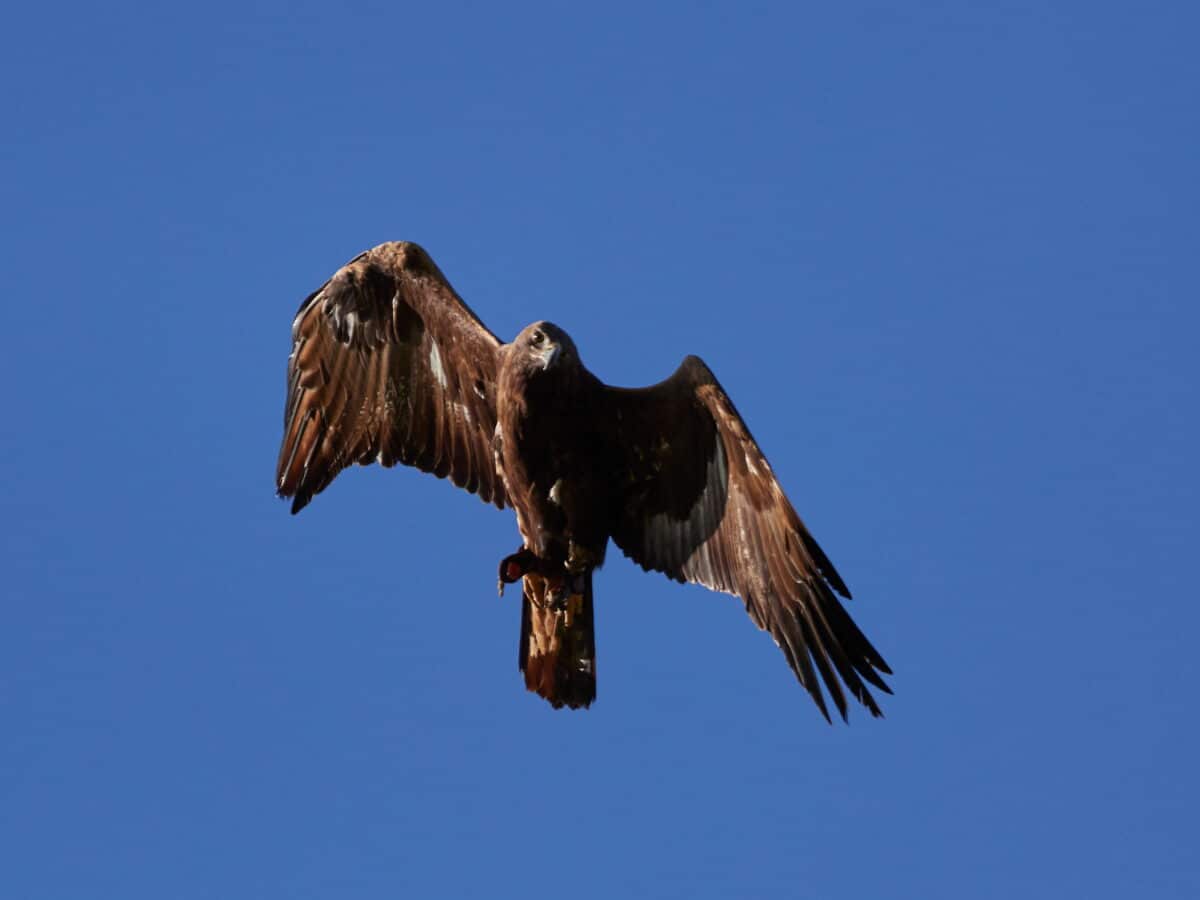
While not quite as fast as the peregrine falcon, the golden eagle (Aquila chrysaetos) deserves recognition as one of the world’s fastest birds, capable of reaching speeds up to 200 mph (320 km/h) during hunting dives. What makes golden eagles particularly impressive is their combination of speed with raw power—these birds can weigh up to 15 pounds and have a wingspan approaching 8 feet.
Unlike the peregrine, which primarily hunts other birds in flight, golden eagles use their speed to strike ground-dwelling prey, sometimes as large as deer or livestock. Their massive talons can exert pressure exceeding 400 pounds per square inch, and when combined with the kinetic energy of their high-speed dive, create a formidable hunting strategy. Golden eagles also demonstrate remarkable horizontal flying speeds of 80 mph (130 km/h) during level flight, showcasing their all-around aerial prowess.
Swift Family: Masters of Sustained Flight

While falcons may dominate in diving speed, members of the swift family claim the title for fastest level flight. The common swift (Apus apus) can maintain speeds of up to 70 mph (112 km/h) in level flight, while the white-throated needletail (Hirundapus caudacutus) has been recorded at an impressive 105 mph (169 km/h). Unlike the burst speed of falcons, swifts are built for endurance—they spend almost their entire lives in the air, even sleeping while flying.
These birds have evolved extremely efficient wings with a high aspect ratio (long and narrow), allowing them to glide effortlessly while minimizing energy expenditure. Their streamlined bodies and specialized wing structure create the perfect balance between speed and endurance. Some swift species can stay continuously airborne for up to ten months, landing only to breed, showcasing their remarkable aerial adaptation. Their unique flight capabilities make them perfectly suited for catching insects on the wing, their primary food source.
Black Marlin: The Ocean’s Speed Demon
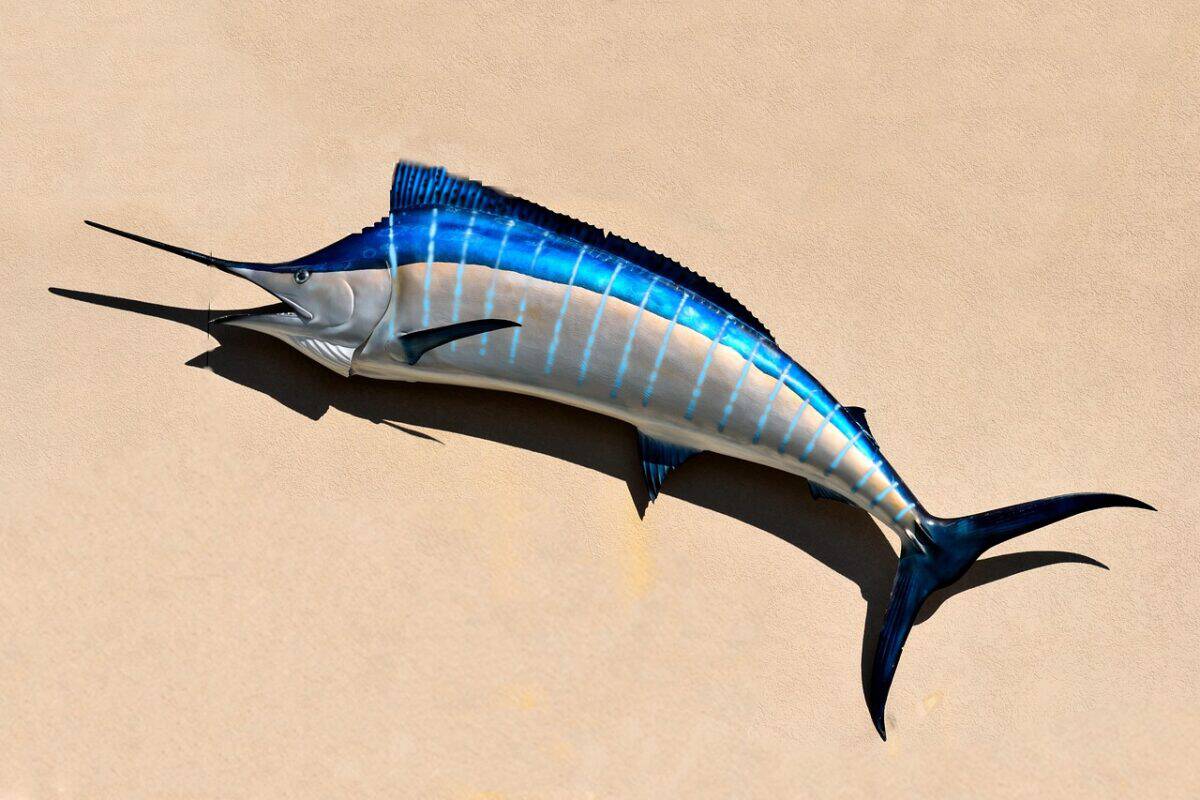
Beneath the waves, the black marlin (Istiompax indica) reigns supreme as the fastest fish in the sea, capable of reaching speeds up to 82 mph (132 km/h). This massive predator—which can weigh over 1,500 pounds—combines sheer power with hydrodynamic efficiency to achieve these remarkable velocities. Unlike most fish species, the black marlin features rigid pectoral fins that cannot be folded against the body, similar to an aircraft’s fixed wings.
This adaptation provides exceptional stability during high-speed pursuits. The marlin’s torpedo-shaped body, powerful caudal fin (tail), and distinctive bill minimize water resistance while maximizing propulsion. Their speed serves them well as apex predators that hunt fast-moving prey like tuna and mackerel. The combination of their size and velocity makes them one of the most sought-after game fish, capable of stripping hundreds of yards of line from fishing reels in seconds when hooked.
Sailfish: The Ocean’s Speedster with a Sail

The sailfish (Istiophorus) comes in as a close second to the black marlin, with confirmed speeds reaching 68 mph (109 km/h). What makes sailfish particularly fascinating is not just their speed but their distinctive dorsal fin, which can be taller than the fish’s body height and can be folded into a groove when swimming at high speeds to reduce drag. When hunting, sailfish often raise this sail to herd schools of smaller fish, using it as both an intimidation display and a practical tool.
Like the marlin, sailfish possess a spear-like bill used for slashing at prey, stunning them before consumption. Their bodies contain specialized muscles that generate heat, allowing for faster muscle contractions and greater sustained speed than most cold-blooded fish. Sailfish typically hunt in groups, using coordinated attacks to isolate and capture prey. Their iridescent blue and silver coloration can rapidly change during hunting or courtship, creating spectacular displays as they flash through the water.
Cheetah: Evolution’s Land Speed Masterpiece

The cheetah (Acinonyx jubatus) stands as the undisputed fastest land animal, capable of accelerating from 0 to 60 mph (97 km/h) in just three seconds and reaching top speeds of 70-75 mph (113-121 km/h). This remarkable acceleration exceeds that of most sports cars. Cheetahs are evolutionary specialists, with bodies designed specifically for short bursts of extreme speed. Their slender frame, deep chest housing enlarged heart and lungs, non-retractable claws that provide traction like cleated shoes, and flexible spine that allows their stride to stretch up to 25 feet all contribute to their velocity.
A cheetah’s tail acts as a rudder for balance during high-speed turns, while specialized foot pads provide exceptional grip. However, this specialization comes at a cost—cheetahs can only maintain their top speed for about 20-30 seconds before risking dangerous overheating. Their hunting success rate is approximately 50%, relatively high among predators, thanks to their explosive acceleration and precision.
Pronghorn Antelope: Built for Sustained Speed

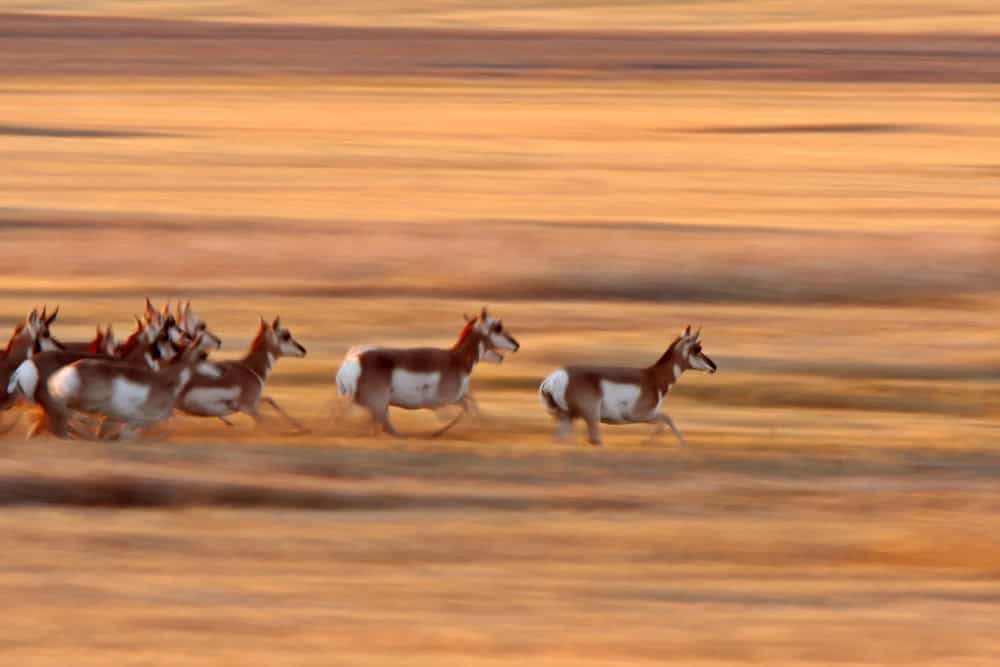
While the cheetah may win the sprint, the pronghorn antelope (Antilocapra americana) of North America deserves recognition for its remarkable combination of speed and endurance. Capable of sustained runs at 55 mph (89 km/h) and short bursts up to 60 mph (97 km/h), pronghorns can maintain high speeds for much longer distances than cheetahs—up to 4 miles at a stretch. This evolutionary adaptation seems puzzling since no predator in their current ecosystem can match their speed.
Scientists believe this ability evolved in response to now-extinct American cheetahs that hunted pronghorns during the Pleistocene era. The pronghorn’s oversized heart, lungs, and windpipe allow for exceptional oxygen intake, while their lightweight frame and specialized hooves provide efficiency and traction. They feature unique branched horns (not true antlers) that give them their name, and despite their deer-like appearance, they belong to their own distinct family. Their remarkable speed adaptation represents an evolutionary echo of ancient predator-prey relationships.
Springbok: The Pronking Speedster

The springbok (Antidorcas marsupialis) of southern Africa combines impressive speed with one of the animal kingdom’s most distinctive movements. These medium-sized antelopes can reach speeds of 55 mph (88 km/h) and are capable of a unique leaping display called “pronking” or “stotting,” where they jump up to 10 feet high with their back arched and legs stiff. This behavior, performed during high-speed runs, serves multiple purposes: it confuses predators, signals the animal’s fitness (essentially saying “I’m so healthy I can waste energy jumping while running”), and allows individuals to see over tall grass to spot dangers.
Springboks have evolved specialized adaptations for their arid habitat, including the ability to survive without drinking water by extracting moisture from the plants they consume. Their name derives from Afrikaans, meaning “jumping antelope,” reflecting their distinctive locomotion style. During historical mass migrations (no longer occurring due to fencing and habitat fragmentation), thousands of springboks would move together, creating spectacular displays of synchronized speed and pronking.
Swordfish: Built for Sustained Underwater Velocity

The swordfish (Xiphias gladius) completes the trio of elite ocean speedsters, with documented speeds of up to 60 mph (97 km/h). What makes swordfish particularly remarkable is their specialized physiology that allows them to maintain high speeds through cold waters. They possess a unique heat exchange system that warms their eyes and brain, improving vision and neural processing while hunting at depth and speed. Their distinctive sword-like bill, which can measure up to one-third of their total body length, serves multiple purposes: it slices through water to reduce drag, can be used to slash at prey fish to stun them, and contains specialized sensory organs that detect temperature changes and help locate prey.
Swordfish undergo a dramatic transformation as they age—juveniles have scales and teeth that they lose as adults, becoming completely smooth-skinned with bills that harden and flatten. This metamorphosis optimizes their bodies for high-speed hunting in the open ocean, where they pursue fast-moving prey like squid and smaller fish.
Mako Shark: The Ocean’s Sprint Champion

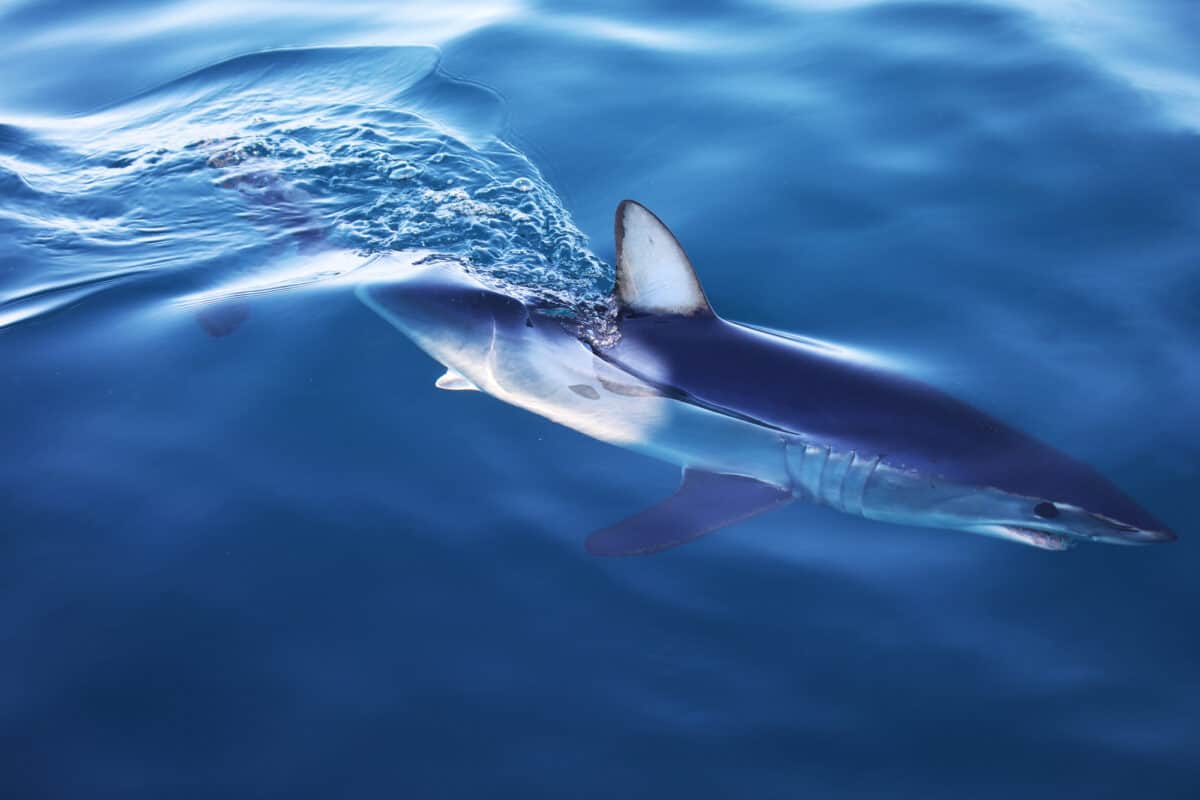
The shortfin mako shark (Isurus oxyrinchus) holds the title of fastest shark species, capable of bursts exceeding 45 mph (72 km/h). These oceanic predators combine speed with exceptional jumping ability, sometimes breaching completely clear of the water in spectacular displays of power. Makos possess several adaptations that enhance their velocity: specialized skin denticles (tooth-like scales) that reduce drag, a streamlined body shape, and a unique circulatory system that maintains muscle temperature above surrounding water, allowing for faster and more powerful contractions.
Their crescent-shaped tail provides exceptional thrust, while their pointed snout minimizes water resistance. Unlike many shark species that must swim continuously to breathe, makos can actively pump water over their gills, allowing them to maintain high speeds with greater efficiency. Their speed serves them well in pursuing fast prey like tuna and swordfish. Makos are also known for their intelligence and curious nature, sometimes following boats for extended periods and displaying complex hunting behaviors.
The Physiological Cost of Speed
While impressive, extreme speed comes with significant physiological costs for these animal champions. The cheetah risks dangerous overheating after just 30 seconds at top speed and must rest for up to 30 minutes following a chase. The peregrine falcon’s dive subjects it to g-forces that would cause a human to lose consciousness. Black marlins exert tremendous energy during their sprints, requiring substantial recovery periods.
These speed specialists typically sacrifice other capabilities—cheetahs lack the strength of other big cats, making them vulnerable to having kills stolen; peregrine falcons have specialized for aerial hunting at the expense of ground mobility; pronghorns maintain vigilance and nervousness even without natural predators fast enough to catch them. Evolution represents a series of trade-offs, and these speed specialists have essentially “invested” their evolutionary currency in velocity at the expense of other potential advantages. This specialization makes many speed champions particularly vulnerable to environmental changes that might render their specific adaptations less advantageous.
Conclusion: Nature’s Velocity Masters Across Domains
The remarkable speed capabilities demonstrated across birds, fish, and mammals showcase the incredible diversity of evolutionary adaptations. Each of these speed champions has evolved specialized physiological and anatomical features precisely tuned to their ecological niche, whether diving through air at hundreds of miles per hour, slicing through water with minimal resistance, or sprinting across open plains.
What unites them is the critical role speed plays in their survival strategy—either as predators capable of overtaking prey or as prey species evolved to escape capture. As we continue to study these extraordinary animals, we gain deeper insights into the principles of biomechanics, energy efficiency, and evolutionary optimization. These natural speed champions continue to inspire human technology, from more efficient vehicle designs to advanced materials that reduce drag and friction, demonstrating once again how nature remains our greatest teacher in the art of engineering excellence.

From exploring the marine wonders in the Azores and witnessing the vast savannas of Kenya, to delving deep into the rich biodiversity of South Africa and traversing iconic landscapes in Australia and the US like Yellowstone, Chris's experiences are vast.
With a penchant for diving alongside sharks, the ocean holds a special place in his heart.
Through his academic insights, he champions wildlife conservation, striving with 'Animals Around The Globe' to cultivate a profound connection between humans and animals, enhancing our mutual appreciation.
Connect with him at Feedback@animalsaroundtheglobe.com.
- This Monkey Has a Mustache - July 21, 2026
- How Steve Irwin Changed the World’s View of Wildlife - July 21, 2026
- The Catfish That Caused Earthquakes in Japanese Folklore - July 21, 2026