


When we think of intelligent creatures, insects rarely come to mind. Our bias typically leans toward mammals with their larger brains and observable problem-solving abilities. However, the insect world harbors remarkable cognitive capabilities that challenge our understanding of intelligence. Despite having brains smaller than pinheads, many insects display complex behaviors, social structures, and problem-solving abilities that rival those of some vertebrates. From sophisticated communication systems to extraordinary navigation skills, insects demonstrate that intelligence comes in many forms beyond sheer brain size. This article explores 17 surprisingly smart insects whose cognitive abilities might just change your perspective on these tiny invertebrates.
14. Honey Bees The Mathematical Navigators

Honey bees possess cognitive abilities that would impress even seasoned mathematicians. These remarkable insects can solve what scientists call the “traveling salesman problem” – finding the shortest route between multiple locations – a complex mathematical challenge that stumps many computers. Using their internal compass and memory of landmarks, honey bees optimize their foraging routes to minimize travel distance between flowers. Their famous “waggle dance” communication system conveys precise information about food sources, including direction, distance, and quality, to hive mates. Most impressively, studies have shown that honey bees understand the concept of zero, placing them in an elite cognitive category shared with only a few vertebrate species including humans, non-human primates, and some birds. They can also recognize human faces, count up to four, and understand abstract concepts like “same” and “different” – remarkable feats for a brain containing fewer than one million neurons.
13. Ants The Collective Problem Solvers

Ants represent one of nature’s most successful examples of collective intelligence. While an individual ant’s brain is tiny, their colonies function like superorganisms with distributed cognitive systems. Leaf-cutter ants, for instance, practice sophisticated agriculture by cultivating fungus gardens, managing waste, and defending against pathogens – essentially farming millions of years before humans. Army ants can construct living bridges with their bodies to cross gaps, constantly adjusting the structure’s strength and size based on traffic flow. Fire ants can form waterproof rafts during floods by linking their bodies together, demonstrating collective engineering prowess. Research has shown that ant colonies can solve complex optimization problems through simple individual behaviors combined with chemical communication. Perhaps most impressively, some ant species can teach each other through a process called tandem running, where knowledgeable ants lead inexperienced ones to food sources – a form of teaching previously thought unique to higher vertebrates.
12. Fruit Flies The Emotional Learners

Despite their pesky reputation and minuscule brains, fruit flies (Drosophila melanogaster) exhibit surprisingly sophisticated learning and memory capabilities. Research has revealed that these tiny insects can remember negative experiences and modify their behavior accordingly – essentially learning from past mistakes. In groundbreaking studies, scientists discovered that fruit flies display primitive emotional states analogous to fear and anxiety. When repeatedly exposed to threatening stimuli, they develop stress responses that persist even after the threat is removed. Their brains contain specialized neurons that form memory traces, allowing them to retain information for days. Perhaps most remarkably, male fruit flies that are rejected by females during mating attempts will subsequently increase their alcohol consumption, suggesting complex emotional responses to social rejection. The fruit fly’s brain, despite containing only about 250,000 neurons (compared to our 86 billion), can process information through parallel circuits similar to those in mammalian brains, demonstrating that sophisticated neural processing doesn’t necessarily require large brain volume.
11. Cockroaches The Learning Survivors

Cockroaches may elicit disgust, but their cognitive abilities deserve respect. These ancient insects possess remarkable learning capabilities that contribute to their legendary survival skills. Studies have demonstrated that cockroaches can be classically conditioned – the same learning principle famously shown in Pavlov’s dogs. They can associate neutral stimuli with rewards, showing they possess associative learning abilities. American cockroaches can navigate complex mazes and remember solutions for days or even weeks. This spatial memory helps them quickly find shelter when threatened, explaining their uncanny ability to disappear when the lights come on. Their social learning is equally impressive – cockroaches share information about food sources through chemical signals, and young cockroaches learn feeding preferences from adults. Perhaps most remarkably, cockroaches exhibit a form of emergent intelligence when in groups, making collective decisions about shelter selection that optimize for size, darkness, and protection. Their decentralized nervous system – with ganglia throughout their bodies capable of independent function – represents an entirely different evolutionary approach to intelligence than our centralized brain model.
10. Jumping Spiders The Visual Strategists

Though technically arachnids rather than insects, jumping spiders deserve mention for their extraordinary cognitive abilities packed into a brain smaller than a poppy seed. These tiny hunters possess remarkable vision through their eight eyes, with the main pair offering acuity comparable to that of humans. Unlike most arthropods, jumping spiders don’t rely on hardwired instinctual responses; instead, they employ complex hunting strategies that involve planning, detours, and ambushes. Studies have shown they can solve multi-step problems to reach prey, including navigating mazes and creating detours when direct paths are blocked. Perhaps most impressively, they can identify prey items they’ve never encountered before based on movement patterns alone, suggesting abstract reasoning abilities. Recent research has even demonstrated that Portia jumping spiders can see the moon and use celestial cues for navigation. Their ability to recognize individual humans, remember spatial layouts, and adjust hunting tactics based on previous experiences suggests a level of cognition previously thought impossible in such small animals. All this is accomplished with a brain containing fewer than 600,000 neurons – a testament to evolutionary efficiency in neural design.
9. Paper Wasps The Face-Recognizing Socialites

Paper wasps possess one of the most surprising cognitive abilities in the insect world: facial recognition. These social insects can recognize and remember the unique facial patterns of other wasps in their colony, a skill previously thought to require the specialized neural circuitry found only in mammals. This remarkable ability helps maintain their complex social hierarchies, where remembering who’s who is crucial for colony stability. Research at the University of Michigan demonstrated that paper wasps (Polistes fuscatus) not only recognize faces but can remember them for extended periods – at least a week and likely much longer. Their visual processing abilities extend beyond simple pattern recognition; they can generalize facial features and recognize individuals they’ve never seen before based on family resemblance. Paper wasps also demonstrate impressive learning abilities, adjusting their behavior based on observation of others’ experiences – a form of social learning once thought exclusive to vertebrates. These wasps can even recognize a hierarchy of threats, making sophisticated decisions about when to defend their nest versus when to abandon it, showing a nuanced risk assessment system packed into their tiny brains.
8. Praying Mantises The 3D Vision Hunters

Praying mantises demonstrate remarkable cognitive abilities centered around their extraordinary visual processing. They are the only insects known to possess stereoscopic vision, creating a three-dimensional perception of their environment similar to humans. This sophisticated visual system allows them to judge distances with remarkable precision when striking at prey. Research at Newcastle University confirmed this ability by creating the world’s smallest 3D glasses for mantises and demonstrating they process stereoscopic cues differently than vertebrates, yet achieve similar results. Their hunting strategies show evidence of learning and adaptation rather than purely instinctual behavior. Mantises can remember the locations where they’ve successfully hunted before and return to these spots. Perhaps most impressively, they demonstrate selective attention – the ability to focus on relevant stimuli while ignoring distractions – a cognitive skill once thought limited to vertebrates. Some species even employ sophisticated mimicry, adjusting their behavior to resemble swaying leaves or flowers, suggesting an awareness of their own appearance. Their ability to track multiple moving objects simultaneously while maintaining perfect body control demonstrates a sophisticated integration of sensory input and motor output that rivals the coordination of many vertebrates.
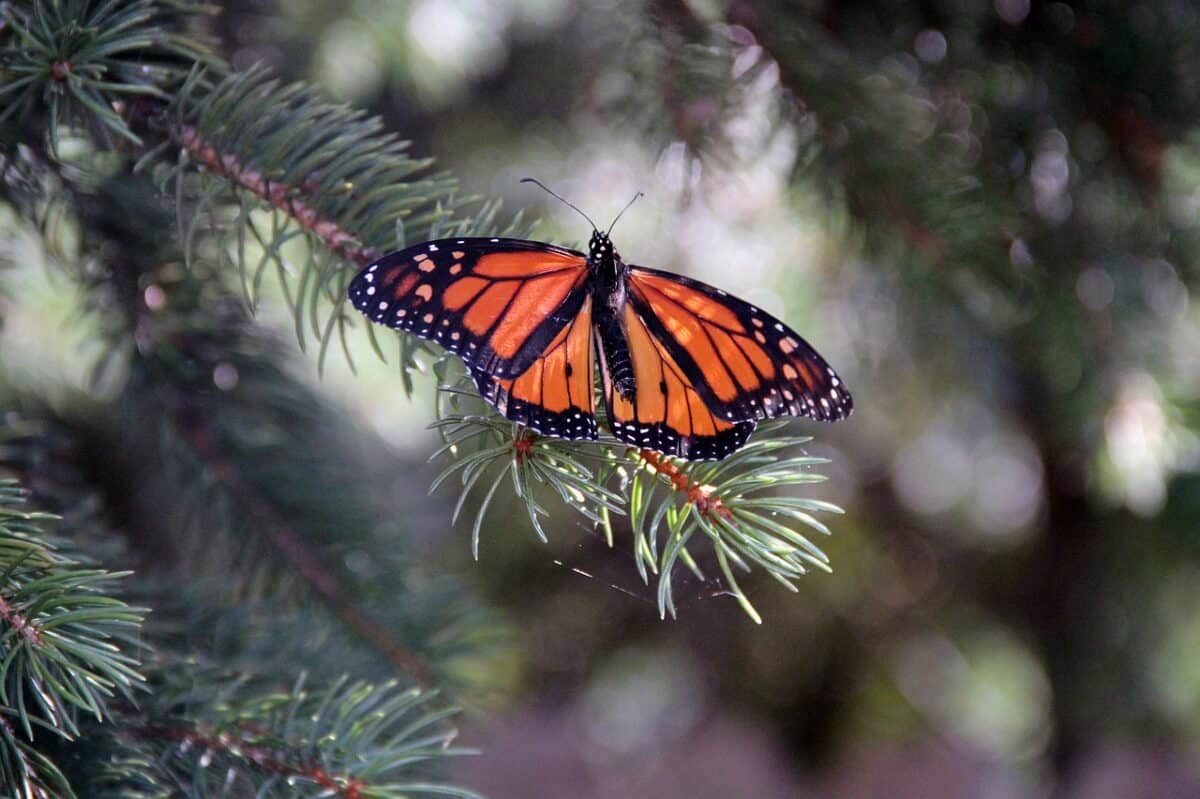
7. Monarch Butterflies The Trans-Generational Navigators

Monarch butterflies perform one of the most astonishing feats of navigation in the animal kingdom, completing a multi-generational migration spanning up to 3,000 miles between Canada and Mexico. What makes this achievement truly remarkable is that no single butterfly completes the entire round trip – it takes 3-4 generations to complete the cycle. This means the great-grandchildren of butterflies that left Mexico somehow know how to return to the exact same overwintering sites their ancestors used, despite never having been there themselves. This trans-generational memory appears to be coded through a combination of genetic programming and environmental cues. Monarchs possess an internal compass that integrates information from the sun’s position and the Earth’s magnetic field. Research has shown they have specialized cryptochromes (light-sensitive proteins) in their antennae that function as magnetoreceptors, allowing them to sense magnetic fields. Their brains, though tiny, contain specialized “time-compensated sun compass neurons” that adjust for the sun’s movement throughout the day, maintaining a consistent directional reference. This navigational system, functioning in a brain weighing less than 0.5 milligrams, outperforms many of our most sophisticated human-designed GPS systems in terms of energy efficiency and reliability.
6. Orchid Bees The Fragrance Collectors

Male orchid bees demonstrate a remarkable cognitive specialization centered around scent recognition and memory. These colorful tropical insects collect aromatic compounds from orchids, fungi, tree resins, and other sources to create complex personal perfumes unique to each individual. This behavior requires extraordinary chemical memory and discrimination abilities. Each male must remember dozens of distinct fragrances, their locations across miles of rainforest, and which ones he has already collected – a feat requiring significant spatial and olfactory memory. Research has shown they can distinguish between hundreds of similar chemical compounds, a level of chemical discrimination rivaling the most sophisticated analytical equipment. The perfume-making process isn’t random; males selectively choose compounds that create species-specific blends, demonstrating an understanding of chemical complementarity. They must also track the changing availability of scent sources through seasons and remember these patterns year after year. This sophisticated behavior represents a form of extended phenotype intelligence – using environmental resources to create something that becomes part of their reproductive strategy. Their brain’s specialized olfactory processing centers allow them to perform these complex chemical analyses with neural structures weighing less than a milligram – an efficiency unmatched by any human-made chemical sensor.
5. Dung Beetles The Celestial Navigators

Dung beetles demonstrate remarkable astronomical navigation abilities that were only recently discovered by scientists. These industrious insects harvest balls of dung and need to roll them away from the competitive dung pile as quickly as possible in a straight line. Research published in Current Biology revealed that African dung beetles (Scarabaeus satyrus) use the Milky Way as a navigation guide during their nocturnal activities. This makes them the only known insects to orient themselves by our galaxy. During experiments where beetles were fitted with tiny hats to block their view of the sky, their paths became erratic and inefficient. Further studies showed they can also navigate using the polarization pattern of moonlight and even the gradient of light created by the sun over the horizon. Their brains contain specialized cells that detect polarized light patterns invisible to humans, essentially giving them a built-in celestial compass. Most impressively, they can switch between different navigational cues as conditions change, demonstrating cognitive flexibility previously thought impossible in insects. Their celestial navigation system functions with incredible efficiency despite being housed in a brain smaller than a grain of rice – an achievement that has inspired designs for autonomous robots and navigation systems.
4. Dragonflies The Predictive Hunters

Dragonflies possess one of the most sophisticated neural systems for aerial predation in the animal kingdom. These ancient insects capture prey in mid-air with a success rate exceeding 95% – far higher than many vertebrate predators. Their hunting prowess comes from remarkable predictive capabilities housed in specialized neurons. When pursuing prey, dragonflies don’t simply chase their target’s current position; they calculate where the prey will be in the future and intercept it there. This requires complex computational abilities to factor in the prey’s speed, direction, and potential evasive maneuvers. Research using high-speed cameras shows that dragonflies maintain a constant visual angle to their prey during pursuit, a strategy called proportional navigation that was independently developed by human missile engineers in the 1940s. Their compound eyes provide nearly 360-degree vision with specialized zones dedicated to tracking movement, while their brain processes visual information at a rate equivalent to seeing 200 distinct images per second (humans max out around 60). Perhaps most impressively, dragonflies can selectively focus attention on a single prey item among swarms of similar insects, a form of selective attention once thought unique to vertebrates. These abilities require sophisticated neural circuits that perform complex calculations in real-time using minimal neural hardware.
3. Termites The Climate Control Engineers

Termites display extraordinary collective intelligence through their construction of some of the most sophisticated structures in the natural world. Their mounds, which can reach heights equivalent to a 17-story building relative to their body size, incorporate advanced architectural features that maintain stable internal temperatures despite extreme external fluctuations. These structures include sophisticated ventilation systems with carefully positioned tunnels that create convection currents, allowing precise regulation of temperature, humidity, and gas exchange. The mounds feature specialized chambers for different functions, including nurseries for young, fungus gardens, royal chambers, and waste disposal areas – essentially creating a fully functional city. What makes this achievement truly remarkable is that no single termite understands the blueprint; instead, complex structures emerge from simple rules followed by millions of individuals. Recent research has revealed that termites can detect minute changes in air movement, carbon dioxide levels, and temperature gradients, allowing them to continuously adjust their building behavior. They can even repair damage to their structures using different techniques depending on the type and extent of the damage. This emergent problem-solving ability represents a form of distributed cognition that accomplishes engineering feats still being studied by human architects seeking sustainable building designs.
2. Houseflies The Aerial Acrobats
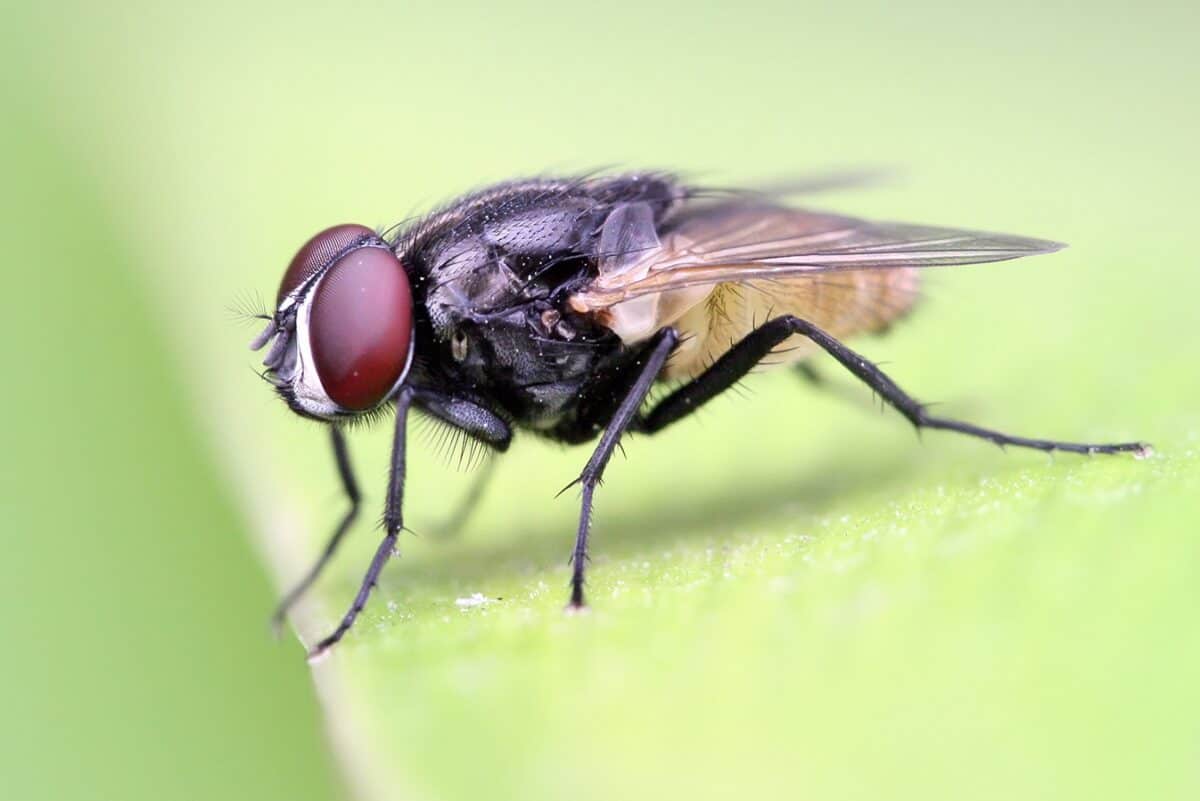
The common housefly, despite its nuisance status, possesses one of the most sophisticated flight control systems in the natural world. Their aerial maneuverability – allowing them to evade swatting hands with seeming ease – stems from remarkable neural processing abilities. Houseflies can process visual information and translate it to wing adjustments in under 30 milliseconds, giving them reaction times far superior to humans (whose fastest reflexes take about 150-300 milliseconds). This cognitive feat is accomplished through specialized neural pathways that bypass traditional processing centers, creating direct connections between visual input and motor output. Their compound eyes provide nearly 360-degree vision, capturing approximately 250 images per second (five times faster than human perception), while specialized organs called halteres function as biological gyroscopes that detect rotation with extraordinary precision. Research has shown that flies can remember and learn from unsuccessful capture attempts, adjusting their escape strategies based on previous experiences. They can also recognize patterns in threatening movements and anticipate actions before they occur – essentially predicting the future location of threats. These capabilities represent a specialized form of intelligence optimized for survival in three-dimensional space, requiring sophisticated spatial awareness and split-second decision-making packed into a nervous system weighing mere milligrams.
1. Mosquitoes The Selective Hunters

Despite their notorious reputation, mosquitoes demonstrate surprising cognitive sophistication in their host-seeking behavior. Female mosquitoes (the only ones that bite) can detect human presence from up to 50 meters away by integrating multiple sensory inputs through complex neural processing. Their hunting strategy involves detecting carbon dioxide plumes, then tracking body heat, visual cues, and finally specific skin odor profiles – a multi-stage approach requiring significant sensory integration. Research has shown that mosquitoes can learn to associate specific odors with negative experiences. If they attempt to feed on someone who has consumed alcohol or certain medications that make blood less palatable, they’ll remember and avoid that individual in future encounters. Perhaps most remarkably, studies have demonstrated that mosquitoes can recognize and remember specific human hosts, developing preferences for particular individuals based on body chemistry and previous feeding success. They can also learn to avoid areas where they’ve experienced danger, showing spatial memory and risk assessment abilities. Mosquitoes adjust their hunting strategies based on time of day, weather conditions, and host availability, demonstrating behavioral flexibility that helps explain why they’ve remained such successful parasites despite human efforts to control them. These abilities stem from specialized olfactory processing centers that can distinguish between hundreds of chemical compounds at concentrations as low as a few parts per billion.
Conclusion:
From the humble honeybee to the majestic butterfly, these 17 insects prove that intelligence isn’t just for big brains. They solve problems, build cities, and even care for their families with an ingenuity that rivals some of the smartest animals on earth. Next time you spot an insect, take a closer look—you might just be witnessing a tiny genius at work. Have you ever underestimated just how clever these little creatures can be?

As a little kid, I fell in love with nature, wildlife, and animals. Living in the USA, South Africa, Italy, China and Germany gave me the opportunity to discover the world's Wildlife. My favorite animals are Mountain Gorillas, Siberian Tigers, and Great White Sharks.
I'm a certified PADI Open Water Diver, went to Everest Base Camp and Trekked Gorillas in Uganda. I hold a Master of Science in Economics and Finance.
Please send any feedback to feedback@animalsaroundtheglobe.com
- 14 Insects That Are Smarter Than You Think - August 4, 2026
- 16 Things You Did Not Know About Frogs - August 4, 2026
- 13 Mutant Animals Born From Environmental Change - August 4, 2026
Leave a comment
You must be logged in to post a comment.