

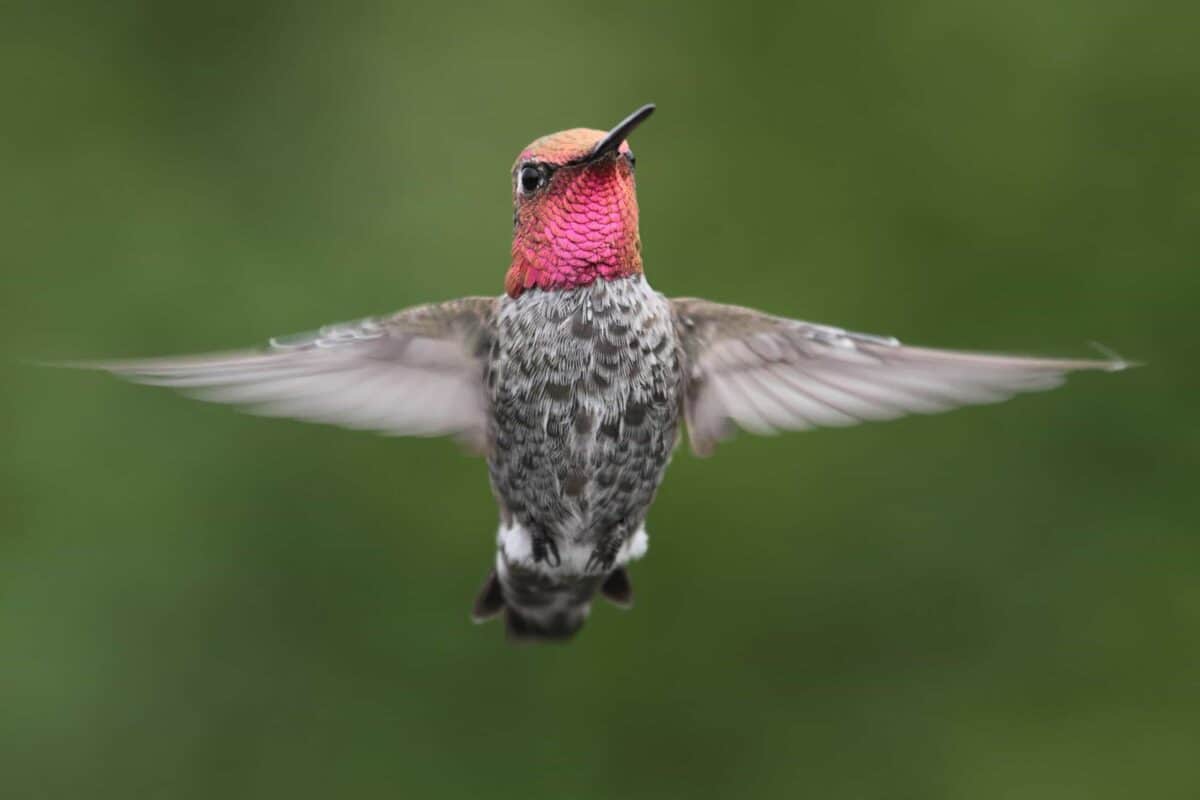
When researchers looked closely at California’s Anna’s hummingbirds, they discovered something remarkable. Over generations, these tiny, dazzling birds have evolved longer, more tapered beaks—not in wildflower meadows, but in suburban backyards. The cause? Human-made nectar feeders. What started as a simple act of kindness—feeding birds—has unexpectedly reshaped nature.
Born in the Suburbs, Raised on Feeders

Anna’s hummingbirds were once winter migrants, but they’ve become year-round residents in places like Los Angeles and San Diego. Backyard feeders have allowed them to thrive in cityscapes, where natural flowers aren’t always in bloom. Over time, hummingbirds raised in these environments began to shift—physically. Their beaks are evolving to suit the easy-access nectar provided by humans.
The Shape of Change

In a large-scale study involving 1,300 museum specimens and 200 live birds, scientists noticed a clear pattern. Birds found near urban feeders had beaks that were not only longer but more tapered at the tip—perfectly shaped to reach into plastic feeder ports. This isn’t just coincidence—it’s evolution in action, unfolding right outside our windows.
Not Just About Nectar

Beak shape doesn’t only affect how hummingbirds eat. It also influences how they compete and court. A longer, sharper beak might give an edge in territorial battles or even impact a male’s display to a potential mate. The urban birds are slowly becoming different from their wildflower-foraging cousins—not just in feeding behavior, but possibly in social dynamics too.
Urban Evolution, One Feeder at a Time

Scientists call this a clear example of “urban-driven evolution.” It’s a reminder that human behavior doesn’t just influence animal behavior—it can drive biological change. While this kind of adaptation might help hummingbirds in cities, it could also make them less suited to wild habitats, where flower shapes and foraging demands are different.
Are We Helping or Harming?

Feeding hummingbirds may seem like a harmless way to connect with nature, but it’s a powerful ecological force. As we reshape their food sources, we’re also reshaping their bodies. This doesn’t mean we should stop feeding them—but it does call for awareness. How we design feeders, where we place them, and how consistently we provide food all matter.
Nature Is Always Watching

The story of California’s hummingbirds is a quiet yet powerful example of how animals respond to us. Evolution isn’t just something that happened long ago in distant environments. It’s happening now, in neighborhoods and on balconies. These birds are adapting to our world—becoming a little more like us, one beak at a time.

adventuring, photography and videography. I am currently working towards a BSc in Biodiversity and Ecology at Stellenbosch University to go on to specialise in Marine Sciences one day.
Please send any feedback to Feedback@animalsaroundtheglobe.com
- Top 21 Must-see Birds For Bird Watchers In America - July 20, 2026
- Italy Mourns Hero Police Dog Killed by Food Laced with Nails - July 20, 2026
- Pigeon Turns into Fashionista and Wears Bread - July 19, 2026