

North America is home to an incredible diversity of wildlife, from the frigid tundra of Alaska to the subtropical wetlands of Florida. While we often think of intelligence as a uniquely human trait, many wild animals possess remarkable cognitive abilities that help them survive and thrive in their environments. Some of these intelligent creatures might surprise you – they’re not always the species we expect. From problem-solving predators to tool-using birds, the continent hosts a remarkable array of animal intellect that challenges our understanding of non-human cognition. Let’s explore the remarkable minds of North America’s smartest wild animals and discover what makes their intelligence so special.
Ravens: The Feathered Einsteins

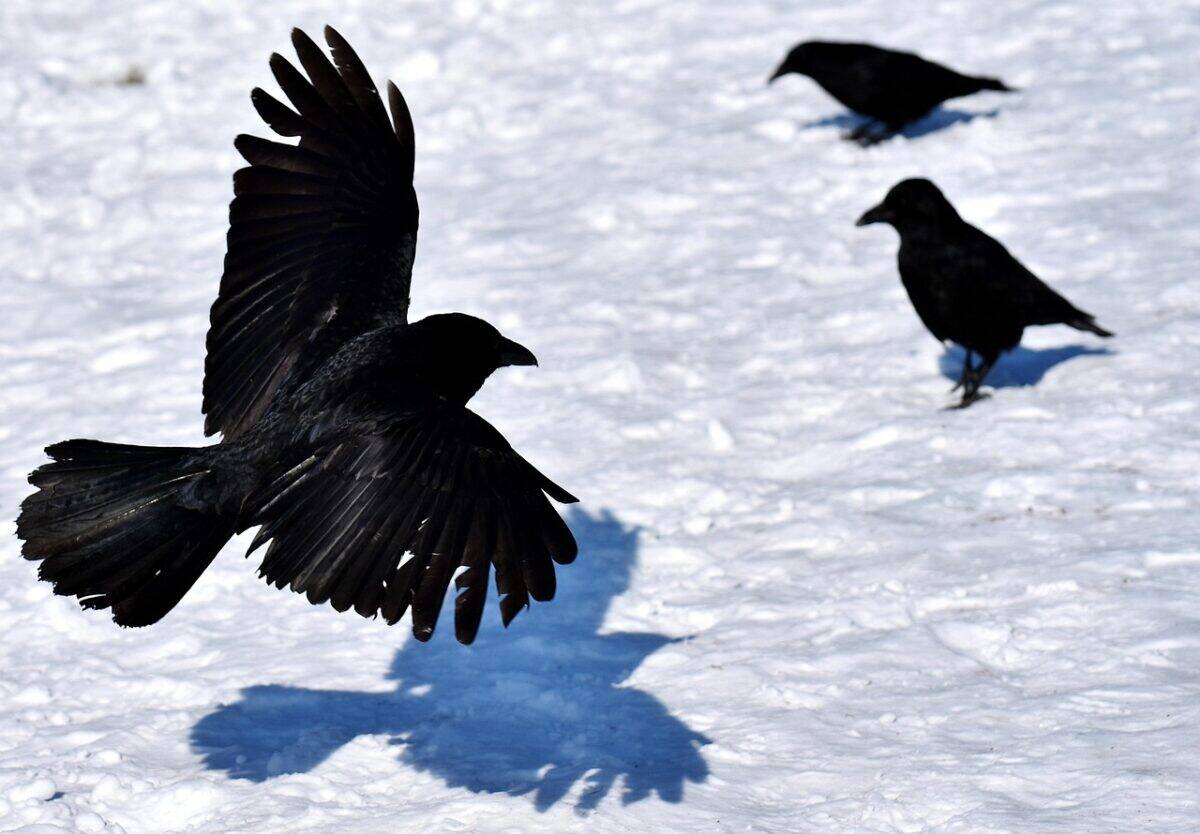
Common ravens (Corvus corax) are arguably North America’s intellectual avian champions. These glossy black birds possess cognitive abilities comparable to those of great apes and dolphins. Ravens can solve complex multi-step problems, use tools, and even plan for the future – a trait once thought unique to humans. In a famous study at the University of Vermont, ravens quickly learned to pull a string to retrieve food, understanding the cause-and-effect relationship after just a few attempts.
Perhaps most impressively, ravens exhibit “theory of mind,” the ability to attribute mental states to others. They can determine when other ravens or humans are looking at their food cache and will move their treasures accordingly to avoid theft. Their intelligence extends to social manipulation; ravens have been observed calling wolves to carcasses they can’t open themselves, essentially using the larger predators as unwitting “tools” to access food.
Raccoons: Urban Problem Solvers

Raccoons (Procyon lotor) have earned their reputation as clever bandits. Their intelligence has been demonstrated in numerous laboratory and urban settings, where they routinely outsmart supposedly “raccoon-proof” garbage cans and bird feeders. Their problem-solving abilities are linked to their unusually high neuron density in the cerebral cortex – they pack the same number of cortical neurons as a dog into a brain the size of a cat’s. Raccoons possess remarkable tactile sensitivity in their front paws, often appearing to “see” with their hands as they manipulate objects.
In the 1900s, ethologist H.B. Davis conducted experiments showing raccoons could remember solutions to problems for up to three years. More recently, raccoons have demonstrated the ability to understand abstract concepts, distinguishing between quantities of items and remembering complex mechanical sequences needed to access food. Their adaptability to urban environments is perhaps the greatest testament to their intelligence, as they continue to evolve new strategies for living alongside humans.
Coyotes: Adaptive Tricksters
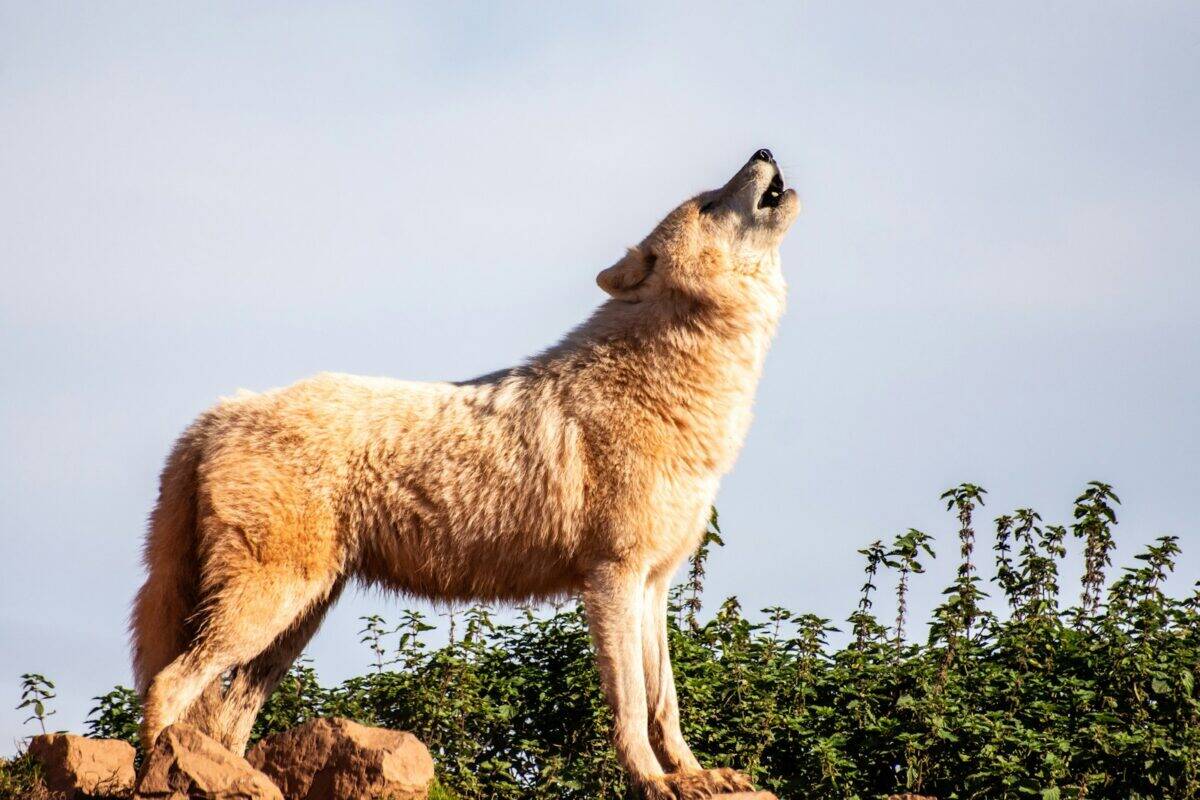
Coyotes (Canis latrans) have demonstrated remarkable intelligence through their adaptability to changing landscapes and human encroachment. Unlike many species that decline with urbanization, coyote populations have expanded throughout North America, adapting to environments from deserts to metropolitan areas. Their cognitive flexibility is evident in their evolving hunting strategies – coyotes have been documented working in teams to distract adult deer while others attack fawns, a complex cooperative hunting behavior. In urban settings, they’ve learned to navigate traffic patterns, using roads as travel corridors during low-traffic hours.
Some coyotes have even been observed waiting for traffic lights to change before crossing busy streets. Their ability to learn from experience is remarkable; in areas where they’re hunted, coyotes quickly become nocturnal and extremely wary of humans, while in protected areas, they may become more visible and active during daylight. This behavioral plasticity, combined with their ability to remember complex spatial information, makes coyotes one of North America’s most successful and intelligent carnivores.
River Otters: Playful Geniuses

North American river otters (Lontra canadensis) exhibit a form of intelligence that’s often overlooked – play-based learning and tool use. These semi-aquatic mammals engage in elaborate play behaviors that serve as practice for hunting and social interactions. River otters have been observed using rocks to crack open shellfish and manipulating sticks to investigate novel objects, showing primitive tool use. Their intelligence extends to remarkable spatial memory – they can navigate complex waterway systems and remember productive hunting grounds across seasons.
River otters also display advanced social learning; young otters learn hunting techniques by watching their mothers, gradually developing sophisticated strategies for catching fish and other prey. Neurologically, otters possess large brains relative to their body size, with well-developed areas for sensory processing and motor coordination. Their cognitive abilities are particularly impressive considering their evolutionary path diverged from primates and other traditionally “intelligent” mammals hundreds of millions of years ago, suggesting their intelligence evolved independently.
Wolves: Social Strategists

Gray wolves (Canis lupus) demonstrate a form of intelligence deeply rooted in their complex social structures. Wolf packs function as sophisticated family units with distinct roles and cooperative hunting strategies that require advanced communication and planning. Wolves can coordinate ambushes, with different pack members taking positions to intercept prey, drive it toward waiting packmates, or cut off escape routes – a level of cooperative hunting rarely seen outside of primate species. Their social intelligence extends to emotional intelligence; wolves form strong bonds and appear to console packmates after conflicts or losses.
Cognitive studies have shown wolves outperform domestic dogs in certain problem-solving tasks, particularly those requiring independent thinking rather than human cues. They exhibit exceptional observational learning, quickly figuring out how to open complex latches after watching another wolf succeed. Perhaps most impressively, wolves demonstrate remarkable restraint during hunting, avoiding unnecessary risks – a form of calculated decision-making that weighs potential food rewards against personal safety.
Black Bears: Underestimated Intellects

American black bears (Ursus americanus) possess cognitive abilities that have been historically underappreciated. Their intelligence manifests primarily in their exceptional memory – black bears can recall the locations of thousands of food sources across their vast territories, returning to berry patches or nut trees at precisely the right time of year for harvesting. This spatial and temporal memory requires sophisticated mental mapping abilities. Black bears demonstrate tool use by employing logs and rocks to stand on for better views or to reach food, and they’ve been observed using sticks to scratch themselves.
Their problem-solving skills are apparent in their interactions with human infrastructure; bears quickly learn to open car doors, complex garbage containers, and food storage systems. In cognitive tests, black bears have shown the ability to distinguish quantities, identifying which of two containers holds more food. Perhaps most remarkably, black bears show evidence of metacognition – awareness of their own knowledge. In one study, bears that were uncertain about a task would seek additional information before making a decision, a sophisticated cognitive ability once thought limited to primates.
Bottlenose Dolphins: Marine Masterminds
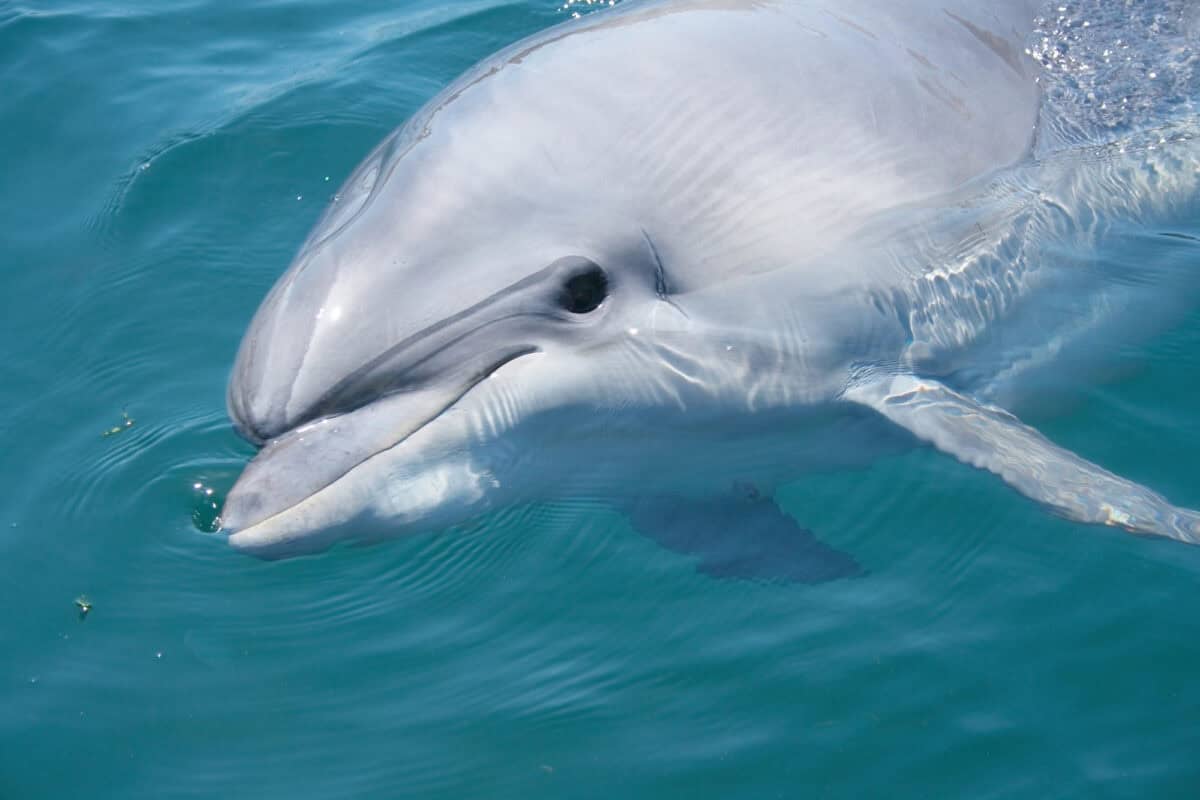
Coastal bottlenose dolphins (Tursiops truncatus) that inhabit North American waters demonstrate some of the most advanced cognitive abilities in the animal kingdom. These marine mammals possess brains that are proportionately larger than humans’, with a complex neocortex that supports sophisticated information processing. Bottlenose dolphins show evidence of self-awareness, recognizing themselves in mirrors – a rare ability shared only with great apes, elephants, and a few other species. Their communication system includes unique “signature whistles” that function essentially as names, allowing dolphins to refer to specific individuals even when they’re not present.
Dolphins along the Florida coast have developed a remarkable hunting technique called “mud-ring feeding,” where they create perfect circles of disturbed mud to trap fish – a behavior that appears to be culturally transmitted through generations. They’ve also been observed using marine sponges as protective tools while foraging on the seafloor, one of the clearest examples of tool use in marine mammals. Cognitively, dolphins can understand abstract concepts, including symbolic language, syntactic structure, and numerosity, challenging many traditional notions about the uniqueness of human cognition.
Bighorn Sheep: Social Learners
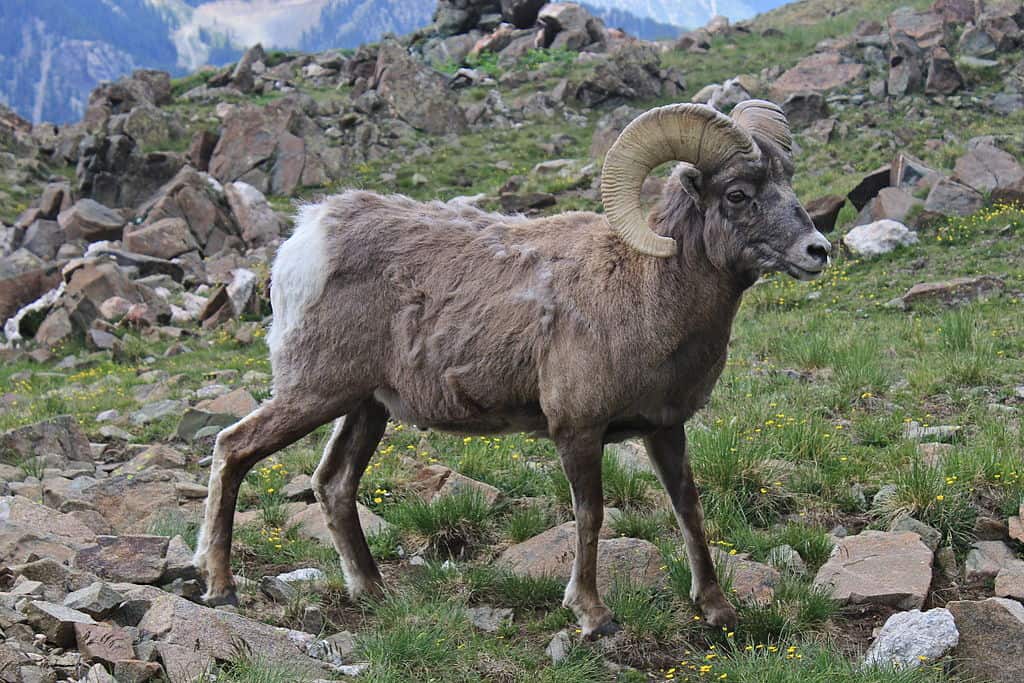
Bighorn sheep (Ovis canadensis) might seem like unlikely candidates for this list, but recent research has revealed surprising cognitive abilities in these mountain-dwelling ungulates. Bighorns demonstrate complex social learning and cultural transmission of knowledge – young sheep learn migration routes, predator avoidance strategies, and foraging locations from older individuals in their groups. These learned behaviors can persist for generations, creating distinct “cultures” within different bighorn populations. Their spatial cognition is particularly impressive; bighorns navigate treacherous mountain terrain with remarkable precision, remembering seasonal migration routes spanning hundreds of miles and identifying escape paths in case of predator attacks.
Studies have shown bighorns can recognize dozens of individual sheep faces, maintaining complex social hierarchies based on these recognitions. Perhaps most surprisingly, bighorns exhibit advanced problem-solving abilities when faced with obstacles. Researchers have documented cases where bighorn sheep figured out how to depress cattle guards to cross them safely – a behavior that spread through populations via social learning. This combination of social intelligence, spatial cognition, and problem-solving places bighorn sheep among North America’s more cognitively sophisticated species.
Wild Pigs: Invasive Intellectuals

Feral pigs and wild boars (Sus scrofa), though invasive in North America, demonstrate remarkable intelligence that contributes to their successful colonization of diverse habitats. These highly adaptable mammals possess cognitive abilities comparable to those of dogs and primates, with problem-solving skills that make them notoriously difficult to control. Wild pigs can remember complex spatial information, learning and avoiding trap locations after a single experience. Their learning extends to human behavior patterns; pigs quickly become nocturnal in hunted areas and can distinguish between armed hunters and unarmed hikers, adjusting their wariness accordingly.
Research has shown wild pigs can use mirrors to locate hidden food, suggesting potential self-recognition capabilities. They exhibit sophisticated social learning, with young pigs rapidly acquiring behaviors modeled by their mothers or other group members. In laboratory settings, pigs have demonstrated the ability to use joysticks to manipulate cursors on computer screens, understanding the relationship between their actions and on-screen effects. This cognitive flexibility, combined with their ability to remember both positive and negative experiences for years, makes wild pigs among the most intelligent invasive species in North America.
Octopuses: The Cephalopod Geniuses
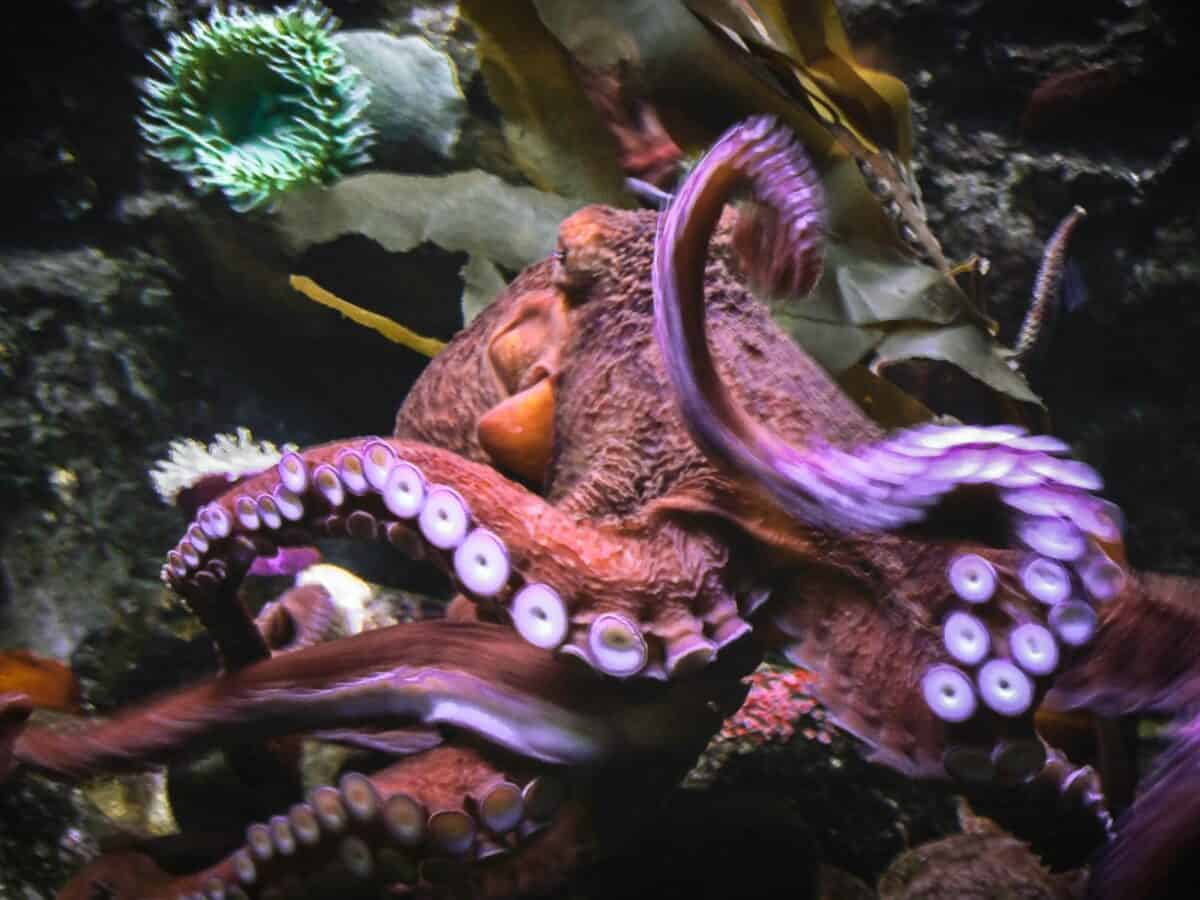
The giant Pacific octopus (Enteroctopus dofleini) and other octopus species found in North American coastal waters represent a form of intelligence that evolved entirely separately from the vertebrate lineage. With a distributed nervous system – only one-third of their neurons are located in their brain, with the rest spread throughout their arms – octopuses demonstrate a fundamentally different type of cognition. Their problem-solving abilities are legendary; they can open childproof pill bottles, solve mechanical puzzles, and navigate mazes with remarkable efficiency. Octopuses are masters of observation and imitation; in laboratory settings, they’ve been documented watching and learning from other octopuses’ successful strategies.
Their tool use includes collecting and arranging coconut shells as portable shelters and using rocks to prop open bivalve shells. Each of their eight arms can act semi-autonomously, solving problems independently while the central brain coordinates overall behavior. Perhaps most impressively, octopuses can recognize individual humans, distinguishing between keepers who have been helpful or threatening, despite having evolved in an environment with no similar selection pressures. This suggests a general intelligence that transcends specific evolutionary adaptations.
Beavers: Ecosystem Engineers

North American beavers (Castor canadensis) display specialized intelligence through their remarkable engineering abilities. These semi-aquatic rodents construct some of the most complex structures in the animal kingdom, creating dams and lodges that can withstand powerful water currents and predator attacks. What makes beaver engineering truly impressive is their ability to assess environmental conditions and adapt their construction accordingly. They build dams precisely where they’ll be most effective, using different materials depending on water flow and available resources. Beavers adjust their structures continuously in response to changing conditions, including water levels, seasonal variations, and damage.
Research has shown that beavers can respond to the sound of running water alone, even when played through speakers, attempting to “fix” the leak. Their construction reflects advanced spatial reasoning and planning abilities; they create underwater entrances to their lodges positioned to remain accessible even when water freezes, and they maintain food caches organized for winter survival. Beavers also exhibit remarkable social learning, with young beavers observing and participating in construction alongside adults before establishing their own territories, suggesting cultural transmission of engineering knowledge through generations.
Clark’s Nutcracker: Memory Champions

The Clark’s nutcracker (Nucifraga columbiana), a bird native to western North American mountains, possesses perhaps the most extraordinary memory in the animal kingdom. These corvids collect and cache up to 33,000 pine seeds each autumn, storing them in 2,500 to 3,000 distinct locations spread across dozens of square miles. The remarkable feat isn’t just the number of caches but that nutcrackers can remember the locations with astonishing precision for up to nine months. Their specialized hippocampus – the brain region responsible for spatial memory – is proportionately larger than that of other birds.
This memory prowess isn’t limited to cache locations; Clark’s nutcrackers remember detailed topographical features, prevailing wind patterns that affect snow accumulation (which impacts cache accessibility), and complex social information about potential cache thieves. Their cognitive abilities extend to numerical understanding; they can distinguish quantities of seeds and adjust caching behavior based on perceived food value and energy expenditure. The relationship between these birds and certain pine species has evolved into a mutualistic one, with some pines like whitebark pine becoming dependent on nutcrackers for seed dispersal – a relationship that requires sophisticated cognitive timing to synchronize with pine cone development and seed maturation.
Conclusion: Redefining Animal Intelligence

The diverse cognitive abilities demonstrated by North America’s smartest wild animals challenge our traditional understanding of intelligence. From the cultural learning of bighorn sheep to the distributed cognition of octopuses, from the engineering prowess of beavers to the exceptional memories of Clark’s nutcrackers, these animals exhibit forms of intelligence that have evolved to solve specific ecological challenges. What’s particularly fascinating is how these cognitive abilities often evolved independently in different lineages, suggesting that intelligence represents a powerful adaptive strategy regardless of evolutionary history.
As we continue to develop more sophisticated research methods, we’re discovering that many animals previously considered “simple” possess complex cognitive abilities that remained hidden from earlier scientific approaches. This growing understanding of animal cognition not only enriches our appreciation of wildlife but also raises important ethical questions about our relationship with these sentient beings. The smart wild animals of North America remind us that intelligence in the natural world takes many forms, each beautifully adapted to help species thrive in their unique ecological niches.

From exploring the marine wonders in the Azores and witnessing the vast savannas of Kenya, to delving deep into the rich biodiversity of South Africa and traversing iconic landscapes in Australia and the US like Yellowstone, Chris's experiences are vast.
With a penchant for diving alongside sharks, the ocean holds a special place in his heart.
Through his academic insights, he champions wildlife conservation, striving with 'Animals Around The Globe' to cultivate a profound connection between humans and animals, enhancing our mutual appreciation.
Connect with him at Feedback@animalsaroundtheglobe.com.
- Penguins Are Moving North—What This Means for the Arctic - July 22, 2026
- The Bull as a Symbol of Power in Minoan and Hindu Stories - July 22, 2026
- This Monkey Has a Mustache - July 21, 2026