


The animal kingdom is full of incredible journeys that defy our imagination. From the depths of the ocean to the highest skies, creatures big and small embark on epic migrations that showcase nature’s remarkable resilience and determination. These journeys aren’t just impressive feats of endurance—they’re essential survival strategies shaped by millions of years of evolution. In this exploration of Earth’s most extreme migrations, we’ll discover animals that navigate using the stars, cross entire oceans, climb mountains, and brave harsh conditions all in pursuit of food, breeding grounds, or more favorable climates. These 17 remarkable creatures demonstrate just how far life will go to survive and thrive on our dynamic planet.
13. Arctic Tern The Pole-to-Pole Champion

The Arctic Tern (Sterna paradisaea) holds the record for the longest migration of any animal on Earth. These small but mighty seabirds travel an astonishing 44,000 miles annually in their round-trip journey between their Arctic breeding grounds and Antarctic feeding areas. Remarkably, they don’t simply fly in a straight line—their migration follows a complex, S-shaped route that maximizes favorable winds and feeding opportunities. This incredible journey means Arctic Terns experience more daylight than any other creature, as they enjoy the summer seasons at both poles. Even more impressive is their longevity—living up to 30 years, an Arctic Tern might travel the equivalent distance of going to the Moon and back three times during its lifetime. Their extraordinary navigation skills are believed to involve a combination of celestial cues, Earth’s magnetic field, and visual landmarks.
12. Monarch Butterfly A Multi-Generational Marvel

The eastern North American Monarch butterfly (Danaus plexippus) undertakes one of the most remarkable insect migrations known to science. What makes their journey truly exceptional is that it spans multiple generations. Each fall, Monarchs travel up to 3,000 miles from the northern United States and Canada to specific overwintering sites in central Mexico’s oyamel fir forests. The butterflies that begin this southward journey are not the same ones that return north in spring—it takes four generations to complete the annual cycle. Even more mysteriously, the great-great-grandchildren somehow know exactly where to go, despite never having been to Mexico before. This inherited navigational knowledge remains one of nature’s most fascinating puzzles. Scientists believe they use a combination of the sun’s position and Earth’s magnetic field as a compass, while possibly using the polarization of light to stay on course even on cloudy days. Sadly, Monarch populations have declined by more than 80% in recent decades due to habitat loss, climate change, and pesticide use.
11. Humpback Whale The Ocean’s Long-Distance Swimmer

Humpback whales (Megaptera novaeangliae) undertake one of the longest migrations of any mammal, traveling up to 5,000 miles each way between their polar feeding grounds and tropical breeding waters. These 40-ton giants navigate with remarkable precision across featureless open oceans, returning to the same locations year after year. During their migration, humpbacks barely eat, surviving primarily on fat reserves accumulated during summer feeding frenzies. What’s particularly fascinating is that different populations worldwide follow different migratory routes—some travel between Alaska and Hawaii, others between Antarctica and Costa Rica. One documented humpback made a record-breaking 11,706-mile round trip between American Samoa and Antarctica. Even more impressively, these journeys are undertaken without sleep as we know it; humpbacks rest half their brain at a time, remaining continuously aware of their surroundings. Their songs, which can travel hundreds of miles underwater, may play a role in navigation and coordination during these epic journeys.
10. Bar-tailed Godwit The Non-stop Flying Machine
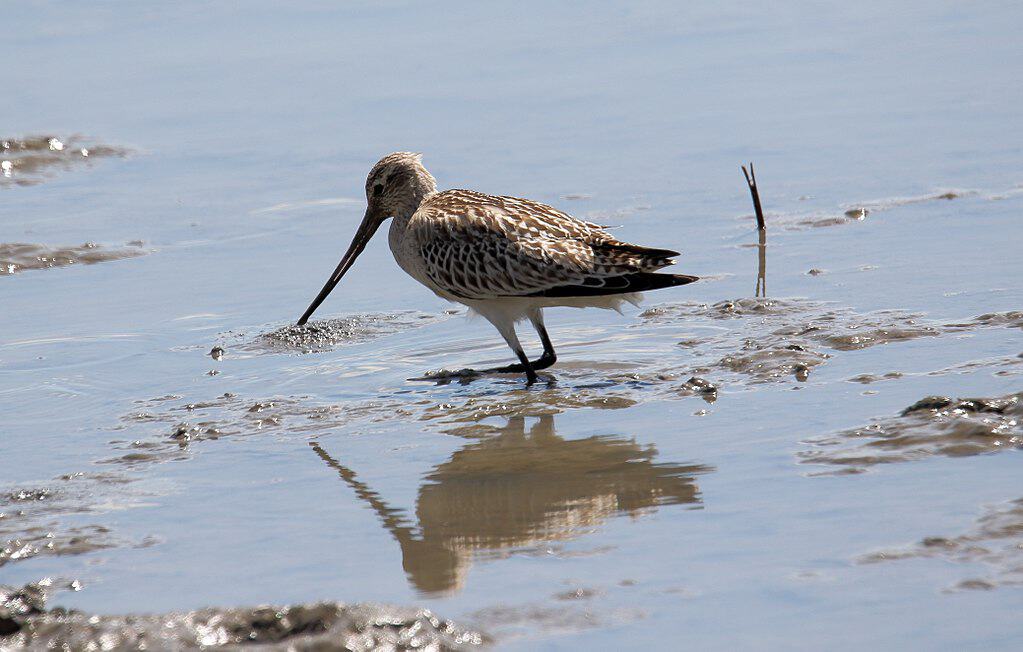
The Bar-tailed Godwit (Limosa lapponica) performs perhaps the most physically demanding migration of any animal. These unassuming shorebirds hold the record for the longest non-stop flight of any land bird. The baueri subspecies flies from Alaska to New Zealand—a journey of approximately 7,000 miles—without a single stop for food, water, or rest. This phenomenal eight-day flight crosses the entire Pacific Ocean without the safety net of islands to land on if exhausted. Before departing, godwits undergo remarkable physiological changes, doubling their body weight with stored fat and shrinking non-essential organs to reduce weight. During flight, they can sleep with one brain hemisphere at a time while maintaining their course. In 2020, a male godwit set a new record by flying 7,500 miles in 11 days without stopping, covering the equivalent of flying from New York to London and back again without a break. Their incredible endurance has made them important subjects for studying the extreme limits of animal physiology.
9. Sooty Shearwater The Endless Summer Seeker
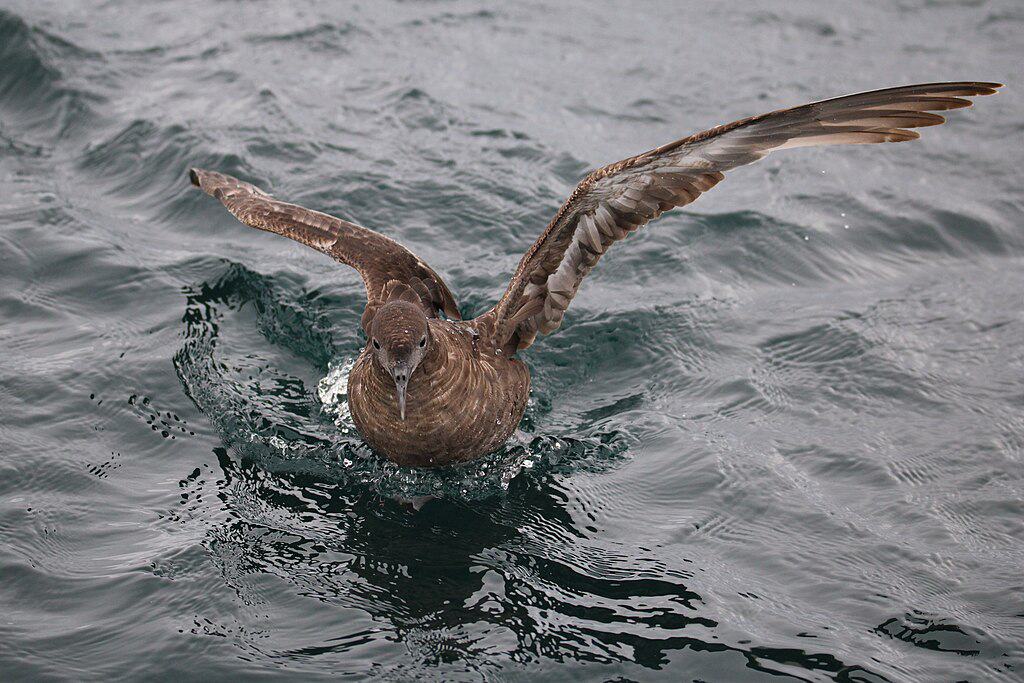
The Sooty Shearwater (Ardenna grisea) completes one of the longest migrations of any bird, traveling in a massive figure-eight pattern across the Pacific Ocean. These seabirds breed on islands near New Zealand, Chile, and the Falklands during the Southern Hemisphere’s summer, then fly north to feed in the rich waters of the North Pacific off Japan, Alaska, and California during the Northern Hemisphere’s summer. This strategic pattern allows them to experience an “endless summer” of long, food-rich days. Their annual journey spans approximately 40,000 miles—nearly matching the Arctic Tern. Researchers tracking these birds found they can travel up to 620 miles per day, spending almost all their lives over open ocean except when breeding. In the Northern Hemisphere, massive flocks of millions of Sooty Shearwaters were once so common they darkened the skies along the California coast. They’re remarkably adapted to marine life, able to dive to depths of 200 feet to catch fish and squid, and can drink seawater thanks to special salt glands that filter out excess salt.
8. Dragonflies Tiny Intercontinental Travelers

The Globe Skimmer or Wandering Glider dragonfly (Pantala flavescens) defies all expectations for an insect with its extraordinary multigenerational migration spanning multiple continents. Despite weighing less than a paperclip, these remarkable insects travel over 4,400 miles across the Indian Ocean from India to East Africa and back again—the longest migration of any insect relative to its size. Unlike monarchs, individual globe skimmers can cross oceans, riding high-altitude winds and gliding to conserve energy. Their journey follows monsoon rains, allowing them to reproduce in temporary water bodies before continuing onward. Genetic studies show populations across Asia, Africa, and even North America are remarkably similar, suggesting these tiny insects regularly mix across vast distances. Their four wings can operate independently, allowing incredibly precise flight control even in strong winds. What makes their migration even more impressive is their short lifespan—about six months—meaning many individuals complete only portions of the full migratory circuit before laying eggs and dying, with their offspring continuing the journey.
7. Great White Shark: The Ocean’s Mysterious Navigator

Great White Sharks (Carcharodon carcharias) undertake remarkably precise long-distance migrations that have only recently been revealed through satellite tracking. One famous female great white nicknamed “Nicole” completed a documented round trip of over 12,400 miles between South Africa and Australia—the longest known migration of any shark. Even more impressively, she returned to the exact same location in South Africa after her journey. This challenges the notion that these apex predators are merely coastal territorial hunters. What drives these massive transoceanic journeys remains something of a mystery, though breeding is the likely motivation. Great whites navigate with extraordinary precision using multiple senses, including the ability to detect Earth’s magnetic field through special electroreceptive organs called ampullae of Lorenzini. During these migrations, they often dive to depths exceeding 3,000 feet in what scientists call “deep dives,” potentially to use deep-ocean currents for efficient travel or to hunt specific deep-water prey. Their epic migrations often include an oceanic phase where they gather in a region between Hawaii and California nicknamed the “White Shark Café”—a seemingly empty stretch of ocean whose importance to sharks is still being studied.
6. Wildebeest The Thundering Savanna Migration

The Great Migration of wildebeest (Connochaetes taurinus) across the Serengeti-Mara ecosystem represents the largest terrestrial mammal migration on Earth. Approximately 1.5 million wildebeest, accompanied by hundreds of thousands of zebras and gazelles, travel in a continuous 1,800-mile clockwise circuit through Tanzania and Kenya, following seasonal rains and fresh grass. Unlike many migrations with distinct endpoints, the wildebeest journey is a perpetual cycle. What makes this migration particularly dramatic are the dangerous river crossings, especially at the Mara River, where crocodiles lie in wait and the steep banks claim many lives. The sheer scale of this movement is so vast it can be seen from space, with the wildebeest herds covering the savanna as far as the eye can see. This migration shapes the entire ecosystem—their grazing prevents woodland encroachment on grasslands, their hooves aerate the soil, and their droppings fertilize vast areas. Approximately 400,000 wildebeest calves are born within a remarkably synchronized three-week period each year, flooding the ecosystem with new life just before the migration begins again—a strategy that overwhelms predators with too many targets at once.
5. Christmas Island Red Crabs The Island-Transforming March

The annual migration of Christmas Island Red Crabs (Gecarcoidea natalis) is among the most visually spectacular wildlife events on Earth. Each year during the wet season (October-November), an estimated 40-50 million bright red crabs emerge from the forests of Christmas Island, Australia, and march en masse to the ocean to breed. This crimson wave transforms the 52-square-mile island, with crabs blanketing roads, flowing through gardens, and cascading down cliffs in their unwavering journey to the sea. The migration is precisely timed to the lunar cycle and rainfall patterns, with all adult crabs moving simultaneously. Male crabs arrive at the shore first, dig burrows, and are joined by females who release up to 100,000 eggs each into the ocean during a precise nocturnal spawning event aligned with the high tide of the last quarter moon. The eggs develop in the ocean for about a month before returning to shore as tiny baby crabs, less than a quarter-inch wide. The entire island has adapted to this migration—the government builds special crab bridges over roads, closes highways during peak movement, and employs full-time “crab sweepers” to clear paths. Sadly, introduced yellow crazy ants have killed an estimated 10-15 million crabs in recent decades, threatening this extraordinary natural phenomenon.
4. Salmon The Ultimate Homecoming Journey

Pacific salmon (Oncorhynchus species) undertake one of the most physiologically demanding migrations in nature—a one-way journey that culminates in both reproduction and death. Born in freshwater streams, young salmon migrate to the ocean where they spend 1-7 years (depending on the species) growing and maturing in salt water. They then make the extraordinary return to the exact stream of their birth, often traveling thousands of miles against strong currents, leaping up waterfalls, and navigating complex river systems with astonishing precision. This homecoming depends on their remarkable ability to detect the unique chemical signature of their natal stream—they can distinguish their home waters from among thousands of options with accuracy measured in parts per billion. As they transition from salt to fresh water, salmon undergo dramatic physiological transformations, with their bodies deteriorating as they redirect all energy to reproduction. Some species, like Sockeye, even change from silver to bright red during this final journey. The Yukon River Chinook salmon make one of the longest salmon migrations, traveling over 2,000 miles upstream. Their epic journey and subsequent death delivers marine nutrients to inland ecosystems, fertilizing forests and feeding everything from bears to eagles to tiny insects in a crucial ecological connection between ocean and land.
3. Leatherback Sea Turtle The Ancient Ocean Wanderer

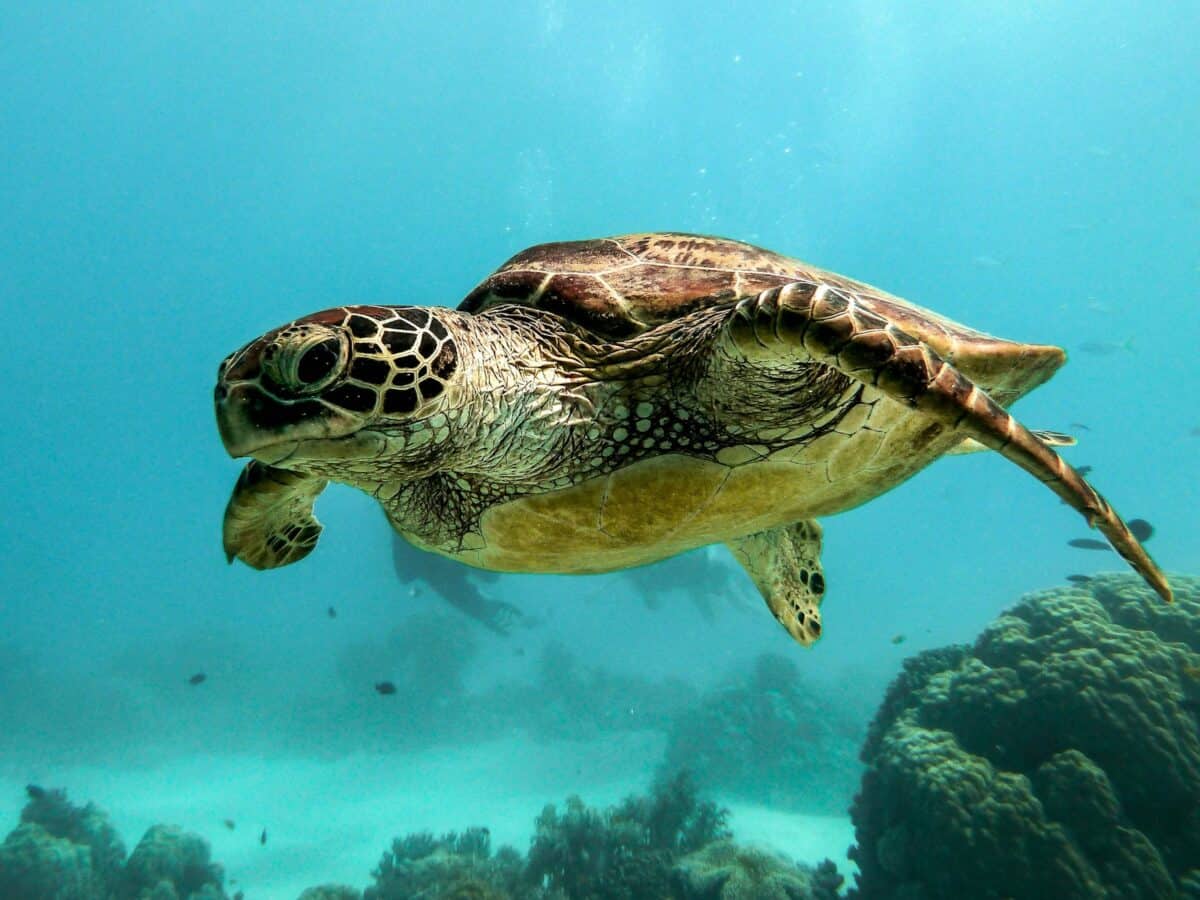
The Leatherback Sea Turtle (Dermochelys coriacea), Earth’s largest turtle weighing up to 2,000 pounds, undertakes one of the most extensive reptile migrations known. These ancient mariners regularly cross entire ocean basins, with individuals documented traveling over 10,000 miles annually between feeding and nesting grounds. One tracked leatherback swam from Indonesia to Oregon—a journey spanning nearly half the Pacific Ocean. Unlike other sea turtles with hard shells, leatherbacks have a flexible, leather-like carapace that can withstand extreme deep-sea pressure, allowing them to dive deeper than 4,000 feet—deeper than any other turtle and most marine mammals. Their remarkable physiology includes specialized blood vessels that act as countercurrent heat exchangers, allowing them to maintain body temperatures up to 18°F warmer than surrounding water, enabling these reptiles to venture into near-freezing polar seas where no other reptile can survive. Their primary food source is jellyfish, and individuals can consume their body weight daily in these gelatinous creatures. Like salmon, female leatherbacks return to their natal beaches to lay eggs, sometimes crossing entire oceans to reach specific stretches of coastline they themselves hatched on decades earlier, guided by the Earth’s magnetic field and possibly other environmental cues still not fully understood by scientists.
2. Ruby-throated Hummingbird The Tiny Powerhouse

The Ruby-throated Hummingbird (Archilochus colubris) executes one of the most physically impressive migrations relative to body size. Weighing just 3-4 grams—less than a penny—these tiny birds fly non-stop across the Gulf of Mexico twice each year, covering approximately 500 miles over water without any opportunity to rest or refuel. Before this journey, ruby-throats double their body weight, from 3 to 6 grams, storing just enough fat to fuel their incredible crossing. During migration, their heart rate can exceed 1,200 beats per minute, and they maintain a wing-beat frequency of 53 times per second. Despite their diminutive size, they travel over 2,000 miles between breeding grounds in eastern North America and wintering areas in Central America. Most astonishingly, unlike geese or other birds that fly in energy-efficient formations, each hummingbird makes this journey alone, including birds hatched just weeks before their first migration who have never made the trip before. Their ability to precisely relocate the same yards and gardens year after year demonstrates remarkable spatial memory in a brain the size of a pea. These aerial marathoners can live up to 9 years, potentially completing this grueling journey up to 18 times during their lifetime.
1. Desert Locusts The Biblical Swarm
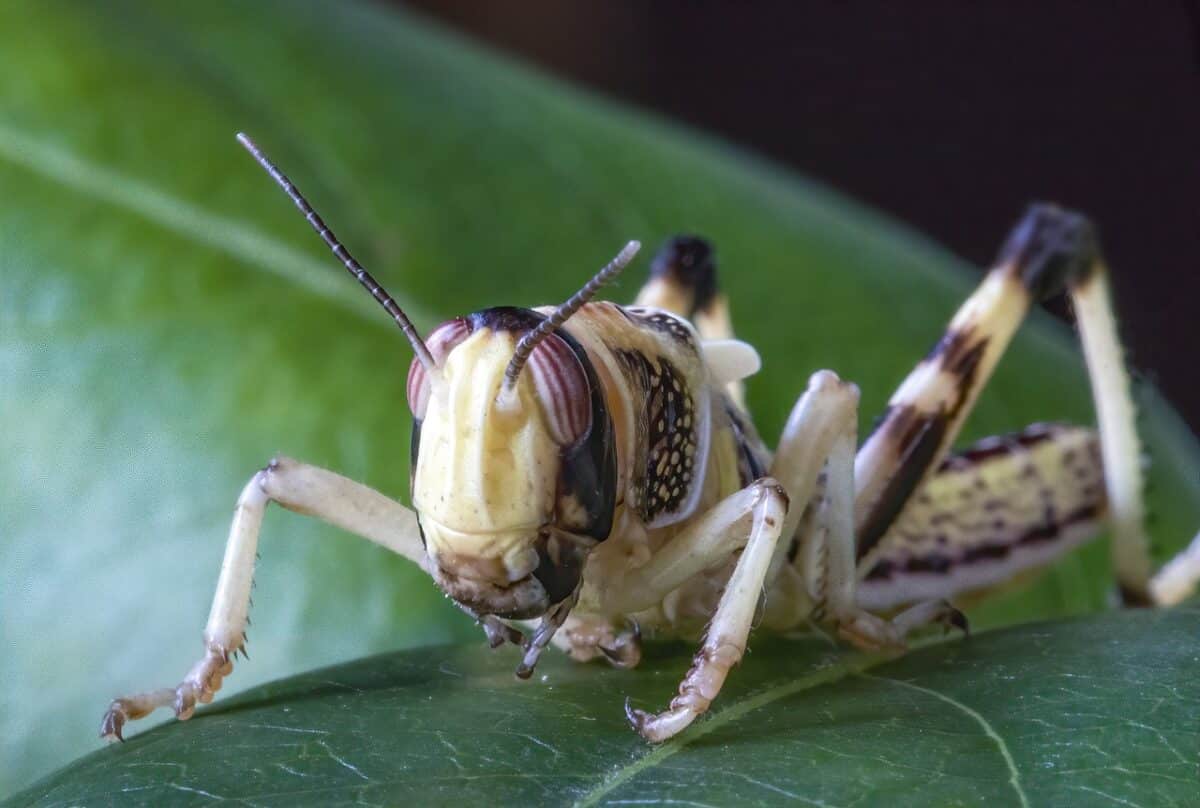
Desert Locusts (Schistocerca gregaria) undergo one of the most dramatic and destructive migrations on Earth. Unlike most creatures on this list that follow predictable annual routes, locust migrations are irregular, explosive events triggered by specific environmental conditions. When heavy rains follow drought in their arid homeland, these normally solitary grasshoppers undergo a remarkable transformation—their bodies change color from brown to yellow, their brains release different neurochemicals, and they begin to swarm. These swarms can contain up to 80 million locusts per square kilometer and cover distances of 80-100 miles per day, traveling up to 3,000 miles in their lifetime. A single swarm can span 460 square miles—larger than New York City—and consume 423 million pounds of vegetation daily, equivalent to the food needed for 35,000 people for a year. Their migration paths span more than 20% of Earth’s land surface across Africa, the Middle East, and Asia. What makes their migration uniquely extreme is not just distance but the ecological impact—these insects can increase their population 20-fold in just three months, creating swarms that darken skies and strip entire regions of vegetation. The 2019-2022 locust plague across East Africa and the Middle East was the worst outbreak in decades, affecting 23 countries and threatening the food security of millions.
Conclusion:
From the icy poles to sweltering deserts, across vast oceans and over treacherous mountains, the migrations of these 13 creatures reveal a world in constant motion. Each journey, whether made by a colossal whale or a paperclip-sized dragonfly, is a testament to the incredible adaptability, resilience, and navigational genius built into life on Earth. These epic treks are not only physical feats—they are ancient rituals encoded in DNA, essential to the survival of entire species and ecosystems. Migration connects continents, cycles nutrients, synchronizes births and blooms, and fuels some of the most spectacular natural events on the planet. In a world increasingly altered by climate change, habitat fragmentation, and human interference, understanding and protecting these extreme migrations has never been more important. These extraordinary travelers remind us that movement is not just part of life—it is life, written across the skies, seas, and soil in the language of endurance.

As a little kid, I fell in love with nature, wildlife, and animals. Living in the USA, South Africa, Italy, China and Germany gave me the opportunity to discover the world's Wildlife. My favorite animals are Mountain Gorillas, Siberian Tigers, and Great White Sharks.
I'm a certified PADI Open Water Diver, went to Everest Base Camp and Trekked Gorillas in Uganda. I hold a Master of Science in Economics and Finance.
Please send any feedback to feedback@animalsaroundtheglobe.com
- 10 Most Unique Reptiles You will See in the US - July 21, 2026
- 3 Dangerous Invasive Species the USA Must Eradicate - July 21, 2026
- 10 Things That Calm Cats And 4 That Make Them Nervous - July 21, 2026