

Deep in forests, gardens, and even urban landscapes, spiders silently create architectural marvels that have fascinated scientists for centuries. Spider silk, particularly that of the Darwin’s bark spider and certain orb-weavers, possesses strength-to-weight ratios that surpass steel and approach the theoretical limits of what’s physically possible for a biological material. This extraordinary natural material has become a focal point for biomimetic research, with implications ranging from medical sutures to bulletproof vests. In this article, we’ll explore the remarkable properties of spider silk, understand its molecular structure, and discover how this humble arachnid creation outperforms one of humanity’s most relied-upon construction materials.
The Remarkable Strength of Spider Silk
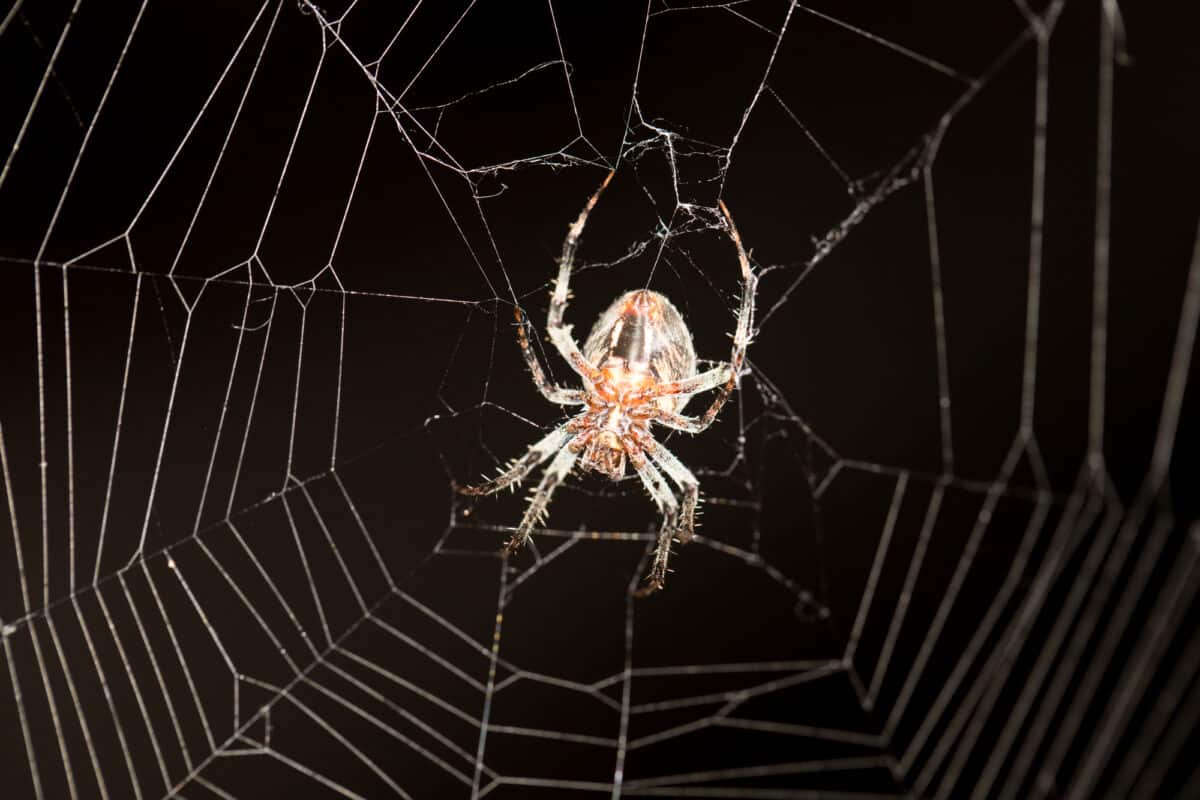
Spider silk represents one of nature’s most impressive engineering feats. Gram for gram, the dragline silk of certain spider species is approximately five times stronger than steel. The Darwin’s bark spider (Caerostris darwini), discovered in Madagascar in 2009, produces the toughest biological material ever studied—with a tensile strength up to 520 MJ/m³, far exceeding that of steel at approximately 6 MJ/m³.
This extraordinary strength allows these spiders to build webs spanning up to 25 meters across rivers and lakes, capturing prey as large as small birds and bats. Unlike steel, which is brittle and tends to snap under sufficient force, spider silk can stretch up to 40% of its length before breaking, providing a remarkable combination of strength and elasticity unmatched in the industrial world.
The Molecular Architecture Behind the Strength

The secret to spider silk’s incredible properties lies in its complex molecular structure. Spider silk is primarily composed of proteins called spidroins, which contain both crystalline and amorphous regions arranged in a precise nanostructure. The crystalline regions, made up of beta-sheets where protein chains align in parallel and form hydrogen bonds, provide the tensile strength. Meanwhile, the amorphous regions, where protein chains are arranged randomly, give the silk its elasticity.
This combination creates a natural composite material with an optimal balance of strength and flexibility. Additionally, spider silk proteins contain high proportions of the amino acids glycine and alanine, which allow for tight molecular packing in the crystalline regions while maintaining the necessary flexibility. This sophisticated molecular architecture is what allows spider silk to absorb enormous amounts of energy without breaking.
The Darwin’s Bark Spider: Nature’s Engineering Champion
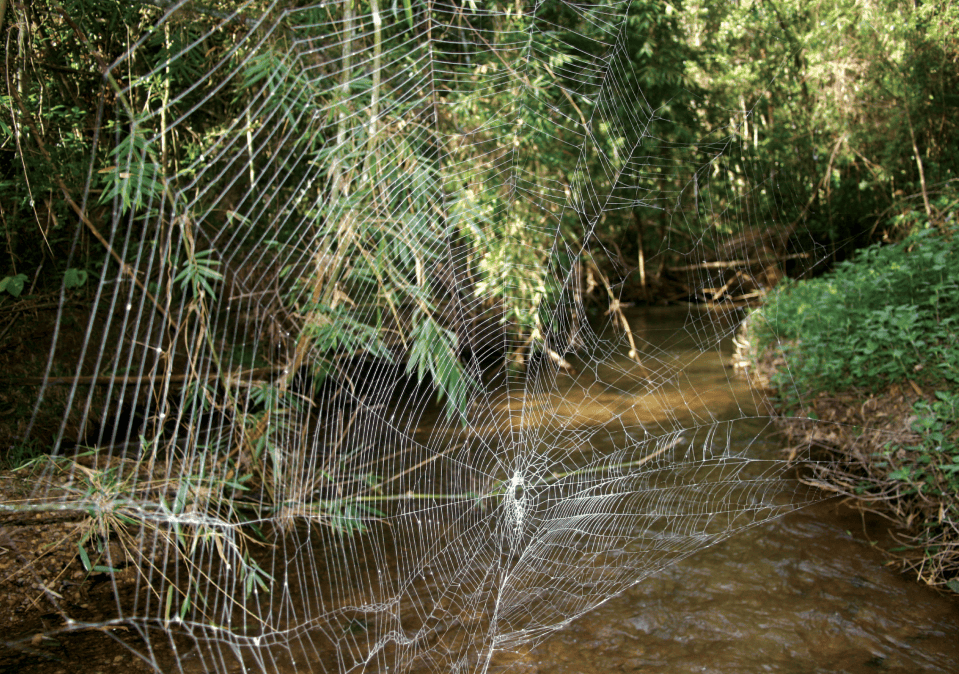
The Darwin’s bark spider deserves special attention in any discussion of spider silk strength. Named after Charles Darwin and discovered in Madagascar, this species produces the toughest known biological material. Its silk is more than twice as strong as any previously known spider silk and over ten times stronger than Kevlar. These spiders construct their webs across flowing water bodies, with bridge lines that can span 25 meters.
The extraordinary properties of their silk allow these massive structures to withstand not only the weight of captured prey but also environmental stresses like wind and rain. Scientists believe that the extreme conditions of the spider’s habitat have driven the evolution of this exceptionally strong silk through natural selection, demonstrating nature’s remarkable ability to develop specialized solutions to environmental challenges.
Spider Silk Production: A Biological Marvel

The production of spider silk involves a fascinating biological process that scientists are still working to fully understand. Unlike silkworms, which produce only one type of silk, spiders can produce up to seven different types from specialized glands, each with unique properties suited to specific functions. The dragline silk—the strongest variety used for the web frame and the spider’s lifeline—comes from the major ampullate gland.
As liquid protein solution passes through the spider’s spinning duct, physical and chemical changes occur, including acidification and ion exchange, which trigger the transformation from liquid to solid fiber. Perhaps most remarkably, this transformation happens at ambient temperature and pressure using water as a solvent, unlike industrial processes for synthetic fibers that require harsh chemicals and high energy inputs. This environmentally friendly production process has become a holy grail for materials scientists seeking to develop sustainable manufacturing methods.
Comparing Spider Silk to Steel: Beyond Strength

While the headline-grabbing aspect of spider silk is its superior strength-to-weight ratio compared to steel, the comparison goes much deeper. Steel, while incredibly strong in compression, is relatively heavy with a density of approximately 7.8 g/cm³. Spider silk, in contrast, has a density of about 1.3 g/cm³, making it roughly six times lighter. Furthermore, steel is susceptible to corrosion and fatigue over time, whereas spider silk maintains its properties in various environmental conditions.
Spider silk also demonstrates superior performance in temperature extremes, remaining flexible even at very low temperatures where steel becomes brittle. Perhaps most significantly, spider silk exhibits exceptional toughness—the ability to absorb energy before breaking—which can be up to three times greater than that of synthetic high-performance fibers like Kevlar. These combined properties make spider silk not just stronger than steel in certain respects, but a fundamentally different and in many ways superior structural material.
The Elasticity Factor: Why It Matters

The extraordinary elasticity of spider silk contributes significantly to its overall performance and sets it apart from steel and other industrial materials. Spider dragline silk can stretch up to 40% of its original length before breaking, compared to high-tensile steel which typically stretches only about 1-2%. This elasticity allows spider webs to absorb the kinetic energy of flying insects without breaking. When an insect hits a web, the silk stretches and then recovers, converting the insect’s momentum into vibrational energy that travels through the web, alerting the spider to its prey.
This remarkable combination of strength and elasticity gives spider silk its exceptional toughness—measured as the amount of energy absorbed per unit volume before breaking. Spider silk’s toughness can exceed 180 MJ/m³, compared to Kevlar at approximately 50 MJ/m³ and steel at around 6 MJ/m³. This property makes spider silk particularly valuable for applications requiring both strength and impact resistance, from parachute cords to artificial tendons.
Evolutionary Perfection Through Natural Selection

The extraordinary properties of spider silk represent the culmination of over 400 million years of evolutionary refinement. Spiders have been producing silk since the Devonian period, with the selective pressures of survival driving continuous improvements in silk performance. The ability to produce stronger, more elastic silk provided significant evolutionary advantages: more efficient prey capture, better protection from predators, and improved reproductive success through secure egg sacs.
Different spider species have evolved specialized silk types optimized for their particular ecological niches. For instance, spiders in windier environments tend to produce silks with greater elasticity to withstand gusts, while those targeting larger prey develop stronger dragline silks. This process of natural selection has pushed spider silk properties close to the theoretical limits of what’s physically possible with protein-based materials, creating a biological material that human engineering is still struggling to replicate despite our advanced technologies.
Biomimetic Applications: Learning from Nature’s Design

The exceptional properties of spider silk have inspired numerous biomimetic applications across various industries. In medicine, researchers are developing spider silk-based sutures that cause less scarring and artificial tendons and ligaments that better mimic the mechanical properties of natural tissues. The military and defense sectors are investing in spider silk research for next-generation body armor that could be lighter and more flexible than current Kevlar vests while providing superior protection.
In the textile industry, companies are working on spider silk-inspired fabrics that combine strength, elasticity, and lightweight properties for high-performance athletic wear. Architectural applications include earthquake-resistant building materials that can absorb and dissipate energy rather than cracking. Even the automotive and aerospace industries are exploring spider silk-inspired composites to reduce vehicle weight while maintaining or improving safety standards. These diverse applications demonstrate how understanding and mimicking nature’s designs can lead to transformative technologies across human endeavors.
The Challenge of Synthetic Production

Despite decades of research, creating synthetic spider silk that matches all the properties of the natural material remains one of the greatest challenges in biomaterials science. Unlike silkworms, which can be farmed for their silk, spiders are territorial and cannibalistic, making conventional farming impractical. Scientists have pursued various approaches to overcome this limitation. Genetic engineering has been used to introduce spider silk genes into other organisms including bacteria, yeast, plants, and even goats, which can then produce the silk proteins in milk. However, producing the proteins is only part of the challenge—the spinning process is equally crucial.
Natural spider spinning involves precise control of protein concentration, pH changes, ion exchanges, and mechanical stretching as the liquid silk passes through the spider’s spinnerets. Replicating this complex process has proven exceptionally difficult, though companies like Bolt Threads, Spiber, and AMSilk have made significant progress in recent years, bringing the first synthetic spider silk products to market, albeit with properties that still don’t fully match natural spider silk.
Spider Silk in Ancient and Modern Medicine

Spider silk has a fascinating history in medicine dating back thousands of years. Ancient Greeks and Romans used spider webs as wound dressings, a practice also documented in traditional medicine across multiple continents. Modern science has validated this historical use, as spider silk contains vitamin K, which can help in blood clotting, and has natural antibacterial properties. Today, the medical applications of spider silk extend far beyond wound dressings. Its biocompatibility makes it ideal for sutures, especially in delicate surgeries like those involving the eyes or nerves.
Researchers are developing spider silk scaffolds for tissue engineering, where cells can grow on silk structures to regenerate damaged organs or tissues. Spider silk’s combination of strength and elasticity makes it particularly promising for artificial tendons and ligaments. Additionally, its ability to be absorbed by the body without causing inflammation or immune response opens possibilities for drug delivery systems that can release medications gradually and then safely dissolve. These medical applications represent one of the most promising frontiers for spider silk technology.
The Environmental Advantage of Spider Silk

Beyond its mechanical properties, spider silk offers significant environmental advantages over conventional industrial materials. Steel production is energy-intensive and generates substantial carbon emissions—approximately 1.85 tons of CO2 for every ton of steel produced. Additionally, steel manufacturing requires mining iron ore and coal, which causes habitat destruction and water pollution. In contrast, spiders produce silk at ambient temperature and pressure using water as a solvent and proteins made from naturally available amino acids.
The production process requires minimal energy and produces no toxic byproducts. Even synthetic spider silk production methods being developed aim to maintain these environmental benefits through fermentation-based processes rather than petroleum-derived polymers. Furthermore, spider silk is biodegradable, unlike many synthetic fibers that persist in the environment for centuries. As industries worldwide seek more sustainable materials to reduce environmental impact, spider silk represents an inspiring model for developing the next generation of high-performance, environmentally friendly materials.
Beyond Spider Silk: Other Remarkable Arachnid Adaptations

While spider silk rightfully captures much scientific attention, it represents just one of many remarkable adaptations found in arachnids. The adhesive properties of spider feet, which allow them to walk on ceilings and vertical surfaces, have inspired new types of adhesives that work without glue. The hydraulic system that spiders use to extend their legs—essentially a biological pressure system—has influenced designs for soft robotics.
Some spider species produce silks with optical properties that reflect particular wavelengths of light, inspiring new photonic materials. The venom of certain spiders contains compounds being studied for treatments of conditions ranging from pain to cardiac arrhythmia and even as environmentally friendly pesticides. The exceptional color vision of jumping spiders, achieved with a tiny brain and minimal neural processing, is informing machine vision research. These diverse adaptations demonstrate how spiders, despite their small size and often negative public perception, represent an extraordinary reservoir of biological innovations that can inspire human technology across multiple fields.
Conclusion: Nature’s Lessons for Material Science

Spider silk’s remarkable properties—stronger than steel, tougher than Kevlar, more elastic than nylon, and produced sustainably at ambient conditions—exemplify nature’s unparalleled ability to develop high-performance materials through evolutionary processes. As we continue to face challenges in developing sustainable, high-performance materials for the future, spider silk offers both inspiration and a roadmap. The multifunctional nature of spider silk, combining seemingly contradictory properties like strength and elasticity, reminds us that the traditional engineering approach of optimizing for a single property often falls short of what’s possible.
Perhaps most importantly, spider silk demonstrates that extraordinary performance need not come at an environmental cost, with production methods that are inherently sustainable and materials that naturally return to the ecosystem at the end of their life cycle. As we advance in materials science and engineering, the humble spider continues to spin a compelling case for looking to nature not just for inspiration, but for fundamental principles that can transform how we design, produce, and use materials in a resource-constrained world.

From exploring the marine wonders in the Azores and witnessing the vast savannas of Kenya, to delving deep into the rich biodiversity of South Africa and traversing iconic landscapes in Australia and the US like Yellowstone, Chris's experiences are vast.
With a penchant for diving alongside sharks, the ocean holds a special place in his heart.
Through his academic insights, he champions wildlife conservation, striving with 'Animals Around The Globe' to cultivate a profound connection between humans and animals, enhancing our mutual appreciation.
Connect with him at Feedback@animalsaroundtheglobe.com.
- A Bear Journey Through The USA: 18 Best Bear Photos from 18 US States - July 19, 2026
- Elephant Matriarchs Know Every Waterhole for Miles - July 19, 2026
- Top 10 Dinosaur Relatives Still Roaming Earth Today - July 19, 2026