


Hummingbirds are nature’s aerial acrobats, capable of flying backward, upside down, and even hovering in mid-air with wings beating up to 80 times per second. But beyond their impressive flight capabilities lies another remarkable skill: their exceptional memory. These tiny birds, weighing less than a penny, possess an extraordinary ability to remember every flower they visit—tracking which ones contain nectar, when they last visited them, and when those flowers will replenish their sweet rewards. This cognitive prowess is not just fascinating but crucial for their survival in a world where energy management is everything. Let’s explore the remarkable memory systems of these avian marvels and how they navigate their complex floral landscapes with precision that would impress even the most sophisticated computers.
The Remarkable Memory Capacity of Hummingbirds
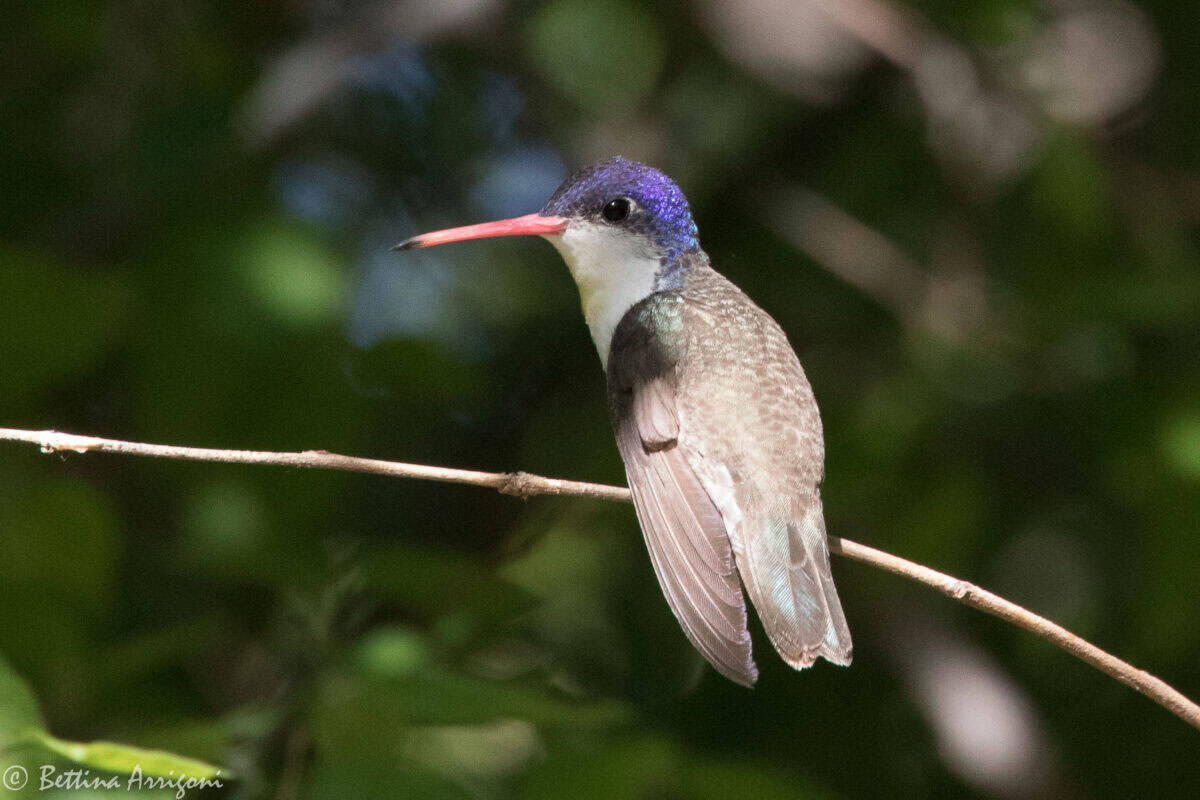
Hummingbirds possess one of the most impressive memory systems in the animal kingdom relative to their size. Research has shown that these tiny birds can remember not only which flowers they’ve visited but also the exact location of thousands of flowers within their territory. Scientists at the University of St. Andrews discovered that hummingbirds can recall the location of a flower they visited as long as 8-12 months after their initial visit—despite seasonal changes completely transforming the landscape.
This spatial memory allows them to create detailed mental maps of their feeding territories, sometimes spanning several miles, all stored within a brain that weighs less than 0.2 grams. This cognitive feat would be equivalent to humans remembering the location of every restaurant they’ve ever visited across an entire city, including when they last ate there and how good the food was.
The Science Behind Temporal Memory in Hummingbirds

Beyond spatial memory, hummingbirds possess remarkable temporal memory—they know not just where flowers are but when to visit them. Research published in Current Biology demonstrated that wild rufous hummingbirds could time their visits to specific flowers based on the flowers’ nectar replenishment schedules. In experiments, when researchers created artificial flowers with different refill times (ranging from 10 to 40 minutes), the hummingbirds quickly learned the optimal time to revisit each flower.
This temporal precision is crucial because hummingbirds must consume more than their body weight in nectar daily to survive. Visiting an already-depleted flower would waste precious energy, while waiting too long after replenishment risks another competitor discovering the resource. This timing ability suggests they possess a sophisticated internal clock that they can associate with specific spatial locations—a combination of “what,” “where,” and “when” memory that was once thought unique to humans and other primates.
Hippocampal Development: The Brain Behind the Memory

The secret to the hummingbird’s remarkable memory lies in its hippocampus—the brain region responsible for spatial memory and navigation. Despite their tiny overall brain size, hummingbirds have a disproportionately large hippocampus compared to other birds. Neurobiological studies have revealed that the hummingbird hippocampus contains a high density of neurons and shows significant neuroplasticity, allowing for continuous memory formation and adaptation.
What’s particularly fascinating is that their hippocampus appears to be specialized for remembering nectar sources in three-dimensional space. This specialization makes evolutionary sense: unlike many other birds that focus on ground-level food sources, hummingbirds navigate in all dimensions as they flit from flower to flower at varying heights. Their hippocampus has evolved to process and store this complex 3D spatial information with remarkable efficiency, enabling them to remember thousands of locations within their territory.
Energy Economics: Why Memory Matters

For hummingbirds, memory isn’t just an impressive cognitive feat—it’s a matter of survival. These birds operate on an extremely tight energy budget, with some species consuming more than twice their body weight in nectar daily. Their high-speed metabolism requires them to visit hundreds to thousands of flowers each day to meet their energy needs. A ruby-throated hummingbird typically consumes nectar from approximately 1,000-2,000 flowers daily, and wasting energy visiting empty flowers could be catastrophic.
Studies have calculated that efficient foraging through memory can reduce a hummingbird’s energy expenditure by up to 35% compared to random searching. This efficiency becomes even more critical during migration, when some species like the Ruby-throated Hummingbird fly non-stop across the Gulf of Mexico—a 500-mile journey requiring precise fat reserves accumulated through efficient feeding. Their memory systems have evolved under extreme selection pressure, where even small improvements in foraging efficiency could mean the difference between survival and starvation.
Experimental Evidence: How Scientists Test Hummingbird Memory

Documenting and measuring hummingbird memory requires ingenious experimental designs. One groundbreaking study conducted by researchers at the University of California involved creating artificial flower arrays with controlled nectar rewards. Scientists placed different colored feeders across a meadow, filling only certain colors with sugar water. Within hours, the hummingbirds learned which colors contained rewards and focused their visits accordingly. When researchers secretly changed which colors contained nectar, the birds continued visiting the previously rewarding colors for several trials before adapting their behavior—demonstrating both memory retention and flexibility.
In another innovative experiment, researchers at the University of Edinburgh used computer-controlled artificial flowers that refilled at different rates. They discovered hummingbirds could track the refill schedules of eight different flowers simultaneously, adjusting their visitation patterns to maximize energy intake. These experiments have consistently shown that hummingbirds not only remember locations but can associate specific qualities (color, shape, refill time) with each location in their mental maps.
Beyond Location: Remembering Flower Qualities

Hummingbirds don’t just remember where flowers are—they remember detailed information about each flower’s characteristics. Studies show they can recall the color, shape, and even scent of flowers that provided good nectar rewards in the past. More impressively, they can associate these characteristics with nectar quality and quantity. In controlled experiments, hummingbirds consistently avoided artificial flowers that previously contained less concentrated sugar solutions, even when the less rewarding flowers were more visually prominent.
They can also remember which flower species are currently in bloom in different microhabitats within their territory, allowing them to focus their foraging efforts on productive areas. This quality-based memory helps them adapt to seasonal changes in their environment. For example, when early-season flowers begin to fade, hummingbirds quickly shift their attention to newly blooming species, demonstrating their ability to update their mental catalog of available food sources continuously.
The Role of Trap-lining in Memory Formation
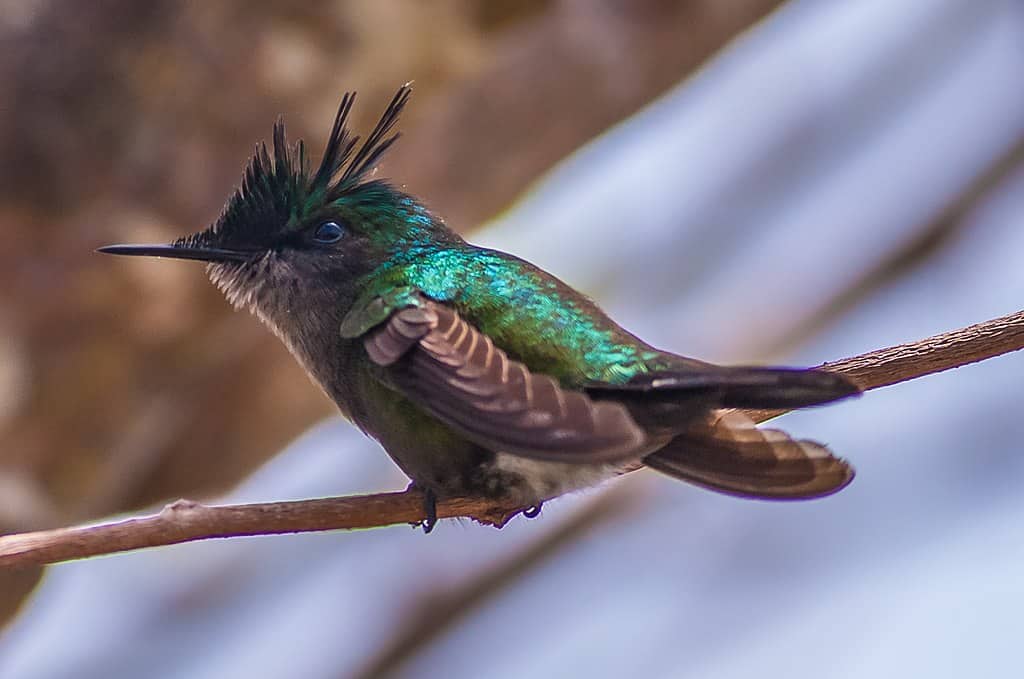
Many hummingbird species engage in a behavior called “trap-lining”—following a memorized route that connects productive feeding locations in a sequence. Rather than randomly searching their territory, they establish these efficient routes that minimize travel distance between nectar sources. Research using RFID tags to track individual birds has shown that these routes aren’t random but carefully optimized over time.
A study of Long-billed Hermit hummingbirds in Costa Rica revealed that individuals would visit the same sequence of flowers at remarkably consistent times each day, with some routes remaining stable for weeks. What’s fascinating about trap-lining is that it requires integrating multiple memory systems: spatial memory to locate each flower, temporal memory to know when each will be ready for revisiting, and sequential memory to maintain the optimal route. This sophisticated routing behavior demonstrates that hummingbirds don’t just remember individual flowers but organize this information into efficient systems—a cognitive ability once thought limited to larger-brained animals.
Memory Competition Between Hummingbirds

Hummingbirds are notoriously territorial, and their memory plays a crucial role in territorial defense. Research has shown that resident hummingbirds remember which flowers are within their territory and will aggressively defend these resources from intruders. Interestingly, this territorial memory appears to involve recognition of other individual hummingbirds. Studies using controlled intrusions with stuffed hummingbird models have demonstrated that territory holders respond more aggressively to repeated “intruders” they recognize from previous encounters.
This suggests they not only remember flower locations but also remember other individuals who might compete for those resources. In areas with high hummingbird density, this memory-based territorial system creates a complex social landscape where birds must balance the energy costs of defense against the benefits of exclusive access to nectar sources. Some researchers have suggested that cognitive abilities like memory could provide competitive advantages in these confrontations, as birds with better memory can more efficiently monitor and defend productive feeding areas.
Comparing Hummingbird Memory to Other Species

When we compare hummingbird memory to other animals, the results are surprising. Despite having a brain roughly the size of a grain of rice, hummingbirds demonstrate memory capabilities comparable to many mammals with much larger brains. In spatial memory tests, they outperform many rodent species and show memory duration similar to some primates. While elephants are famous for their memory, and corvids (crows and ravens) are renowned for their cognitive abilities, hummingbirds stand out for the remarkable efficiency of their memory systems relative to brain size.
This efficiency likely comes from extreme specialization—their memory systems have evolved specifically for the tasks critical to their survival: tracking floral resources in time and space. Unlike generalist species that need to remember diverse types of information, hummingbirds have dedicated most of their neural resources to this specialized memory system. This comparison raises fascinating questions about how cognitive abilities evolve under different selection pressures and demonstrates that impressive memory doesn’t necessarily require a large brain—just one that’s highly specialized for specific tasks.
Memory Development in Young Hummingbirds
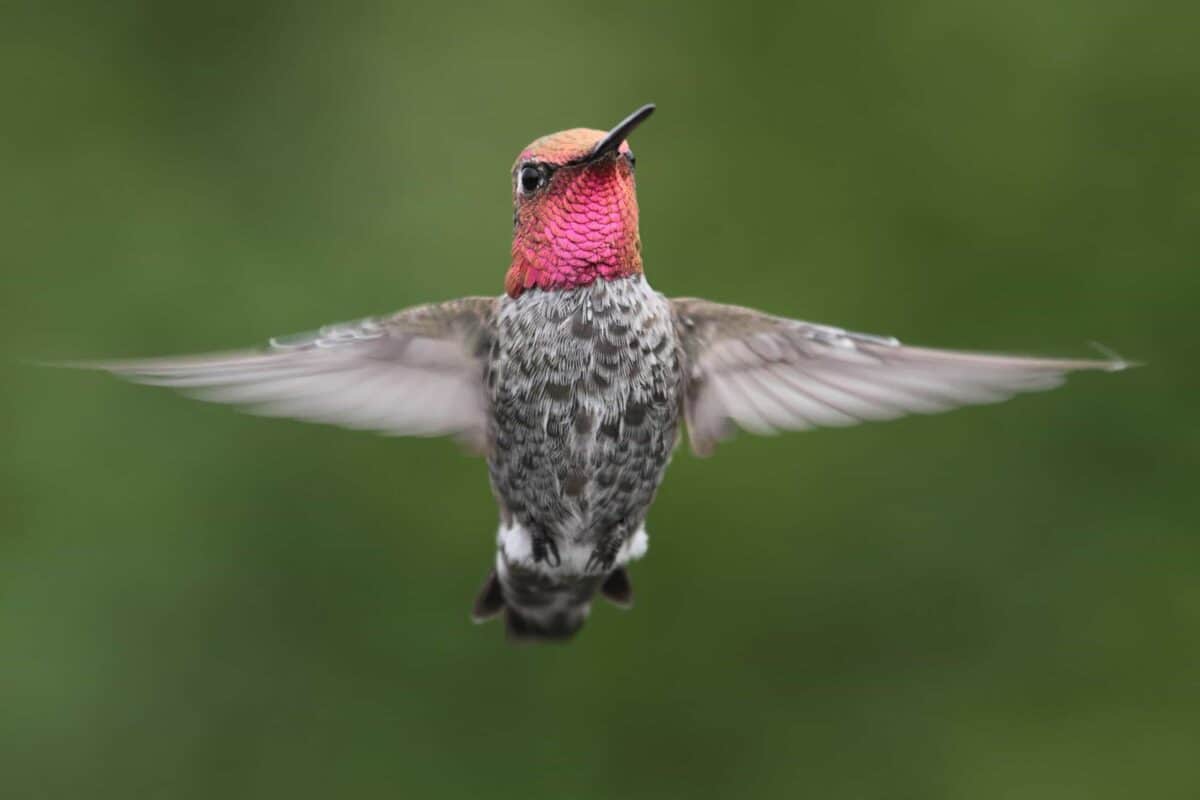
Young hummingbirds face a steep learning curve when they leave the nest. Unlike some birds that learn foraging techniques from parents over extended periods, hummingbird chicks receive little parental guidance after fledging. Research tracking newly independent hummingbirds shows they initially forage inefficiently, visiting many non-rewarding flowers and spending excess energy on exploration. However, their memory systems develop rapidly during this critical period. Within just 2-3 weeks after leaving the nest, juvenile hummingbirds begin showing adult-like memory patterns, establishing traplines and demonstrating recognition of productive versus unproductive flowers.
This rapid development suggests that while the neural architecture for their remarkable memory is innate, the content of that memory—which flowers provide nectar, when they replenish, and where they’re located—must be learned through experience. Studies examining the hippocampal development of young hummingbirds show significant neural growth during this early independent period, with new neurons and connections forming as they build their mental maps of available resources.
Memory Adaptations Across Hummingbird Species

The world’s 360+ hummingbird species have evolved different memory specializations based on their ecological niches. Species that specialize in defending small, dense territories (like many of the North American species) show exceptional memory for individual flowers within a confined area. In contrast, tropical “trap-lining” species that travel long routes between scattered but highly rewarding flowers demonstrate superior long-distance spatial memory and route-optimization abilities.
High-altitude hummingbird species, which face greater energetic challenges due to the colder environment, show particularly precise temporal memory for flower refill times—minimizing any wasted energy on visits to empty flowers. Some of the most fascinating adaptations appear in migratory hummingbird species, which must remember not only feeding locations within their breeding and wintering grounds but also critical refueling stops along migration routes. Researchers have documented that some migratory hummingbirds return to the exact same gardens and feeders year after year, suggesting they maintain these spatial memories over their annual migrations spanning thousands of miles.
Implications for Understanding Animal Cognition

The extraordinary memory capabilities of hummingbirds are forcing scientists to reconsider long-held assumptions about brain size and cognitive ability. Traditionally, larger brains were thought necessary for complex cognitive functions like integrated spatial and temporal memory. Hummingbirds prove this isn’t always the case. Their highly specialized neural systems demonstrate that remarkable cognitive abilities can evolve in tiny brains when under strong selection pressure. This has implications for how we understand the evolution of intelligence across the animal kingdom.
Rather than thinking of intelligence as a single scale with humans at the top, hummingbirds suggest we should consider cognition as a diverse set of specialized adaptations to specific ecological challenges. The study of hummingbird memory also highlights the importance of considering an animal’s ecological context when assessing its cognitive abilities. What might seem like simple tasks to humans—remembering locations or timing events—can be incredibly complex when they involve thousands of changing flowers across miles of territory. By appreciating these contextual challenges, scientists gain a more nuanced understanding of how different forms of intelligence evolve in response to specific survival challenges.
Conclusion: The Remarkable Memory Masters of the Avian World

Hummingbirds represent one of nature’s most fascinating examples of specialized cognitive evolution. Despite their tiny size, these remarkable birds possess memory systems that allow them to track thousands of flowers across their territory, remembering not just where each flower is located, but when they last visited it and when it will replenish its nectar. This integration of spatial and temporal memory, all packed into a brain smaller than a pea, demonstrates nature’s ability to produce extraordinary specialization when survival depends on it.
As climate change alters flowering patterns and urbanization transforms landscapes, the adaptability of hummingbird memory systems will be crucial to their survival. By continuing to study these aerial marvels, scientists not only gain insights into the diverse ways intelligence can evolve but also develop a deeper appreciation for the remarkable cognitive abilities that can exist in even the smallest of brains. For these tiny birds, remembering every flower they visit isn’t just an impressive feat—it’s the sophisticated memory system that makes their extraordinary lifestyle possible.

From exploring the marine wonders in the Azores and witnessing the vast savannas of Kenya, to delving deep into the rich biodiversity of South Africa and traversing iconic landscapes in Australia and the US like Yellowstone, Chris's experiences are vast.
With a penchant for diving alongside sharks, the ocean holds a special place in his heart.
Through his academic insights, he champions wildlife conservation, striving with 'Animals Around The Globe' to cultivate a profound connection between humans and animals, enhancing our mutual appreciation.
Connect with him at Feedback@animalsaroundtheglobe.com.
- This Monkey Has a Mustache - July 21, 2026
- How Steve Irwin Changed the World’s View of Wildlife - July 21, 2026
- The Catfish That Caused Earthquakes in Japanese Folklore - July 21, 2026