
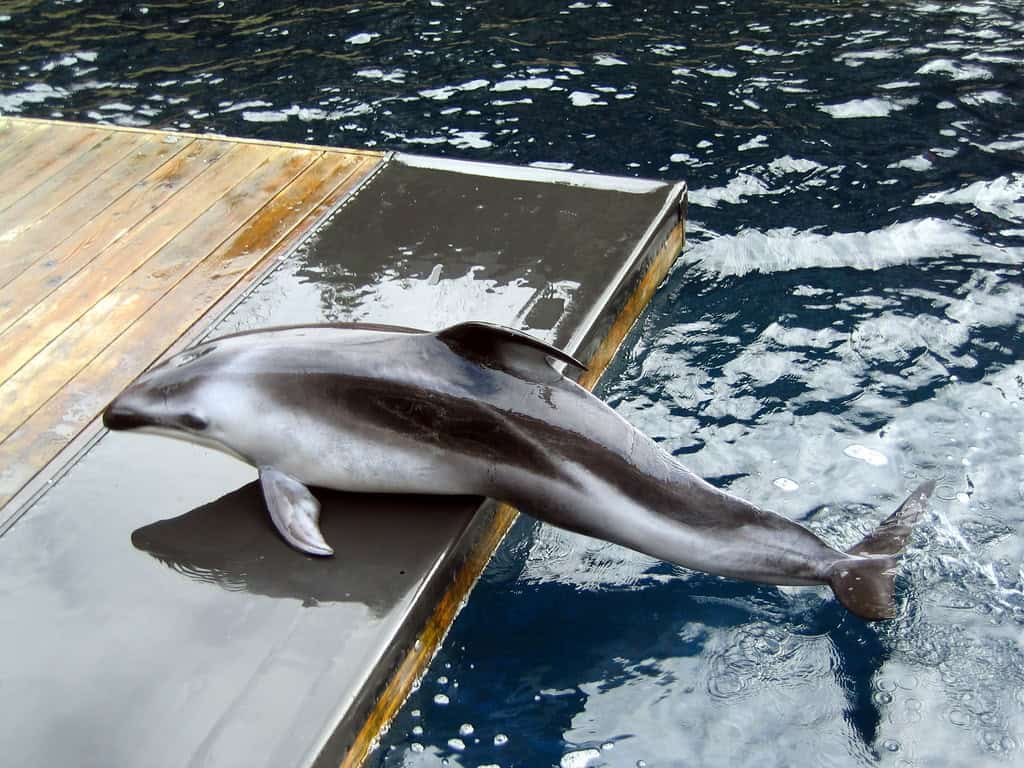
In the vast, dark depths of the Pacific Ocean, a remarkable creature has evolved one of nature’s most sophisticated navigation systems. The Pacific white-sided dolphin (Lagenorhynchus obliquidens) relies on an intricate biological sonar called echolocation to map its underwater world, find prey, and communicate with its pod members. This article explores the fascinating mechanisms behind this dolphin species’ echolocation abilities, examining how these marine mammals have mastered the art of “seeing” with sound in their complex oceanic environment.
The Pacific White-Sided Dolphin: An Ocean Navigator
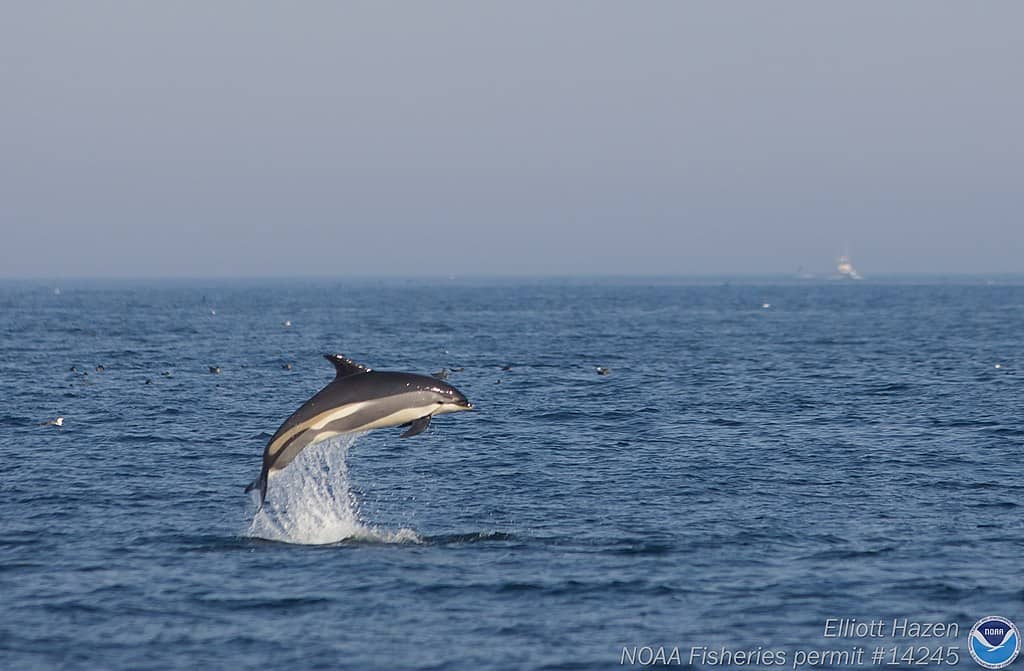
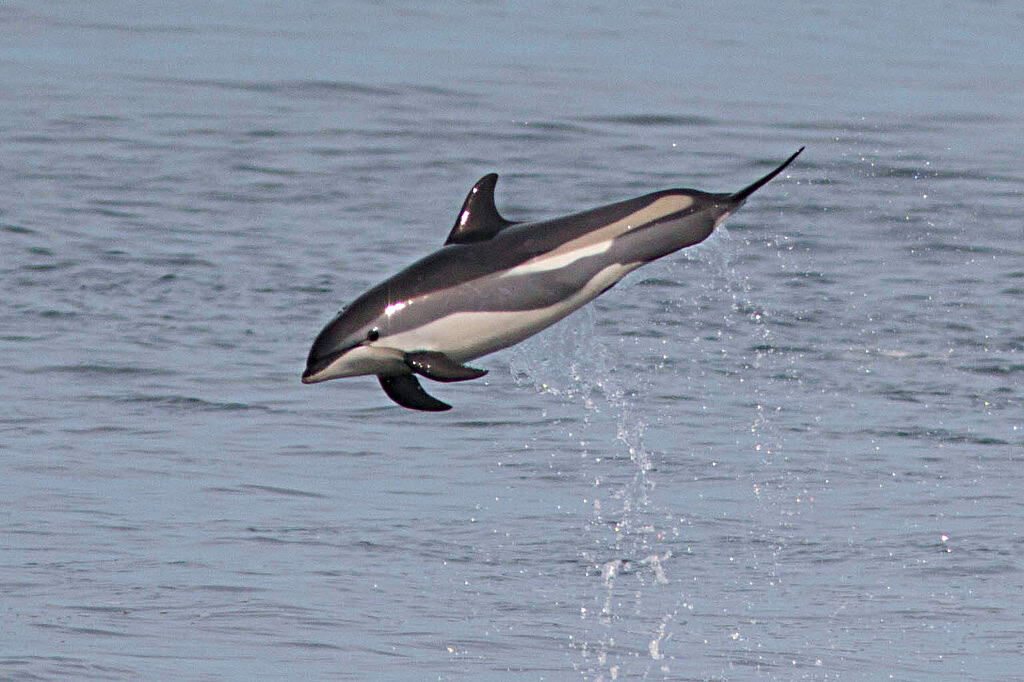
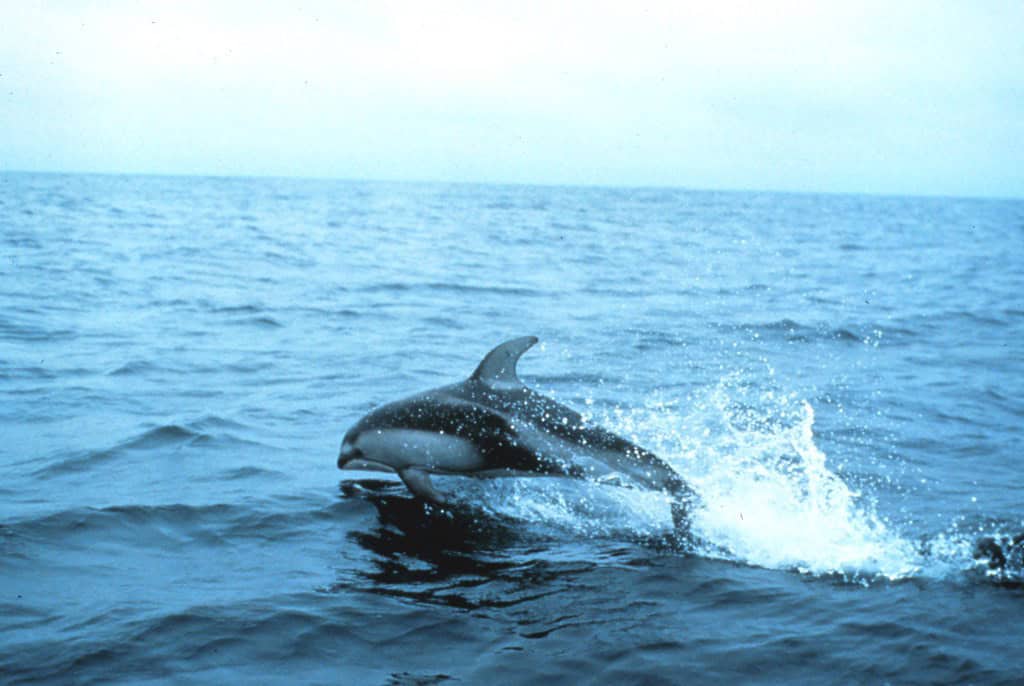
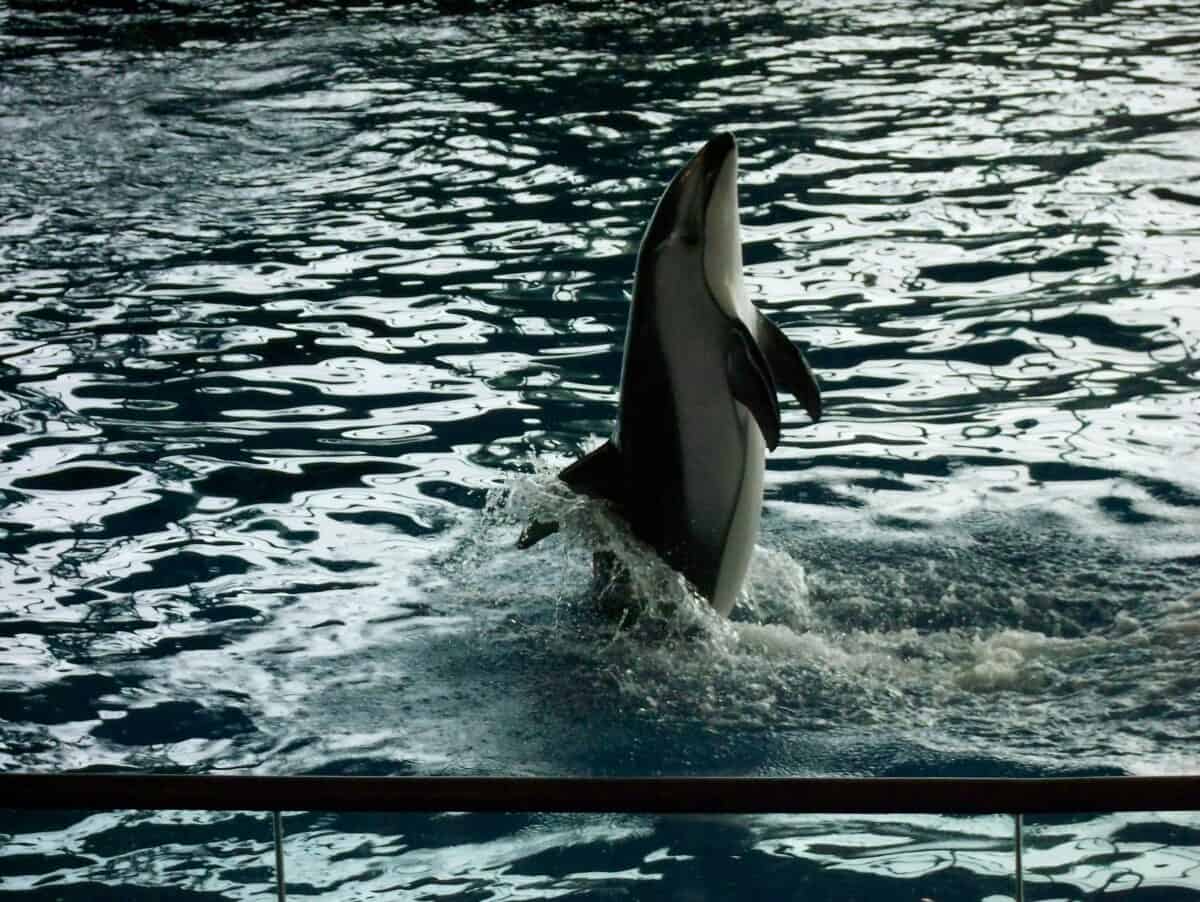
Pacific white-sided dolphins are highly social cetaceans found throughout the temperate waters of the North Pacific Ocean, from the Bering Sea to the Sea of Japan and down to southern California. Measuring between 5.5 to 8 feet in length and weighing approximately 300 pounds, these acrobatic dolphins are known for their distinctive black, gray, and white coloration pattern. What truly sets them apart, however, is their remarkable ability to navigate through their three-dimensional underwater habitat using echolocation, allowing them to thrive in environments where visibility is often severely limited. Like other odontocetes (toothed whales), these dolphins have evolved sophisticated biological structures dedicated to sound production and reception, creating one of nature’s most effective navigation systems.
The Science of Echolocation
Echolocation is a biological sonar system that involves the production of high-frequency sound waves and the analysis of their echoes as they bounce off objects in the environment. Pacific white-sided dolphins emit a series of clicks, whistles, and pulses through specialized structures in their head. These sound waves travel through water (approximately 4.5 times faster than through air) and reflect off objects they encounter. The returning echoes are then received and processed by the dolphin’s brain, creating a detailed acoustic “image” of their surroundings. Through this process, these dolphins can determine the size, shape, distance, direction, and even the internal composition of objects around them with remarkable precision, often outperforming human-made sonar systems in complexity and accuracy.
Anatomical Adaptations for Sound Production
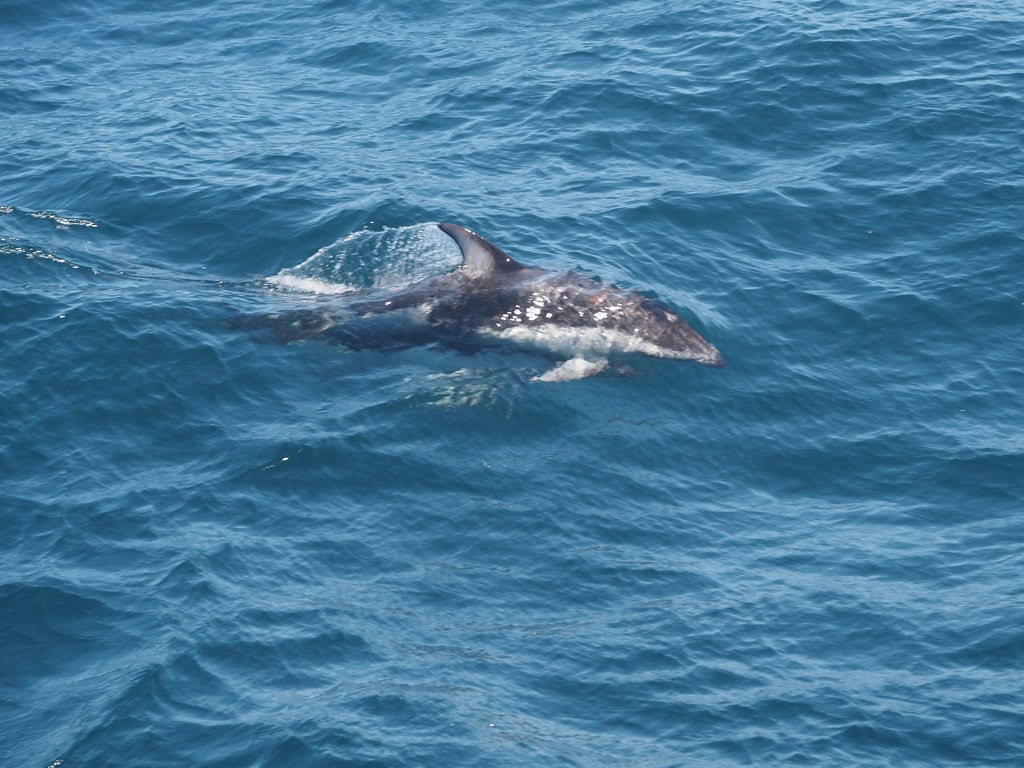
The Pacific white-sided dolphin’s echolocation abilities begin with specialized anatomical structures for sound production. Unlike humans who use their larynx to produce sounds, these dolphins generate their echolocation clicks through a complex system involving their nasal passages. The primary sound-producing organ is the melon—a fatty, dome-shaped structure in the forehead that contains specialized connective tissues and lipids. Beneath the melon are air sacs and a structure called the “phonic lips” or “monkey lips,” which vibrate as air passes through them, creating sound waves. These initial sounds are then focused and amplified by the melon, which acts as an acoustic lens, directing the sound waves forward in a narrow beam. This highly evolved system allows Pacific white-sided dolphins to produce clicks with frequencies ranging from 20 to 120 kHz—well beyond human hearing range (which tops out at about 20 kHz).
Receiving and Processing Echo Information

For echolocation to function effectively, Pacific white-sided dolphins must not only produce sounds but also receive and interpret the returning echoes. The primary sound reception pathway begins at the dolphin’s lower jaw, which contains a thin area of bone filled with fat that conducts sound vibrations to the middle and inner ear. This “acoustic window” in the jaw effectively funnels sound waves directly to the auditory system, bypassing the outer ear entirely. Once these sound waves reach the inner ear, they’re converted into neural signals that travel to specialized regions of the brain. Pacific white-sided dolphins possess an auditory processing system approximately ten times more complex than that of humans, allowing them to detect minute variations in returning echoes, differentiate between multiple echo sources simultaneously, and form detailed mental “images” of their surroundings based solely on sound information.
Echolocation for Hunting and Feeding
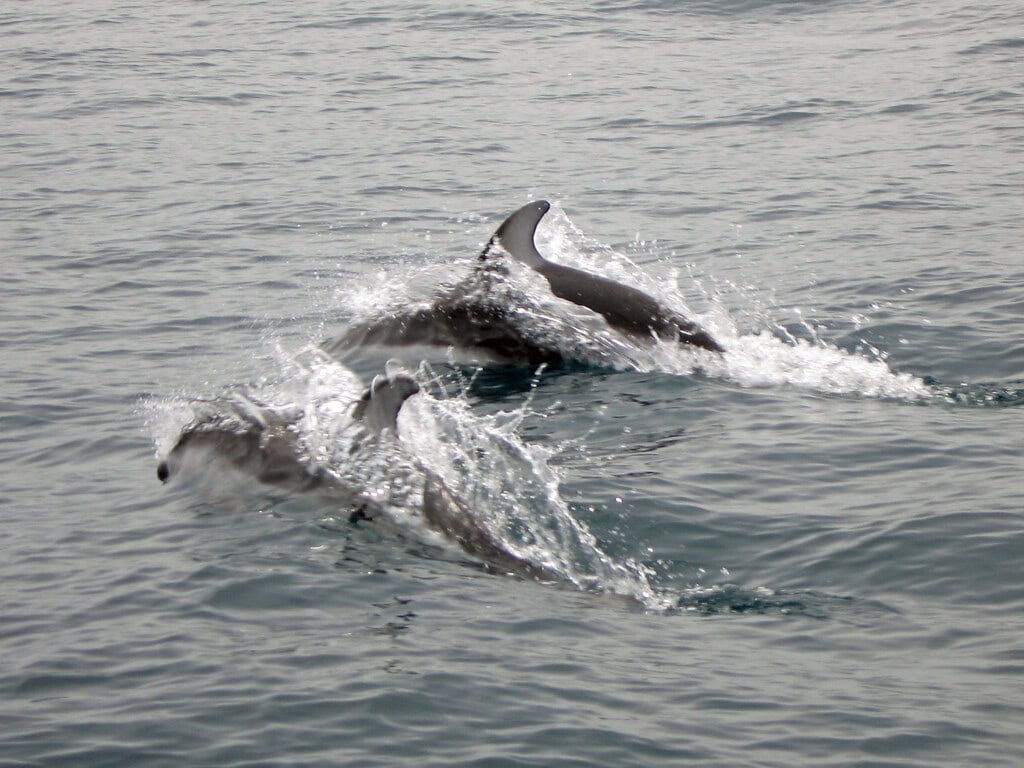
Perhaps the most critical application of echolocation for Pacific white-sided dolphins is in hunting and feeding. These dolphins primarily feed on small schooling fish such as herring, anchovies, and salmon, as well as squid—all prey that can be difficult to locate visually in murky waters or at night. Using echolocation, the dolphins can detect fish schools from considerable distances, sometimes exceeding 100 meters in good conditions. Research has shown that Pacific white-sided dolphins can not only locate prey but can distinguish between different fish species based on the distinctive echo signatures created by their swim bladders and body compositions. This ability allows these dolphins to selectively hunt for preferred prey even when multiple species are present. During cooperative hunting, pod members coordinate their movements using both echolocation and communication sounds, effectively herding fish schools into tight balls where they become easier to capture.
Navigating Complex Underwater Environments

The Pacific Ocean presents a challenging environment for navigation, with complex underwater topography including seamounts, canyons, reefs, and ever-changing currents. Pacific white-sided dolphins use echolocation to create detailed mental maps of these features, allowing them to navigate efficiently through their habitat. Their echolocation system provides them with information about water depth, seafloor composition, and underwater obstacles—even in complete darkness or turbid water conditions where visual navigation would be impossible. This extraordinary ability enables these dolphins to follow optimal migration routes, locate productive feeding grounds, and avoid natural hazards. Studies tracking tagged individuals have shown that Pacific white-sided dolphins often return to the same locations year after year, suggesting they maintain long-term spatial memory of their environment that is updated and refined through ongoing echolocation mapping.
Echolocation for Social Communication
Beyond navigation and hunting, Pacific white-sided dolphins utilize their sound production capabilities for complex social communication. While not all their vocalizations are related to echolocation, the same physiological structures are involved in producing both types of sounds. These dolphins generate a diverse repertoire of clicks, whistles, and pulsed calls that serve various social functions within their pods, which typically contain 10-100 individuals but can sometimes form superpods of over 1,000 animals. Each dolphin appears to have a unique “signature whistle” that functions similar to a name, allowing individuals to identify each other acoustically. Researchers have observed that during social interactions, Pacific white-sided dolphins will sometimes direct echolocation clicks directly at pod members, potentially as a form of individual recognition or to assess the physiological state of other dolphins. This multi-purpose sound system highlights the sophisticated integration of navigation and communication functions in these highly social marine mammals.
Development of Echolocation Skills

Echolocation abilities in Pacific white-sided dolphins aren’t fully formed at birth but develop gradually as calves mature. Newborn calves begin producing simple clicks within days of birth, but these initial sounds lack the power, frequency range, and directionality of adult echolocation. Young dolphins learn to refine their echolocation skills through a combination of practice and social learning, often swimming close to their mothers to observe her hunting techniques. Research indicates that juvenile Pacific white-sided dolphins typically spend 3-4 years developing adult-level proficiency in echolocation. During this learning period, calves rely heavily on their mothers and other pod members to locate food and navigate safely. This extended learning phase highlights the complexity of mastering echolocation and suggests that cultural transmission of knowledge plays an important role in the development of these critical survival skills.
Adaptations for Different Environments
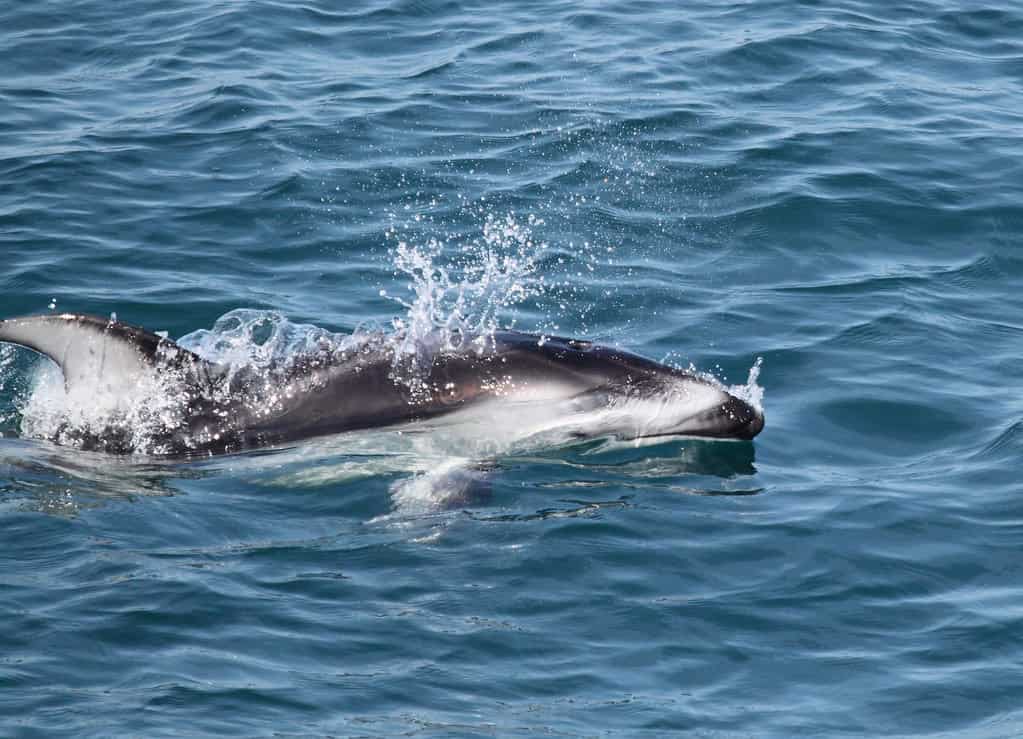
Pacific white-sided dolphins demonstrate remarkable flexibility in adapting their echolocation techniques to different environmental conditions. In shallow coastal waters, where sound waves can bounce unpredictably off the seafloor and surface, these dolphins adjust the frequency and rhythm of their clicks to avoid confusing echo patterns. Conversely, in deep offshore waters, they may employ lower-frequency, more powerful clicks that can travel greater distances. Research has also shown that these dolphins modify their echolocation behaviors in noisy environments, shifting their click frequencies to avoid overlap with ambient noise or waiting for quieter moments to emit their sounds. These adaptations are particularly important in modern oceans, where human-generated noise from shipping, offshore construction, and military activities can interfere with cetacean echolocation. The ability to adjust their acoustic behaviors allows Pacific white-sided dolphins to maintain effective navigation even as their environment changes.
Comparing Echolocation Across Dolphin Species

While all dolphin species use echolocation, the Pacific white-sided dolphin exhibits some distinctive characteristics in its echolocation system compared to other species. Their echolocation clicks tend to be broadband, containing energy across a wide frequency range (typically 20-120 kHz), which differs from the narrower frequency bands used by some other dolphin species. Compared to bottlenose dolphins, which have been studied more extensively, Pacific white-sided dolphins generally produce clicks with higher peak frequencies and shorter duration. These differences likely reflect adaptations to their specific ecological niche and prey preferences. Interestingly, Pacific white-sided dolphins that share habitats with other echolocating species (such as Dall’s porpoises in parts of their range) appear to use slightly different frequency ranges, potentially reducing acoustic interference between species. These variations highlight how echolocation systems have evolved to suit the particular requirements of each dolphin species within their specific ecological context.
Challenges to Echolocation in Modern Oceans
Despite its effectiveness, the echolocation system of Pacific white-sided dolphins faces increasing challenges in today’s oceans. Human activities have dramatically increased underwater noise pollution, creating an acoustic environment very different from the one in which dolphin echolocation evolved. Commercial shipping lanes, which overlap with much of this species’ habitat along the Pacific coast, generate low-frequency noise that can mask important sounds and cause dolphins to avoid otherwise suitable habitat. Military sonar, particularly mid-frequency active sonar used in naval exercises, operates in frequency ranges that can directly interfere with dolphin echolocation and has been associated with behavioral disruptions and even mass stranding events in some cetacean species. Additionally, underwater construction activities, seismic surveys for oil and gas exploration, and recreational boat traffic all contribute to the acoustic degradation of marine environments. Conservation efforts increasingly focus on understanding and mitigating these acoustic impacts to protect the sophisticated navigation systems that Pacific white-sided dolphins and other cetaceans depend upon.
Research Techniques for Studying Dolphin Echolocation

Scientists employ a variety of sophisticated methods to study the echolocation capabilities of Pacific white-sided dolphins. Hydrophones (underwater microphones) are used to record the full spectrum of dolphin vocalizations, including their ultrasonic echolocation clicks that are beyond human hearing range. These recordings can be analyzed using specialized software that visualizes the acoustic properties of each sound. To understand how dolphins process returning echoes, researchers sometimes conduct controlled experiments with trained dolphins in managed care, presenting them with objects of different sizes, shapes, and compositions while monitoring their echolocation behavior. More recently, suction-cup attached acoustic tags (D-tags) have been developed that can be temporarily placed on wild dolphins, recording not only their vocalizations but also their movement patterns, diving behavior, and even heart rate—providing a comprehensive view of how echolocation is integrated with other behaviors. Through these combined approaches, scientists continue to uncover new details about the remarkable echolocation abilities of Pacific white-sided dolphins and other cetaceans.
Conclusion: Nature’s Sonic Masterpiece
The echolocation system of Pacific white-sided dolphins represents one of nature’s most sophisticated sensory adaptations, allowing these marine mammals to thrive in the challenging environment of the open ocean. Through millions of years of evolution, these dolphins have developed specialized anatomical structures and neural processing capabilities that enable them to create detailed acoustic images of their surroundings with remarkable precision. Their ability to navigate, hunt, and communicate using sound demonstrates the extraordinary potential of acoustic sensing in environments where vision is limited. As we continue to learn more about these remarkable abilities, we gain not only scientific knowledge but also a deeper appreciation for the complex adaptations that allow different species to perceive their worlds in fundamentally different ways. The Pacific white-sided dolphin’s mastery of echolocation serves as both an inspiration for human technological innovation and a reminder of the importance of protecting the acoustic environment of our oceans.

- Unbelievable! These 14 Animals Are Smarter Than You Think - July 28, 2026
- Why Puffins Are Using Trash in Their Nesting Materials - July 28, 2026
- Why This Fish Walks on Land and Breathes Air - July 27, 2026