

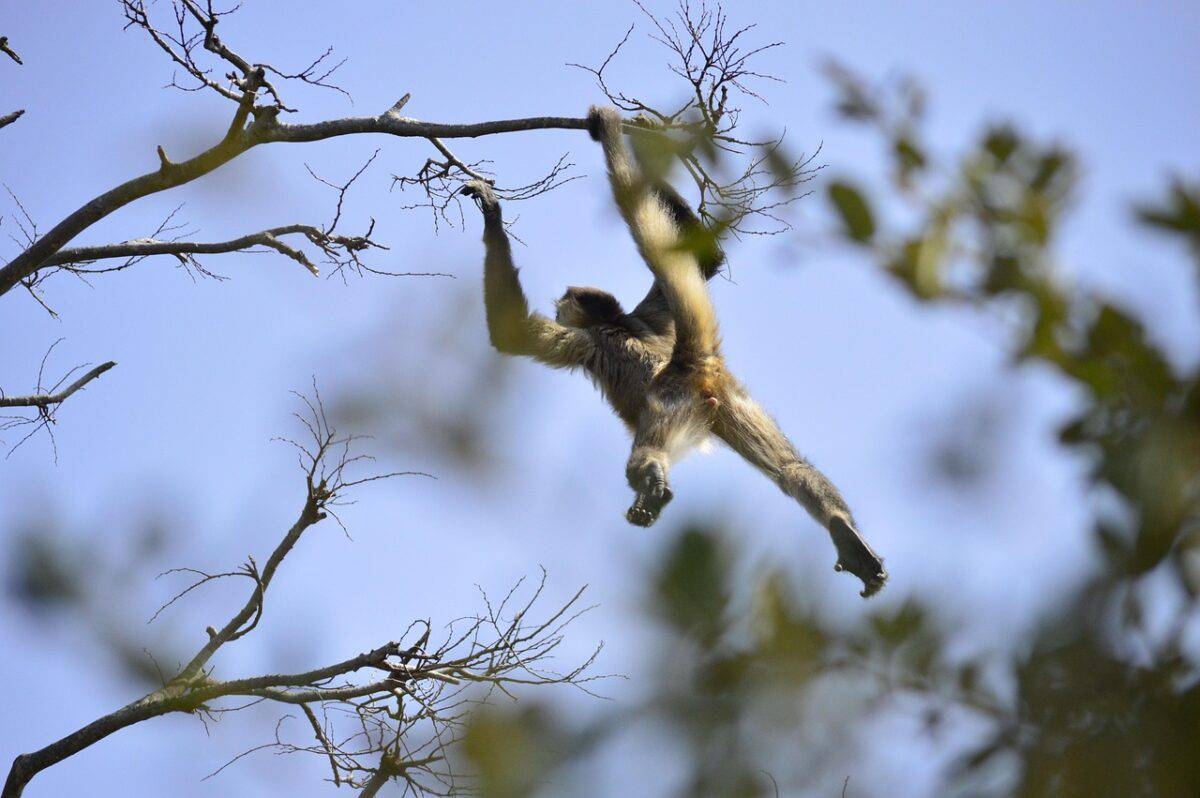
High above the rainforest floor, where few creatures dare to venture, spider monkeys reign supreme as nature’s ultimate aerial artists. With their remarkably specialized bodies and incredible intelligence, these New World primates have perfected the art of canopy living to a degree that few other animals can match. Their graceful movements through the treetops, sometimes spanning distances of over 30 feet in a single leap, have earned them a well-deserved reputation as the true acrobats of the rainforest. But what exactly makes these remarkable creatures so adept at their high-flying lifestyle? From their unusually proportioned limbs to their surprising cognitive abilities, spider monkeys possess a fascinating array of adaptations that have evolved specifically for life in the forest canopy.
The Perfect Anatomical Design
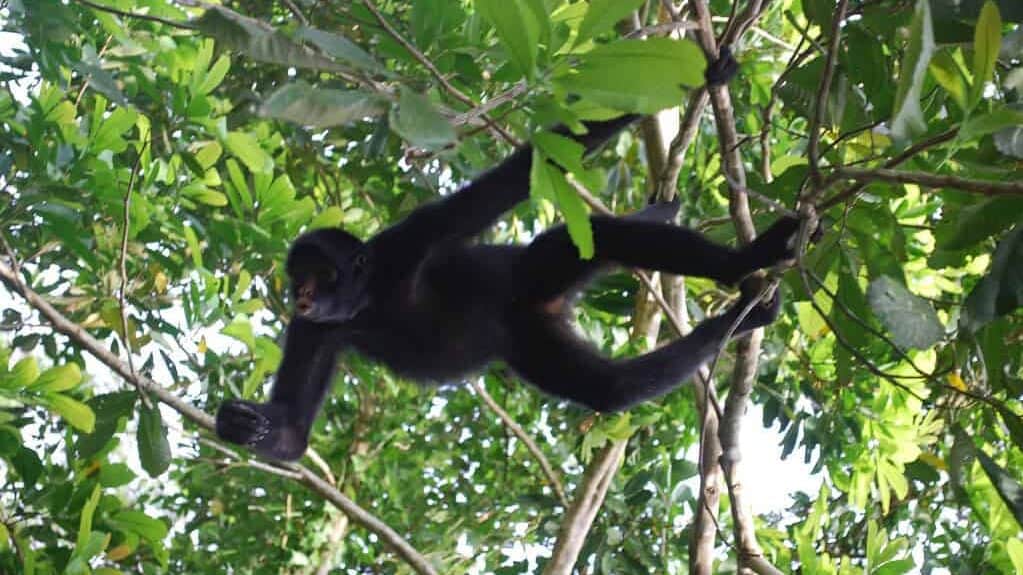
Spider monkeys possess a body perfectly engineered for arboreal acrobatics. Their most distinctive feature is their exceptionally long, slender limbs relative to their body size, giving them a spider-like appearance that inspired their common name. These disproportionately lengthy arms and legs provide tremendous reach, allowing them to bridge gaps between trees that would be impossible for other primates. Their shoulder joints have evolved remarkable flexibility, enabling a wide range of motion that lets them swing in any direction with ease. Spider monkeys also have hook-like hands with reduced thumbs, creating an efficient curved shape perfect for swinging and grasping branches. This specialized anatomy represents millions of years of evolutionary refinement, producing a body optimized for the challenging three-dimensional environment of the rainforest canopy.
The Remarkable Prehensile Tail
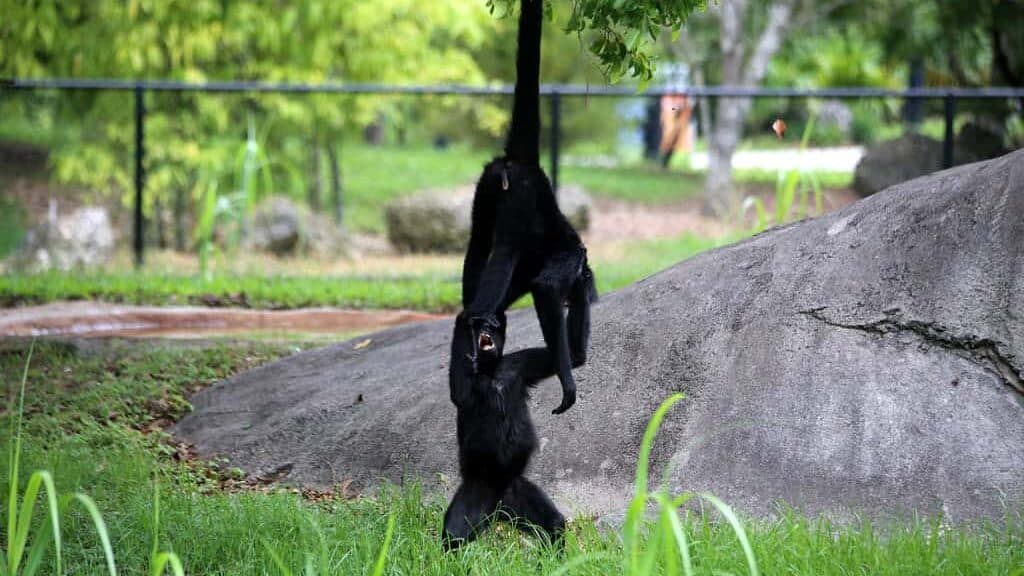
Perhaps the most extraordinary adaptation of the spider monkey is its prehensile tail, which essentially functions as a fifth limb. Unlike many other tailed mammals, a spider monkey’s tail has a specialized gripping area with sensitive tactile pads similar to a fingerprint on the underside near the tip. This allows for precise control when grasping branches. Remarkably strong, the tail can support the monkey’s entire body weight, freeing up all four limbs for other activities. Spider monkeys routinely hang by their tails while feeding, grooming, or even during social interactions. The tail’s versatility is so advanced that it can be used to retrieve food from hard-to-reach places with surprising dexterity. This extraordinary appendage gives spider monkeys a significant advantage in navigating their complex arboreal environment.
Brachiation: The Ultimate Locomotion Technique

Spider monkeys are masters of brachiation, a specialized form of locomotion that involves swinging from one handhold to another using only the arms. While several primate species can brachiate to some extent, spider monkeys have refined this technique to an art form. When brachiating at full speed, they create a fluid, pendulum-like motion, releasing one grip only after securing the next. This allows them to maintain momentum and travel rapidly through the canopy with minimal energy expenditure. Studies have shown that spider monkeys can reach speeds of up to 35 miles per hour when brachiating through familiar territory. This efficient movement style allows them to cover large distances across their home ranges, which can span over 900 acres in some species. Brachiation not only saves energy compared to walking on all fours but also enables these monkeys to access food sources that would otherwise be unreachable.
Spatial Intelligence and Mental Mapping
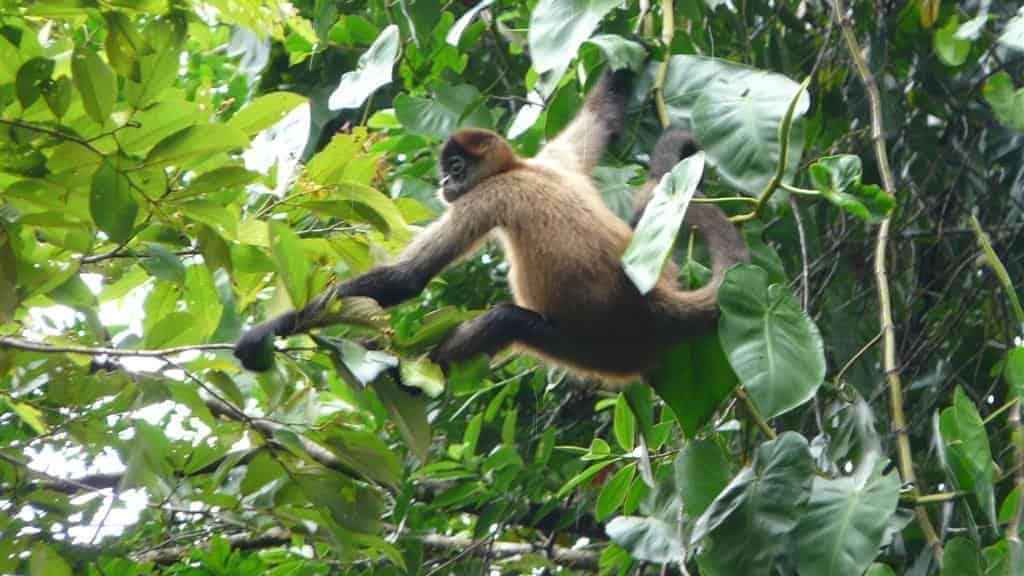
Behind the spider monkey’s aerial prowess lies remarkable cognitive ability, particularly regarding spatial intelligence. These primates maintain detailed mental maps of their territories, remembering the locations of thousands of food trees and the optimal routes between them. Research has demonstrated that spider monkeys can plan complex travel routes that minimize energy expenditure while maximizing feeding opportunities. This requires sophisticated spatial memory and the ability to conceptualize three-dimensional space. Their brain-to-body size ratio is among the highest in the primate world, with especially developed areas related to motor control and spatial reasoning. Scientists studying wild spider monkeys have documented individuals traveling directly to specific fruiting trees over distances exceeding two miles, suggesting they not only remember locations but also track seasonal changes in food availability. This cognitive sophistication is a crucial component of their success as canopy specialists.
Social Dynamics and Group Structure
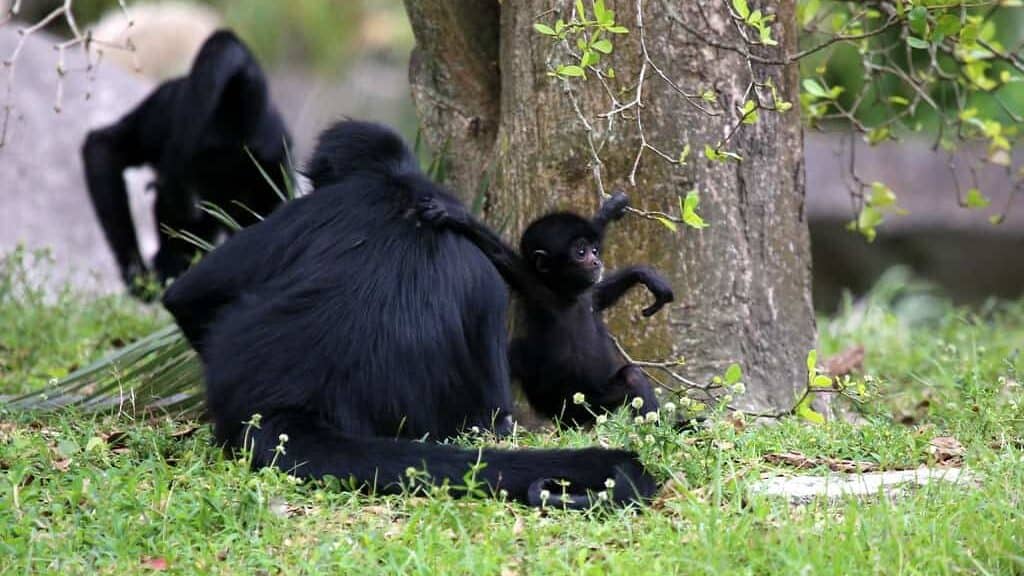
Spider monkeys live in a complex social structure known as fission-fusion society, where larger communities of 15-40 individuals frequently split into smaller subgroups for daily activities. This fluid social arrangement is perfectly adapted to their environment, where food resources are often widely scattered and insufficient to support large groups feeding together. The composition of these subgroups changes regularly, requiring sophisticated social intelligence to maintain community relationships despite frequent separations. Males typically form strong bonds and patrol territory boundaries together, while females often travel with their offspring. When subgroups reunite, spider monkeys engage in elaborate greeting rituals involving embraces, tail-wrapping, and specialized vocalizations that help maintain social bonds. This dynamic social structure influences their movement patterns through the canopy, as different subgroups navigate their shared territory in coordinated but separate ways.
Specialized Diet and Feeding Acrobatics

Spider monkeys are primarily frugivores, with ripe fruits comprising up to 90% of their diet in some seasons. Their preference for ripe fruit has shaped their foraging strategy, requiring them to travel widely to locate scattered, ephemeral food sources throughout the canopy. While feeding, spider monkeys display impressive acrobatic abilities, often hanging by their tails to reach fruits at the ends of slender branches that wouldn’t support their body weight. This tail-hanging feeding technique gives them access to food resources that remain unavailable to many competing species. They supplement their fruit diet with young leaves, flowers, bark, honey, and occasionally small insects. Studies have shown that a single spider monkey group may utilize over 150 different plant species throughout the year, requiring intimate knowledge of when and where different foods become available. Their feeding ecology directly influences their movement patterns and has been a major driving force behind the evolution of their acrobatic abilities.
Species Diversity and Geographic Range
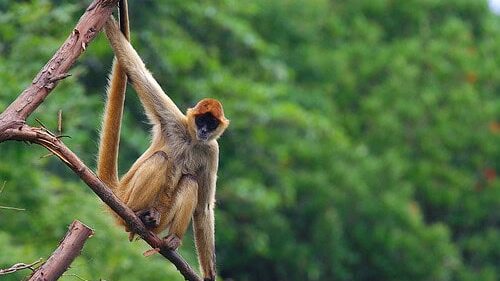
Spider monkey. Image via Openverse
The spider monkey family (genus Ateles) includes seven recognized species distributed across Central and South America, from Mexico to Brazil. Each species has adapted to slightly different forest environments, from lowland rainforests to montane cloud forests up to 9,000 feet in elevation. The most widespread species, the black-handed spider monkey (Ateles geoffroyi), inhabits diverse forest types from Mexico to Panama. The Brazilian spider monkey (Ateles marginatus) specializes in seasonally flooded Amazon forests, while the brown spider monkey (Ateles hybridus) has adapted to drier forest regions in Colombia and Venezuela. Despite their different habitats, all spider monkey species share the same exceptional acrobatic abilities, though subtle variations exist in their locomotor patterns based on forest structure. For example, species living in more open forest canopies tend to leap more frequently, while those in dense forests rely more heavily on brachiation.
Communication in the Canopy
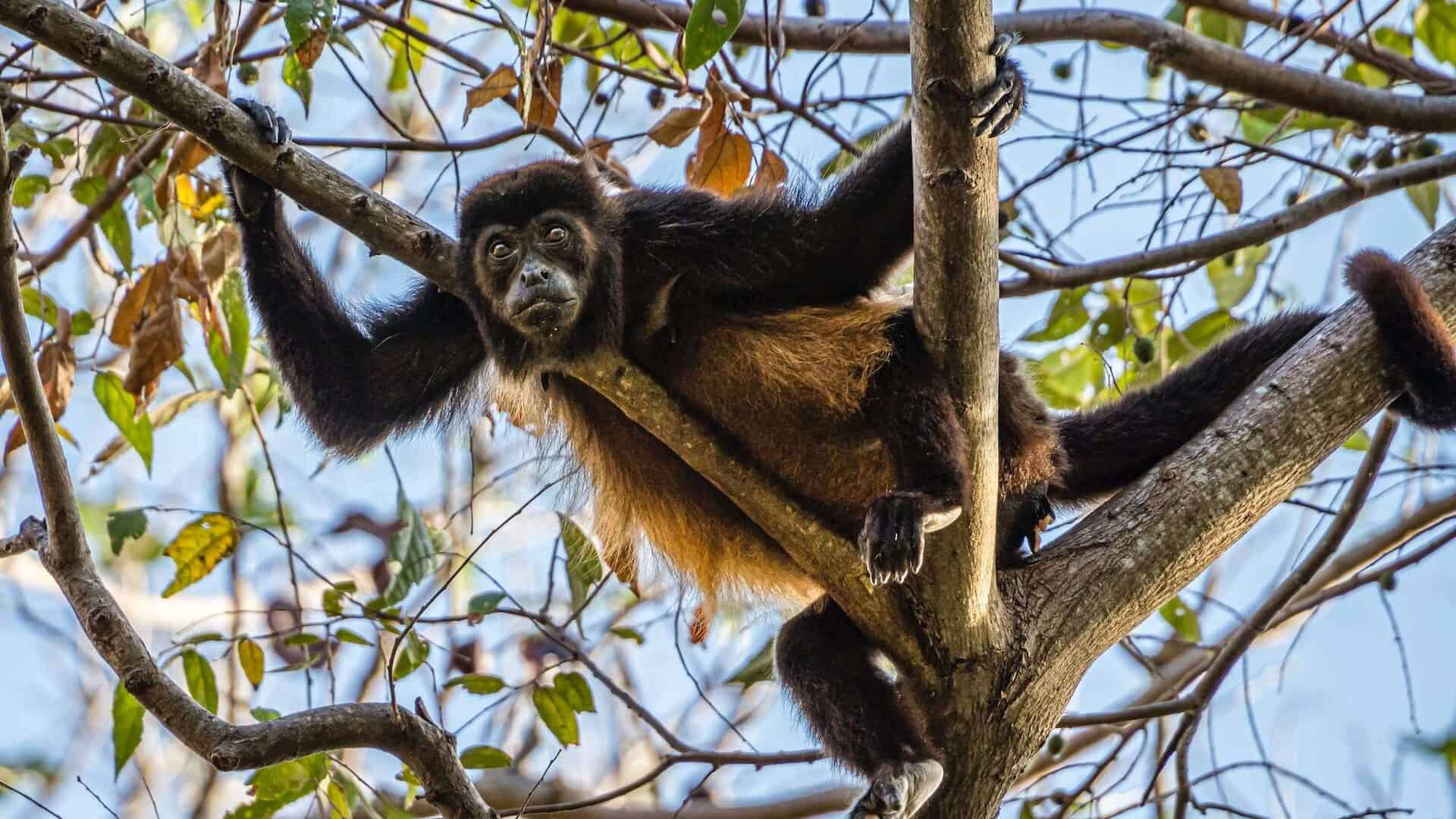
Coordinating movement through a three-dimensional environment requires sophisticated communication, and spider monkeys have developed an extensive vocal repertoire for this purpose. They produce over 20 distinct vocalizations, including long-distance calls that can travel more than a mile through the forest. These calls help scattered subgroups maintain contact and coordinate movements despite limited visibility in the dense canopy. Spider monkeys also use specific alarm calls that indicate the type and location of predators, allowing group members to escape using appropriate evasive movements. Beyond vocalizations, they employ visual signals such as branch-shaking displays and unique postures that communicate intent during social interactions. Perhaps most remarkably, researchers have documented “sentinel behavior,” where individuals take positions at vantage points in the upper canopy to scan for predators while group members feed below, demonstrating a level of coordinated group movement rarely seen outside of primate societies.
Predator Evasion Techniques
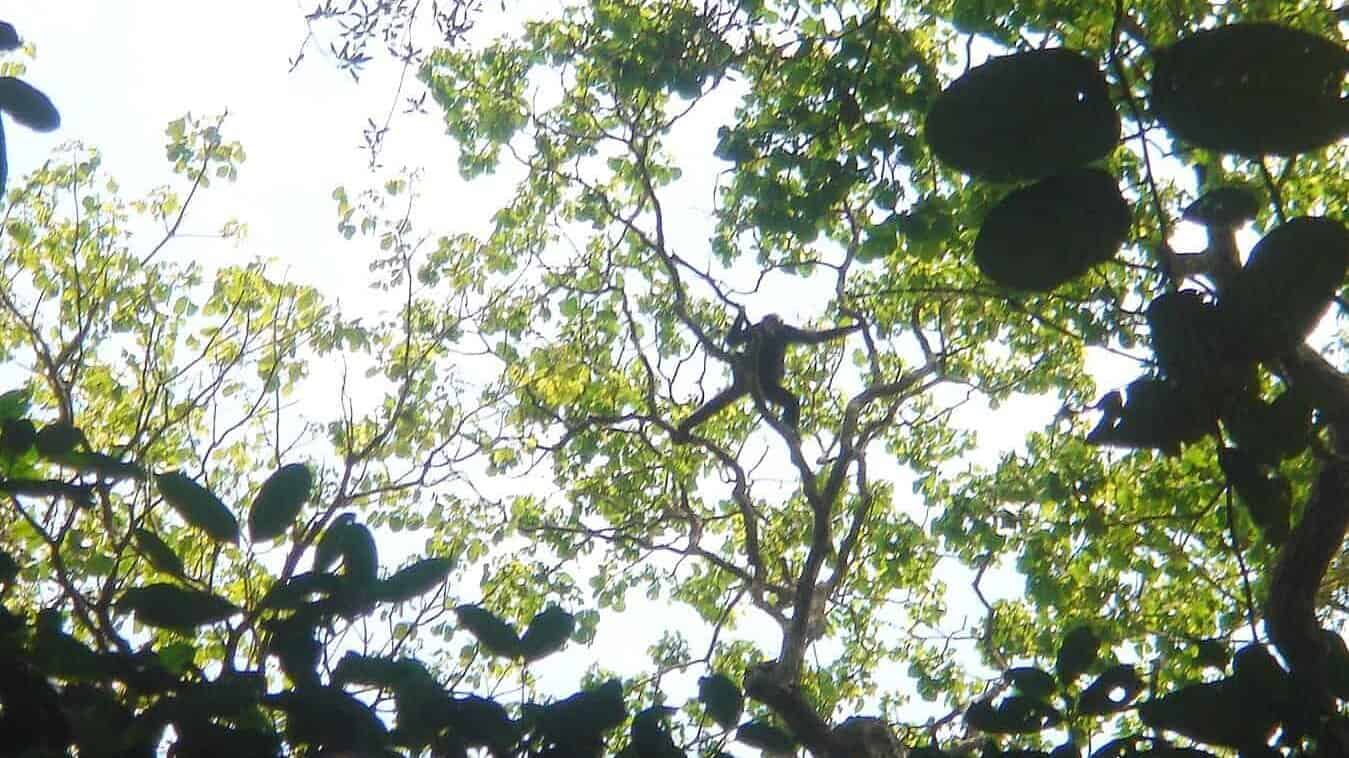
Despite their agility, spider monkeys face threats from predators like harpy eagles, jaguars, and large constrictors. They’ve developed specialized evasion techniques that capitalize on their acrobatic abilities. When threatened by aerial predators, spider monkeys don’t simply flee downward; instead, they often move to the thinnest outer branches where eagles cannot land, or they may drop suddenly several meters before catching themselves on lower branches. Against ground-based predators that occasionally climb trees, spider monkeys use rapid brachiation to move horizontally through the canopy, crossing gaps that pursuing predators cannot navigate. They’ve also been observed using coordinated mobbing behavior against potential threats, where multiple individuals surround a predator while vocalizing loudly and shaking branches vigorously. These sophisticated defensive strategies demonstrate how their acrobatic abilities serve not only for efficient travel but also as crucial survival adaptations.
Development of Acrobatic Skills
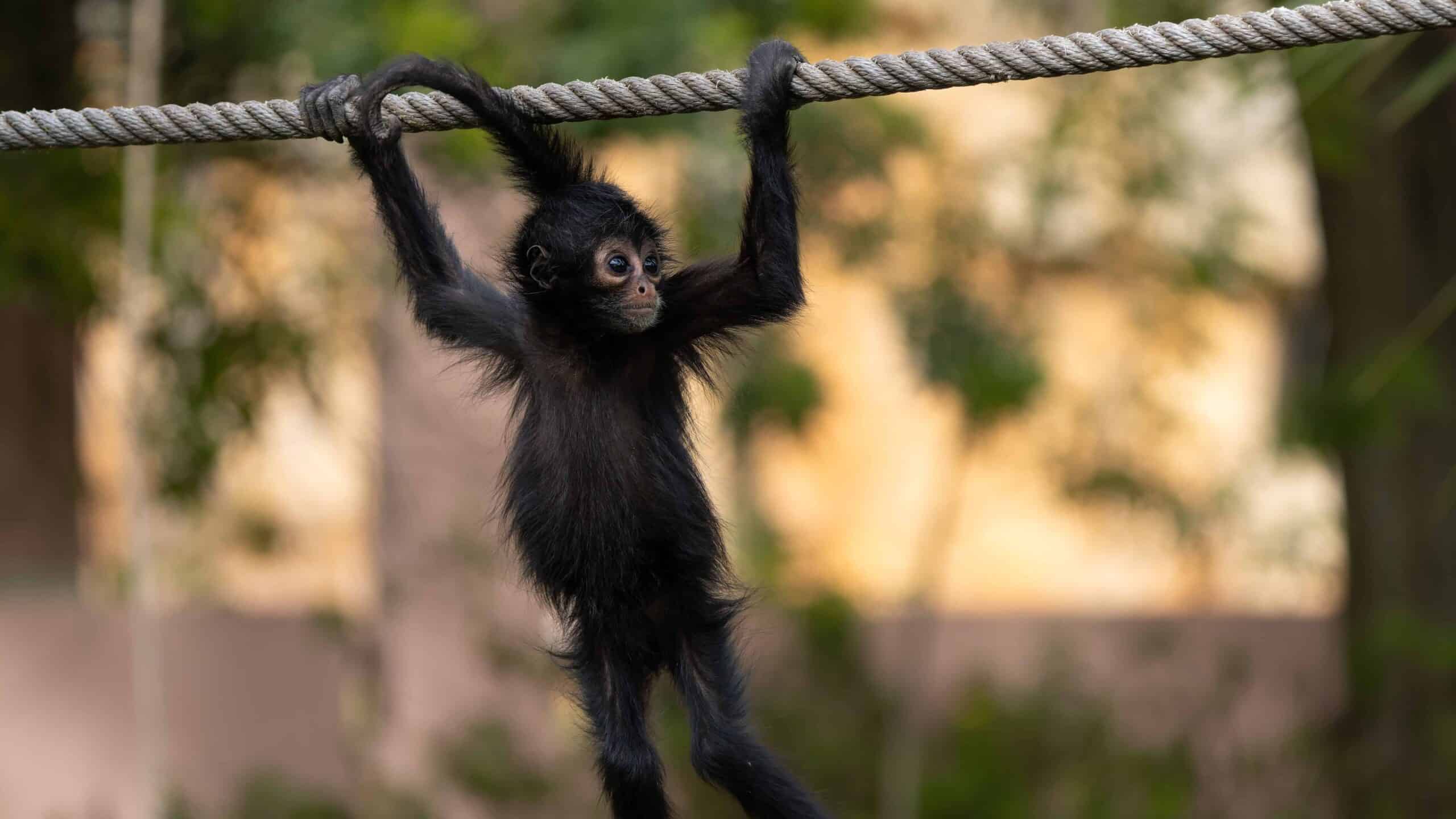
Young spider monkeys aren’t born with their impressive acrobatic abilities—these skills develop gradually through a prolonged learning period. Infants cling to their mothers’ bellies for the first few months of life, observing adult movements from this secure position. Around six months of age, they begin practicing basic climbing and hanging behaviors on their mother’s body before attempting short independent movements. The development of full brachiation skills takes approximately three years, during which juveniles practice increasingly complex movements under the watchful eyes of adult group members. Research has documented distinct learning stages, from early tentative reaching between branches to the eventual mastery of fluid, continuous movement. Interestingly, young females typically develop proficient acrobatic skills earlier than males, possibly because males continue growing for a longer period, requiring ongoing adjustments to their changing body proportions. This extended learning period highlights the complexity of the skills required for life in the rainforest canopy.
Conservation Challenges

The remarkable acrobatic abilities of spider monkeys are increasingly threatened by habitat loss and fragmentation. As specialized canopy dwellers, they require large areas of intact forest to thrive—an average group needs at least 250-800 hectares of healthy forest. When forests are fragmented by roads or agriculture, canopy continuity is broken, creating gaps too large for even these accomplished acrobats to cross. This isolates populations and disrupts normal movement patterns. All seven spider monkey species now appear on the IUCN Red List, with six classified as either Endangered or Critically Endangered. Their slow reproductive rate—females give birth only once every 2-4 years—makes populations particularly vulnerable to hunting pressure. Conservation efforts have focused on creating forest corridors to reconnect fragmented habitats and establishing protected areas large enough to maintain viable spider monkey populations. The preservation of these aerial acrobats depends entirely on maintaining the complex three-dimensional environment of the rainforest canopy that shaped their remarkable adaptations.
Spider monkeys represent one of nature’s most successful examples of evolutionary specialization, with every aspect of their biology fine-tuned for life in the rainforest canopy. Their extraordinary anatomical adaptations—from their elongated limbs and reduced thumbs to their remarkable prehensile tails—work in perfect concert with their sophisticated cognitive abilities to create the ultimate arboreal acrobats. As they navigate their three-dimensional world with seemingly effortless grace, these monkeys demonstrate the incredible potential of natural selection to produce specialized life forms perfectly adapted to challenging ecological niches. Beyond their biological significance, spider monkeys play crucial ecological roles as seed dispersers and as indicators of forest health, making their conservation vital for maintaining the integrity of tropical ecosystems. In the face of ongoing habitat loss, protecting these aerial artists and the forests they inhabit remains one of the most pressing conservation challenges of our time.

- The Smartest Animals Known for Solving Problems - July 23, 2026
- Fascinating Animal Traditions Passed From One Generation to the Next - July 23, 2026
- Mysterious Animal Disappearances That Still Baffle Experts - July 23, 2026