

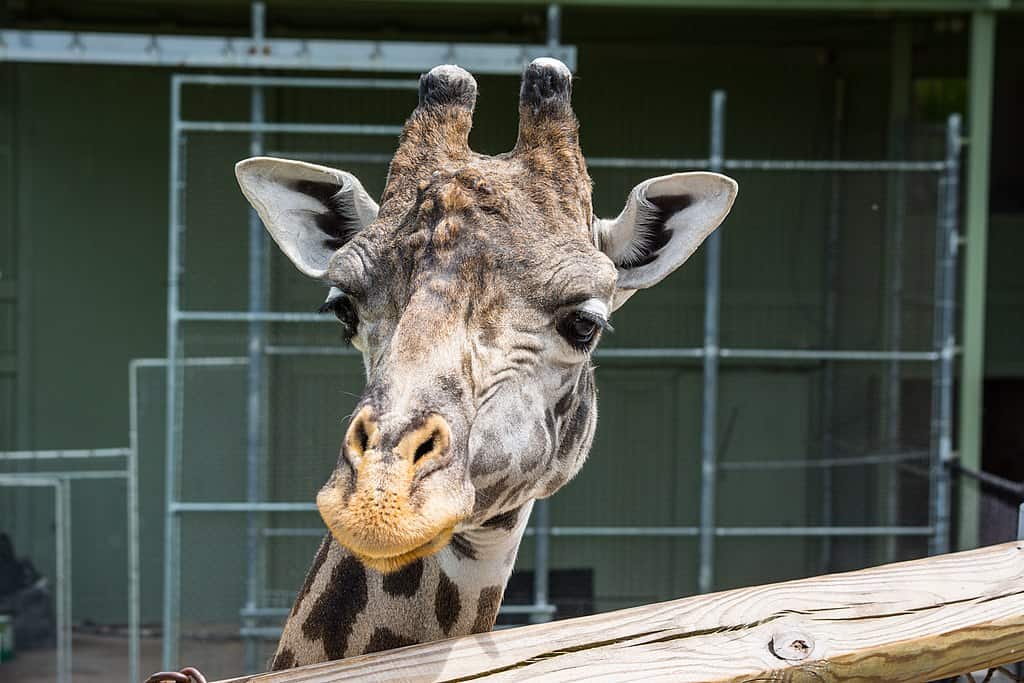
Imagine watching the world’s tallest animal bend its neck backward to rest its head on its own rump – it sounds impossible, but it’s just another day in the life of a giraffe. These towering giants have captivated humans for centuries, but behind their elegant exterior lies a complex world of behaviors that most people never get to witness. From their unusual sleeping habits to their surprising social dynamics, giraffes are far more fascinating than their peaceful appearance suggests. What if I told you that giraffes barely sleep, engage in brutal combat using their necks as weapons, and have developed some of the most unusual survival strategies in the animal kingdom?
They Sleep Less Than an Hour Per Day in the Wild
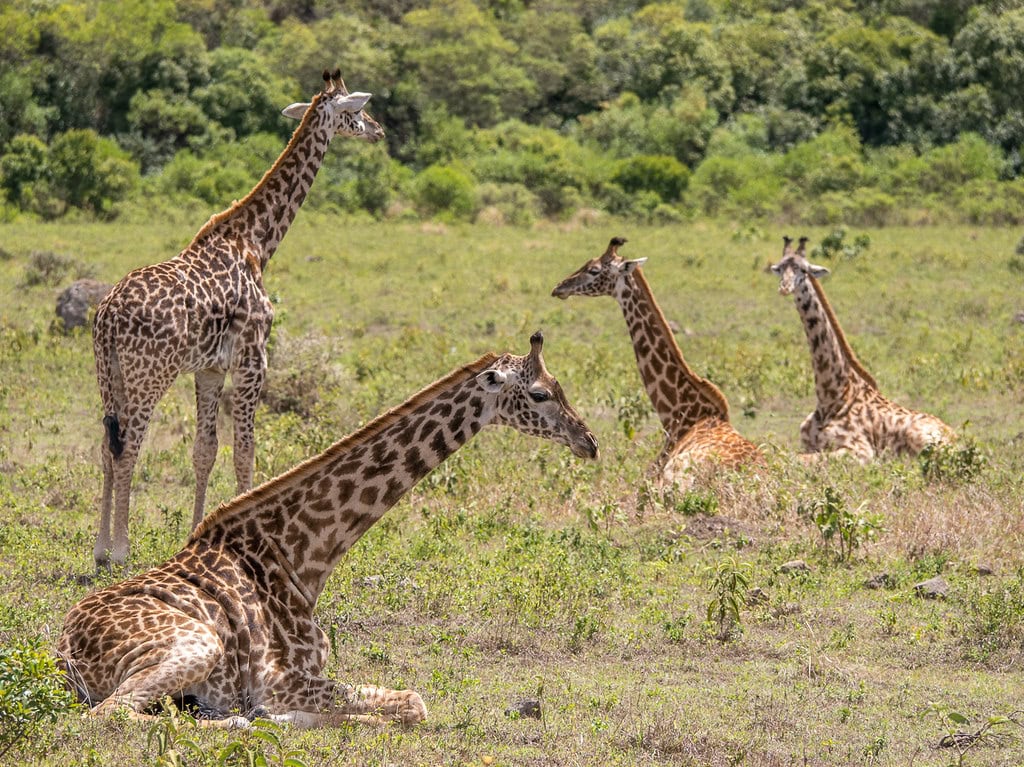
Giraffes sleep an average of 40 minutes a day in the wild, imagine sleeping in bursts of five minutes scattered throughout the day – giraffes are never asleep for more than a few minutes in one go. They are the strangest sleepers and one of the most sleepless animals in the wild, taking naps and snoozing for a maximum of three hours per day but only in short bursts – for 10 minutes at a stretch – spread throughout the day. Adult giraffes occasionally sleep like this too, but rarely for more than a few minutes at a time, often never sleeping for longer than five minutes at a stretch in the wild. In the wild, they can survive on 30 minutes of sleep a day, while in captivity giraffes can sleep around 4-5 hours a day without the fear of predators lurking around. This extreme sleep deprivation would kill most mammals, but giraffes have evolved to function perfectly on what amounts to a series of power naps. Rumination requires giraffes to continuously chew partially digested food most of their active day, and adults can sleep standing to achieve a state of half-sleep which keeps them aware of surroundings while resting for a few minutes.
Young Calves Use Their Own Rumps as Pillows

As babies, giraffes lay down with their legs tucked beneath their bodies and rest their heads on their rumps – apparently, they’re their own best pillows! Young giraffes, known as calves, spend about a quarter of their time sleeping lying down with their heads on their rumps, clearly needing more sleep than adult giraffes with the benefit of having their mother and other tower members standing watch to protect them. When they lie down, giraffes often bend their necks backward and rest their heads on their hips or thighs – it’s a sight that might look awkward to us but is quite natural for them! This sleeping position might look uncomfortable, but it’s actually perfectly designed for quick escapes. Seeing baby giraffes sleeping is particularly rare in the wild. The adorable sight of a young giraffe using itself as a pillow represents one of nature’s most charming adaptations to survival in dangerous environments.
Males Fight by Swinging Their Necks Like Medieval Weapons

Male giraffes use their necks as weapons in combat, a behavior known as “necking,” which is used to establish dominance, and males that win necking bouts have greater reproductive success. Two bull giraffes vie for dominance through a pugilistic ritual entirely unique to their species: swinging their horned heads at one another’s necks like cudgels – necking is the singular way male giraffes sort out hierarchies. In high-intensity necking, combatants spread their front legs and swing their necks at each other, attempting to land blows with their ossicones, trying to dodge each other’s blows before preparing to counter – the power of a blow depends on the weight of the skull and the arc of the swing. A necking duel can last more than half an hour depending on how well matched the combatants are, and although most fights do not lead to serious injury, there have been records of broken jaws, broken necks, and even deaths. Think of it like medieval knights wielding massive clubs, except these “clubs” are attached to their bodies and weigh hundreds of pounds.
They Have Three Different Types of Sleep Patterns

Researchers have observed three types of sleep in giraffes: standing, recumbent, and paradoxical – the latter sleep type is similar to REM sleep, while standing sleep is characterized by a giraffe standing motionless with its head tilted slightly more forward than when awake, essentially a light nap that makes up a majority of their sleep. During recumbent and paradoxical sleep, a giraffe can be observed lying down with their legs folded under them, their neck turned and arched backward and their heads resting on their rumps or the ground – similar to a swan. Giraffes primarily sleep standing up, an adaptation that allows them to quickly wake and flee from predators, remaining in a half-sleep condition with their eyes half-open and their ears twitching to stay alert. The standing sleep is like being on guard duty while catching a quick rest. They often keep their necks upright, but occasionally briefly sleep with their heads resting on their rumps, a vulnerable position associated with REM sleep. It’s remarkable how they’ve evolved multiple sleep strategies to balance rest with survival needs.
Their Social Groups Are More Complex Than Previously Thought

More recent studies have found that giraffes have long-lasting social groups or cliques based on kinship, sex or other factors, and these groups regularly associate with other groups in larger communities or sub-communities within a fission-fusion society. Giraffes are social, but duration of social bonds not well-understood due to few longitudinal behavior studies, with contradictory findings describing giraffe society as both a loose and constantly shifting amalgamation of non-bonded individuals as well as a structured community network. Giraffes are social animals living in loose, open, unstable herds varying from 10 to 20 individuals, although herds of up to 70 have been observed – individual giraffes join and leave the herd at will, with herds including all female, all male, female with young calves, or mixed genders and ages. Think of it like a neighborhood where friends drop by whenever they want, but some relationships are deeper than others. Female giraffes are more social than male giraffes. Masai giraffes in Tanzania sort themselves into different subpopulations of 60-90 adult females with overlapping ranges, each differing in reproductive rates and calf mortality.
They Can Run Faster Than Most Cars in a School Zone

Giraffes can run up to 60 km/hr (37 mi/hr). These long legs allow giraffes to run as fast as 35 miles an hour over short distances and cruise comfortably at 10 miles an hour over longer distances. Giraffes are huge and can run as fast as 35 miles an hour; when they’re alert, they’re not easy targets. Despite their towering height and seemingly awkward appearance, giraffes are surprisingly graceful runners. They’re able to jump over cattle fences. They alternate moving the two right limbs together and then the two left, which keeps front legs from tangling with hind legs – camels and horses walk this way. Their running style is unique among large animals, resembling a slow-motion gallop that can quickly accelerate when danger approaches.
Mother Giraffes Give Birth While Standing Up

Females give birth standing up, with newborns dropping to the ground, but newborns are able to stand about 5-20 minutes after birth. Mother giraffes give birth standing up or walking. Imagine entering the world with a six-foot drop – that’s exactly what baby giraffes experience! This might seem harsh, but it’s actually nature’s way of giving calves a crash course in life from their very first moments. The fall helps stimulate the newborn’s breathing and circulation, much like a doctor slapping a human baby. The gestation period is about 457 days. Within minutes of this dramatic entrance, baby giraffes are already attempting to stand on their wobbly legs, driven by an instinct to avoid becoming easy prey. The mother’s height advantage also means she can spot predators while giving birth, maintaining vigilance even during this vulnerable time.
Stress Affects Their Sleep Just Like Humans

Just like humans’, giraffes’ sleeping patterns change with stress. Their sleep patterns change when they’re under stress – who would have imagined that giraffes could lose sleep over stressful days? When giraffes move from one zoo to another, or lose a mate, they tend to sleep for fewer hours than normal or end up losing their sleep altogether. A giraffe will sleep as usual only when at ease, but will skip sleep phases when stress levels change, such as when transported from wild to zoo or between zoos – they feel pain when they lose a mate and suffer when their herds change, taking up to three weeks to restore sleeping patterns to standard level, so stress hormone levels affect sleep just like humans. It’s remarkable how these giant animals share such a fundamental similarity with us when it comes to emotional responses. This discovery has important implications for giraffe care in captivity, showing that their emotional well-being directly impacts their physical health. The fact that they can grieve the loss of companions reveals a depth of emotion that many people don’t associate with these gentle giants.
Low-Intensity Fights Involve Leaning and Rubbing

Necking occurs at low or high intensity – in low-intensity necking, the combatants rub and lean on each other, with the male that can keep itself more upright winning the bout. Many necking encounters are low-grade affairs in which bulls test a rival’s strength and heft by leaning and rubbing against one another. One giraffe rubs its head or neck against another giraffe’s body, which seems to serve a social purpose rather than primarily for scratching itches – this is seen between young bulls and sometimes leads to sparring and mounting. These gentler confrontations are like a handshake between business rivals – testing strength without causing harm. Most necking takes place within bachelor herds as males resolve their respective social rankings; once those are established, bulls in a given population can usually avoid actual confrontations over mating rights. Male giraffes engage in necking behavior where they use their heads and necks to establish dominance and determine strength – this is their way of resolving conflicts without resorting to more serious or harmful methods. It’s nature’s version of “let’s settle this like gentlemen.”
They’re Essentially Insomniacs by Human Standards

A sleeping giraffe is a rare sight, with few people having encountered one – hence, people used to believe that they never sleep, and even zoologists, scientists and field researchers until the mid-1950s thought that giraffes never slept at all. Because giraffes only sleep for a few minutes at a time and with their eyes usually half-opened, you might have seen a giraffe sleeping without even knowing it – while grazing, they might daze for a short moment. Giraffes don’t have a fixed sleeping routine like humans do, instead taking short naps sporadically throughout the day and night whenever they feel safe and the opportunity arises – this pattern allows them to stay alert to potential dangers. Their sleep schedule would drive any human to madness – imagine never getting more than five minutes of consecutive rest! Think about how humans get after pulling an all-nighter or after days of sleep deprivation – their brains basically stop functioning, sleep is vital for the body, but animals in the wild cannot afford this luxury, especially prey animals like giraffes who have adapted to survive on less sleep in uncomfortable positions to avoid becoming dinner.
Recent Research Shows Females Actually Have Proportionally Longer Necks

Some studies have stated that necks are longer and heavier for males than females of the same age, and that males do not employ other forms of combat – however, a 2024 study found that while males have thicker necks, females actually have proportionally longer ones, which is likely because of their greater need to find more food to sustain themselves and their dependent young. This recent discovery has turned decades of assumptions upside down. For years, scientists believed that male giraffes had evolved longer necks primarily for fighting, but the latest research suggests that females may have driven neck evolution through their feeding needs. Once their paper was published with the provocative title “Sexual selection is not the origin of long necks in giraffes,” it became clear that there was a contradiction in relative observations of males. While traditional theories credit the long neck to natural selection for reaching food in tall trees, a persisting theory challenges this view, asking if giraffes evolved long necks as weapons in mating battles rather than just to survive food competition in this provocative “necks-for-sex” theory that has sparked much debate. This ongoing scientific debate shows how much we still have to learn about these remarkable animals.
Conclusion

From their remarkable ability to function on virtually no sleep to their complex social structures and brutal neck-swinging combat, giraffes have proven to be far more fascinating than their peaceful grazing might suggest. These gentle giants navigate their world with strategies that would seem impossible to most other animals – sleeping standing up with one eye open, giving birth six feet above ground, and engaging in medieval-style combat with necks as weapons. Recent research continues to reveal new surprises about their behavior, from females having proportionally longer necks to their emotional responses to stress and loss. The next time you see a giraffe calmly munching on acacia leaves, remember that you’re looking at one of nature’s most remarkable survival specialists, perfectly adapted to thrive in one of the world’s most challenging environments. What other secrets might these towering giants be hiding in plain sight?

As a little kid, I fell in love with nature, wildlife, and animals. Living in the USA, South Africa, Italy, China and Germany gave me the opportunity to discover the world's Wildlife. My favorite animals are Mountain Gorillas, Siberian Tigers, and Great White Sharks.
I'm a certified PADI Open Water Diver, went to Everest Base Camp and Trekked Gorillas in Uganda. I hold a Master of Science in Economics and Finance.
Please send any feedback to feedback@animalsaroundtheglobe.com
- 12 Sea Animals Believed to Bring Luck or Doom - July 29, 2026
- The Lizard That Can Run on Water – Nature’s Real-Life Jesus Lizard - July 29, 2026
- Why Some Fish Can Live in Both Freshwater and Saltwater - July 29, 2026