


Worried about unexpected vet bills?
Pet insurance can cover thousands in unexpected vet costs. Get a free quote from Lemonade in under 2 minutes.
Get My Free Quote →Sponsored · Opens Lemonade.com
From the crystal-clear shallows of tropical reefs to the mysterious depths of cold northern waters, the United States is home to some of the most vibrantly colored aquatic creatures on the planet. While many assume colorful marine life exists primarily in exotic locations like the Great Barrier Reef, America’s diverse water ecosystems harbor an astonishing array of living rainbows. These animals use their brilliant hues for everything from attracting mates to warning predators and camouflaging against predation. Let’s dive beneath the surface to discover sixteen of the most dazzling and chromatic creatures inhabiting U.S. waters, exploring not just their striking appearances but also their fascinating behaviors and ecological importance.
15. Mandarin Fish (Synchiropus splendidus)

The Mandarin fish is arguably one of the most visually stunning fish found in the warm waters around Hawaii and other U.S. Pacific territories. These small reef-dwellers, measuring only about 3 inches long, boast an almost psychedelic pattern of blue swirls and orange, yellow, and green dots that seem almost too vibrant to be natural. Their coloration resembles the elaborate robes of imperial Chinese mandarins, hence their common name.
What makes Mandarin fish particularly special is that their vibrant colors don’t come from iridescence like many other fish, but from pigmented cells called chromatophores. They’re also known for their unusual mating ritual, which occurs at dusk when pairs rise slightly above the reef to spawn. Despite their beauty, Mandarin fish are rarely kept successfully in home aquariums due to their specialized diet of small living organisms that are difficult to provide in captivity.
14. Garibaldi Damselfish (Hypsypops rubicundus)

The Garibaldi is California’s official state marine fish and a true icon of the Pacific coast’s kelp forests. Adult Garibaldi damselfish display a uniform, brilliant orange color that makes them stand out dramatically against the blues and greens of their coastal habitat. Growing up to 14 inches long, these fish are impossible to miss while snorkeling or diving off the California coast, particularly around Catalina Island.
Young Garibaldi are even more colorful than adults, with iridescent blue spots adorning their orange bodies until they mature. These territorial fish are known for their aggressive defense of nesting sites, where males cultivate and protect patches of red algae for egg deposition. Their territorial nature and striking coloration have made them a favorite subject for underwater photographers, though their populations are now protected in California waters to prevent collection for the aquarium trade.
13. Blue Angel Sea Slug (Glaucus atlanticus)

Though relatively small at just 1.2 inches long, the Blue Angel Sea Slug (also called the Blue Dragon) commands attention with its otherworldly appearance. Found occasionally washing up on beaches along the Gulf Coast and Atlantic seaboard, this pelagic nudibranch floats upside down on the ocean’s surface tension, displaying a stunning electric-blue topside with silvery-blue cerata (finger-like projections) extending from its body.
What makes this creature even more fascinating is its dangerous nature. Blue Angels feed on venomous creatures like Portuguese Man O’ War, storing their prey’s stinging cells in their own cerata for defense. This makes them potentially dangerous to handle despite their beautiful appearance. Their countershaded coloration—blue on the underside (which faces upward) and silvery on the top (which faces downward)—provides camouflage from both aerial and underwater predators, demonstrating how their striking colors serve a practical survival purpose.
12. Queen Angelfish (Holacanthus ciliaris)
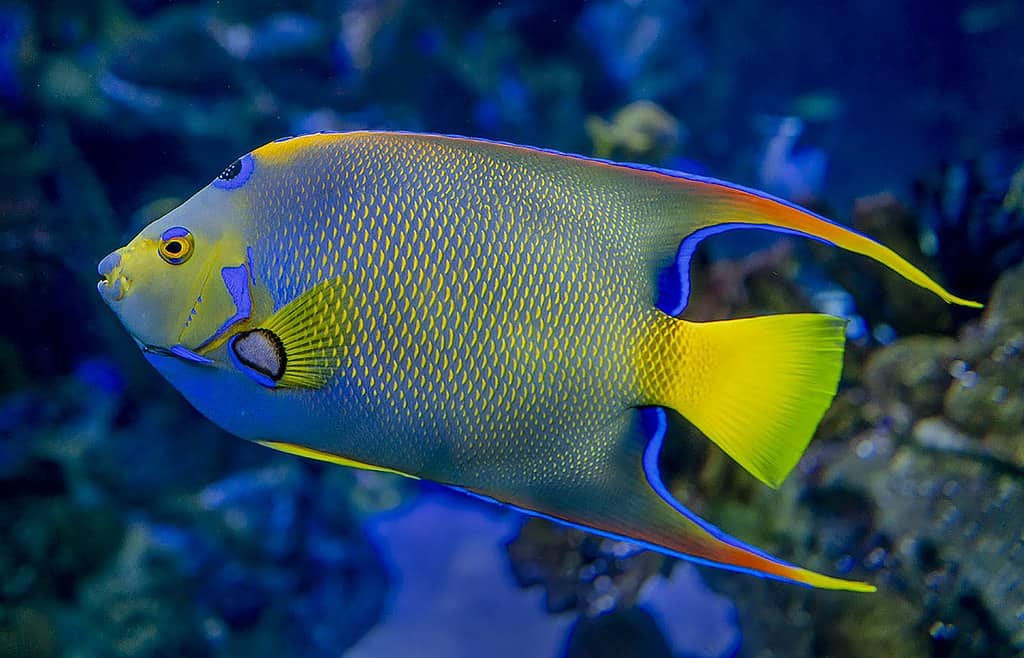
The Queen Angelfish reigns as one of the most majestic colored fish in the Florida Keys and throughout U.S. Caribbean waters. These large reef fish can grow up to 18 inches long and display a spectacular palette of blues, yellows, purples, and oranges. Their most distinctive feature is the dark blue “crown” marking on their forehead, which gives them their royal name. Their bodies typically feature a gradient of blue-green with yellow highlights along the edges of their fins.
Juvenile Queen Angelfish look markedly different from adults, featuring dark blue bodies with yellow vertical bars, an evolutionary adaptation that may help them avoid competition or predation at different life stages. These fish are protogynous hermaphrodites, meaning they begin life as females and can transform into males later. In reef ecosystems, they serve an important role by feeding on sponges, helping to prevent any single sponge species from dominating the reef habitat.
11. Pacific Blue Tang (Paracanthurus hepatus)

Made famous by the character Dory in the animated film “Finding Nemo,” the Pacific Blue Tang is found in the warm waters of Hawaii and other U.S. Pacific territories. These surgeonfish are instantly recognizable by their vibrant royal blue bodies, black “palette” marking, and yellow tails. They can grow up to 12 inches long and usually travel in schools across coral reefs, creating stunning visual displays as they move in unison.
The Pacific Blue Tang possesses sharp, scalpel-like spines at the base of its tail (hence the name “surgeonfish”), which can be extended for defense when threatened. Young Blue Tangs undergo a remarkable color transformation as they age—starting life as bright yellow juveniles before transitioning to their iconic blue coloration as adults. These fish are important reef maintainers, grazing on algae that might otherwise smother coral, demonstrating how even the most beautiful reef inhabitants play crucial ecological roles.
10. Rosy Rockfish (Sebastes rosaceus)
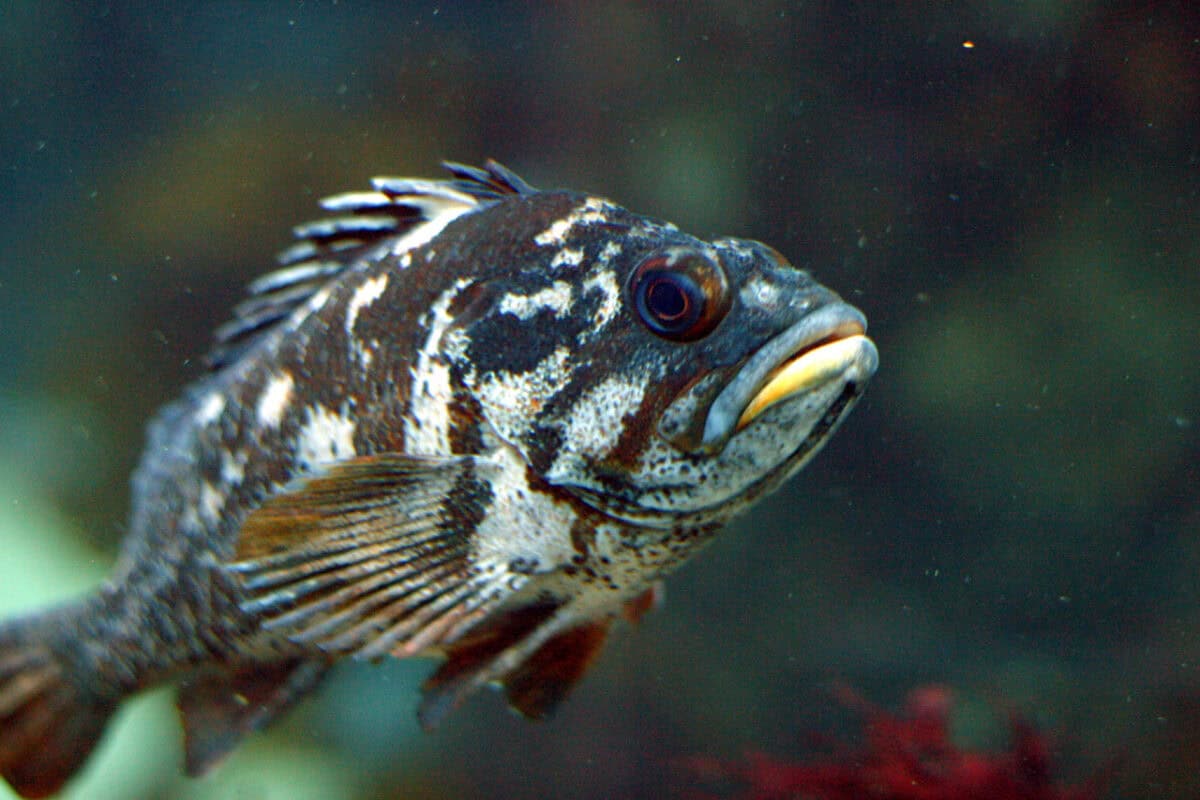
The cold waters off the Pacific Northwest and California coast are home to the Rosy Rockfish, a fish whose vibrant coloration defies the notion that only tropical waters produce colorful creatures. These rockfish display a stunning orange-red to pink coloration with darker mottling across their bodies and fins. Four distinct pink stripes radiate from their eyes across their cheeks, creating a distinctive facial pattern among the 70+ rockfish species found in U.S. waters.
Rosy Rockfish typically inhabit rocky reefs at depths between 150-420 feet, where their red coloration actually serves as camouflage—red light is filtered out at these depths, making them appear gray or black to predators. These slow-growing, long-lived fish (some rockfish can live over 100 years) give birth to live young rather than laying eggs. Their striking coloration combined with relatively slow reproduction rates has made some rockfish species vulnerable to overfishing, leading to increased protections in recent decades.
9. Hawaiian Cleaner Wrasse (Labroides phthirophagus)

The Hawaiian Cleaner Wrasse is endemic to the Hawaiian Islands and stands out with its distinctive three-color pattern: a black horizontal stripe running from snout to tail, bordered by electric blue above and bright yellow below. At just 4-5 inches in length, these small fish play an outsized role in reef ecosystems. They operate “cleaning stations” where larger fish come to have parasites and dead skin removed from their bodies, mouths, and even gills.
What makes these wrasses particularly fascinating is their relationship with “client” fish that could easily eat them. Their distinctive coloration serves as advertising, allowing potential clients to recognize them as cleaners rather than prey. Juvenile Hawaiian Cleaner Wrasses display even more intense coloration than adults, sometimes with additional purple hues. Their critical ecological role and striking colors have made them subjects of extensive research on symbiotic relationships in marine ecosystems.
8. Lined Seahorse (Hippocampus erectus)

The Lined Seahorse inhabits seagrass beds and mangroves along the Atlantic and Gulf coasts, from Cape Cod to Florida and throughout the Gulf of Mexico. While less vibrantly colored than some tropical species, these seahorses display an impressive range of color variations from ash-gray to bright orange, red, or yellow, often with white lines and tiny dots adorning their bodies. Their ability to change color to match their surroundings makes them especially fascinating.
Growing up to 7 inches tall, Lined Seahorses are known for their unusual reproductive strategy, where males become pregnant and give birth to fully-formed young. They can produce up to 1,500 offspring at a time, releasing tiny perfect replicas of adult seahorses from their brood pouch. Their prehensile tails allow them to anchor to seagrass or other structures as they wait for small crustaceans to drift by. Unfortunately, habitat loss and collection for traditional medicine have made them a species of conservation concern in some areas.
7. Catalina Goby (Lythrypnus dalli)
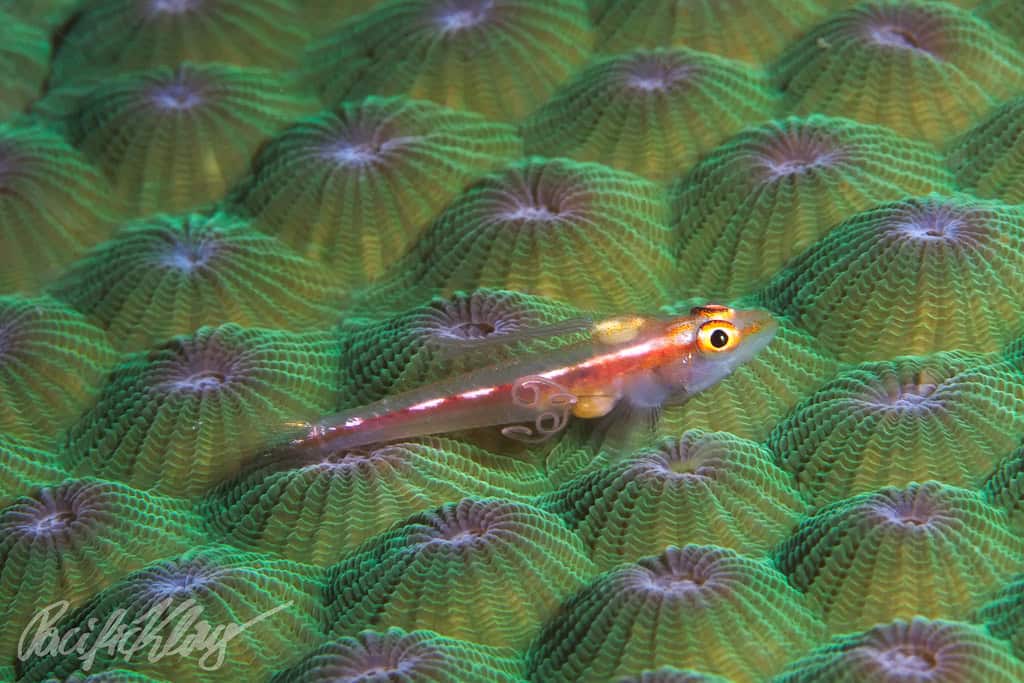
The Catalina Goby, also known as the Bluebanded Goby, is a tiny but spectacularly colored fish found in rocky reef habitats from California to the Gulf of California. Despite measuring only about 2.5 inches in length, these fish demand attention with their electric blue and ruby-red horizontal stripes that run the length of their bodies. Their vibrant coloration stands in stark contrast to the often muted kelp forest environments they inhabit.
What makes the Catalina Goby particularly fascinating is its complex social and reproductive behavior. These fish are sequential hermaphrodites that can change from female to male when social conditions warrant it, such as when a dominant male disappears from the group. This sex change comes with a shift in behavior but little change in their striking coloration. Their small size and brilliant colors have made them popular in the marine aquarium trade, though wild collection is now regulated to protect natural populations.
6. Sea Goldie (Pseudanthias squamipinnis)
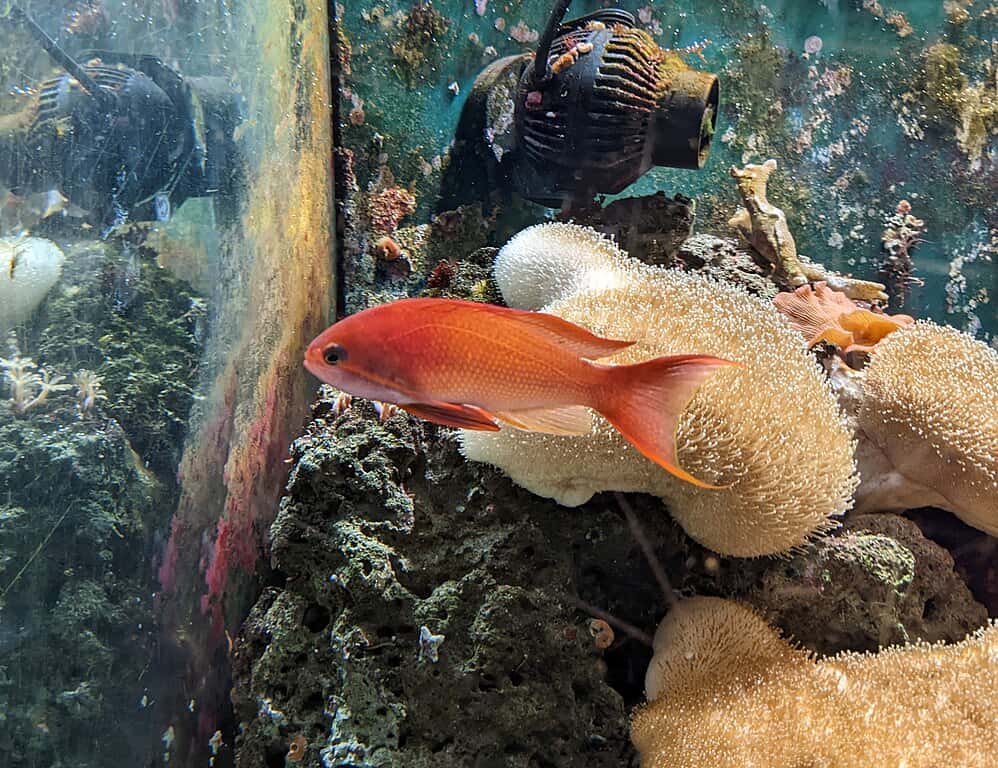
The Sea Goldie, also called the Lyretail Anthias, brings splashes of pink, orange, and purple to the deeper reef environments of Hawaii and U.S. Pacific territories. These fish exhibit extreme sexual dimorphism—males and females look dramatically different. Females display a vivid orange-pink coloration, while males develop more intense purplish-red bodies with elongated lyretail fins and a distinctive purple stripe running from their eyes to their tails.
Living in harems with a single dominant male overseeing groups of females, Sea Goldies are among the most abundant and colorful fish on healthy Pacific reefs. They feed primarily on zooplankton in the water column, darting out from the reef to feed and quickly retreating to safety when threatened. Like many colorful reef fish, they’re protogynous hermaphrodites, with some females transforming into males when the social structure of their group changes. Their dancing, fluttering movements combined with their brilliant colors create living kaleidoscopes above reef systems.
5. Longhorn Cowfish (Lactoria cornuta)
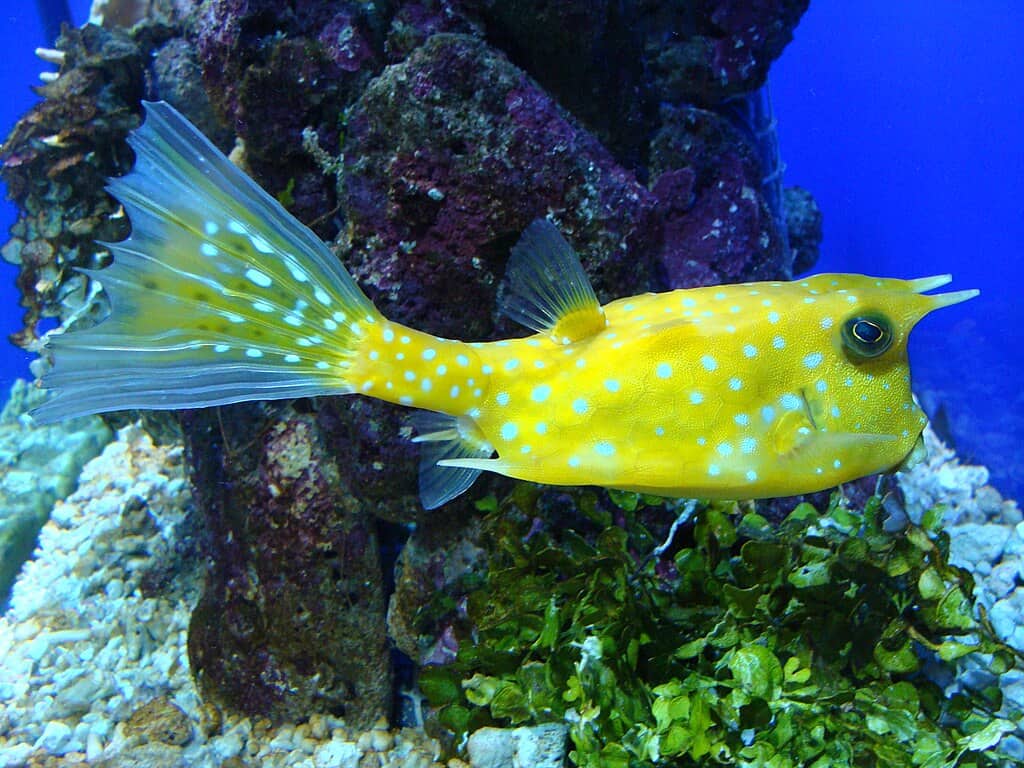
The Longhorn Cowfish is among the most unusual-looking colorful creatures in Hawaiian and southern Florida waters. These boxfish feature a yellow to olive-green body covered in small blue-white spots, creating a polka-dot effect that seems almost artificially designed. Their most distinctive features are the two long, horn-like protrusions that extend from their forehead, giving them their bovine-inspired name.
Beyond their striking appearance, Longhorn Cowfish possess fascinating adaptations. Their rigid, box-like body is actually a protective carapace made of fused scales, providing protection from predators. When threatened, they can release a powerful toxin called ostracitoxin from specialized skin cells, creating a cloud that can kill nearby fish. This combination of passive and chemical defense mechanisms, along with their unmistakable appearance, makes them one of the most recognizable colorful creatures in U.S. tropical waters, especially popular with underwater photographers and snorkelers.
4. California Hydrocoral (Stylaster californicus)
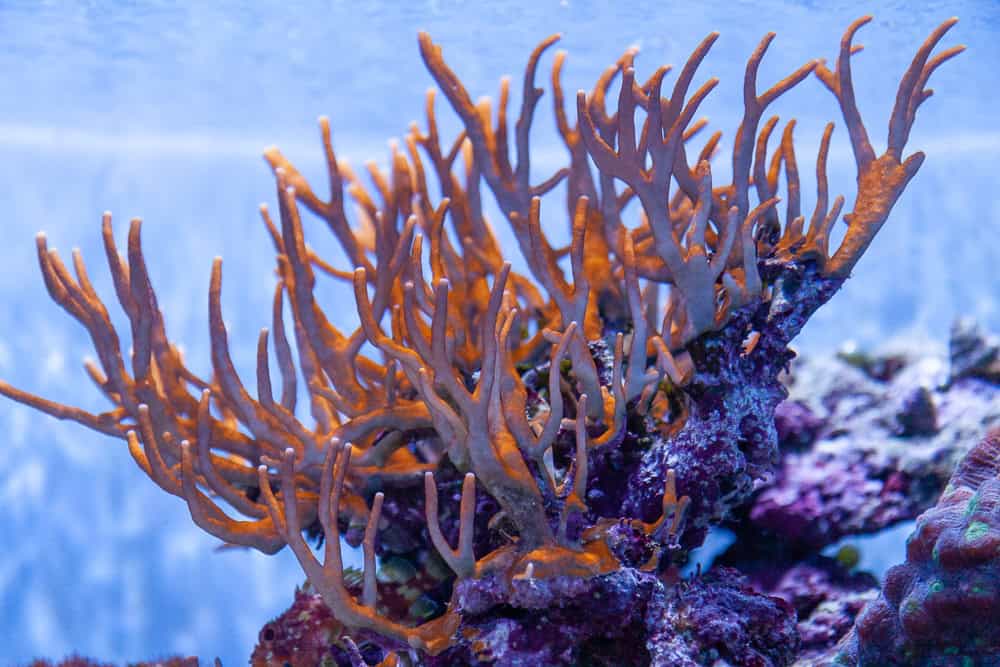
Often mistaken for a plant, the California Hydrocoral is actually a colonial animal that creates stunning bright pink to purple skeletal structures in the cold waters off the California coast, particularly around the Channel Islands. These delicate, branching formations can grow up to 12 inches high and stretch several feet across, creating living sculpture gardens on rocky reefs at depths of 30-100 feet. Their vibrant pink coloration stands in striking contrast to the often muted greens and browns of the kelp forest environments.
Unlike true corals that depend on symbiotic algae, California Hydrocorals are cnidarians more closely related to jellyfish and sea anemones. They capture passing plankton with their tiny stinging tentacles. Growth is extremely slow at just a quarter-inch per year, meaning large colonies may be decades or even centuries old. This slow growth rate, combined with their brittleness and vulnerability to physical damage from divers and fishing gear, has led to special protections for these colorful living gems in many California marine protected areas.
3. Painted Greenling (Oxylebius pictus)
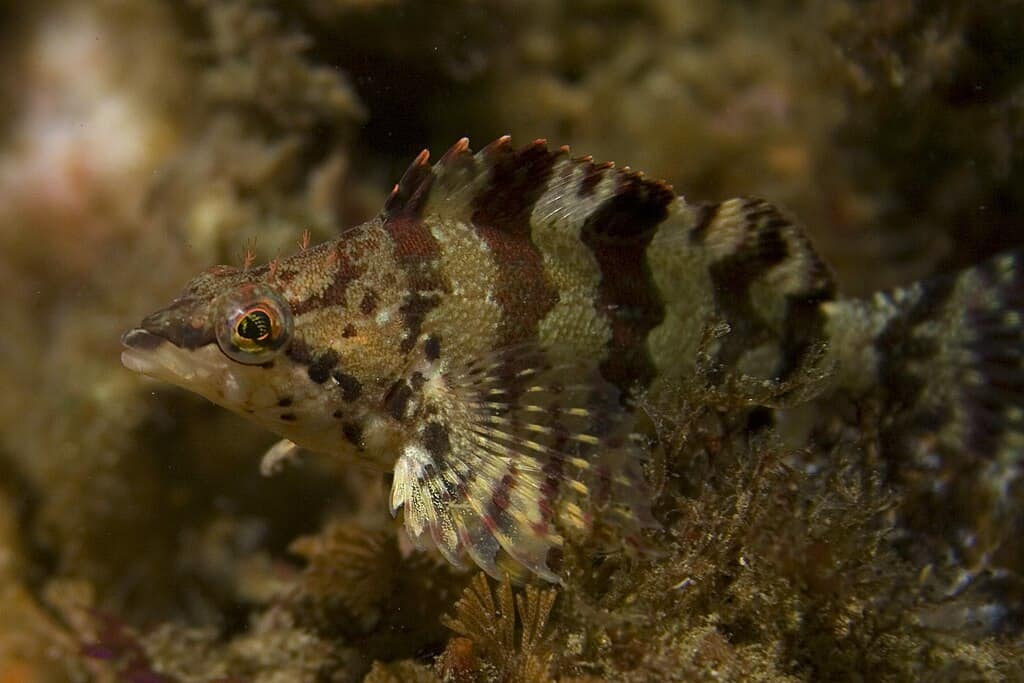
The Painted Greenling lives up to its name with a canvas-like pattern of reddish-brown and cream vertical bands adorning its body, accented by orange fins and a distinctive bright red spot on its dorsal fin. Found in rocky reef habitats from Alaska to Baja California, these fish reach about 10 inches in length and are especially common in the kelp forests off California’s coast. Their color pattern provides excellent camouflage among the rockweed and coralline algae of their natural habitat.
Male Painted Greenlings take on brighter coloration during breeding season, when they guard nests of eggs laid by females in rocky crevices. What makes these fish particularly interesting is their symbiotic relationship with certain species of sea anemones, near which they often make their homes. The fish gain protection from the anemone’s stinging tentacles (to which they appear immune), while potentially bringing food particles to their stationary partners. This relationship showcases how colorful marine creatures often have complex ecological interactions beyond their eye-catching appearances.
2. Candy Striped Shrimp (Lebbeus grandimanus)
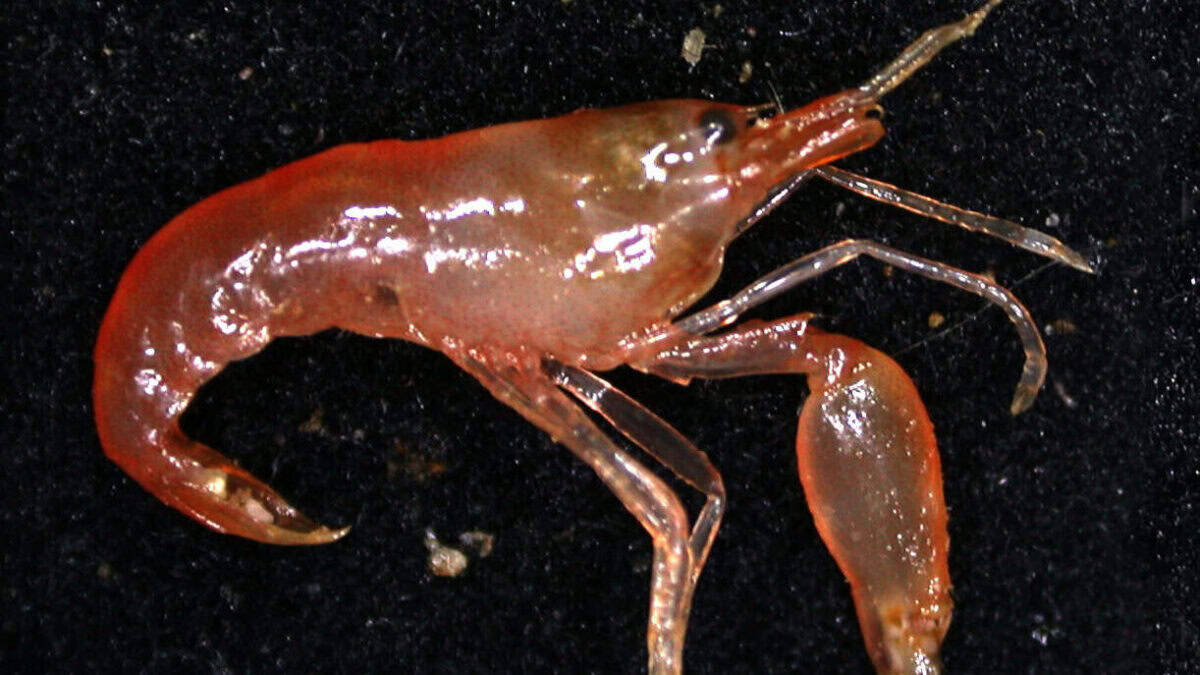
The Candy Striped Shrimp looks precisely as its name suggests—a translucent crustacean decorated with brilliant red bands that wrap around its body like peppermint candy. Found in the colder waters of Alaska and the Pacific Northwest, these shrimp grow to about 2 inches long and typically inhabit rocky areas with good water movement. Their vivid coloration stands out dramatically against the often darker, subdued backgrounds of temperate water ecosystems.
What makes these shrimp particularly interesting is their cleaning behavior. Like their tropical counterparts, Candy Striped Shrimp will sometimes clean parasites and dead tissue from larger fish. Their distinctive coloration may serve as a signal to fish that they provide this service and should not be eaten. They’re often found in association with crimson anemones, which provide them protection while the shrimp’s movements may help keep the anemone clean. Despite their beauty, they remain relatively unstudied compared to more accessible tropical cleaner shrimp species.
1. Pacific Purple Sea Urchin (Strongylocentrotus purpuratus)
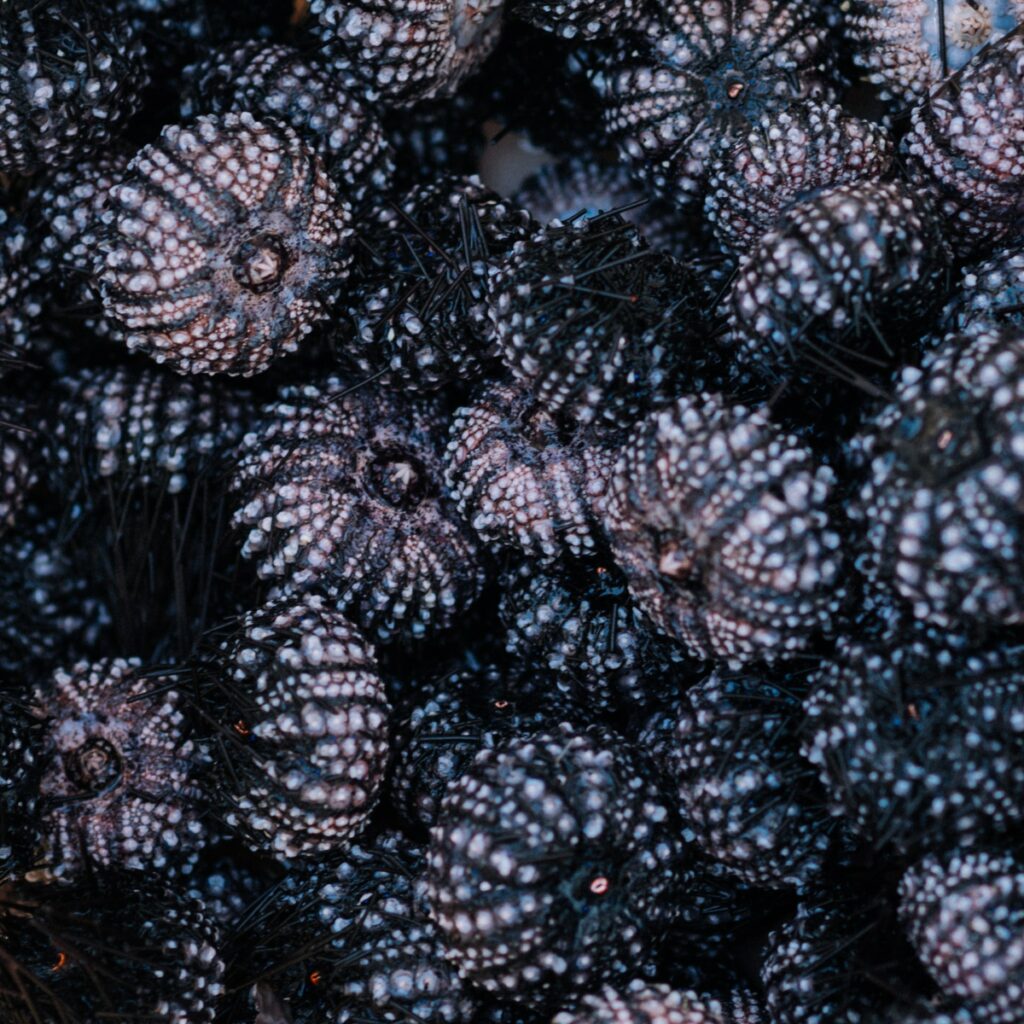
The Pacific Purple Sea Urchin creates striking underwater landscapes with its deep violet to burgundy coloration along rocky coastlines from Alaska to Mexico. These spiny echinoderms, typically 3-4 inches in diameter (excluding spines), can sometimes gather in such densities that they create purple carpets across rocky reef surfaces. Their color comes from a pigment called echinochrome, which may provide protection from ultraviolet radiation in shallow waters.
Beyond their eye-catching coloration, Purple Sea Urchins play a critical ecological role in kelp forest ecosystems. They’re primary grazers of kelp and algae, helping maintain balance in healthy systems. However, when their predators (like sea otters) are removed, urchin populations can explode, creating “urchin barrens” where they consume all available kelp. This demonstrates how even colorful, seemingly docile creatures can dramatically reshape entire marine ecosystems. Their hard, calcium carbonate shells also serve as microhabitats for numerous tiny marine organisms, creating biodiversity hotspots within their spiny exteriors.
Conclusion:

The waters of the United States are teeming with vibrant life, from the electric blues of reef fish in the Florida Keys to the brilliant reds and purples of sea slugs along the Pacific coast. These colorful creatures aren’t just beautiful—they also play vital roles in their ecosystems, serving as indicators of environmental health, warning signals to predators, or camouflage among coral and kelp. Their dazzling appearances are the result of millions of years of adaptation to the unique marine environments found across the country’s coastal and inland waters.
By appreciating the vivid diversity of life beneath the surface, we gain a deeper respect for the fragile ecosystems these creatures call home. Whether you’re snorkeling through a coral reef, exploring a tide pool, or simply marveling at underwater photography, these vibrant animals remind us of the incredible beauty that thrives just below the waterline—and the importance of protecting it for generations to come.
Worried about unexpected vet bills?
Pet insurance can cover thousands in unexpected vet costs. Get a free quote from Lemonade in under 2 minutes.
Get My Free Quote →Sponsored · Opens Lemonade.com

As a little kid, I fell in love with nature, wildlife, and animals. Living in the USA, South Africa, Italy, China and Germany gave me the opportunity to discover the world's Wildlife. My favorite animals are Mountain Gorillas, Siberian Tigers, and Great White Sharks.
I'm a certified PADI Open Water Diver, went to Everest Base Camp and Trekked Gorillas in Uganda. I hold a Master of Science in Economics and Finance.
Please send any feedback to feedback@animalsaroundtheglobe.com
- Top 10 Animals and Wildlife in the Rocky Mountains - June 4, 2026
- 12 Signs Your Dog Thinks You Are the Pack Leader - June 4, 2026
- African Wild Dogs Nature Master Strategists at Risk - June 4, 2026