


Contrary to what some might believe based on the title, Bubbles was not an elephant but rather Michael Jackson’s famous chimpanzee companion. This common misconception stems from the many exotic animals that resided at Jackson’s Neverland Ranch over the years. While Jackson did house various animals including giraffes, tigers, and reptiles, Bubbles was specifically a chimpanzee who became one of the most recognized animal companions of any celebrity. The chimp’s story has fascinated the public for decades, partly because of his unusual lifestyle and the mystery surrounding his fate after leaving Neverland Ranch.
Bubbles first entered Jackson’s life in the early 1980s, becoming not just a pet but a constant companion who traveled, dined, and even attended professional engagements with the King of Pop. Their relationship garnered significant media attention, with Bubbles becoming almost as famous as Jackson himself in certain circles. The chimpanzee’s journey from Hollywood to his later life represents a fascinating case study in the ethics and challenges of keeping primates as pets, even for those with virtually unlimited resources.
Bubbles’ Early Life with Michael Jackson
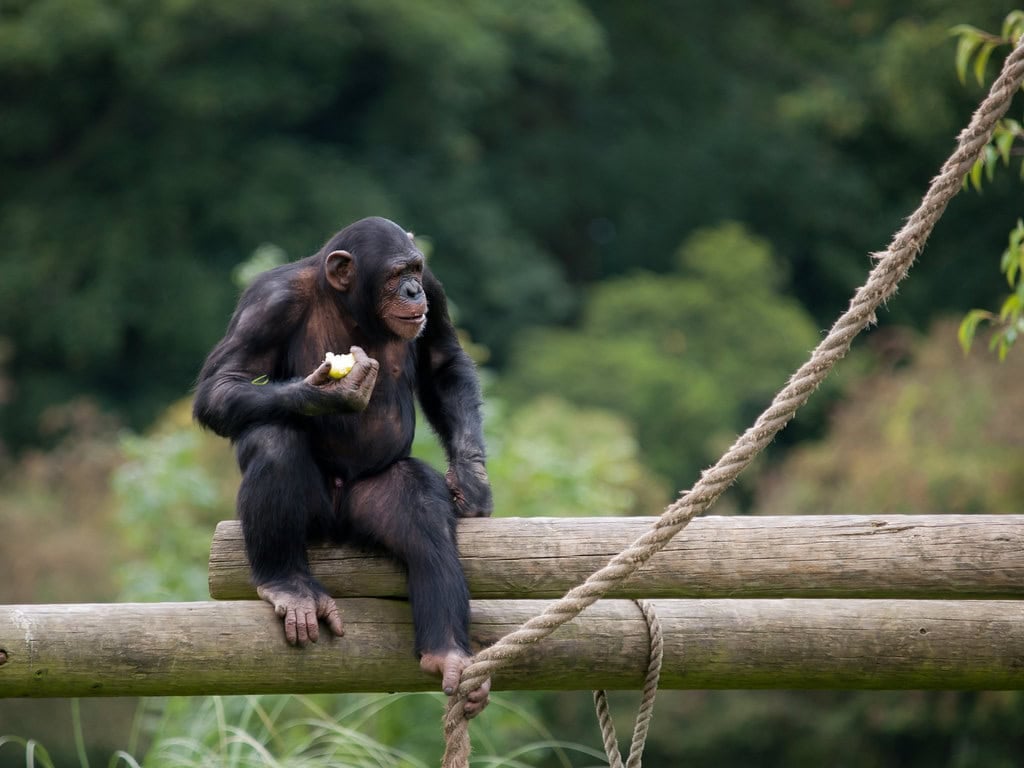
Bubbles was reportedly born in 1983 in a Texas research facility. Michael Jackson acquired him when Bubbles was still an infant, possibly around 8 months old. The young chimpanzee quickly became an integral part of Jackson’s eccentric lifestyle. During his early years with Jackson, Bubbles experienced a life unlike any other chimpanzee on the planet. He slept in a crib in Jackson’s bedroom, used the star’s toilet, and ate at the dining table with Jackson and his guests. This unusual upbringing blurred the lines between human and animal in ways that would later become problematic.
As a young chimp, Bubbles traveled the world with Jackson, visiting Japan during the Bad World Tour and attending tea with the mayor of Osaka. He even sat in on recording sessions for Jackson’s albums. During this period, Bubbles was dressed in matching outfits with Jackson, further cementing the image of the chimp as an extension of the pop star’s persona rather than as a wild animal with natural needs and behaviors. This period marked the height of Bubbles’ celebrity status, with the chimp appearing in numerous photographs and news stories about Jackson.
Life at Neverland Ranch

When Michael Jackson created his famous Neverland Ranch in Santa Barbara County, California, Bubbles became one of its most notable residents. The 2,700-acre property featured a zoo, amusement park rides, and sprawling gardens where Bubbles could roam more freely than in Jackson’s previous residences. At Neverland, Bubbles had his own quarters but reportedly still spent significant time in the main house with Jackson. The chimp was known to watch movies in Jackson’s private theater and join the star for dinner with celebrity guests.
During the Neverland years, Bubbles’ presence became part of the unusual mystique surrounding Jackson’s home. Visitors to the ranch would often comment on interactions with the chimp, who was trained to offer refreshments to guests and bow when introduced. However, as Bubbles matured physically, his natural chimpanzee behaviors began to emerge more prominently. Adult male chimpanzees naturally become stronger and more aggressive, a biological reality that would eventually necessitate changes in his living situation, regardless of his celebrity owner’s wishes or resources.
The Growing Challenges of Keeping an Adult Chimpanzee

As Bubbles matured into adulthood, the situation at Neverland became increasingly complicated. Adult male chimpanzees can be up to five times stronger than adult humans and naturally become more aggressive and territorial as they mature. By the late 1990s, Bubbles had grown into a powerful adult chimp weighing over 160 pounds. According to various accounts, including statements from Jackson’s staff, Bubbles began showing signs of aggression that made his continued presence in the household problematic. This included reported incidents of Bubbles becoming destructive with furniture and occasionally threatening behavior toward humans.
The challenge Jackson faced with Bubbles is common among those who keep chimpanzees as pets. What begins as a seemingly manageable and even adorable infant primate inevitably grows into a powerful wild animal with natural instincts that cannot be suppressed through training. This reality has led most primatologists and animal welfare experts to strongly discourage keeping chimpanzees as pets under any circumstances. For Jackson, who reportedly had a strong emotional attachment to Bubbles, the situation presented a difficult dilemma that would ultimately require finding the chimp a more appropriate living situation.
The Decision to Relocate Bubbles

By 2003, it became clear that Neverland Ranch was no longer a suitable home for Bubbles. The specific catalyst for Bubbles’ removal varies according to different sources. Some reports suggest that the final decision came after Bubbles allegedly became aggressive toward Jackson’s newborn son, Prince Michael II (also known as Blanket). Other accounts claim the decision was made more gradually as part of a general recognition that the adult chimp needed specialized care that could not be provided in a home environment, even one as elaborate as Neverland.
The decision to relocate Bubbles represented a significant turning point in the chimp’s life story. While Jackson had treated Bubbles as something between a child and a pet, the reality of chimpanzee biology could not be ignored indefinitely. This transition marked the end of Bubbles’ unusual life in the spotlight and the beginning of a more appropriate—if less glamorous—chapter for the famous chimp. Jackson reportedly remained financially responsible for Bubbles’ care even after the relocation, suggesting continued concern for the animal’s welfare despite the separation.
Temporary Home at Bob Dunn’s Ranch

Bubbles’ first destination after leaving Neverland was the ranch of animal trainer Bob Dunn in Sylmar, California. Dunn had previously worked with Bubbles and other celebrity animals, making his facility a logical transition point. At Dunn’s ranch, Bubbles was able to interact with other chimpanzees, possibly for the first time in his life. This period served as an important adjustment phase, allowing Bubbles to begin developing more natural social behaviors with members of his own species after years of primarily human interaction.
While at Bob Dunn’s facility, Bubbles began the process of learning to live more like a chimpanzee and less like a human child. This transition period was crucial for his long-term welfare, though it would have represented a significant change from his previous lifestyle. The stay at Dunn’s ranch was always intended to be temporary, as the facility was not designed as a permanent sanctuary for retired entertainment animals. Records indicate Bubbles remained there for approximately one to two years while a more permanent solution was arranged.
Finding a Permanent Home at the Center for Great Apes

In 2005, Bubbles was transferred to the Center for Great Apes in Wauchula, Florida, where he has lived ever since. This 100-acre sanctuary is specifically designed for orangutans and chimpanzees who have been retired from the entertainment industry or the pet trade. Founded by Patti Ragan in 1993, the Center for Great Apes provides a naturalistic environment where primates can live in social groups with others of their species. For Bubbles, this represented his first opportunity to live in a setting that prioritized his natural needs as a chimpanzee rather than treating him as a humanized pet or entertainment attraction.
The Center for Great Apes houses approximately 40 great apes, including several who, like Bubbles, achieved fame before being retired. The facility features large outdoor habitats connected by elevated tunnels called “aerial trailways” that allow the apes to travel between different areas while remaining safely contained. The center operates as a non-profit organization, relying on donations, grants, and in some cases, continued financial support from former owners. According to the sanctuary, Michael Jackson continued to provide financial support for Bubbles’ care until the star’s death in 2009.
Bubbles’ Life at the Sanctuary

At the Center for Great Apes, Bubbles has developed relationships with other chimpanzees and adapted to a more natural lifestyle. According to updates from the sanctuary, he has become the dominant male in a small group of chimpanzees. Bubbles reportedly enjoys painting, listening to flute music, and spending time with his chimpanzee friends. The sanctuary environment allows him to climb, forage, and engage in other natural behaviors that would have been impossible during his years as Jackson’s companion.
Sanctuary staff have noted that Bubbles has a distinct personality, described as somewhat aloof and serious compared to some of the other chimps. He reportedly does not seek attention from human caregivers, perhaps reflecting his unique history. Now in his late 30s (as of 2023), Bubbles has lived at the sanctuary for significantly longer than he lived with Michael Jackson. Chimpanzees in captivity can live into their 50s or even 60s, suggesting that Bubbles may have many more years ahead of him in his sanctuary home.
Public Interest and Media Coverage

Even after leaving Neverland, Bubbles has continued to capture public imagination. The chimp has been the subject of numerous news articles, documentary segments, and even artistic works. In 2018, a documentary titled “Bubbles” was planned as a stop-motion animation film about his life with Michael Jackson, though the project was eventually shelved following controversy surrounding allegations against Jackson. Artist Jeff Koons created a porcelain sculpture titled “Michael Jackson and Bubbles” in 1988, which sold at auction for $5.6 million in 2001, demonstrating the cultural impact of their relationship.
The Center for Great Apes has managed public interest in Bubbles carefully, balancing the educational opportunity his story presents with the need to respect his welfare as a sanctuary resident. While the center occasionally shares updates about Bubbles and allows limited opportunities for supporters to “adopt” chimpanzees through donation programs, they do not exploit their famous residents for entertainment purposes. The sanctuary does not allow public visits in the same way as a zoo, protecting the apes from the stress of constant observation and maintaining their focus on providing appropriate care.
Michael Jackson’s Estate and Bubbles

After Michael Jackson’s death in 2009, questions arose about the continued financial support for Bubbles and the other animals formerly housed at Neverland. According to representatives from the Center for Great Apes, arrangements were made through Jackson’s estate to continue supporting Bubbles’ care. The exact details of these financial arrangements have not been made public, but the sanctuary has confirmed that Bubbles’ needs continue to be met through a combination of support from the estate and the sanctuary’s general funding mechanisms.
The relationship between Jackson’s legacy and Bubbles represents an interesting aspect of celebrity estate planning. While provisions for human heirs are standard in estate planning, arrangements for the continued care of animals—especially those with potentially decades of life remaining—present unique challenges. Jackson’s apparent commitment to ensuring Bubbles’ welfare even after his own death reflects a recognition of the lifetime responsibility involved in acquiring an exotic animal, even if the initial decision to keep a chimpanzee as a pet remains controversial among animal welfare experts.
The Ethics of Celebrities Owning Exotic Animals

Bubbles’ story has become a cautionary tale about the problems inherent in keeping primates as pets. While Jackson provided Bubbles with material comforts far beyond what most pet owners could offer, even these extraordinary resources could not change the fundamental incompatibility between a mature chimpanzee’s needs and a human household. In the years since Bubbles left Neverland, many states have implemented stricter regulations on private ownership of primates and other exotic animals, partially in response to greater awareness of the issues illustrated by cases like Bubbles.
Animal welfare organizations routinely cite Bubbles’ story when advocating against the exotic pet trade. They emphasize that even with Michael Jackson’s virtually unlimited resources and obvious affection for Bubbles, the situation ultimately proved unsustainable. The necessary transition from beloved household member to sanctuary resident highlights the fundamental ethical problems with treating wild animals as pets or entertainment properties. Today, most primatologists and wildlife experts strongly advocate that great apes should only live in accredited zoos, legitimate sanctuaries, or the wild—never as private pets, regardless of the owner’s resources or intentions.
Lessons from Bubbles’ Journey

The story of Bubbles offers valuable insights into the complex relationships between humans and animals, particularly great apes. From a scientific perspective, chimpanzees share approximately 98.6% of their DNA with humans, making them our closest living relatives. This genetic similarity contributes to the appeal of chimps as pets or entertainment animals, as their expressions and behaviors can seem remarkably human-like, especially when they’re young. However, this same relatedness masks fundamental differences in needs, instincts, and development that make long-term cohabitation problematic.
Bubbles’ transition from Jackson’s surrogate child to sanctuary resident illustrates the natural progression of chimpanzee development. While infant chimps may seem adaptable to human environments, their natural biological programming inevitably asserts itself as they mature. The fact that even Michael Jackson—with his extraordinary resources and genuine attachment to Bubbles—ultimately needed to find an alternative living situation for the chimp demonstrates the inherent problems with private ownership of great apes. In this sense, Bubbles’ story has contributed positively to public education about the true nature and needs of chimpanzees.
Conclusion: Bubbles Today

Today, Bubbles lives a quiet life far removed from the international spotlight he once occupied alongside Michael Jackson. Now approaching his 40s, he has spent the majority of his life at the Center for Great Apes, where he has developed relationships with other chimpanzees and adapted to a lifestyle much more suited to his species’ natural needs. While his early years with Jackson remain a fascinating chapter in celebrity history, animal welfare experts generally agree that his current sanctuary home represents a far more appropriate environment for a chimpanzee.
Bubbles’ journey from research facility to global celebrity to sanctuary resident encapsulates changing attitudes toward exotic animal ownership over the past four decades. What was once seen as an eccentric but acceptable hobby for the wealthy is now widely recognized as problematic from both ethical and practical perspectives. Through continued education about his story and current life, Bubbles continues to serve as an ambassador for his species, helping the public understand both the appeal and the significant challenges of human-great ape relationships.
The care provided to Bubbles at the Center for Great Apes represents a commitment to giving him the best possible life after his unusual early years. While visitors cannot see Bubbles in person, the sanctuary periodically shares updates about his health and activities through their website and social media channels. These glimpses into his current life provide reassurance that the famous chimpanzee who once traveled the world with the King of Pop has found a peaceful and appropriate retirement among others of his kind.
Ultimately, Bubbles’ story has a happier ending than many exotic pets who outlive their welcome in human homes. Thanks to Jackson’s resources and the existence of specialized sanctuaries like the Center for Great Apes, Bubbles was able to transition to an appropriate environment rather than facing the neglect or improper care that befalls many formerly-beloved exotic pets. His continued well-being serves as both a testament to the sanctuary system and a reminder of the lifelong responsibility involved in acquiring any animal, particularly one as complex and long-lived as a chimpanzee.

From exploring the marine wonders in the Azores and witnessing the vast savannas of Kenya, to delving deep into the rich biodiversity of South Africa and traversing iconic landscapes in Australia and the US like Yellowstone, Chris's experiences are vast.
With a penchant for diving alongside sharks, the ocean holds a special place in his heart.
Through his academic insights, he champions wildlife conservation, striving with 'Animals Around The Globe' to cultivate a profound connection between humans and animals, enhancing our mutual appreciation.
Connect with him at Feedback@animalsaroundtheglobe.com.
- 10 Cat Breeds That Are Known for Their Intelligence - June 25, 2026
- How Monkeys Are Trained in Certain Cultures—And the Ethics Behind It - June 25, 2026
- The Most Venomous Snakes Slithering Through the Backwoods of Alabama - June 25, 2026