

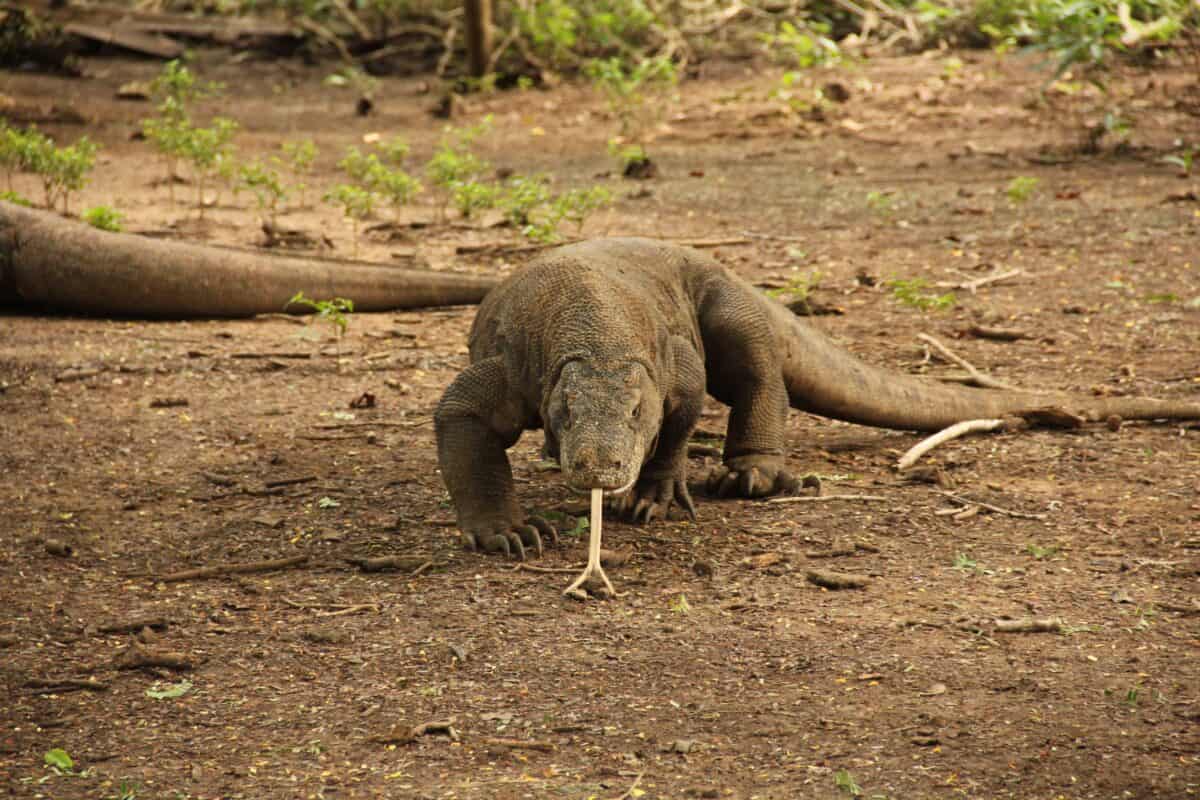
The Komodo dragon, with its prehistoric appearance and fearsome reputation, has captivated human imagination for centuries. As the world’s largest lizard species, these formidable predators have become surrounded by a mix of fascinating truths and persistent misconceptions. Native to the Indonesian islands, particularly Komodo Island, these remarkable reptiles continue to be subjects of scientific study and popular fascination. In this comprehensive exploration, we’ll separate fact from fiction, examining ten verifiable truths about these magnificent creatures alongside four widespread myths that deserve to be debunked. From their hunting tactics to their evolutionary history, prepare to discover the real story behind these iconic dragons.
True Fact #10 Komodo Dragons Are the World’s Largest Living Lizards

Komodo dragons (Varanus komodoensis) truly deserve their impressive reputation as giants of the reptile world. These magnificent creatures can grow to a remarkable length of up to 10 feet (3 meters) and weigh as much as 330 pounds (150 kilograms). Their massive size makes them the undisputed champions among living lizard species, dwarfing even their closest relatives in the monitor lizard family. Males typically grow larger than females, exhibiting a notable sexual dimorphism that researchers believe plays a role in their mating behaviors and territorial disputes.
The impressive dimensions of Komodo dragons are the result of a fascinating evolutionary phenomenon known as island gigantism. This occurs when species isolated on islands with few predators and competitors evolve to much larger sizes than their mainland counterparts. Their large size gives them a significant advantage as apex predators in their ecosystem, allowing them to take down prey much larger than themselves, including deer, pigs, and even water buffalo—animals that can weigh several times more than the dragons themselves.
True Fact #9 They Have a Deadly Bacterial Bite

One of the most well-documented facts about Komodo dragons is their lethal bite, which is dangerous for multiple reasons. While their serrated teeth certainly cause significant tissue damage, the bacteria in their mouths play a crucial role in their hunting strategy. Researchers have identified over 50 different strains of bacteria in Komodo dragon saliva, including several pathogenic species that can cause severe infections. When a Komodo dragon bites its prey, these bacteria enter the wound and begin to multiply rapidly, causing systemic infection that can eventually lead to sepsis.
This bacterial arsenal serves as an effective hunting tool. Even if prey animals initially escape after being bitten, the resulting infection often weakens them over the following days or weeks. Komodo dragons have evolved exceptional patience and tracking abilities to follow wounded prey for long distances—sometimes up to several miles—until the animals succumb to infection and can be consumed. This hunting strategy allows relatively solitary Komodo dragons to take down prey much larger than themselves without expending enormous amounts of energy in a direct confrontation.
True Fact #8 Komodo Dragons Can Reproduce Asexually

In a remarkable biological feat, female Komodo dragons possess the ability to reproduce through parthenogenesis—a form of asexual reproduction where embryos develop from unfertilized eggs. This phenomenon was first documented in 2006 when a female Komodo dragon at the Chester Zoo in England laid a clutch of viable eggs despite having no contact with male dragons. Scientists were astonished to discover that all the resulting offspring were male, as the mother’s chromosomes had essentially doubled to create a full set of genetic material.
This reproductive flexibility likely evolved as a survival adaptation, allowing isolated female Komodo dragons to establish new populations when no males are available. In parthenogenetic reproduction, the offspring are not exact clones of the mother but rather have genetic diversity limited to the variations possible within the mother’s own genome. While this method of reproduction reduces genetic diversity compared to sexual reproduction, it provides a critical backup system that helps ensure the species’ survival in fragmented habitats. This ability is rare among vertebrates but has been documented in a few other reptile species.
True Fact 7 They Have Incredible Hunting Endurance

Komodo dragons possess remarkable stamina that makes them formidable hunters. Unlike many reptiles that rely on ambush tactics, Komodo dragons can maintain pursuit of prey over long distances, sometimes tracking wounded animals for days. They can achieve surprising bursts of speed, reaching up to 12 miles per hour (20 kilometers per hour) in short sprints—an impressive feat for such a large reptile. This combination of speed and endurance is particularly effective in their island habitats, where prey animals have limited escape routes.
Their hunting endurance is supported by specialized physiological adaptations. Komodo dragons have a more efficient cardiovascular system than most other reptiles, with a divided heart chamber that improves oxygen circulation during extended activity. They also utilize their muscular tails as counterbalances when running, allowing them to make quick directional changes while in pursuit. These dragons are primarily active during the day, using their excellent vision to spot potential prey from distances of up to 300 meters (985 feet), giving them ample time to plan and execute their hunting strategies.
True Fact #6 Komodo Dragons Have Venomous Glands

In a groundbreaking 2009 study, researchers confirmed that Komodo dragons possess genuine venom glands—settling a long-standing scientific debate. Located in their lower jaws, these specialized glands produce a complex venom containing multiple toxins that prevent blood clotting, lower blood pressure, induce muscle paralysis, and cause rapid blood loss in bite victims. This venom works in conjunction with their bacteria-laden saliva to create a doubly effective weapon system that significantly increases their hunting success rate.
The venom delivery system of Komodo dragons differs from that of venomous snakes. Rather than hollow fangs, they have deeply grooved teeth and glands that allow venom to flow into wounds during biting. When hunting large prey like deer or pigs, Komodo dragons often target the legs first, using their venom to induce shock and prevent escape. This discovery of venom production has caused scientists to reconsider the evolutionary history of these reptiles and their relationship to other venomous species. It also suggests that venom production may be more widespread among lizards than previously thought.
True Fact #5 Their Limited Range Makes Them Vulnerable

Komodo dragons have one of the most restricted natural ranges of any large predator, occurring naturally on only five islands in Indonesia: Komodo, Rinca, Flores, Gili Motang, and Gili Dasami. This limited distribution makes them inherently vulnerable to extinction threats. Their total natural habitat spans less than 1,400 square kilometers (540 square miles), with the majority of the population concentrated on Komodo and Rinca islands. This geographic isolation is both the reason for their unique evolution and a significant conservation challenge.
The International Union for Conservation of Nature (IUCN) classifies Komodo dragons as Endangered, with their wild population estimated at fewer than 4,000 individuals. Their restricted range makes them particularly susceptible to habitat loss, natural disasters, and climate change impacts. Rising sea levels could significantly reduce their available habitat, while increasing temperatures may affect their biological processes, including their temperature-dependent sex determination during egg incubation. Conservation efforts, including the establishment of Komodo National Park in 1980, aim to protect these remarkable reptiles from extinction, but their limited distribution remains a major concern for their long-term survival.
True Fact #4 Komodo Dragons Are Excellent Swimmers

Despite their bulky appearance and terrestrial hunting habits, Komodo dragons are surprisingly adept swimmers. They can cross significant stretches of open water between islands, using their powerful tails as propellers in a serpentine swimming motion. This aquatic mobility has played a crucial role in their evolutionary history, allowing them to colonize multiple islands in the Indonesian archipelago. Young dragons, in particular, are often more comfortable in trees and water than on the ground, where they might fall prey to larger adults.
Their swimming ability serves multiple purposes beyond mere transportation. Komodo dragons often cool themselves in water during hot weather and will readily enter shallow marine environments to feed on carrion or hunt marine animals stranded in tide pools. They have been observed swimming up to 500 meters (1,640 feet) between islands in the wild. This aquatic proficiency distinguishes them from many other large reptiles and highlights their remarkable adaptability to various environmental conditions. Their swimming capability also explains how they’ve maintained genetic connectivity between island populations, though human activity has increasingly fragmented these natural corridors.
True Fact #3 They Have Incredibly Powerful Digestive Systems

Komodo dragons possess one of the most efficient digestive systems in the animal kingdom. These remarkable reptiles can consume up to 80% of their body weight in a single meal, devouring almost every part of their prey including bones, hooves, and hide. Their stomach acidity is exceptionally high, allowing them to break down and neutralize pathogens present in decaying carcasses. This powerful digestive capability means they can safely consume carrion that would sicken or kill other predators, giving them a significant ecological advantage.
After a large meal, Komodo dragons undergo dramatic physiological changes to accommodate digestion. Their metabolic rate increases substantially, and their intestines can expand to process the enormous quantity of food. They may then go without eating for weeks or even months following a substantial feast. To aid in digesting large chunks of meat, they repeatedly slam their bodies against trees to force food further down their digestive tract—a behavior unique among reptiles. Their efficient digestion also means little goes to waste; they excrete very little undigested material, extracting maximum nutritional value from each meal.
True Fact #2 Komodo Dragons Have a Complex Social Structure

Contrary to the common perception of reptiles as solitary creatures with limited social behaviors, Komodo dragons display surprisingly sophisticated social dynamics. They maintain a clear dominance hierarchy, particularly evident during feeding events where larger dragons eat first while smaller individuals wait their turn. Researchers have documented complex non-verbal communication between dragons, including specific body postures, tongue flicking patterns, and even facial expressions that convey information about social status and intentions to other dragons.
During mating season, males engage in ritualized combat known as “wrestling,” standing on their hind legs and grappling with their forelegs to establish dominance and earn mating rights. These battles rarely result in serious injury, suggesting they’ve evolved as a method to establish hierarchy without endangering population survival. Female dragons also exhibit complex maternal behaviors, carefully selecting and preparing nest sites, and sometimes guarding their eggs for several months. While they don’t directly care for hatchlings, recent studies suggest mothers may recognize their offspring and show less aggression toward them than toward unrelated young dragons—hinting at more complex familial recognition than previously thought.
True Fact #1 They Have an Extraordinary Sense of Smell

Komodo dragons possess one of the most refined olfactory systems among reptiles, capable of detecting carrion from distances of up to 5 miles (8 kilometers) away under favorable wind conditions. This extraordinary sense of smell is facilitated by their forked tongue and Jacobson’s organ (vomeronasal organ), a specialized sensory structure in the roof of their mouth. When a Komodo dragon flicks its yellow forked tongue, it’s collecting scent particles from the air and ground, which are then delivered to this organ for processing.
This remarkable olfactory ability serves multiple crucial functions beyond merely locating food. It allows them to detect potential mates, identify territorial markings from other dragons, and even determine when female dragons are receptive to breeding. Their sense of smell is so precise that they can follow the exact path of wounded prey, detecting minute traces of blood in the air or on vegetation. Young Komodo dragons use their sense of smell to avoid areas frequented by larger adults, reducing the risk of cannibalism. Researchers have found that Komodo dragons can differentiate between individual human scents and often recognize their regular keepers in captivity, suggesting cognitive abilities far more advanced than previously attributed to reptiles.
Myth #4 Komodo Dragons Spit Fire

Despite their evocative name, Komodo dragons cannot breathe or spit fire—a misconception likely stemming from the conflation of these real-world reptiles with mythical dragons from folklore. This myth has no basis in scientific reality, as Komodo dragons lack any biological mechanism that could produce or expel flames. Their name actually derives from local legends on Komodo Island, where residents once believed these enormous lizards descended from a mythical dragon, not from any fire-producing ability.
The persistence of this myth in popular culture speaks to how these imposing creatures have captured human imagination. Their powerful jaws, threatening posture, and deadly hunting abilities are impressive enough without fictional fire-breathing capabilities. Interestingly, when threatened, Komodo dragons may hiss loudly and produce large amounts of saliva, which might have contributed to misinterpretations by early explorers or storytellers. Their forked tongues, frequently flicked to sample air particles, may also have reinforced associations with mythical fire-breathing dragons in the minds of those unfamiliar with their actual biology.
Myth #3 Komodo Dragons Always Kill Their Prey Instantly

A common misconception portrays Komodo dragons as delivering instant death to their prey through a single, fatal bite. In reality, their hunting strategy is far more complex and typically involves a prolonged process. While their venomous bite and bacterial infection are indeed lethal, they rarely kill large prey immediately. Instead, Komodo dragons often bite their targets and then track them for hours or even days until the venom and bacteria take full effect, gradually weakening the animal until it can no longer escape or defend itself.
This patient hunting approach reflects an evolutionary adaptation to their island environment, where conserving energy is crucial for survival. The persistence hunting strategy allows relatively solitary Komodo dragons to take down prey much larger than themselves without risking serious injury in a direct confrontation. Smaller prey like young goats or deer might succumb quickly to a Komodo dragon attack, but larger animals like water buffalo often survive the initial encounter, only to weaken progressively over time. This hunting strategy requires significant intelligence and spatial memory, as dragons must remember where they’ve bitten prey and predict likely escape routes to track their quarry effectively.
Myth #2 Komodo Dragons Are Dinosaur Descendants

Despite their prehistoric appearance and the nickname “living dinosaurs,” Komodo dragons are not direct descendants of dinosaurs. This common misconception confuses evolutionary relationships and timeline. While birds evolved directly from theropod dinosaurs, Komodo dragons belong to a separate reptilian lineage that diverged from the archosaur line (which includes dinosaurs and birds) approximately 250 million years ago. Komodo dragons are actually monitor lizards (family Varanidae), a group that evolved during the late Cretaceous period when dinosaurs still roamed the Earth.
The evolutionary history of Komodo dragons is fascinating in its own right without needing dinosaur ancestry. Genetic and fossil evidence suggests that Komodo dragons evolved from smaller monitor lizards that migrated to Indonesia from Australia approximately 4 million years ago. Once isolated on the Indonesian islands, they underwent island gigantism, a process where species grow significantly larger than their mainland relatives due to reduced predation pressure and competition. Their impressive size and appearance certainly evoke prehistoric imagery, but from an evolutionary standpoint, calling them dinosaur descendants is as inaccurate as applying that label to snakes or turtles.
Myth #1 Komodo Dragons Regularly Attack and Eat Humans
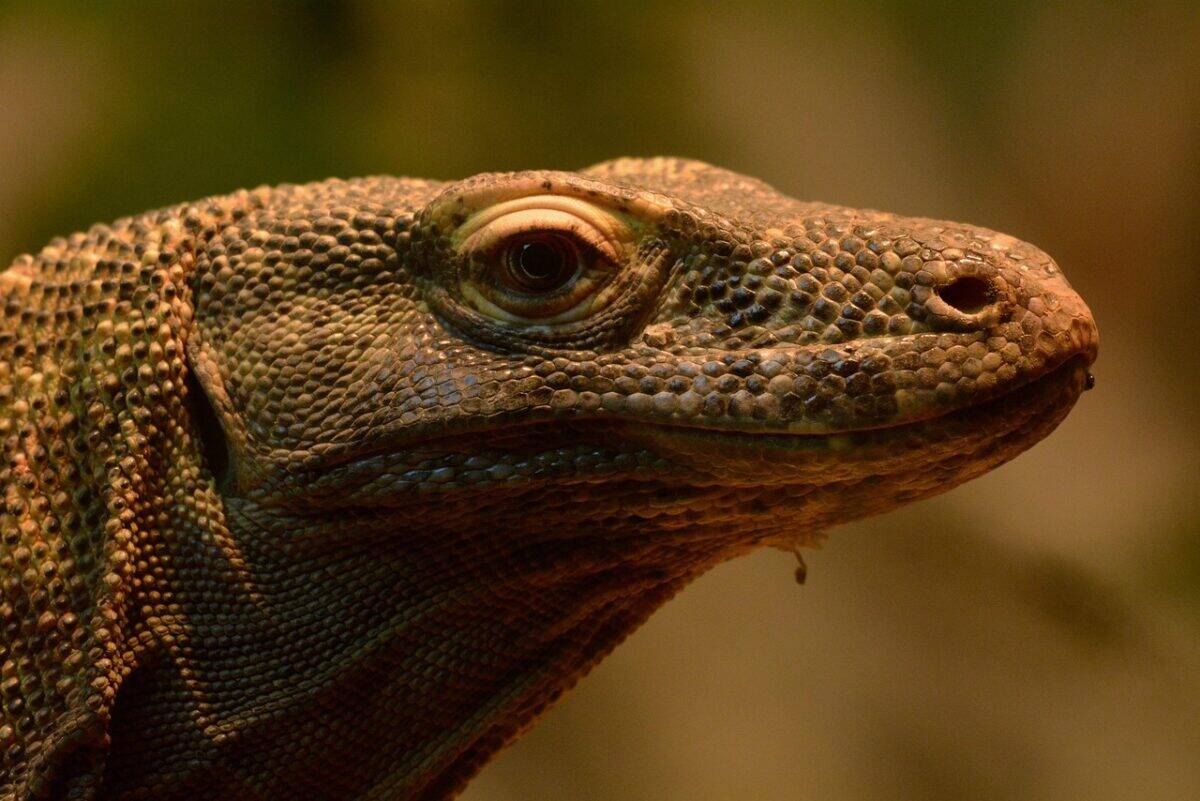
While dramatic stories about man-eating Komodo dragons make for sensational headlines, the reality is that attacks on humans are exceedingly rare, and fatal attacks even more so. Records indicate fewer than 25 documented attacks on humans in the last century, with only a handful resulting in fatalities. These reptiles do not naturally view humans as prey and typically avoid human contact when possible. Most attacks occur when dragons feel cornered or threatened, or in rare cases when they mistake human activities (like squatting or bending down) for those of their natural prey animals.
The exaggerated perception of danger stems partly from local folklore, colonial-era adventure stories, and sensationalized media coverage that emphasizes the dragons’ predatory nature while overlooking their typical behavior patterns. In reality, Komodo dragons have evolved to hunt.
Conclusion:

The Komodo dragon is one of nature’s most fascinating and fearsome reptiles, and many of the facts about it are just as impressive as the myths. From their venomous bite and powerful sense of smell to their stealthy hunting techniques and ancient lineage, Komodo dragons are living relics of a prehistoric world. These giant lizards have adapted remarkably to the harsh environments of Indonesia’s islands, earning their reputation as apex predators.
However, not everything you hear about Komodo dragons is grounded in science. Popular myths—like them being purely reliant on bacteria to kill prey, or being immune to pain—can lead to misunderstandings about their biology and behavior. By separating fact from fiction, we gain a more accurate and respectful appreciation of these incredible creatures. Understanding the real Komodo dragon reveals a predator that is not only deadly but deeply complex and worthy of protection.

As a little kid, I fell in love with nature, wildlife, and animals. Living in the USA, South Africa, Italy, China and Germany gave me the opportunity to discover the world's Wildlife. My favorite animals are Mountain Gorillas, Siberian Tigers, and Great White Sharks.
I'm a certified PADI Open Water Diver, went to Everest Base Camp and Trekked Gorillas in Uganda. I hold a Master of Science in Economics and Finance.
Please send any feedback to feedback@animalsaroundtheglobe.com
- 14 Stunning Animals You Can See in India - July 18, 2026
- The Most Enormous Lobster Ever Pulled From Maine Waters - July 18, 2026
- The Most Dangerous Waters for Sharks in North America - July 18, 2026