


Long before humans dominated Earth, our planet was ruled by creatures so formidable that they would send shivers down the spines of even our bravest modern-day adventurers. These prehistoric predators, perfectly evolved killing machines, roamed land, sea, and air with adaptations that made them apex hunters in their respective domains. Though extinct for millions of years, imagine for a moment these ancient terrors suddenly appearing in our contemporary world. From colossal marine reptiles that would dwarf our largest sharks to flying reptiles with wingspans wider than small aircraft, these creatures would fundamentally disrupt our ecosystems and challenge humanity’s position at the top of the food chain. Let’s explore twelve of the most terrifying prehistoric predators that would turn our modern world upside down if they were to mysteriously return.
Tyrannosaurus Rex The Tyrant King
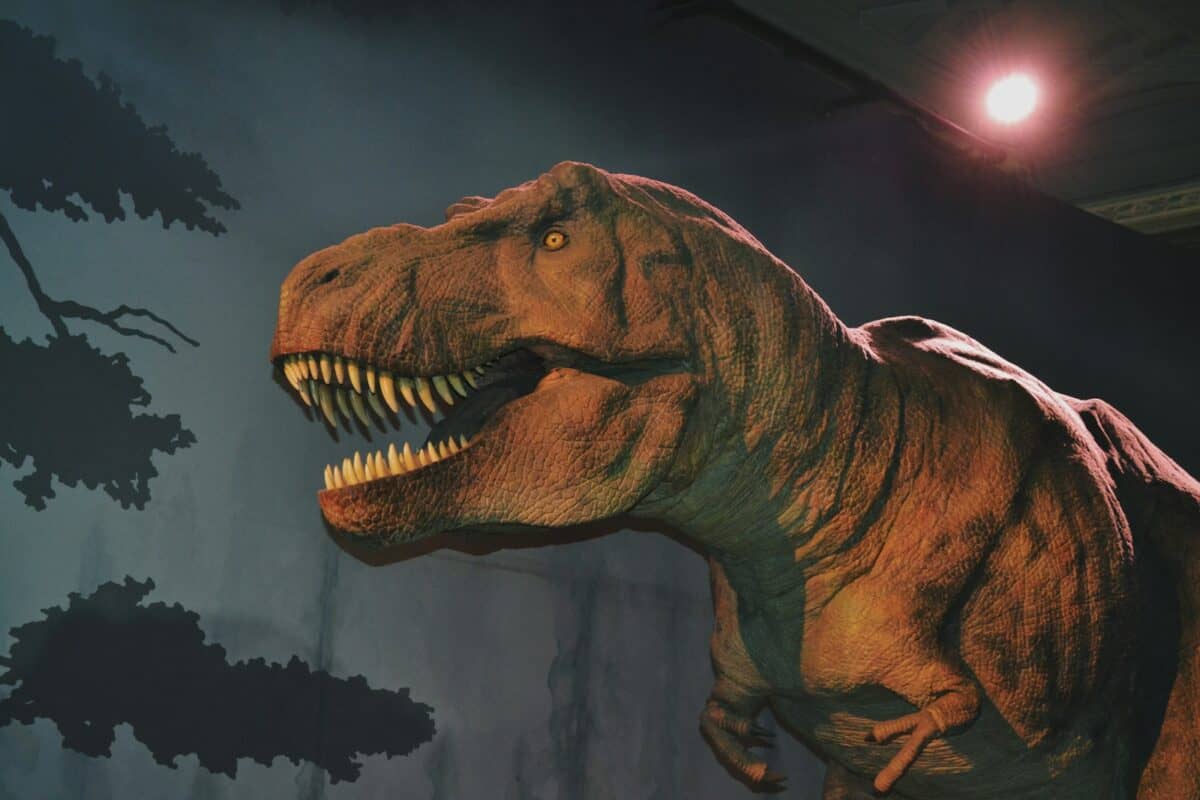
No list of prehistoric predators would be complete without mentioning Tyrannosaurus rex, perhaps the most iconic dinosaur to ever walk the Earth. Living approximately 68-66 million years ago during the Late Cretaceous period, T. rex was a massive bipedal carnivore reaching lengths of up to 40 feet and weighing as much as 9 tons. Its most terrifying features were undoubtedly its skull and teeth—the skull measured up to 5 feet long with 60 serrated teeth, some reaching 12 inches including the root. These teeth could exert a bite force estimated at 12,800 pounds, easily crushing the bones of its prey.
If T. rex existed today, it would be an apex predator unlike anything in our modern ecosystems. While our largest terrestrial predators like tigers and bears are formidable, they would be mere snacks for this prehistoric giant. T. rex would likely devastate livestock industries and potentially view humans as prey, though its massive size might limit its habitat to wilderness areas. Scientists believe T. rex could reach speeds of 12-25 mph, making outrunning one in an open field nearly impossible. The economic and ecological impact would be catastrophic, requiring massive resources for containment and protection measures.
Megalodon The Ocean’s Ultimate Predator

Otodus megalodon, commonly known as the megalodon, ruled Earth’s oceans from approximately 23 to 3.6 million years ago. This prehistoric shark dwarfed today’s great white sharks, reaching estimated lengths of 50-60 feet and potentially weighing up to 50-70 tons. Its massive jaws contained serrated teeth measuring up to 7 inches long, designed for hunting large marine mammals. Based on fossil evidence and computer models, scientists estimate that megalodon had a bite force between 108,500 and 182,200 newtons—powerful enough to crush a small car and far exceeding the great white shark’s 18,000 newtons.
If megalodon swam in today’s oceans, it would immediately become the undisputed apex predator of marine environments. Commercial fishing fleets would face unprecedented threats, and beach tourism would likely collapse in regions where the massive shark appeared. Whale populations, already vulnerable from centuries of human hunting, would face a new lethal predator potentially causing extinction cascades throughout marine ecosystems. Naval operations would require significant adaptation, and submarine infrastructure like underwater cables could face damage from these massive creatures. Unlike some extinct species, the megalodon would find suitable prey in our modern oceans, making its hypothetical return particularly disruptive.
Spinosaurus The Swimming Dinosaur

Spinosaurus aegyptiacus holds the title of the largest known carnivorous dinosaur, exceeding even T. rex in length. Living approximately 99-93.5 million years ago during the mid-Cretaceous period, this remarkable predator reached lengths of 41-59 feet and weighed an estimated 7.4-20.9 tons. Its most distinctive feature was the massive sail-like structure on its back formed by elongated neural spines, potentially standing 7 feet tall. Recent discoveries have revolutionized our understanding of Spinosaurus, revealing it as the first known semi-aquatic dinosaur with adaptations including dense bones, paddle-like feet, and a crocodile-like snout filled with conical teeth perfect for catching fish.
If Spinosaurus existed today, it would create unprecedented challenges for wildlife management. As a semi-aquatic predator, it would dominate both freshwater ecosystems and coastal marine environments, devastating fish populations and potentially hunting creatures as large as small boats. Rivers, lakes, and coastal areas would become dangerous for humans, potentially halting water-based recreation and transportation in affected regions. Fishing industries would face significant losses, and the creature’s ability to move between water and land would make containment nearly impossible. Its unique ecological niche—a massive semi-aquatic predator—has no modern equivalent, meaning it would exploit resources without natural competitors.
Titanoboa The Monster Snake
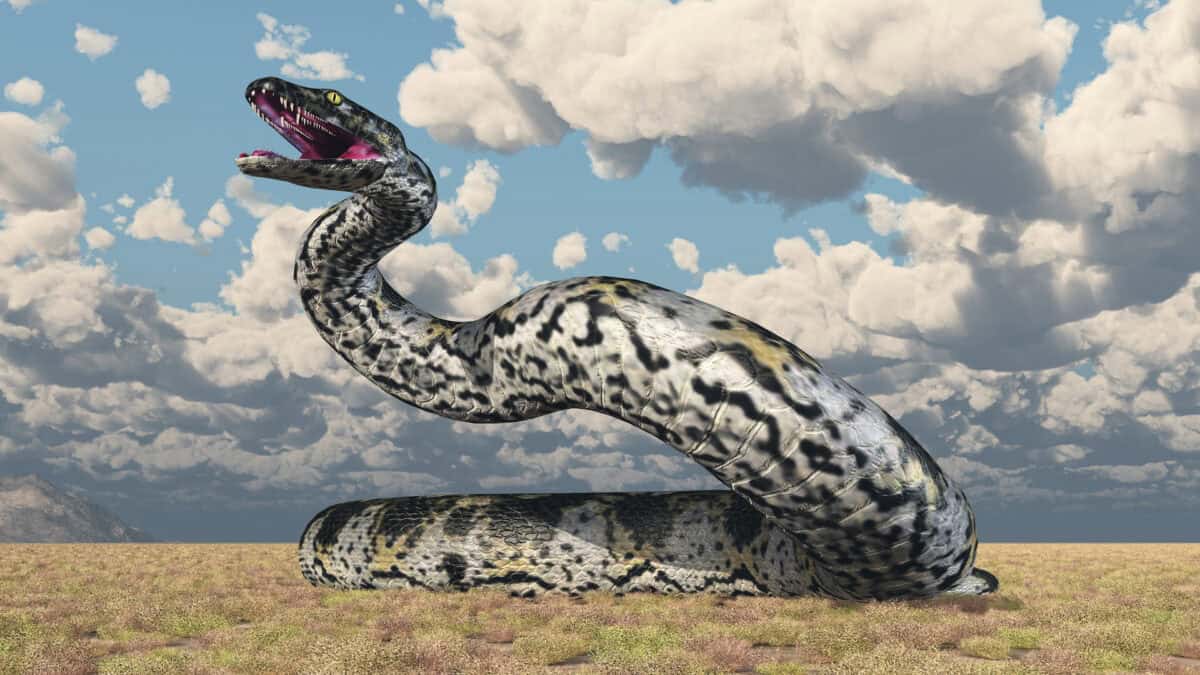
Approximately 60-58 million years ago, shortly after the extinction of the dinosaurs, a truly monstrous snake slithered through the tropical rainforests of what is now Colombia. Titanoboa cerrejonensis is the largest snake ever discovered, reaching lengths of approximately 42-50 feet and weighing up to 2,500 pounds. To put this in perspective, this prehistoric serpent was longer than a school bus and weighed more than a ton—dwarfing today’s reticulated pythons and anacondas, which typically max out at 20-30 feet. Titanoboa was a constrictor, using its massive body to squeeze prey with a force estimated to exceed 400 pounds per square inch.
If Titanoboa existed in today’s world, tropical and subtropical regions would face a predator capable of hunting almost any terrestrial animal, including large mammals such as deer, cattle, and potentially humans. Its massive size would allow it to prey on crocodilians and other apex predators that have few natural enemies today. The psychological impact on human populations would be substantial, likely causing mass panic in regions where the snake appeared. Titanoboa would thrive in today’s warming climate, potentially expanding its range as global temperatures rise. Conservation efforts would be complicated by the snake’s ability to remain hidden in dense vegetation and waterways despite its enormous size, making monitoring and management extremely challenging.
Quetzalcoatlus Terror from the Skies
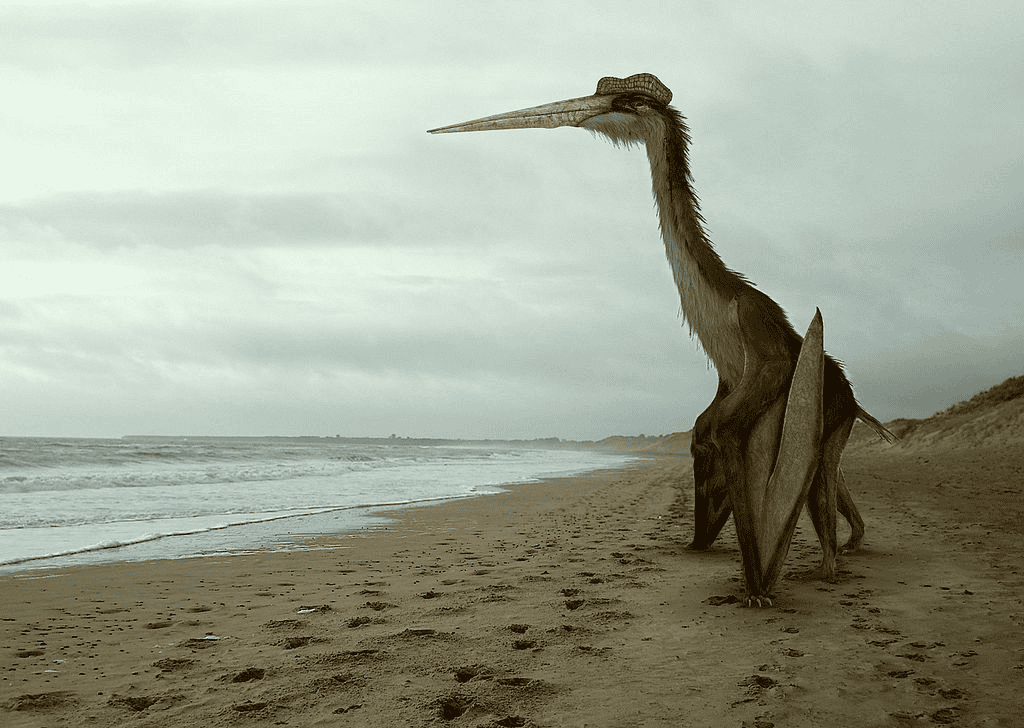
Quetzalcoatlus northropi represents the absolute pinnacle of flying animal evolution, living during the Late Cretaceous period approximately 68-66 million years ago. This pterosaur (flying reptile) had a wingspan estimated at 36-40 feet—roughly the size of a small aircraft—making it one of the largest flying animals ever to exist. Standing on the ground, it reached the height of a giraffe (up to 18 feet tall), with a large, toothless beak that could extend 10-11 feet. Despite its massive size, Quetzalcoatlus is estimated to have weighed only about 440-550 pounds due to hollow bones and other flight adaptations.
If Quetzalcoatlus soared through today’s skies, it would create unprecedented aviation hazards, dwarfing the bird strike dangers currently faced by aircraft. Its hunting strategy is believed to have involved stalking prey on foot before making short, powerful flights to capture animals as large as small dinosaurs. In modern ecosystems, it could potentially prey on deer, sheep, and other medium-sized mammals. The psychological impact of seeing these enormous creatures soaring overhead would be profound, likely causing widespread fear and potentially affecting outdoor activities. Their massive size would make them vulnerable to modern weapons, but their potential flying speed (estimated up to 80 mph) and altitude capabilities would make tracking and controlling populations extremely difficult, especially if they established breeding colonies in remote areas.
Livyatan The Sperm Whale’s Nightmare
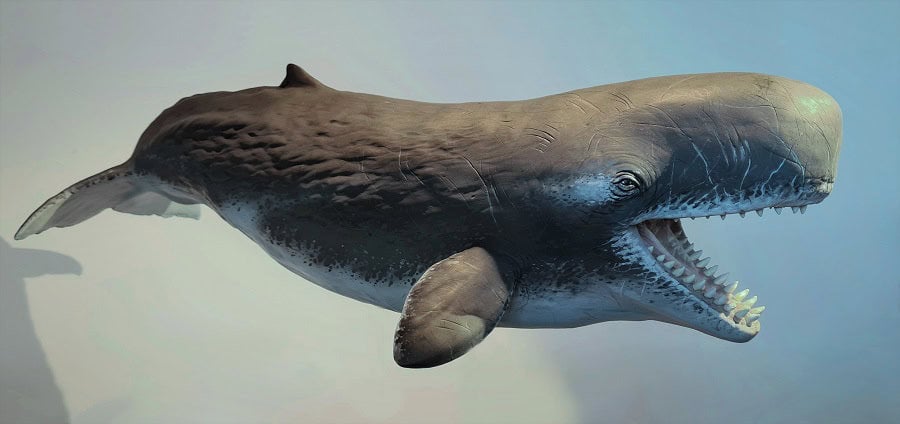
Approximately 9.9-8.9 million years ago during the Miocene epoch, a truly terrifying marine predator hunted the ancient oceans. Livyatan melvillei (named after the biblical sea monster Leviathan and Herman Melville, author of “Moby Dick”) was a prehistoric sperm whale that evolved as a specialized hunter of other marine mammals. Reaching estimated lengths of 44-57 feet—similar to modern sperm whales—Livyatan set itself apart with its massive teeth in both upper and lower jaws, measuring up to 14 inches long. Unlike today’s sperm whales which feed primarily on squid using suction, Livyatan was equipped to hunt and dismember large prey including baleen whales.
If Livyatan swam in today’s oceans, it would represent a completely new class of apex predator. Modern orcas (killer whales) hunt cooperatively to take down baleen whales, but Livyatan could potentially do so alone, creating unprecedented pressure on already vulnerable whale populations. Commercial shipping and fishing operations would face a cetacean predator large enough to potentially damage vessels. The tourism industry centered around whale watching would be transformed—potentially boosted by interest in this prehistoric predator but complicated by safety concerns. From an ecological perspective, the introduction of such a specialized marine mammal predator would disrupt food webs established over millions of years since Livyatan’s extinction, potentially leading to cascading effects throughout ocean ecosystems.
Smilodon The Saber-Toothed Killer
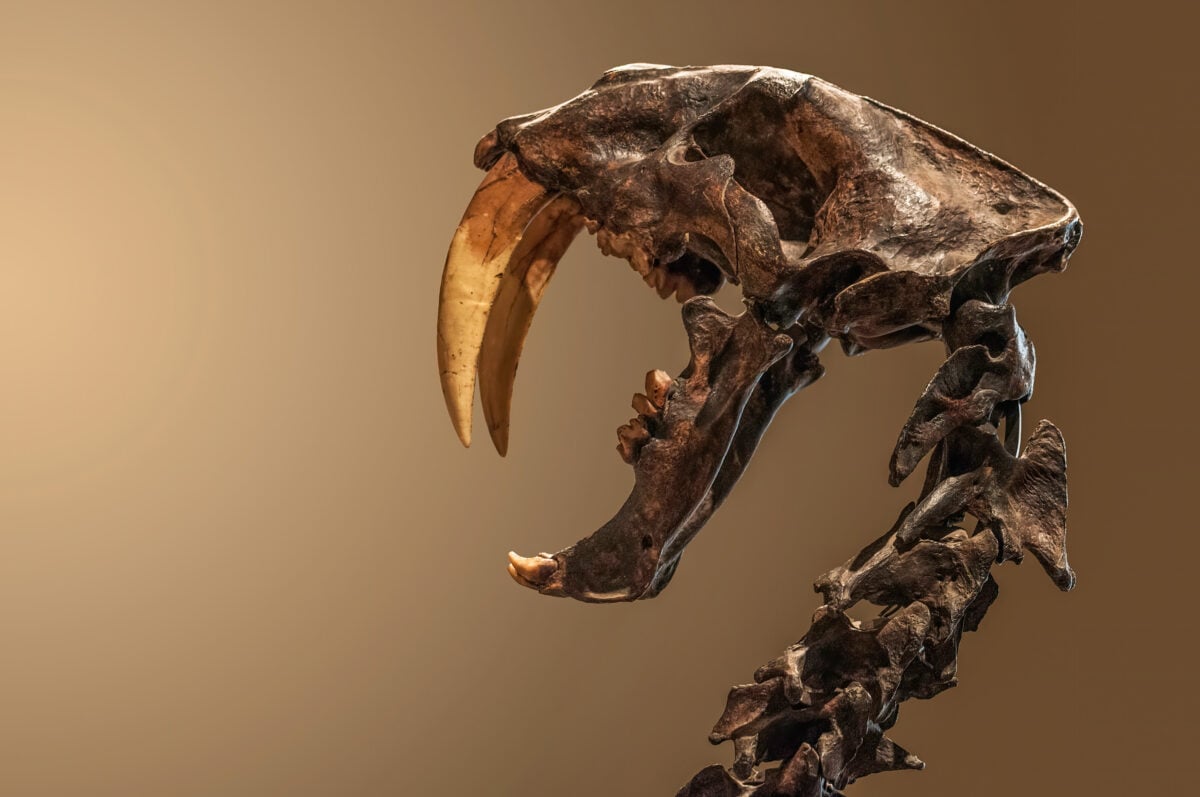
Smilodon, commonly known as the saber-toothed tiger (though not closely related to modern tigers), represents one of the most specialized predator adaptations in mammalian history. Living from approximately 2.5 million to 10,000 years ago, these formidable felids were characterized by their elongated canine teeth, with the largest species, Smilodon populator, sporting impressive 11-inch sabers. Unlike modern big cats, Smilodon had a powerfully muscled front body with robust forelimbs, suggesting it was an ambush predator that wrestled prey to the ground before delivering a precise killing bite to the throat with its specialized teeth.
If Smilodon roamed today’s landscapes, it would introduce a hunting style without parallel in modern ecosystems. While our current big cats are formidable predators, none possess the unique combination of immense strength and specialized killing tools that Smilodon evolved. These predators would likely target large ungulates including cattle, posing significant threats to livestock industries. Unlike some prehistoric animals on this list, Smilodon existed alongside early humans, suggesting a potential for human-predator conflict if reintroduced today. Their ambush hunting style and potential comfort around human settlements (based on La Brea tar pit findings showing they frequented areas where humans were present) would make them particularly dangerous predators from a human safety perspective, potentially more problematic than modern big cats.
Mosasaurus The Sea’s Ultimate Killing Machine
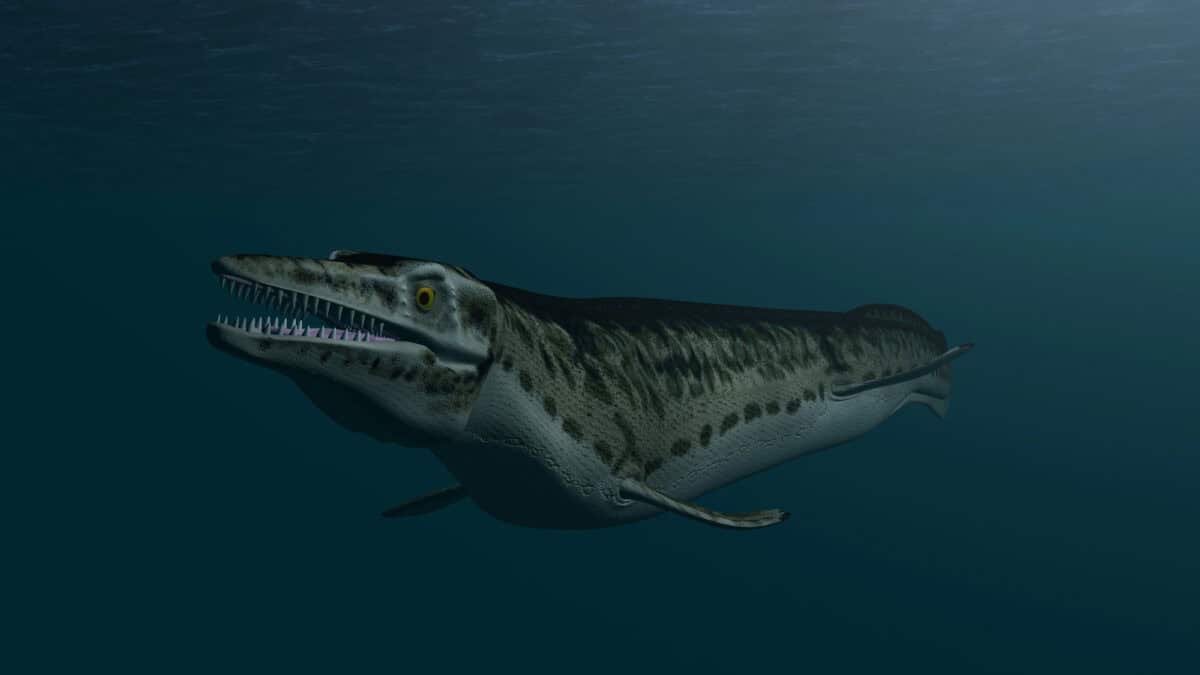
During the Late Cretaceous period, approximately 82-66 million years ago, the oceans were dominated by reptiles rather than mammals, with Mosasaurus standing as one of the most terrifying marine predators ever to exist. The largest species, Mosasaurus hoffmannii, reached lengths of up to 56 feet—longer than a school bus. These massive reptiles were equipped with double-hinged jaws filled with conical teeth, allowing them to swallow large prey whole. Additionally, mosasaurs had an extra set of teeth on the roof of their mouths (pterygoid teeth) that prevented struggling prey from escaping, and powerful paddle-like limbs that propelled them through water with devastating speed.
If Mosasaurus swam in today’s oceans, it would represent a marine predator without modern comparison. Great white sharks and killer whales, our current ocean apex predators, would potentially become prey themselves for these massive reptiles. Commercial fishing operations would face unprecedented risks, and nearshore activities like swimming, surfing, and diving would become extraordinarily dangerous in affected areas. Oil rigs, underwater infrastructure, and even small boats could be vulnerable to investigation or attack by these enormous and potentially territorial reptiles. From an ecological perspective, the introduction of such large-bodied, active predators would create massive disruptions in marine food webs, potentially leading to localized extinctions of prey species unprepared for such efficient hunters.
Arctodus The Short-Faced Bear

Arctodus simus, commonly known as the short-faced bear or bulldog bear, was the most formidable land predator of North America during the Pleistocene epoch, existing from approximately 1.8 million to 11,000 years ago. Standing up to 12 feet tall when reared on its hind legs and weighing an estimated 1,500-2,000 pounds, it dwarfed modern grizzly and polar bears. Despite its massive size, the short-faced bear had proportionally longer legs than modern bears, giving it surprising speed with estimates suggesting it could reach 40 mph in short bursts—faster than any human and most prey animals.
If Arctodus roamed North America today, it would immediately become the continent’s apex predator, capable of dominating territories and potentially driving competing predators like wolves, mountain lions, and even grizzly bears from prime habitats. Its combination of size, speed, and power would make it an unprecedented threat to livestock, potentially causing significant economic damage to ranching operations. Human outdoor activities would face new dangers, particularly in wilderness areas, national parks, and hiking trails. From a conservation perspective, managing populations of such a large, fast, and potentially aggressive predator would present unprecedented challenges, especially considering its potential range could span from Alaska to Mexico based on fossil evidence. The psychological impact of knowing such a formidable predator existed would likely transform humanity’s relationship with wild spaces across North America.
Deinosuchus The Terror Crocodile
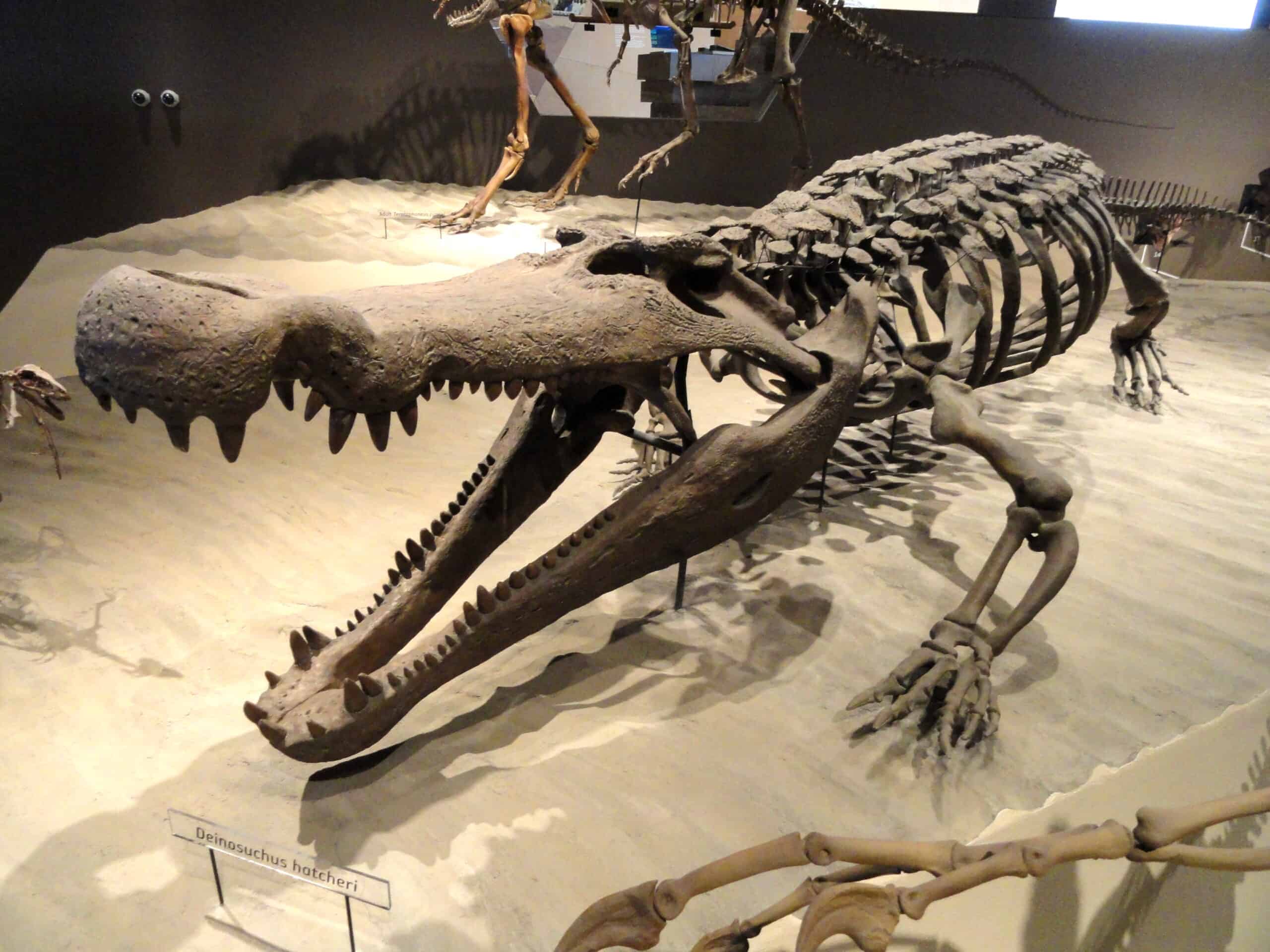
Approximately 82-73 million years ago during the Late Cretaceous period, North America’s waterways were dominated by a truly monstrous reptile that made today’s largest crocodilians look diminutive by comparison. Deinosuchus, whose name appropriately means “terrible crocodile,” reached estimated lengths of 33-39 feet and weighed between 8.5-15.8 tons, dwarfing even the largest modern saltwater crocodiles, which typically max out at 17-18 feet. With a skull alone measuring nearly 6 feet long and equipped with teeth the size of bananas, Deinosuchus possessed one of the most powerful bites in animal history, capable of crushing turtle shells and dragging dinosaurs into the water.
If Deinosuchus lurked in today’s waterways, rivers, lakes, and coastal regions across North America would become extraordinarily dangerous for humans and wildlife alike. Unlike some prehistoric predators that might struggle in modern environments, Deinosuchus would likely thrive in contemporary ecosystems, as modern crocodilians have changed relatively little in their basic form and function. Water-based recreation like swimming, fishing, and boating would become potentially lethal activities in affected regions. Wildlife would face an unprecedented predator capable of taking down animals as large as bison or moose when they came to drink. From an infrastructure perspective, bridges, docks, and other water-adjacent structures might require reinforcement or protective measures to prevent damage from these massive reptiles, whose ambush hunting strategy and territorial behavior would make them particularly problematic near human settlements.
Pulmonoscorpius The Giant Scorpion

During the Early Carboniferous period approximately 336-326 million years ago, when atmospheric oxygen levels were significantly higher than today, arthropods grew to sizes unimaginable in our modern world. Pulmonoscorpius kirktonensis exemplified this gigantism, reaching lengths of up to 28 inches (over 70 cm)—roughly the size of a house cat and more than three times larger than today’s largest scorpions. These ancient arachnids possessed powerful pincers and a venomous stinger that likely contained potent neurotoxins, making them formidable predators in their prehistoric environments where they hunted smaller arthropods and possibly early amphibians.
If Pulmonoscorpius existed today, it would create unprecedented fears around arthropod encounters. While current scorpions can deliver painful and sometimes dangerous stings, a scorpion the size of a house cat would represent a potentially lethal threat, especially to children, small pets, and vulnerable adults. Their ability to hide in small spaces despite their size would make them particularly dangerous home invaders in warm regions. Public health systems would need to develop new antivenoms and treatment protocols for envenomations from these prehistoric

As a little kid, I fell in love with nature, wildlife, and animals. Living in the USA, South Africa, Italy, China and Germany gave me the opportunity to discover the world's Wildlife. My favorite animals are Mountain Gorillas, Siberian Tigers, and Great White Sharks.
I'm a certified PADI Open Water Diver, went to Everest Base Camp and Trekked Gorillas in Uganda. I hold a Master of Science in Economics and Finance.
Please send any feedback to feedback@animalsaroundtheglobe.com
- 10 Facts About Hammerhead Sharks That Will Blow Your Mind - July 24, 2026
- 11 Deadliest Hunters in the Ocean (Hint Its Not Sharks) - July 24, 2026
- 12 Prehistoric Predators That Would Terrorize Todays Earth - July 24, 2026
Leave a comment
You must be logged in to post a comment.