


In the annals of maritime history, ships have carried remarkable passengers—from explorers and pirates to stowaways and mascots. Among these seafaring companions, few have captured hearts and imagination quite like Simon, a humble black and white cat who became one of the most decorated feline war heroes in naval history. His story combines the inherent charm of a ship’s cat with extraordinary courage during one of Britain’s most challenging naval conflicts. This tale of whiskers and warfare reveals how a small cat made an outsized impact on morale, military operations, and even international relations during a pivotal moment in the Cold War era.
The Origins of Simon: From Stray to Ship’s Cat

Simon’s story begins in March 1948 on the docks of Hong Kong, where a scrawny black and white cat, estimated to be about a year old, caught the attention of 17-year-old Ordinary Seaman George Hickinbottom. Serving aboard the British Royal Navy frigate HMS Amethyst, Hickinbottom spotted the malnourished stray wandering the dockyards and, feeling compassion for the animal, smuggled him aboard the vessel. Initially hidden from officers, Simon quickly demonstrated his worth by hunting the ship’s persistent rat population.
Captain Ian Griffiths, rather than ordering the removal of the unauthorized crew member, recognized Simon’s potential value in controlling vermin that threatened both food supplies and the ship’s electrical wiring. The captain officially entered Simon into the ship’s log as “Simon, ship’s cat.” This designation began Simon’s formal naval career, though no one could have predicted how significant this simple act of kindness toward a stray would become in the months ahead. Simon quickly adapted to life at sea, becoming a beloved fixture among the crew who appreciated both his hunting prowess and affectionate nature.
Life Aboard HMS Amethyst

Simon quickly established himself as more than just a pest controller aboard the Amethyst. He developed distinctive routines and relationships that endeared him to the entire crew. Each morning, Simon would make his rounds through the ship, visiting sailors in their quarters and often leaving “gifts” of freshly caught rats at the feet of sleeping crew members. Though these offerings weren’t always appreciated upon waking, they represented Simon’s integration into the ship’s community and his natural instinct to share his hunting success.
Beyond his hunting duties, Simon displayed an uncanny ability to boost morale. He had a habit of napping in sailors’ caps or curling up in the captain’s chair on the bridge when it was unoccupied. The crew noted his particular fondness for sleeping in the navigation officer’s chart drawers. Despite his sometimes mischievous behavior, Simon demonstrated remarkable discipline during important naval operations, seeming to understand when to make himself scarce during critical maneuvers. This combination of utility and companionship made him invaluable to the ship’s company during long deployments far from home.
The Yangtze Incident Begins

On April 20, 1949, HMS Amethyst was navigating the Yangtze River in China on a mission to deliver supplies to the British Embassy in Nanjing. The ship was sailing through waters that had become increasingly dangerous due to the Chinese Civil War between Nationalist and Communist forces. Though the British maintained a policy of neutrality in the conflict, tensions were high. At approximately 8:30 am, without warning, Communist shore batteries opened fire on the Amethyst as it passed near Jiangyin, about 60 miles from Shanghai.
The first shells struck the bridge and wheelhouse, killing several sailors instantly, including the captain, Lieutenant Commander Bernard Skinner. With the ship’s steering damaged and under continued heavy fire, Lieutenant Geoffrey Weston, though wounded himself, managed to run the vessel aground in mud to prevent sinking. The ambush, which would later become known as the Yangtze Incident, marked the beginning of a 101-day ordeal for both the human crew and their feline companion. Simon, who had been sleeping in the captain’s cabin, was among those injured in the initial bombardment, suffering burns and shrapnel wounds that would test his legendary resilience.
Simon’s Battle Wounds

When Communist shells struck HMS Amethyst, Simon was severely wounded. The explosion in the captain’s cabin where he had been resting left him with four shrapnel wounds, facial burns, and damaged whiskers. For several days after the attack, the injured cat was nowhere to be found. The crew, preoccupied with their own survival and that of their injured comrades, feared Simon had perished. It wasn’t until days later that a sailor discovered him hiding in a corner, weak from his injuries and blood loss. The ship’s medical officer, Lieutenant Commander J. Alderton, didn’t expect the cat to survive the night.
Despite the grim prognosis, Simon displayed remarkable resilience. The ship’s medical team cleaned his wounds, removed shrapnel fragments, and provided what care they could with limited medical supplies. Within days, Simon began showing signs of recovery, taking small amounts of food and water. His survival against such odds was the first demonstration of the extraordinary spirit that would make him legendary. Although permanently scarred and slightly weakened from his injuries, Simon’s recovery was nothing short of miraculous, especially considering the limited veterinary care available aboard a damaged naval vessel under siege.
The Siege and Simon’s Recovery

With HMS Amethyst stranded in hostile territory and under periodic shelling, the crew faced dire circumstances. Many sailors were wounded, supplies were dwindling, and the summer heat in the confined spaces of the damaged ship was nearly unbearable. Communication with British authorities was limited, and several rescue attempts by other Royal Navy vessels were repelled by Communist batteries. During this time, the ship’s new commanding officer, Lieutenant Commander John Kerans, who had reached the ship after a dangerous journey, maintained discipline and morale while seeking a diplomatic solution.
As Simon recovered from his injuries, he resumed his duties with a determination that astonished the crew. Despite his weakened condition, he began hunting the rats that had proliferated throughout the damaged vessel. The rodent population had exploded during the crisis, threatening the already limited food supplies and spreading disease among the wounded crew. Simon’s return to rat-catching duties proved crucial to the health and morale of the sailors. Many crew members later recounted that Simon’s resilience—his insistence on performing his duties despite serious injuries—inspired them during their darkest moments of the siege. His presence became a symbol of perseverance that helped sustain the trapped sailors.
Whiskers and Warfare: Simon’s Rat-Catching Heroics
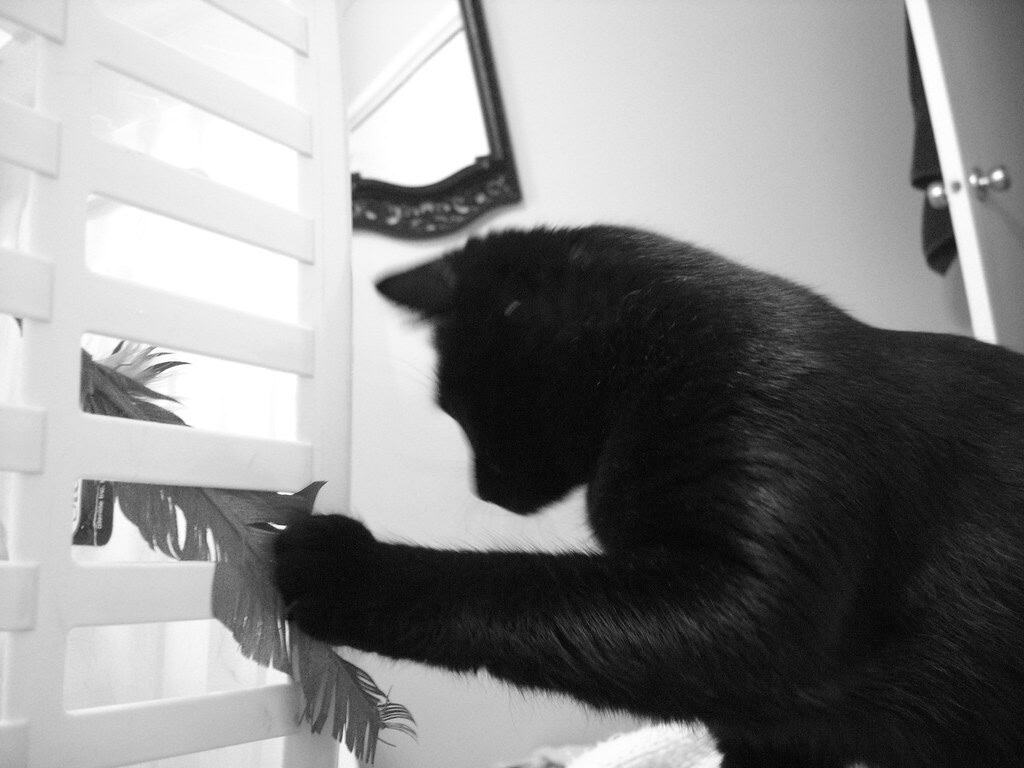
As the siege continued, the rat problem aboard the Amethyst grew increasingly severe. The rodents, some described as “King Rats” by the sailors due to their unusual size, had become bold and aggressive. They contaminated food stores, chewed through electrical wiring, and even attacked sleeping or wounded sailors. In these conditions, Simon’s hunting skills transcended mere pest control to become critical for survival. Despite still recovering from his own injuries, Simon was relentless in his pursuit of the rats, often catching and killing several each night.
One of Simon’s most celebrated achievements was his victory over a particularly notorious rat the crew had nicknamed “Mao Tse-tung.” This enormous rodent had evaded traps and poisons while causing significant damage to food stores. Simon tracked the elusive pest to its hiding place behind a bulkhead and dispatched it, proudly delivering the carcass to Lieutenant Commander Kerans’ cabin. This successful hunt became part of the ship’s lore, with sailors viewing it as both practical assistance and a symbolic victory during their imprisonment on the Yangtze. Simon’s hunting prowess was so valued that the ship’s log formally documented his rat-catching statistics alongside other official records.
Morale Officer with Whiskers

Beyond his practical contributions as a rat catcher, Simon’s greatest service may have been his effect on the crew’s psychological wellbeing. During the 101 days of captivity, with men wounded, frightened, and uncertain of their fate, Simon provided a crucial connection to normalcy and comfort. He developed an uncanny sense for identifying sailors who were particularly distressed or ill, often curling up beside them and providing silent companionship. The ship’s medical officer noted that patients in the sickbay recovered more quickly when Simon paid them visits, and his rounds became an anticipated part of the daily routine.
Simon also maintained his playful spirit despite the circumstances, chasing string or pouncing on moving shadows, providing rare moments of laughter during the crisis. Sailors would save small portions of their dwindling rations to share with him, considering his company worth the sacrifice. As Lieutenant Commander Kerans later wrote in his report, “Simon’s presence was of inestimable value to the morale of the ship’s company, which had been subjected to considerable strain.” The small cat’s ability to carry on with routine activities in the face of danger helped remind the crew that survival was possible, and that everyday life—even moments of joy—could continue even in the direst circumstances.
The Daring Escape

After more than three months of failed negotiations and deteriorating conditions, Lieutenant Commander Kerans made the bold decision to attempt an escape. On the night of July 30, 1949, under cover of darkness and a passing thunderstorm, HMS Amethyst raised anchor and began a dangerous 104-mile dash down the Yangtze River toward the open sea. The ship, still damaged and with limited steering capability, had to navigate sandbars, Communist gun positions, and a blockade of ships while maintaining radio silence. Simon, sensing the tension aboard ship, reportedly remained unusually quiet during the escape, staying close to the crew in the engine room.
When Communist forces realized the Amethyst was escaping, they opened fire and gave chase. In one of the most dramatic naval escapes of the era, the ship managed to slip past patrol boats and shore batteries, finally reaching the open sea near Shanghai on July 31. Upon reaching international waters and the safety of the British fleet, Kerans sent the now-famous signal: “Have rejoined the fleet south of Woosung. No damage or casualties. God save the King.” The successful escape was celebrated throughout the British Empire as a triumph of courage and determination. Simon, having survived both the initial attack and the long siege, had also lived through the perilous nighttime escape to become part of naval legend.
Naval Hero with a Tail: Simon’s Decorations
Following the Amethyst’s return to safety, the story of the ship’s ordeal—including accounts of Simon’s bravery—captured public imagination throughout Britain and beyond. In an unprecedented recognition of animal bravery in warfare, Simon was awarded the Dickin Medal in August 1949, often considered the animal equivalent of the Victoria Cross. The citation read: “For singular devotion to duty when HMS Amethyst was shelled by Communist batteries in the Yangtze River on 20th April 1949. Throughout the incident Simon’s behavior was of the highest order. Despite being wounded by shell splinters, his only concern was for the comfort of his friends, with whom he had shared the dangers of the incident.”
In addition to the Dickin Medal, Simon received the Blue Cross Medal from the animal welfare charity, and was given the unusual honor of a campaign ribbon for the Yangtze Incident, typically reserved for human combatants. He was promoted to “Able Seacat” Simon in recognition of his service. His decorations made him the most decorated cat in military history and one of only a few cats among the 54 animals that have received the Dickin Medal since its creation in 1943. These honors reflected not just sentiment toward a beloved mascot, but genuine recognition of Simon’s practical contributions to the survival and morale of the ship’s company during one of the Royal Navy’s most challenging modern ordeals.
Celebrity Status and Quarantine

When HMS Amethyst docked in Plymouth in November 1949, Simon found himself the focus of unprecedented attention. Newspapers throughout Britain and internationally had published stories about the brave ship’s cat, and crowds gathered at the dock hoping to catch a glimpse of the feline hero. Simon received thousands of letters from well-wishers, so many that a crew member was assigned to respond to his fan mail. He was featured in newsreels, photographed with his medals, and invited to attend numerous functions. The Naval Board officially categorized him as “Cat, Simon, Able Seacat,” the only cat to receive an official naval rank.
However, Simon’s new celebrity status came with a significant challenge. Britain’s strict animal quarantine laws required him to spend six months in isolation before being released into the country, despite his status as a naval hero. The quarantine facilities at the Animal Reception Center in Surrey became Simon’s new, and final, posting. Though the staff did their best to make him comfortable, providing toys and regular visits from former crew members, the transition from ship to isolation facility was difficult for the social cat who had spent most of his life in the company of sailors. The confinement was especially challenging for a cat who had known the freedom of roaming a naval vessel and ports throughout Asia.
Simon’s Final Chapter

Despite receiving the best care available at the quarantine facility, Simon’s health began to deteriorate. The wounds he had sustained during the Yangtze Incident had weakened his constitution, and a viral infection took hold. Despite intensive veterinary intervention, Simon passed away on November 28, 1949, just weeks before he was scheduled to complete his quarantine. He was only two years old. The news of his death prompted an outpouring of grief that extended far beyond the naval community, with tributes appearing in newspapers across Britain and condolence messages arriving from around the world.
Simon was laid to rest with full naval honors at the PDSA Ilford Animal Cemetery in east London. His coffin was draped with the Union Jack and carried by sailors from HMS Amethyst. His gravestone bears the inscription: “Throughout the Yangtze Incident his behavior was of the highest order.” Over 100 people attended the funeral, including the entire crew of HMS Amethyst, representatives from various animal welfare organizations, and the many individuals who had been touched by his story. Lieutenant Commander Kerans delivered a eulogy that emphasized how the small cat had embodied the spirit of endurance and courage that defined the Amethyst’s ordeal, calling him “a example to all” in his dedication to duty and affection for his shipmates.
Legacy of the Nautical Feline
Simon’s remarkable story has endured far beyond his short life, becoming an integral part of Royal Navy folklore and broader military animal history. His legacy inspired changes in how animals serving alongside military personnel were recognized and cared for. The Simon’s Fund was established to provide for the welfare of ships’ cats and other naval mascots, ensuring that animals serving alongside sailors received proper veterinary care and recognition. Simon’s story has been the subject of numerous books, documentaries, and even children’s literature, ensuring that new generations learn about the brave cat who served aboard HMS Amethyst.
Today, Simon’s medals and various memorabilia are displayed at the National Maritime Museum in Greenwich, where they continue to attract visitors interested in this unique aspect of naval history. His grave at Ilford remains a site of pilgrimage for animal lovers and military history enthusiasts alike. Perhaps most significantly, Simon’s story stands as a powerful reminder of the profound bonds that can form between humans and animals, especially in times of crisis. The tale of a simple ship’s cat who became a decorated war hero continues to illustrate how courage, loyalty, and devotion to duty can come in unexpected packages, and how even the smallest creatures can make a profound difference in human affairs during history’s most challenging moments.
Conclusion: The Enduring Impact of a Feline Hero
The story of Simon, the cat who sailed into naval history, transcends the boundaries of a simple tale about a ship’s mascot. His journey from Hong Kong stray to decorated naval hero captures the unique intersection of military history, human-animal relationships, and the unexpected ways courage manifests during crisis. Simon’s legacy endures not merely because of the medals he earned, but because of what his story represents about resilience, duty, and the profound connections that form between species in the face of adversity. His short life continues to inspire discussions about the role of animals in warfare, their capacity for bravery, and their importance to human psychological wellbeing during conflict.
While modern naval vessels rarely carry cats due to hygiene regulations and changed operational procedures, the tradition of ships’ cats that Simon exemplified remains an important chapter in maritime history. Simon’s story reminds us that heroism is not confined to humans, nor is it always found in expected forms. In the midst of war’s chaos and hardship, a small, unassuming cat became a symbol of hope, comfort, and perseverance for an entire crew. His actions—protecting precious food stores from vermin, boosting morale during long and dangerous voyages, and surviving injuries sustained in battle—embody the quiet, everyday forms of heroism that sustain people through the darkest times.
Simon’s enduring impact speaks to the timeless human need for companionship and courage, even in the harshest environments. His story lives on not only in medals and memorials but in the hearts of those who continue to find inspiration in his tale. As we reflect on the role of animals in our shared history, Simon reminds us that sometimes the smallest creatures leave the largest legacies, teaching us about compassion, resilience, and the unbreakable bonds that form in times of trial.

From exploring the marine wonders in the Azores and witnessing the vast savannas of Kenya, to delving deep into the rich biodiversity of South Africa and traversing iconic landscapes in Australia and the US like Yellowstone, Chris's experiences are vast.
With a penchant for diving alongside sharks, the ocean holds a special place in his heart.
Through his academic insights, he champions wildlife conservation, striving with 'Animals Around The Globe' to cultivate a profound connection between humans and animals, enhancing our mutual appreciation.
Connect with him at Feedback@animalsaroundtheglobe.com.
- The Science Behind Global Warming: Let’s Separate Fact from Fiction - June 25, 2026
- The Friendliest Dog Breeds for Families in Ohio - June 25, 2026
- Why Florida Might Be Uninhabitable in 50 Years - June 25, 2026