


The Great Plains of America, stretching from Texas to Montana and from the Mississippi River to the Rocky Mountains, form one of the most expansive grassland ecosystems in the world. This vast heartland, once dominated by tallgrass and shortgrass prairies, hosts a remarkable diversity of wildlife that has evolved to thrive in open spaces, extreme weather conditions, and seasonal changes. From the iconic American bison that once numbered in the millions to the elusive swift fox and the majestic pronghorn antelope, the fauna of America’s heartland plains tells a story of adaptation, resilience, and survival.
Despite centuries of agricultural development, habitat fragmentation, and other human impacts, many native species continue to make their home in these grasslands. Conservation efforts have helped some populations recover, while others remain threatened. This article explores the fascinating animals that roam America’s heartland plains, their unique adaptations, behavioral patterns, and the conservation challenges they face in a changing landscape.
The Iconic American Bison
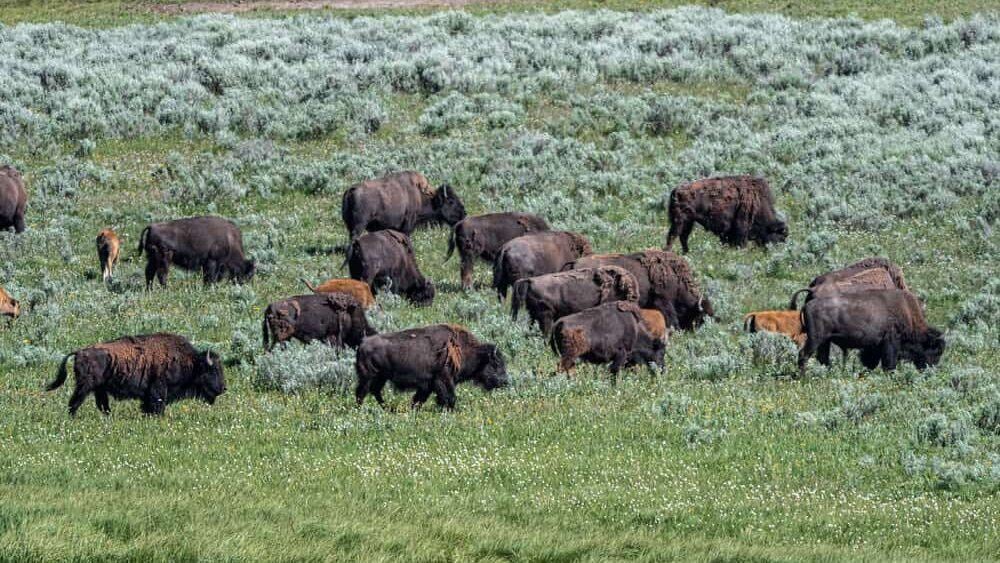
The American bison (Bison bison), often incorrectly called buffalo, stands as the largest land mammal in North America and the living symbol of the Great Plains. These massive creatures can weigh up to 2,000 pounds and stand six feet tall at the shoulder. Their distinctive humped shoulders, shaggy winter coats, and curved horns make them instantly recognizable. Once numbering between 30-60 million, bison herds blackened the plains in the early 1800s before being hunted to near extinction by the 1880s, with fewer than 1,000 individuals remaining.
Today, thanks to dedicated conservation efforts, approximately 500,000 bison exist in North America, though only about 30,000 are in conservation herds rather than raised for commercial purposes. Bison play a crucial ecological role as a keystone species. Their grazing patterns influence plant diversity, their wallowing creates small depressions that collect rainwater and support unique plant communities, and their massive bodies create trails used by other animals. Places like Yellowstone National Park, Theodore Roosevelt National Park, and the American Prairie Reserve in Montana now protect wild bison herds, allowing visitors to witness these magnificent animals in their natural habitat.
Swift and Graceful Pronghorn

Often mistakenly called antelopes, pronghorn (Antilocapra americana) are actually the only surviving members of the Antilocapridae family and are unique to North America. What makes pronghorns remarkable is their incredible speed—they can sustain speeds of 35 mph for miles and reach bursts of up to 55 mph, making them the second-fastest land animal in the world after the cheetah. Their tan and white coloration with distinctive black markings helps them blend into the prairie landscape, while their large eyes positioned on the sides of their head provide nearly 360-degree vision to spot predators.
Pronghorn populations currently number around 700,000 across North America, with the majority inhabiting the Great Plains and western states. Unlike many species, pronghorns didn’t evolve to jump fences, creating challenges as their ancient migration routes became fragmented by ranching infrastructure. Conservation initiatives now include creating “pronghorn-friendly” fencing with higher bottom wires and wildlife crossings over highways. Their preference for wide-open spaces with good visibility makes them excellent indicators of healthy grassland ecosystems, and their presence signifies a functioning prairie environment.
Prairie Dogs: Ecosystem Engineers

Five species of prairie dogs inhabit the Great Plains, with the black-tailed prairie dog (Cynomys ludovicianus) being the most widespread. These social rodents live in complex underground “towns” that can span thousands of acres and contain millions of individuals. Their extensive burrowing aerates the soil, allows water to penetrate deeper, and creates habitat for numerous other species. More than 150 vertebrate species have been associated with prairie dog colonies, including the endangered black-footed ferret, which specializes in hunting prairie dogs.
Despite their ecological importance, prairie dog populations have declined by over 95% since the early 1900s due to habitat conversion, poisoning campaigns, and sylvatic plague. Their communication system is one of the most sophisticated in the animal kingdom, featuring a complex language of yips, barks, and chatters that can communicate specific information about predators, including size, shape, color, and speed of approach. Recent conservation efforts have focused on protecting remaining colonies and reintroducing prairie dogs to restored grasslands, recognizing their critical role as a keystone species that increases biodiversity throughout the prairie ecosystem.
The Coyote: Adaptable Predator

The coyote (Canis latrans) stands as one of the Great Plains’ most successful predators, having not only survived widespread eradication efforts but actually expanded its range across North America. Weighing between 20-50 pounds, these medium-sized canids display remarkable adaptability, adjusting their diet, social structure, and reproductive patterns based on available resources. Coyotes can live as solitary hunters, monogamous pairs, or in small family groups, primarily hunting small mammals like rabbits and rodents but capable of taking down larger prey when hunting cooperatively.
On the plains, coyotes fulfill a vital ecological role by controlling rodent populations and removing sick or weak animals from prey populations. Their distinctive howls, yips, and barks serve as complex communication tools that help establish territories and strengthen family bonds. Despite decades of intense persecution through poisoning, trapping, and shooting, coyote populations have demonstrated remarkable resilience. Research indicates that when under pressure, coyote litters increase in size, allowing populations to quickly recover. Today, they’ve become one of the most widespread carnivores in North America, adapting even to urban environments across the continent.
Majestic Raptors of the Sky

The vast open spaces of America’s heartland provide ideal hunting grounds for a diverse array of raptors. The ferruginous hawk (Buteo regalis), the largest hawk in North America, specializes in hunting ground squirrels and prairie dogs across the western plains. With a wingspan up to 56 inches, these impressive birds can be identified by their rusty back and shoulders, white underparts, and feathered legs. Similarly adapted to grassland hunting, the northern harrier (Circus hudsonius) flies low over the prairie with distinctive V-shaped wings, using its exceptional hearing to locate prey beneath the vegetation.
Perhaps the most iconic raptor of the plains is the golden eagle (Aquila chrysaetos), with its six-foot wingspan and powerful hunting abilities. These birds can take prey as large as pronghorn fawns and even adult coyotes. The American kestrel, prairie falcon, and burrowing owl also make their homes in these grasslands, each occupying a specific ecological niche. Conservation efforts for these raptors focus on maintaining large tracts of undisturbed prairie, protecting nest sites, and reducing threats from rodenticides that can cause secondary poisoning when raptors consume contaminated prey. Their presence indicates a healthy ecosystem with intact food webs and sufficient prey populations.
The Elusive Swift Fox

The swift fox (Vulpes velox), one of the smallest wild canids in North America, is perfectly adapted to life on the shortgrass prairies of the Great Plains. Weighing just 4-7 pounds and standing about 12 inches tall, these diminutive foxes are named for their remarkable speed, capable of running up to 25 mph. Their pale tan to yellowish-gray coloration provides excellent camouflage against the prairie soil and vegetation. Unlike many canids, swift foxes rely heavily on underground dens year-round for protection from predators and extreme weather, often repurposing abandoned prairie dog burrows.
Once abundant throughout the Great Plains, swift fox populations declined drastically by the mid-20th century due to predator control programs, habitat loss, and collateral poisoning from campaigns targeting wolves and coyotes. By the 1950s, they had disappeared from much of their historical range. Reintroduction efforts beginning in the 1980s have helped restore populations in parts of Montana, South Dakota, and Canada. Today, conservation organizations work with ranchers to implement swift fox-friendly practices, as healthy grasslands managed for cattle can provide suitable habitat for these nocturnal hunters. Their diet consists primarily of insects, small rodents, and rabbits, making them important controllers of agricultural pests.
Grassland Birds: Hidden Diversity

America’s heartland plains support a remarkable diversity of grassland birds, many of which have evolved unique adaptations for nesting and feeding in open prairies. The western meadowlark (Sturnella neglecta), recognized as the state bird of six plains states, announces its presence with a distinctive flute-like song while perched on fence posts or shrubs. Its yellow breast with a distinctive black V-shaped marking makes it one of the more visible prairie species. Less conspicuous is the grasshopper sparrow (Ammodramus savannarum), which nests directly on the ground and specializes in catching grasshoppers with its strong, conical bill.
Unfortunately, grassland birds are experiencing the steepest population declines of any bird group in North America, with losses exceeding 53% since 1970. Species like the chestnut-collared longspur, Sprague’s pipit, and Baird’s sparrow have lost more than 70% of their populations in recent decades. These declines stem primarily from habitat loss as native prairies are converted to cropland, as well as changes in ranching practices that alter vegetation structure. Conservation programs now focus on incentivizing landowners to maintain diverse grass heights and compositions, delay haying until after nesting season, and restore native prairie plants that provide essential seeds and attract the insects these birds depend on.
The Resilient Mule Deer

The mule deer (Odocoileus hemionus) is named for its oversized ears that resemble those of a mule, which serve as excellent heat dissipators and sound collectors in the open plains environment. Larger than white-tailed deer but smaller than elk, mule deer are distinguished by their distinctive bounding gait called “stotting,” where all four feet leave the ground simultaneously. This unique movement allows them to cover rough terrain quickly and confuse predators. Their coat changes seasonally, with reddish-brown summer coloration shifting to a grayish-brown in winter, and males grow impressive branched antlers that are shed annually.
Though more commonly associated with the mountain West, mule deer are also native to the western portions of America’s plains, particularly in areas with brushy draws, river bottoms, and badlands that provide cover and diverse browse. Their diet shifts seasonally, focusing on tender forbs and grasses in spring and summer, then transitioning to woody browse during fall and winter. Mule deer populations face challenges from habitat fragmentation, disease (particularly chronic wasting disease), and competition with livestock for forage. Conservation efforts include protecting migration corridors, managing hunting to maintain healthy population levels, and working with landowners to improve habitat connectivity across the increasingly fragmented western plains.
The Badger: Underground Specialist

The American badger (Taxidea taxus) is perfectly adapted for life on the plains with its powerful forelimbs, long claws, and wedge-shaped head designed for digging. These muscular members of the weasel family can excavate with remarkable speed, disappearing underground within minutes when threatened. Their low-slung bodies, grizzled gray fur, distinctive facial markings, and white stripe running from nose to shoulders make them instantly recognizable, though they’re rarely seen due to their primarily nocturnal habits. Badgers are solitary animals that maintain home ranges of 400-600 acres, creating multiple burrows throughout their territory.
On the plains, badgers play a crucial ecological role as specialized predators of burrowing rodents like ground squirrels, pocket gophers, and prairie dogs. Their hunting strategy often involves digging out prey from underground tunnels, though they also consume other small animals, insects, and occasionally plant material. Interestingly, badgers sometimes hunt cooperatively with coyotes in a remarkable example of mutualism—the badger pursues prey underground while the coyote waits to catch animals escaping above ground. Though not endangered, badger populations have declined in many areas due to habitat loss, vehicle collisions, and persecution. Their presence indicates healthy grassland ecosystems with abundant small mammal populations.
The Prairie Rattlesnake

The prairie rattlesnake (Crotalus viridis) is the most widespread venomous snake of the Great Plains, ranging from Canada to Mexico throughout the grasslands of North America. Growing to lengths of 3-5 feet, these pit vipers display a base coloration of brown, greenish-gray, or tan with darker oval blotches along their backs and distinctive rattles at the end of their tails. The rattle, composed of interlocking segments of keratin, serves as a warning system when the snake feels threatened. Prairie rattlesnakes are ectothermic (cold-blooded), regulating their body temperature by moving between sun and shade or using underground burrows to escape extreme temperatures.
Despite their fearsome reputation, rattlesnakes play vital ecological roles in grassland ecosystems as both predators and prey. They help control rodent populations, particularly ground squirrels, mice, and voles, while themselves serving as food for hawks, eagles, coyotes, and badgers. During winter, prairie rattlesnakes gather in communal hibernacula—often rocky outcroppings with deep crevices that extend below the frost line—sometimes sharing these spaces with other snake species. Conservation concerns include habitat fragmentation, deliberate killing, and road mortality. Educational programs now focus on teaching coexistence strategies and highlighting the ecological importance of these misunderstood predators in maintaining healthy prairie ecosystems.
The Black-footed Ferret: Prairie Specialist

The black-footed ferret (Mustela nigripes) stands as one of North America’s most endangered mammals and represents a conservation success story still in progress. These sleek, nocturnal members of the weasel family are specialized predators that depend almost exclusively on prairie dogs for both food and shelter, using abandoned prairie dog burrows for denning and raising young. Distinctive black facial markings, feet, and tail tip contrast with their pale body fur, giving them a bandit-like appearance. Weighing just 1.5-2.5 pounds, black-footed ferrets are nonetheless effective hunters, with a single ferret capable of consuming over 100 prairie dogs annually.
Once thought extinct, black-footed ferrets were rediscovered in 1981 when a ranch dog in Wyoming brought a dead specimen home. This discovery led to the capture of the last 18 wild ferrets to establish a captive breeding program. Today, through intensive reintroduction efforts, approximately 300-400 black-footed ferrets exist in the wild across multiple reintroduction sites in the Great Plains. Their recovery remains tenuous, challenged by prairie dog habitat loss, sylvatic plague (which affects both prairie dogs and ferrets), and genetic limitations from the population bottleneck. Their conservation symbolizes broader efforts to restore prairie ecosystems, as healthy ferret populations require large, connected prairie dog colonies—themselves indicators of intact grassland habitat.
The animals of America’s heartland plains have shown remarkable resilience in the face of tremendous landscape changes over the past two centuries. From the American bison’s return from the brink of extinction to the recovery of the black-footed ferret and the adaptability of the coyote, these species demonstrate the possibility of coexistence between wildlife and human activity when properly managed. Conservation success requires a multifaceted approach that includes habitat protection, restoration of native prairie vegetation, wildlife-friendly ranching practices, and reconnecting fragmented landscapes to allow for natural movement patterns and genetic exchange.
Today, innovative conservation models like the American Prairie Reserve in Montana and the Southern Plains Land Trust in Colorado are working to reassemble large, connected tracts of prairie where the full complement of native species can interact naturally. Private landowners play an essential role as well, with many ranchers implementing rotational grazing practices that mimic historical bison patterns and benefit both livestock and wildlife. Programs that provide economic incentives for conservation on private lands, such as the Conservation Reserve Program and grassbanking initiatives, have proven effective in expanding wildlife habitat beyond public lands.

- How Penguins Use Pebbles as Part of Their Courtship Ritual - July 22, 2026
- Did You Know Red Pandas Are More Closely Related to Raccoons Than Bears? - July 22, 2026
- Why Flamingo Feathers Turn Pink From Their Diet - July 22, 2026