


Wisconsin’s diverse ecosystems harbor a variety of wildlife, including several species that can pose potential dangers to humans. While the Badger State isn’t known for deadly animal encounters like some regions, it’s still important for residents and visitors to recognize potentially harmful creatures that share this environment. From slithering serpents to stinging insects and aquatic hazards, Wisconsin’s venomous and dangerous animals are relatively few but worthy of respect and awareness. This comprehensive guide covers 12 venomous and potentially deadly animals found in Wisconsin waters, forests, and prairies, providing essential information about their identification, habitats, and the risks they pose.
1. Timber Rattlesnake

The Timber Rattlesnake (Crotalus horridus) is Wisconsin’s largest venomous snake, reaching lengths of 3-5 feet. These impressive reptiles feature a distinctive rattle on their tail, heavy-bodied appearance, and variable coloration ranging from yellowish-brown to dark brown with darker crossbands. Primarily found in the southwestern and western portions of Wisconsin, Timber Rattlesnakes prefer remote, rugged terrain including bluff prairies, rocky outcrops, and forested hillsides.
While potentially dangerous, Timber Rattlesnakes are typically non-aggressive and prefer to retreat rather than confront humans. Their venom is hemotoxic, affecting blood and tissue, and can cause severe pain, swelling, tissue damage, and in rare cases, without treatment, death. Listed as a protected species in Wisconsin, these snakes play important ecological roles by controlling rodent populations. If encountered, maintain a respectful distance of at least 5 feet and allow the snake to retreat naturally.
2. Eastern Massasauga Rattlesnake
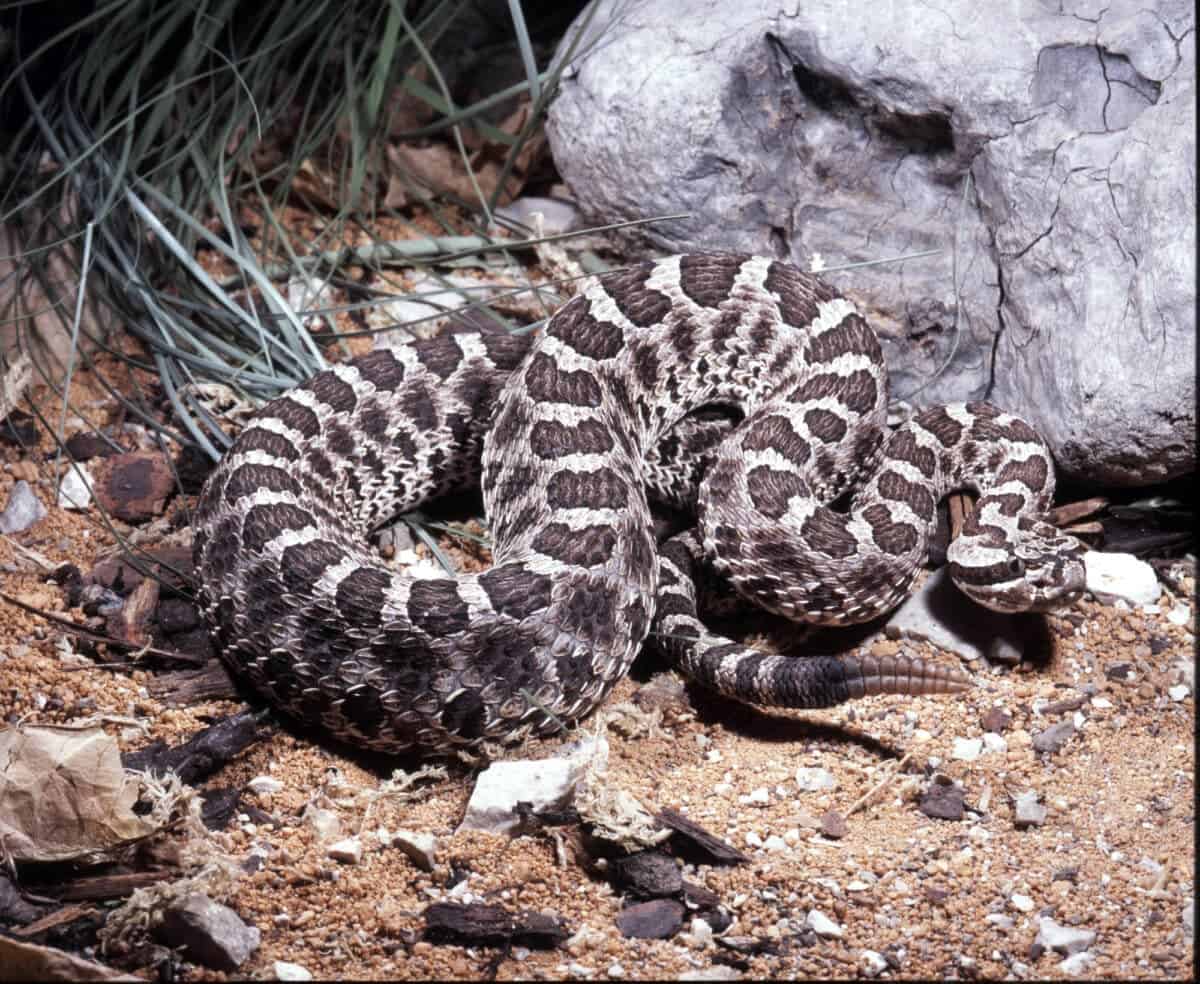
The Eastern Massasauga Rattlesnake (Sistrurus catenatus) is a smaller venomous pit viper, typically reaching only 18-30 inches in length. Often called the “swamp rattler,” this snake has a stocky build with gray or brown coloration adorned with darker brown blotches. Distinguished by its smaller size and less dramatic rattle compared to the Timber Rattlesnake, the Massasauga prefers wet habitats including marshes, swamps, and wet prairies, primarily in Wisconsin’s southern and eastern regions.
Federally listed as threatened, the Eastern Massasauga has become increasingly rare in Wisconsin due to habitat loss and persecution. While its venom is potent and requires immediate medical attention if bitten, fatalities are extremely rare. The Massasauga is typically shy and non-aggressive, preferring to remain hidden and avoid confrontation. Conservation efforts focus on protecting the remaining populations of this ecologically important predator, which helps control small mammal populations in wetland ecosystems.
3. Northern Black Widow Spider
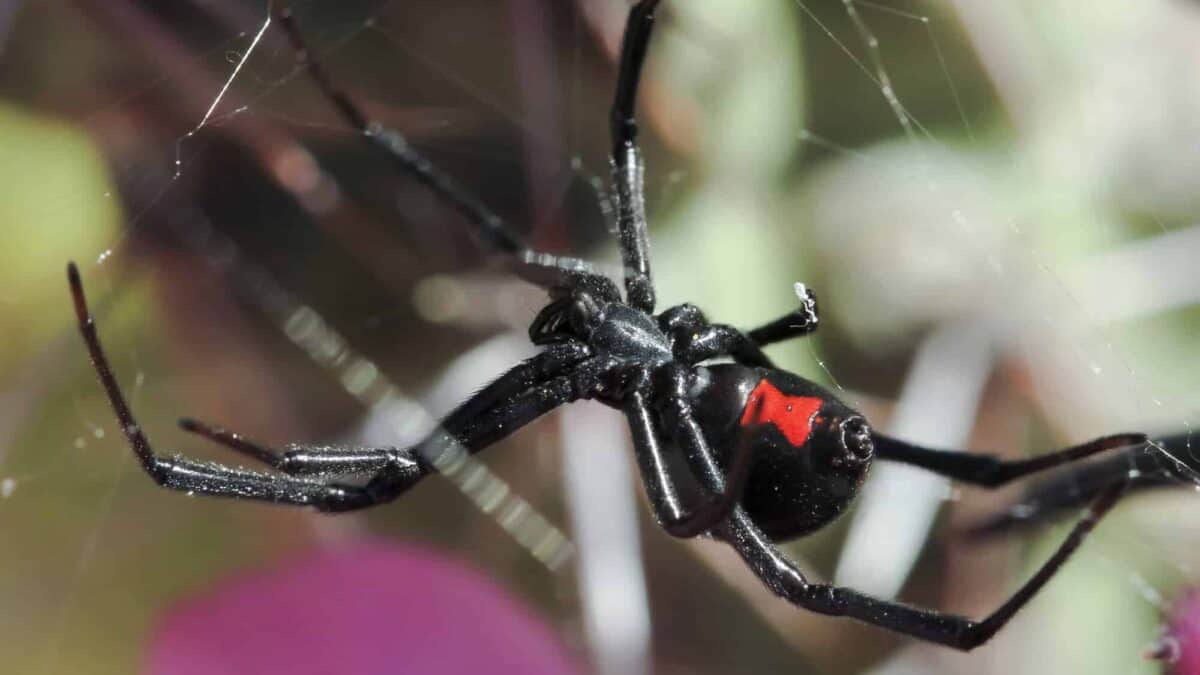
The Northern Black Widow spider (Latrodectus variolus) is among Wisconsin’s most venomous arachnids, though encounters are rare in the state. These infamous spiders are identified by their glossy black bodies and distinctive red hourglass marking on the underside of their abdomen, though the northern variety may have a broken or split hourglass pattern. Females measure about half an inch in body length (not including legs) while males are significantly smaller and not considered dangerous to humans.
In Wisconsin, Northern Black Widows typically inhabit undisturbed areas such as woodpiles, stone walls, hollow stumps, and abandoned rodent burrows. Their venom contains neurotoxins that can cause intense pain, muscle cramping, nausea, and elevated blood pressure. Though potentially serious, deaths from black widow bites are extremely rare with proper medical treatment. These spiders are naturally shy and only bite defensively when directly threatened or disturbed, making encounters with humans uncommon in Wisconsin’s northern climate.
4. Brown Recluse Spider
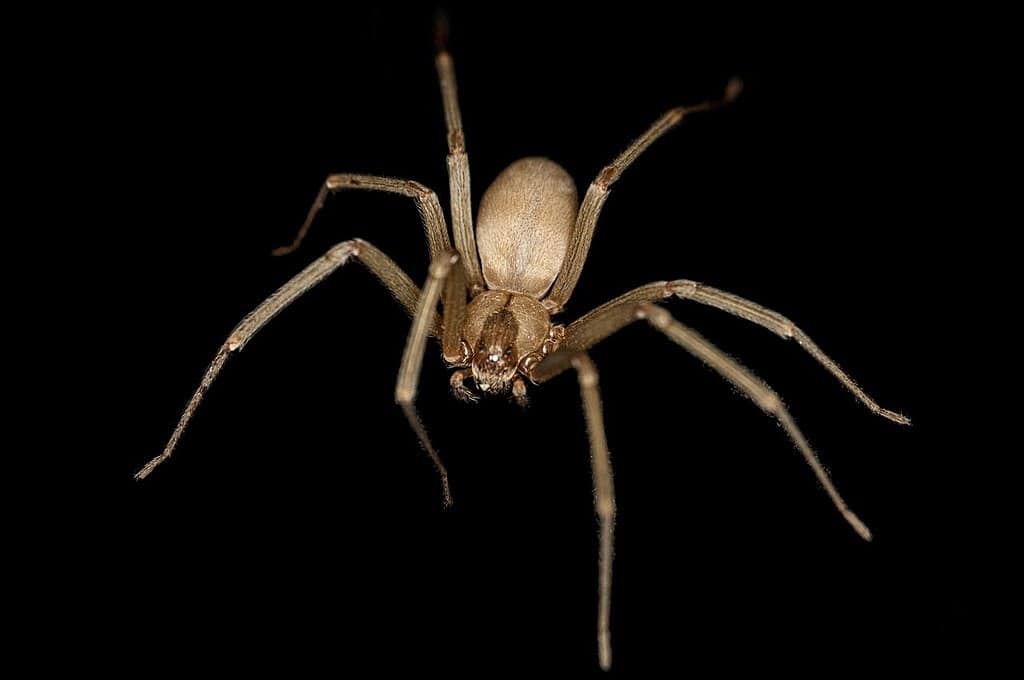
The Brown Recluse spider (Loxosceles reclusa) is not native to Wisconsin but occasionally appears through accidental transportation from southern states. These medium-sized brown spiders are identified by their violin-shaped marking on the cephalothorax (the “fiddle” pattern) and their six eyes arranged in pairs (rather than the eight eyes most spiders have). True Wisconsin populations are extremely rare or non-existent due to the state’s cold climate, though individual specimens may survive indoors.
Brown Recluse venom is necrotizing, potentially causing tissue death around the bite area and creating a characteristic wound that heals slowly. Systemic symptoms can include fever, chills, and nausea in more severe cases. Despite their fearsome reputation, Brown Recluse spiders are not aggressive and only bite when pressed against the skin, typically when hiding in clothing or bedding. Most reported Brown Recluse bites in Wisconsin are misidentifications of other spider bites or different skin conditions, as confirmed specimens are exceedingly rare in the state.
5. Bald-Faced Hornets
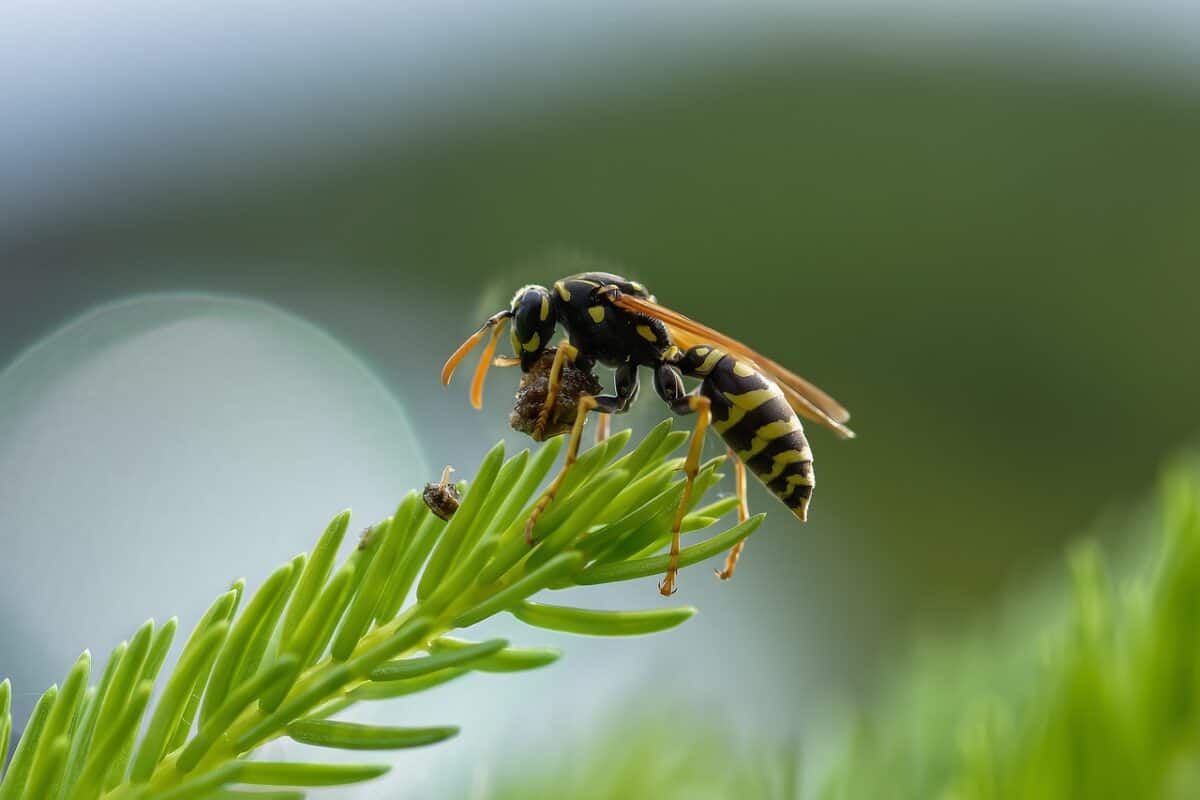
Bald-faced Hornets (Dolichovespula maculata) are large, aggressive wasps with distinctive black and white coloration. Despite their name, they’re not true hornets but a type of yellowjacket wasp. They create large, football-shaped paper nests typically suspended from tree branches, building overhangs, or other elevated structures throughout Wisconsin. These colonial insects can grow up to three-quarters of an inch long and are known for their painful stings and territorial defense behaviors.
Unlike honeybees, Bald-faced Hornets can sting repeatedly without losing their stinger, making encounters potentially dangerous, especially for those with allergies. Their venom contains potent allergens that can cause significant pain, swelling, and in sensitive individuals, anaphylactic reactions requiring emergency medical attention. Nests can contain hundreds of workers that will aggressively defend their colony when disturbed, sometimes pursuing perceived threats for considerable distances. While providing beneficial ecosystem services by controlling pest insects, Bald-faced Hornets present a significant hazard when nests are located near human activity areas.
6. European Honey Bees

European Honey Bees (Apis mellifera) are vital pollinators throughout Wisconsin but possess a venomous sting that can cause serious reactions in allergic individuals. These social insects live in large colonies managed by beekeepers or occasionally in wild hives within tree hollows and building cavities. While not naturally aggressive, honey bees will defend their hives when threatened, releasing alarm pheromones that can trigger collective defensive behavior from the colony.
A honey bee’s barbed stinger remains embedded in mammalian skin after stinging, resulting in the bee’s death but allowing venom to continue pumping into the wound. For most people, stings cause temporary pain, redness, and swelling, but approximately 5-7% of the population experiences allergic reactions ranging from extensive swelling to life-threatening anaphylaxis. Wisconsin beekeepers maintain thousands of colonies statewide, making honey bees common throughout rural and urban environments. Despite their potential danger to some individuals, honey bees’ ecological and agricultural importance far outweighs their risks, as they pollinate over $15 billion worth of crops annually in the United States.
7. Paper Wasps
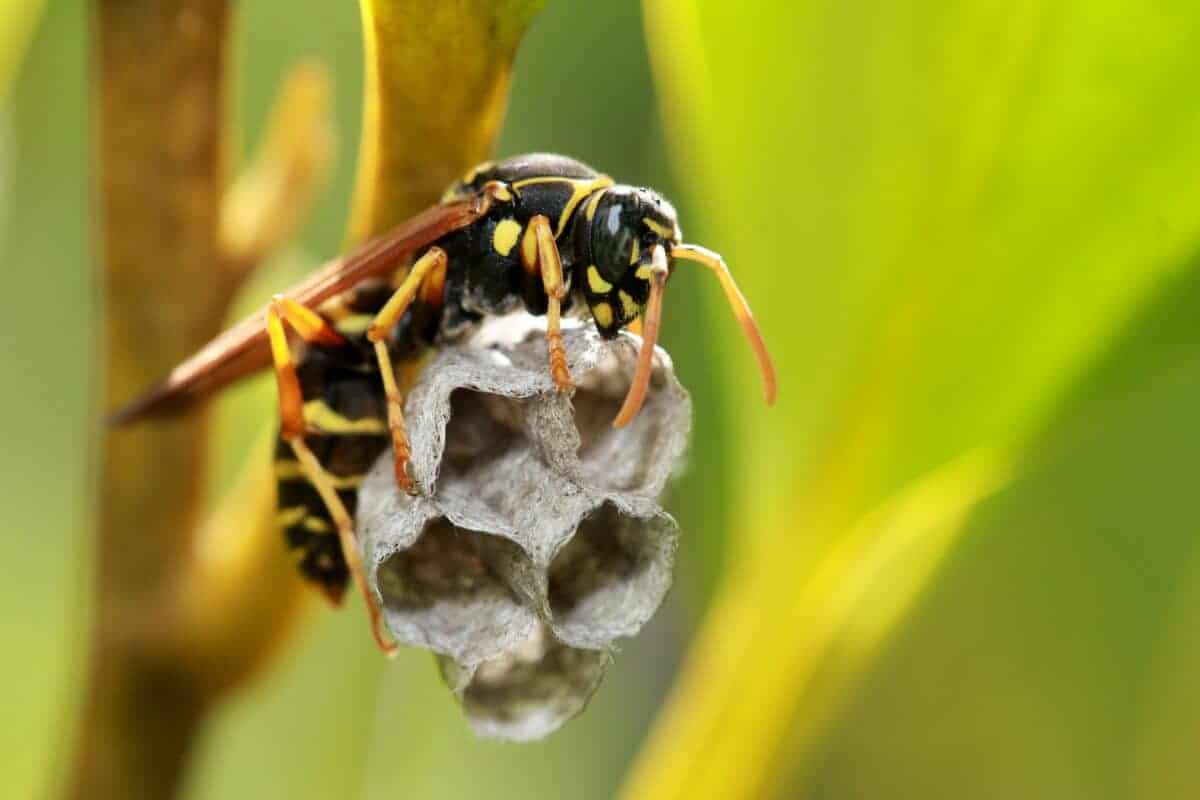
Paper Wasps (primarily Polistes species) are common throughout Wisconsin, recognized by their slender bodies with distinctive yellow and black or brown markings. Unlike yellowjackets, paper wasps have longer legs that dangle visibly during flight. They construct open-celled paper nests that resemble small umbrellas, typically attached to the undersides of eaves, deck railings, or tree branches. These semi-social insects form smaller colonies than many other stinging insects, usually consisting of 20-30 individuals.
While less aggressive than hornets or yellowjackets when away from their nests, paper wasps will defend their colonies vigorously if disturbed. Their stings deliver a venom that causes immediate sharp pain followed by localized swelling and redness. Like other Hymenoptera, they can trigger severe allergic reactions in sensitive individuals. Paper wasps provide ecological benefits by preying on caterpillars and other garden pests, making them beneficial insects despite their painful sting. In Wisconsin, several species occur, including the Northern Paper Wasp (Polistes fuscatus) and the European Paper Wasp (Polistes dominula), which has become increasingly common in recent decades.
8. Yellow Jacket Wasps
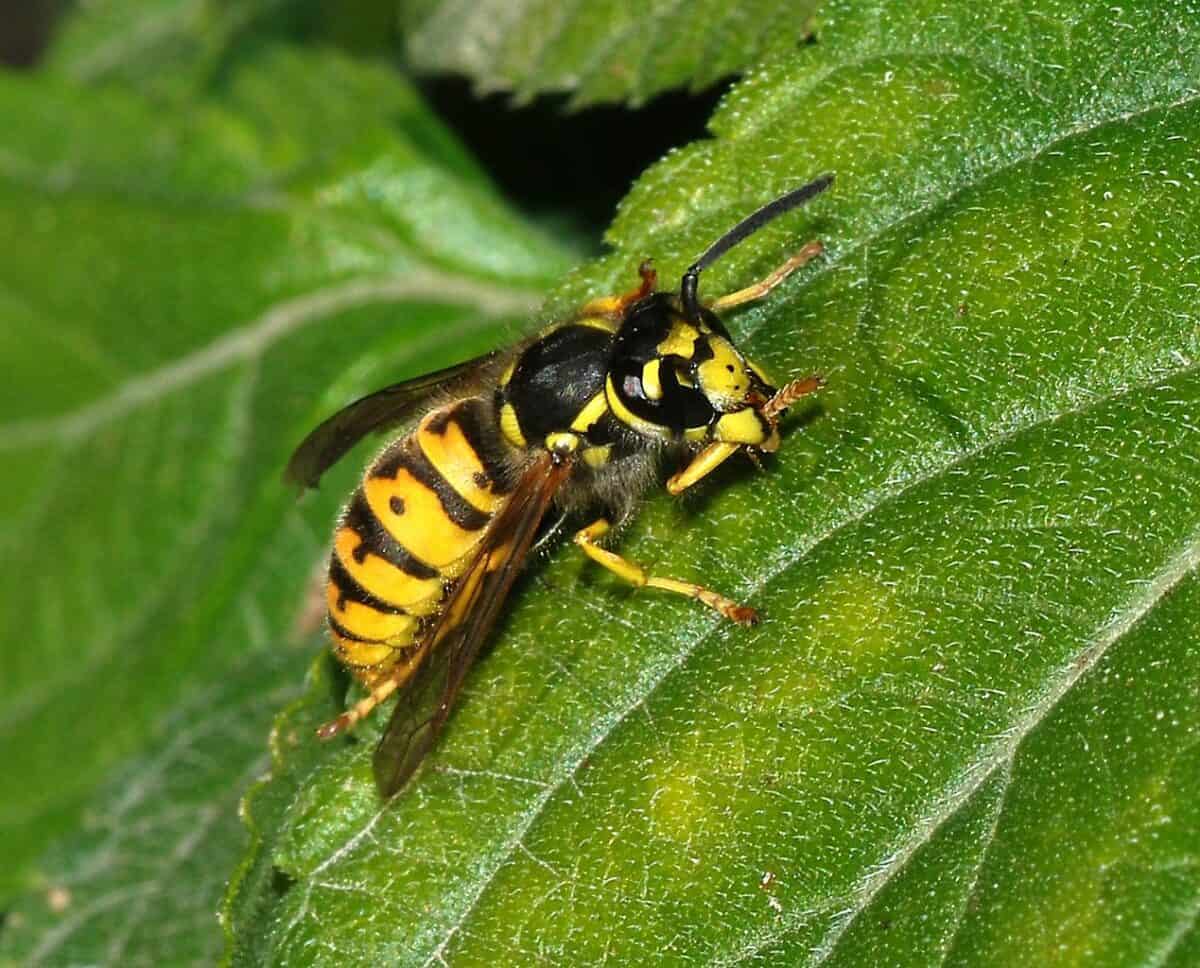
Yellowjackets (Vespula and Dolichovespula species) are among Wisconsin’s most aggressive stinging insects, recognizable by their bright yellow and black banded patterns and smooth bodies. These social wasps build paper nests either underground in abandoned rodent burrows, within wall voids, or occasionally in aerial locations. A mature colony can contain thousands of workers by late summer, making encounters increasingly common during outdoor activities in August and September when colonies reach peak population.
Particularly problematic during late summer picnics and outdoor events, yellowjackets are attracted to sweet foods, meats, and garbage, bringing them into frequent contact with humans. Their ability to sting repeatedly without dying and their aggressive colony defense make them responsible for the majority of stinging insect attacks in Wisconsin. Yellowjacket venom contains powerful allergens and pain-inducing compounds that can cause reactions ranging from localized swelling to life-threatening anaphylaxis in allergic individuals. While they provide ecosystem services by consuming insect pests, their defensive nature and attraction to human foods make yellowjackets one of Wisconsin’s most potentially dangerous insects.
9. Ticks (Black-legged/Deer Ticks)
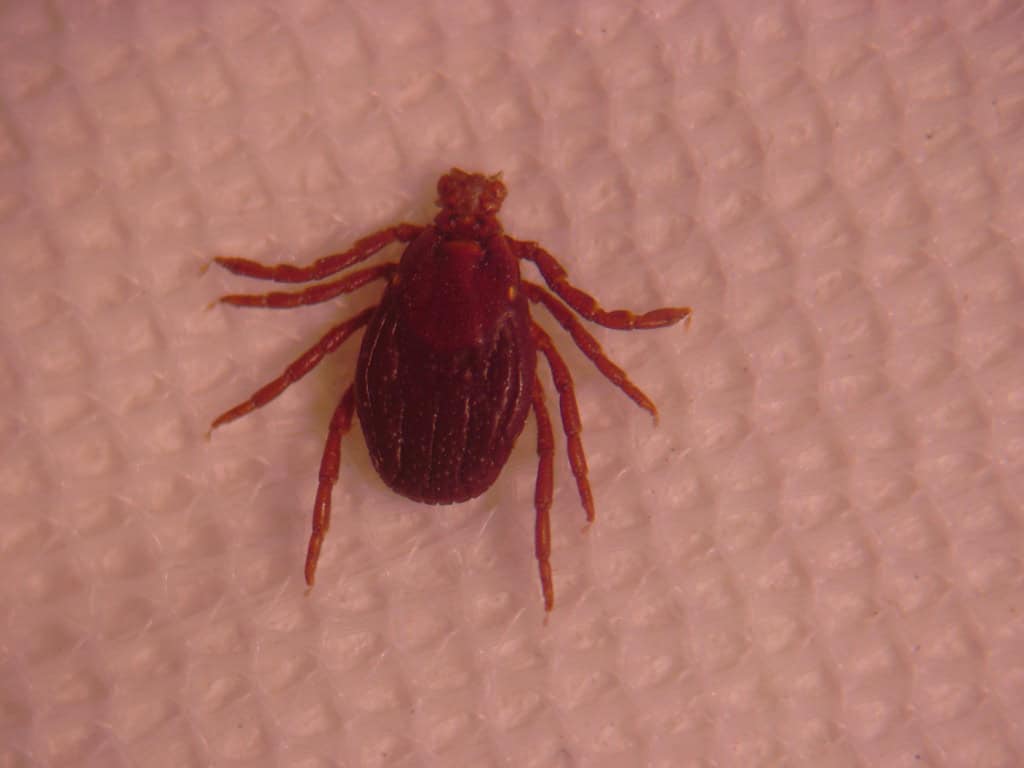
While not venomous in the traditional sense, the Black-legged Tick (Ixodes scapularis), commonly known as the deer tick, presents one of Wisconsin’s most significant wildlife health threats. These tiny arachnids serve as vectors for several serious diseases, most notably Lyme disease, which has increased dramatically in Wisconsin over the past decades. Adult female deer ticks are reddish-brown with black legs and approximately the size of a sesame seed when unfed, growing substantially larger when engorged with blood.
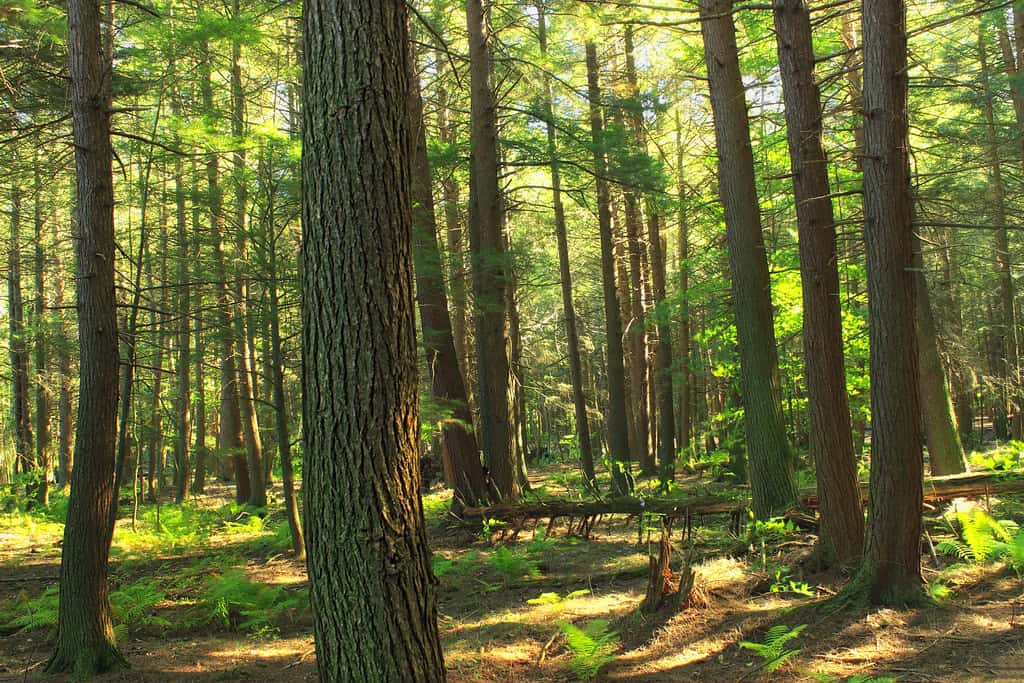
Particularly abundant in Wisconsin’s northern and western counties, deer ticks thrive in wooded areas with high humidity and plenty of host animals such as mice, deer, and birds. Their two-year life cycle includes larval, nymphal, and adult stages, with the nearly invisible nymphs (about the size of a poppy seed) responsible for transmitting most human Lyme disease cases. Beyond Lyme disease, Wisconsin’s deer ticks can transmit anaplasmosis, babesiosis, and Powassan virus—all serious infections that can cause long-term health complications or, in rare cases, death. Prevention through proper clothing, repellents, and prompt tick removal remains the best defense against these disease-carrying parasites.
10. American Water Hemlock
The American Water Hemlock (Cicuta maculata) is not an animal but deserves mention as Wisconsin’s most deadly toxic plant, often encountered in the same wetland habitats where people might watch for venomous animals. This member of the carrot family grows in wet areas throughout Wisconsin, featuring clusters of small white flowers arranged in umbrella-shaped groups and hollow stems with purple streaking. All parts of the plant contain cicutoxin, a powerful neurotoxin that attacks the central nervous system, but the highest concentrations exist in the tuberous roots.
Ingestion of even small amounts of water hemlock can cause violent seizures, respiratory paralysis, and death within hours, making it far more acutely toxic than many animal venoms found in Wisconsin. The plant is particularly dangerous because its roots resemble edible plants like parsnips or wild carrots, and its leaves can be mistaken for edible plants like Queen Anne’s lace. While not an animal threat, awareness of water hemlock is essential for anyone exploring Wisconsin’s wetlands, streams, and lake margins where both this deadly plant and some of the state’s venomous animals may coexist.
11. Snapping Turtles

Common Snapping Turtles (Chelydra serpentina) are Wisconsin’s largest freshwater turtles, reaching shell lengths of 8-14 inches and weights up to 35 pounds. These prehistoric-looking reptiles feature powerful jaws, a rough, often algae-covered shell, a long serrated tail, and a primitive, aggressive disposition when encountered on land. Found throughout Wisconsin’s lakes, rivers, ponds, and wetlands, snapping turtles are ambush predators that feed on fish, amphibians, smaller turtles, aquatic birds, and various invertebrates.
While not venomous, snapping turtles possess remarkably powerful jaws capable of inflicting serious lacerations and even amputating fingers. Their long necks allow them to strike with surprising speed and reach—up to two-thirds of their shell length. Particularly dangerous when encountered out of water during nesting season (May-June) or when crossing roads, these turtles cannot retreat into their shells like other species and instead rely on aggressive defensive behaviors. Despite their fearsome reputation, snapping turtles rarely bite swimmers and prefer to retreat when encountered underwater, making them dangerous primarily when handled or cornered on land.
12. Northern Pike
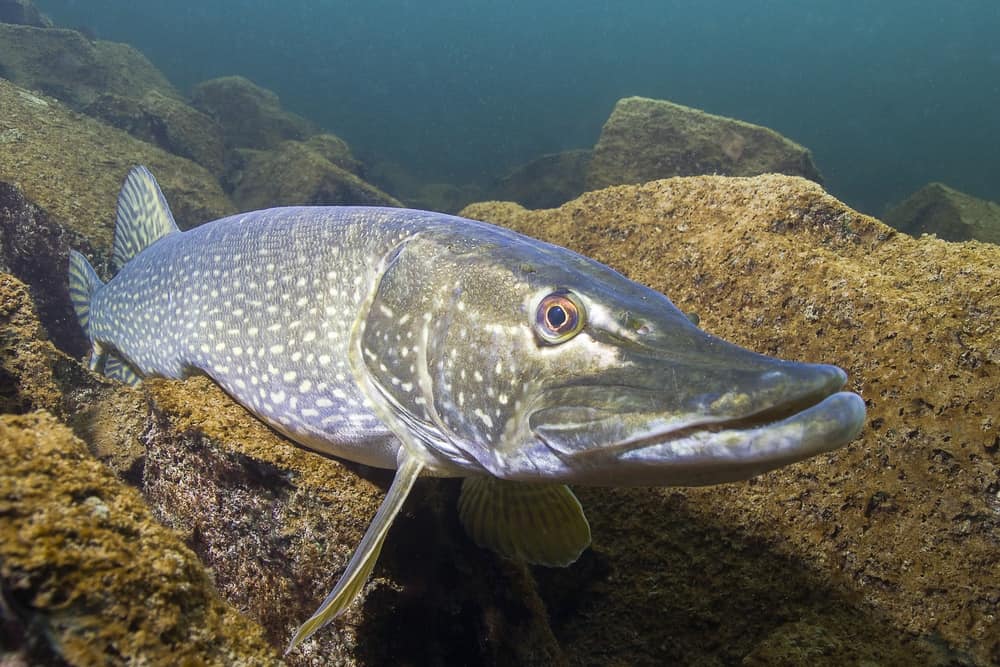
The Northern Pike (Esox lucius) is one of Wisconsin’s most formidable freshwater predators, with a long, torpedo-shaped body reaching lengths up to 4 feet and weights exceeding 20 pounds in state waters. Recognized by their olive-green coloration with lighter bean-shaped spots, elongated duck-like snout, and large, backward-angled teeth, these ambush predators inhabit weedy areas of lakes and rivers throughout Wisconsin. While not venomous, northern pike possess remarkably sharp teeth and powerful jaws designed for seizing and holding prey.
Anglers and swimmers occasionally suffer significant lacerations when handling pike improperly or accidentally encountering them in murky water. Their mouths contain hundreds of needle-sharp teeth facing inward, creating wounds that are both jagged and deep, with significant potential for infection. The pike’s infamous “gill rakers”—bony projections inside the mouth—can also cause severe cuts when fingers are inserted to remove hooks. Though rarely life-threatening, pike injuries can require stitches and proper wound care. Despite these hazards, northern pike remain prized game fish in Wisconsin, where their aggressive strikes and powerful fights make them favorites among anglers willing to respect their dangerous dentition.
Conclusion: Respecting Wisconsin’s Wildlife

Wisconsin’s potentially dangerous animals represent a modest but significant aspect of the state’s rich biodiversity. While fatal encounters are extremely rare, understanding and respecting these creatures is essential for safely enjoying the outdoors. Most of Wisconsin’s venomous and dangerous animals play vital ecological roles, from rattlesnakes controlling rodent populations to predatory fish maintaining aquatic ecosystem balance. With proper knowledge, common-sense precautions, and appropriate distance, the risks posed by these animals can be minimized effectively.
For Wisconsin residents and visitors alike, awareness rather than fear should guide interactions with the state’s wildlife. Learning to identify potentially harmful species, understanding their habitats and behaviors, and knowing appropriate first aid and medical responses can transform potentially dangerous encounters into educational experiences. Remember that many of Wisconsin’s most dangerous animals, including the timber rattlesnake and massasauga, are protected species facing population challenges, deserving conservation rather than persecution. By fostering respect for these remarkable creatures and the vital ecological roles they play, we can ensure that Wisconsin’s natural heritage continues to thrive for generations to come.

From exploring the marine wonders in the Azores and witnessing the vast savannas of Kenya, to delving deep into the rich biodiversity of South Africa and traversing iconic landscapes in Australia and the US like Yellowstone, Chris's experiences are vast.
With a penchant for diving alongside sharks, the ocean holds a special place in his heart.
Through his academic insights, he champions wildlife conservation, striving with 'Animals Around The Globe' to cultivate a profound connection between humans and animals, enhancing our mutual appreciation.
Connect with him at Feedback@animalsaroundtheglobe.com.
- A Bear Journey Through The USA: 18 Best Bear Photos from 18 US States - July 19, 2026
- Elephant Matriarchs Know Every Waterhole for Miles - July 19, 2026
- Top 10 Dinosaur Relatives Still Roaming Earth Today - July 19, 2026