

In the ancient seas of the late Devonian period, approximately 382-358 million years ago, swam one of the most fearsome predators ever to inhabit Earth’s oceans. Dunkleosteus, an enormous armored fish with a set of bone-crushing jaws that could exert forces rivaling those of modern crocodiles and big cats, dominated the prehistoric waters as an apex predator. With no true teeth but rather sharp bony plates that formed a lethal cutting edge, this ancient fish could slice through the hardest armored prey of its time with terrifying efficiency. Its fossil remains tell the story of a creature so perfectly adapted to its role as a top predator that it has fascinated paleontologists and the public alike since its discovery. This article explores the remarkable anatomy, evolutionary significance, and ecological impact of Dunkleosteus, offering a glimpse into the life of this prehistoric marine giant that once ruled the Devonian seas.
A Titan of the Devonian Period

The Devonian period (419-359 million years ago) is often called the “Age of Fishes” due to the remarkable diversity and evolutionary innovations that occurred in aquatic vertebrates during this time. Within this vibrant underwater world, Dunkleosteus emerged as one of the most impressive creatures. As a member of the placoderm class—a group of armored, jawed fishes—Dunkleosteus represented the pinnacle of early vertebrate predatory evolution.
Flourishing approximately 382-358 million years ago during the late Devonian, Dunkleosteus lived just before the devastating Hangenberg extinction event that would wipe out many marine species. Fossil evidence of this magnificent creature has been discovered across several continents, with particularly significant finds in North America’s Cleveland Shale deposits, as well as in Morocco, Belgium, and Poland, suggesting Dunkleosteus had a widespread global distribution in the ancient Devonian oceans.
Impressive Size and Physical Characteristics
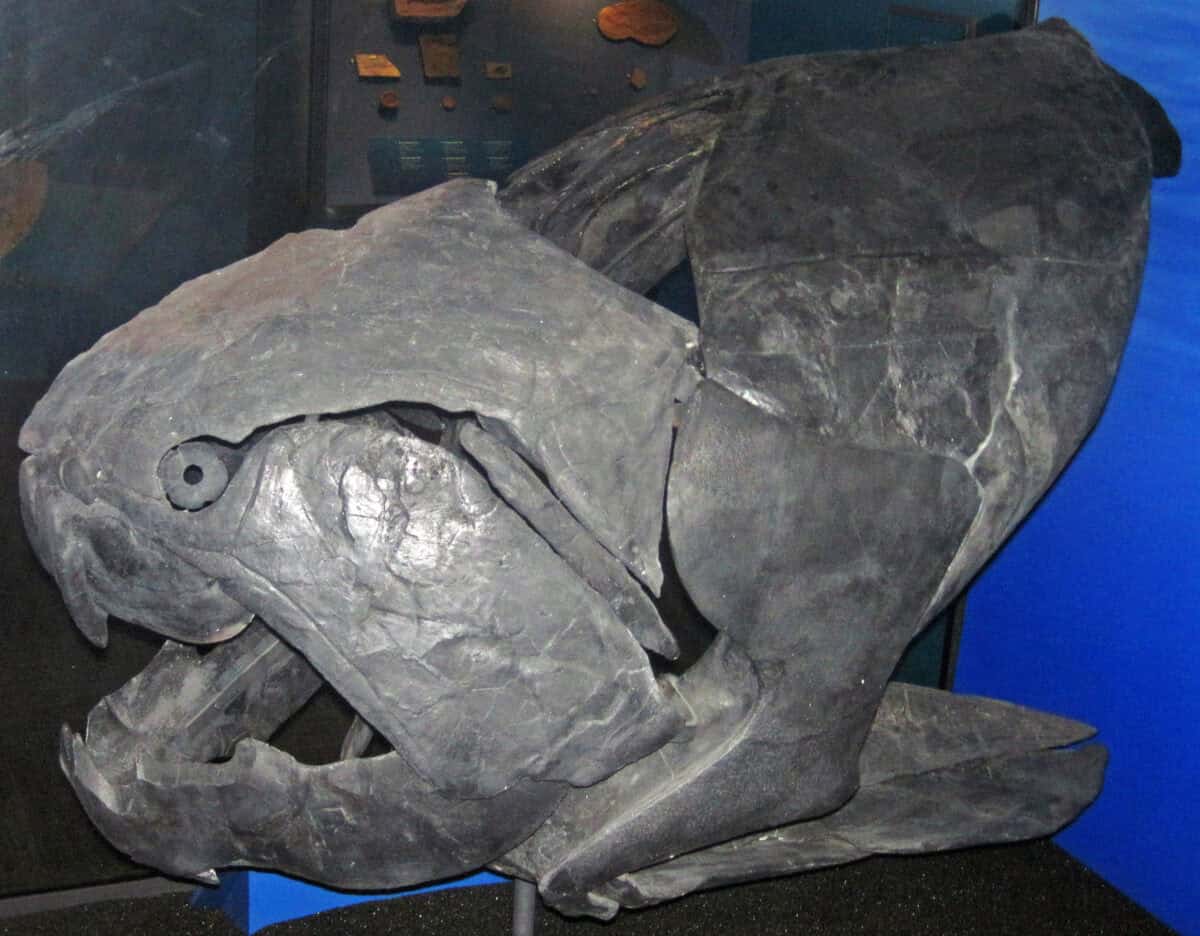
Dunkleosteus terrelli, the largest species of the genus, was truly massive by any standard. Growing up to 8-10 meters (26-33 feet) in length and weighing an estimated 3-4 tons, it was comparable in size to a modern great white shark but much bulkier. This enormous predator had a distinctive appearance characterized by its heavily armored head and thorax. The armor consisted of thick bony plates called osteoderms that formed a solid shield around the front portion of its body, protecting vital organs and providing structural support.
Unlike the front of its body, the rear portion of Dunkleosteus lacked bony armor and was likely covered with skin, possibly with small scales. This contrast between the heavily armored front and the more flexible rear section suggests a body design optimized for both protection and swimming efficiency. The creature’s overall body shape was likely similar to other large predatory fish—streamlined and powerful, with a strong tail for propulsion through the ancient seas.
The Formidable Jaw Mechanism

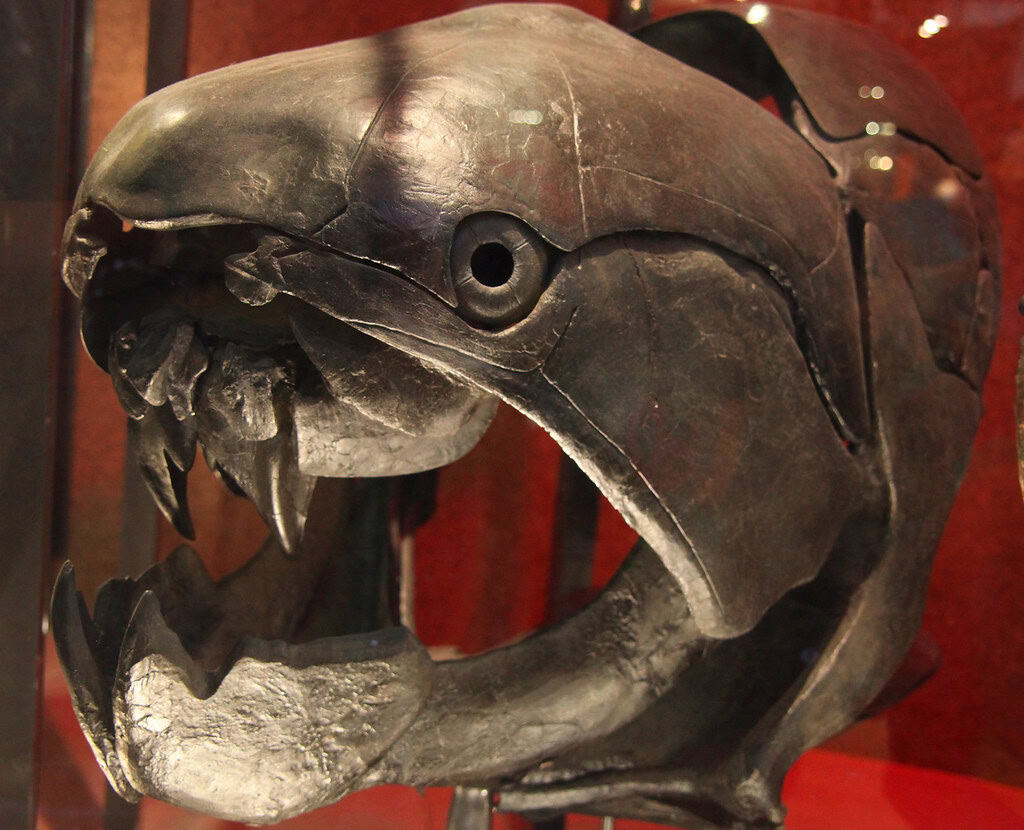
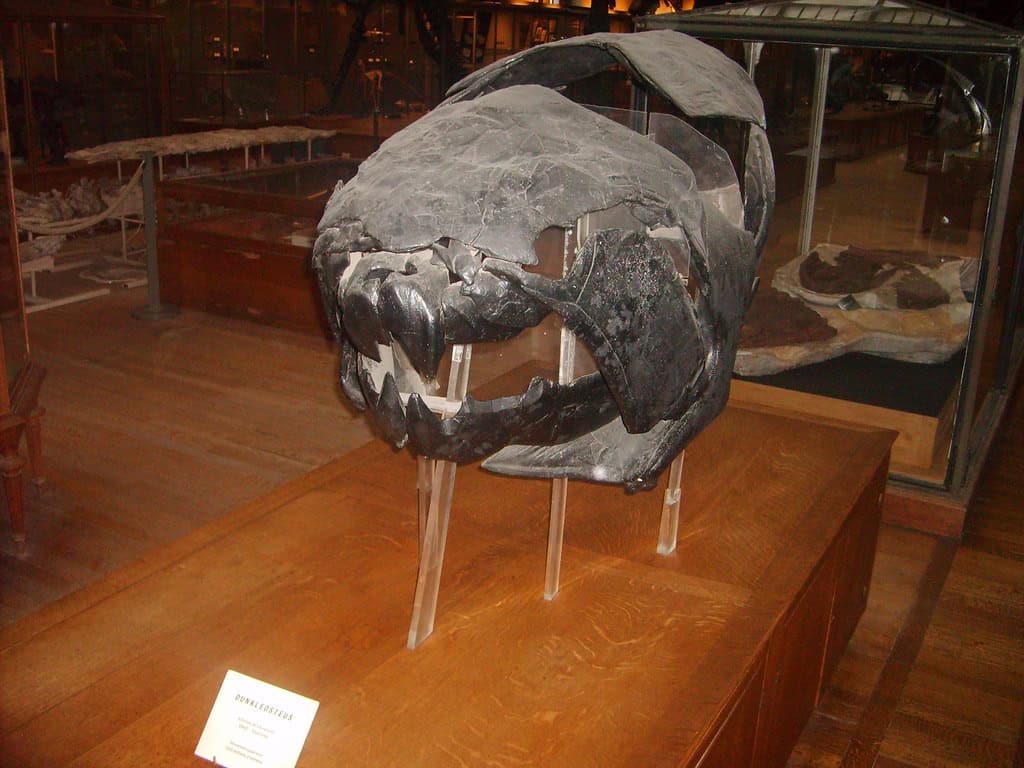
What truly set Dunkleosteus apart from other prehistoric predators was its unique and terrifying jaw apparatus. Rather than conventional teeth, Dunkleosteus possessed sharp bony plates that extended from its skull, forming self-sharpening cutting edges. These plates were arranged in a way that created a deadly biting mechanism, consisting of two pairs of blade-like structures on both the upper and lower jaws. As the jaws closed, these blades created a shearing action that could easily slice through the hardest armor of contemporary prey animals.
Biomechanical studies of Dunkleosteus fossils have revealed astonishing capabilities. Its jaw could exert an estimated bite force of up to 8,000 pounds per square inch (psi) at the tip of its fang-like bony plates and over 11,000 psi at the blade edge. This immense power places Dunkleosteus among the strongest biters in vertebrate history, exceeding the bite force of most dinosaurs and rivaling that of the strongest modern predators. Additionally, the fish could open its jaws in just 20 milliseconds, creating a powerful suction force that helped draw prey into its deadly maw.
Evolution and Taxonomic Classification
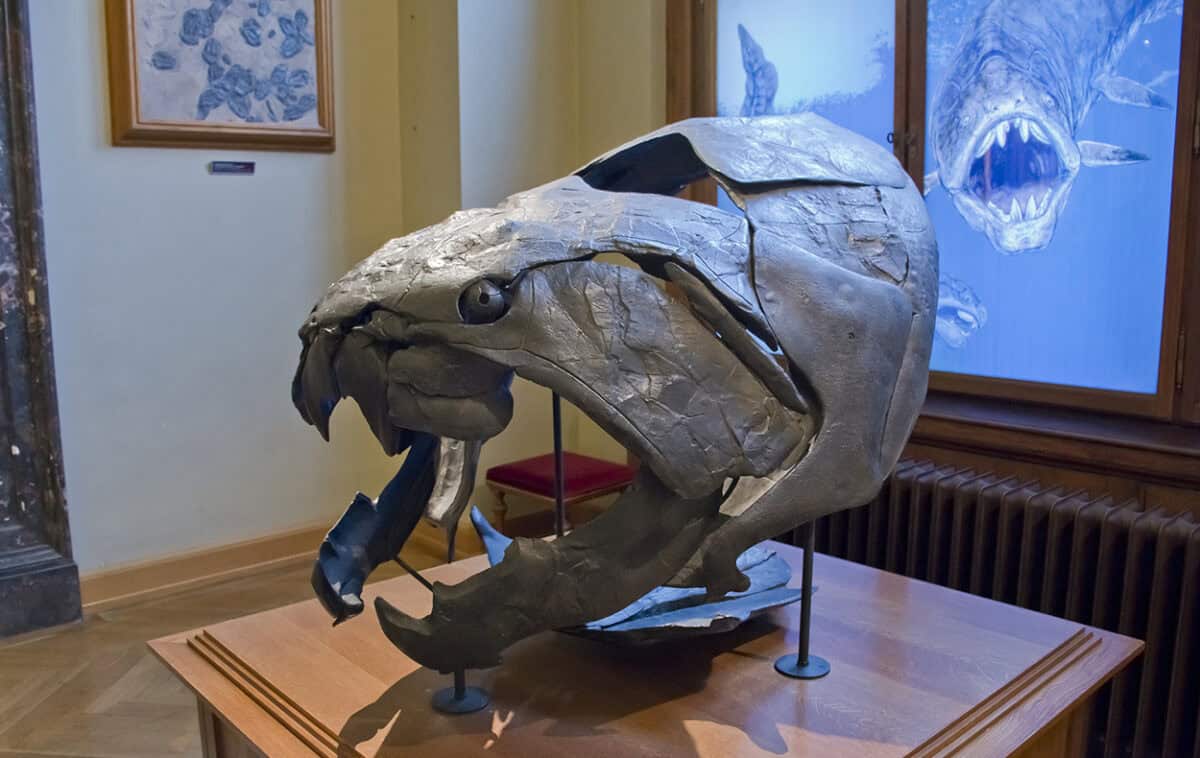
Dunkleosteus belongs to the class Placodermi, an extinct group of armored fish that were among the first vertebrates to evolve jaws. More specifically, it was part of the order Arthrodira, which included various species of armored fish characterized by a joint between their head and thoracic armor that allowed the head to lift independently. The genus name “Dunkleosteus” honors David Dunkle, a former curator of vertebrate paleontology at the Cleveland Museum of Natural History, while the species name “terrelli” commemorates Jay Terrell, who discovered the first specimens in Ohio.
The evolutionary significance of Dunkleosteus cannot be overstated. It represents one of the earliest examples of a vertebrate apex predator, showcasing the rapid development of complex predatory adaptations early in vertebrate evolution. Its specialized jaw mechanism was a revolutionary adaptation that allowed it to exploit ecological niches unavailable to other contemporary organisms. Although placoderms eventually went extinct without leaving direct descendants among modern fish, they represent a crucial chapter in vertebrate evolution, demonstrating early experiments with jawed vertebrate body plans.
Diet and Hunting Behavior
As the apex predator of its ecosystem, Dunkleosteus had a varied and protein-rich diet. Fossil evidence, including coprolites (fossilized feces) and partially digested prey found within body cavities of Dunkleosteus specimens, indicates that these giants were voracious predators that consumed a wide range of marine life. Their primary prey included other armored fish, early sharks, ammonites, and various shellfish. The powerful jaw mechanism of Dunkleosteus made it particularly adept at crushing through the hard shells and armored plates of its contemporaries.
Paleontologists believe that Dunkleosteus employed an ambush hunting strategy, using its powerful swimming abilities to launch sudden, devastating attacks on prey. Its ability to open its jaws extremely rapidly created a vacuum effect that could suck prey into its mouth, a technique similar to that used by many modern fish predators. There is also evidence suggesting that Dunkleosteus may have been cannibalistic, with some fossils showing bite marks that match the distinctive pattern of Dunkleosteus jaws on other members of the same species—perhaps a testament to the competitive feeding environment of the Devonian seas.
The Armor System: Protection and Support

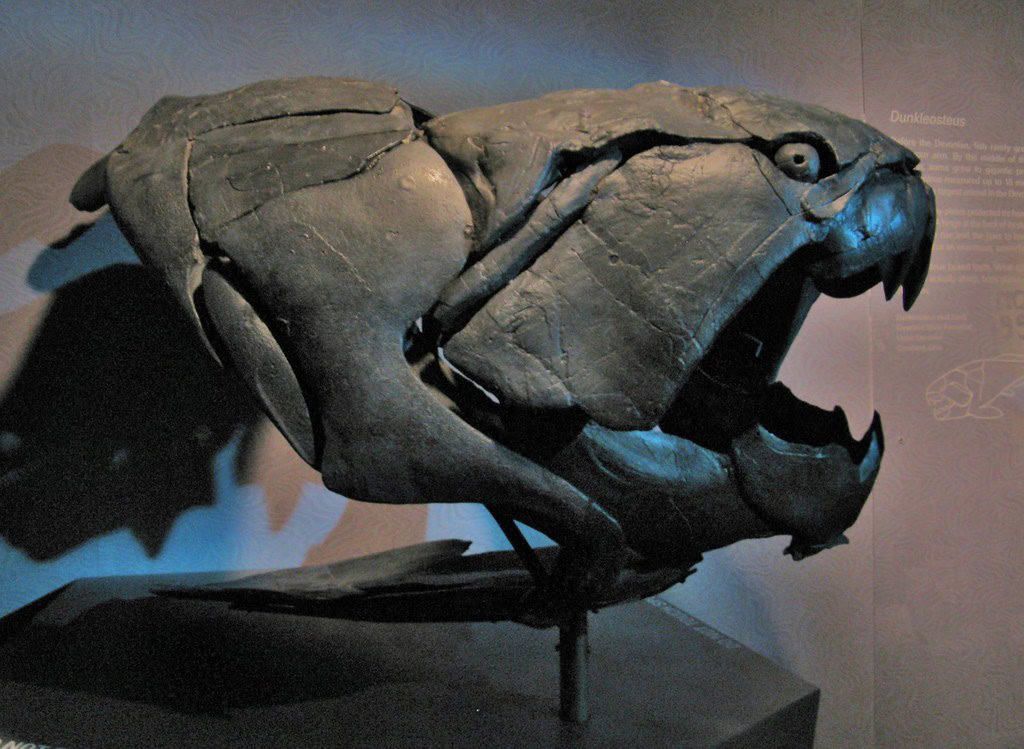
The armor of Dunkleosteus represents one of the most impressive defensive adaptations in prehistoric fish. Covering the head and anterior portion of the body, this armor consisted of thick, interlocking bony plates that formed a solid shield. The head armor, or skull roof, was particularly substantial, featuring plates up to 5 centimeters thick in some places. This robust defensive system protected vital organs and provided structural support for the powerful jaw musculature that enabled its fearsome bite.
Unlike modern fish with flexible cranial kinesis, Dunkleosteus had a relatively rigid skull structure. However, it possessed a unique adaptation in the form of a specialized joint between the head and thoracic armor. This “neck joint” allowed the head to pivot upward independently of the body, enhancing the predator’s ability to capture prey by significantly increasing its gape. This combination of rigid protective armor and limited but strategic mobility represented an effective compromise between protection and predatory efficiency in the competitive Devonian marine environment.
Reproduction and Life Cycle
The reproductive biology of Dunkleosteus, like many aspects of its soft tissue biology, remains somewhat speculative due to the limitations of the fossil record. However, based on what we know about placoderms in general, scientists have developed theories about how these ancient predators may have reproduced. Recent discoveries of placoderm fossils with embryos inside them suggest that some placoderms gave birth to live young (viviparity) rather than laying eggs, representing one of the earliest examples of live birth in vertebrates.
Growth patterns observed in Dunkleosteus fossils indicate that these fish likely grew continuously throughout their lives, though at a decreasing rate as they aged. Juvenile specimens show the same basic armor structure as adults but in less developed form. Based on growth ring analysis of fossilized armor plates (similar to tree rings), paleontologists estimate that Dunkleosteus may have had a relatively long lifespan for a fish, possibly living several decades. The largest specimens likely represent individuals that had reached advanced ages and continued growing throughout their lives.
Fossil Discoveries and Research History

The first significant Dunkleosteus fossils were discovered in the Cleveland Shale formations of Ohio in the late 19th century. These well-preserved remains, primarily consisting of the distinctive armored head shields, caught the attention of paleontologists who recognized them as belonging to a previously unknown prehistoric creature. Initially classified under different names, including “Dinichthys” (terrible fish), the genus was later renamed Dunkleosteus in 1956 to honor David Dunkle, a curator at the Cleveland Museum of Natural History.
Over the decades, Dunkleosteus remains have been discovered across multiple continents, including North America, Europe, Morocco, and Belgium. The Cleveland Museum of Natural History houses one of the most complete and impressive collections of Dunkleosteus fossils, including several nearly complete skull shields that have been instrumental in reconstructing the appearance and capabilities of this ancient predator. Modern research techniques, including biomechanical modeling and CT scanning, continue to reveal new insights about Dunkleosteus, from its jaw mechanics to its probable swimming capabilities and ecological role.
Ecological Role and Impact

As the apex predator of the late Devonian seas, Dunkleosteus played a crucial role in maintaining the ecological balance of marine ecosystems. By preying on mid-level predators and large herbivores, it helped regulate population sizes throughout the food web. This top-down control would have influenced species distribution, population dynamics, and even the evolution of defensive adaptations in prey species. The mere presence of such a formidable predator likely created a “landscape of fear” that affected the behavior and habitat selection of numerous marine species.
Interestingly, Dunkleosteus lived during a time of significant ecological transition in Earth’s oceans. The late Devonian period witnessed several extinction events that dramatically altered marine ecosystems. While Dunkleosteus successfully navigated most of these disruptions, ultimately the lineage did not survive the major Hangenberg extinction event at the very end of the Devonian period. This extinction, characterized by significant ocean anoxia (oxygen depletion) and rapid climate change, led to the disappearance of many placoderm groups, including the mighty Dunkleosteus, forever changing the composition of marine vertebrate communities.
Comparisons with Modern Predators
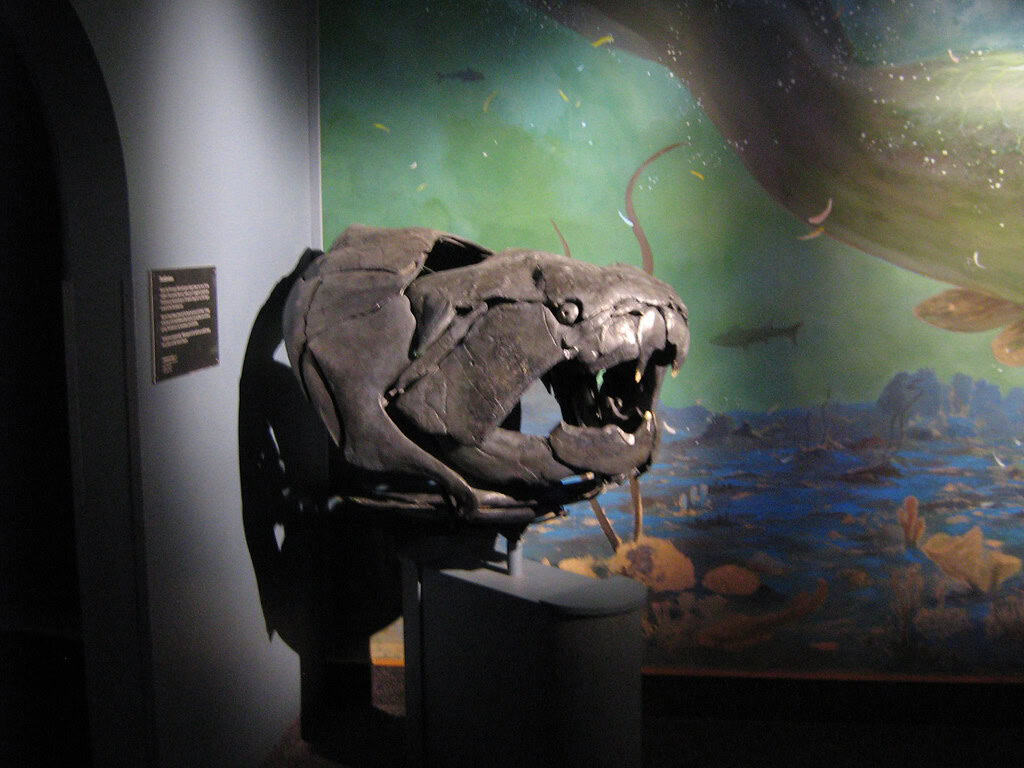
Although separated by hundreds of millions of years of evolution, Dunkleosteus shares several characteristics with modern apex predators. Its estimated bite force of 8,000-11,000 psi rivals or exceeds that of the strongest modern biters, such as saltwater crocodiles (3,700 psi) and great white sharks (4,000 psi). This extraordinary biting power placed Dunkleosteus in a class of its own, even compared to the most formidable predators of today.
In terms of ecological role, Dunkleosteus most closely resembles modern apex marine predators like great white sharks, killer whales, and large crocodilians. Like these contemporary predators, Dunkleosteus likely had few natural enemies as an adult and played a critical role in structuring marine communities through predation pressure. However, unlike most modern marine predators, Dunkleosteus combined extreme bite force with heavy armor protection, a combination rarely seen in today’s oceans where predators typically sacrifice armor for speed and agility. This unique combination of offensive and defensive adaptations made Dunkleosteus a particularly successful predator in the dangerous Devonian seas.
Dunkleosteus in Popular Culture
Despite having been extinct for over 358 million years, Dunkleosteus has captured the public imagination and features prominently in various aspects of popular culture. Its imposing appearance and fearsome reputation have made it a favorite subject in documentary series about prehistoric life, including BBC’s “Sea Monsters” and various productions by Discovery Channel and National Geographic. These documentaries typically highlight the creature’s massive jaws and predatory capabilities, often dramatizing its hunting behavior.
Beyond documentaries, Dunkleosteus has appeared in numerous books, video games, and toys focused on prehistoric life. Notable appearances include roles in the video games “ARK: Survival Evolved” and “Hungry Shark Evolution,” where players can encounter or even control this ancient predator. Museum exhibits featuring Dunkleosteus reconstructions are particularly popular attractions, with institutions like the Cleveland Museum of Natural History, the Field Museum in Chicago, and the Natural History Museum in London showcasing impressive models or fossil displays of this prehistoric giant that continue to awe and educate visitors about Earth’s ancient oceans.
Mysteries and Ongoing Research
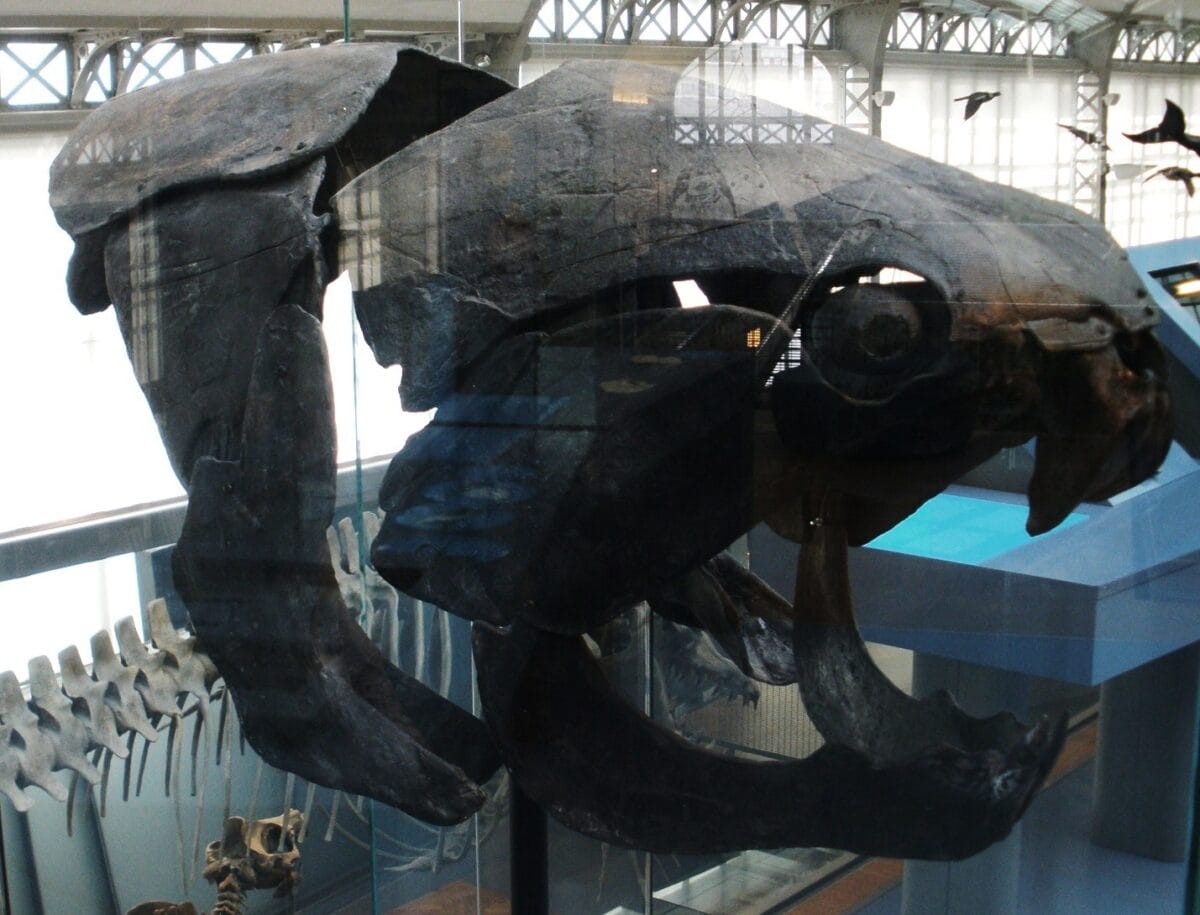
Despite decades of study, many aspects of Dunkleosteus biology and behavior remain mysterious. One of the most significant challenges for researchers is the nature of the fossil record itself. Like most placoderms, Dunkleosteus fossils typically consist only of the bony armor plates, as the cartilaginous internal skeleton and soft tissues rarely fossilize. This limitation means that scientists must make educated inferences about its complete body shape, internal anatomy, coloration, and many aspects of its behavior based on fragmentary evidence and comparative anatomy with both ancient and modern fish.
Current research on Dunkleosteus employs cutting-edge technologies to extract maximum information from existing fossils. CT scanning allows paleontologists to examine the internal structure of armor plates and reconstruct brain case anatomy. Biomechanical modeling helps scientists understand how its jaw apparatus functioned and calculate bite forces with increasing precision. Geochemical analyses of fossilized tissues provide clues about its diet, habitat preferences, and migration patterns. Each new discovery and analytical technique brings researchers closer to understanding this remarkable creature, though some aspects of its biology may remain forever mysterious—a testament to the challenges of reconstructing life from the distant past.
Conclusion: The Legacy of an Ancient Predator

Dunkleosteus stands as a remarkable testament to the diversity and evolutionary innovation of early vertebrate life. Its combination of massive size, impenetrable armor, and bone-crushing jaws made it one of the most formidable predators ever to swim Earth’s oceans, dominating marine ecosystems millions of years before the first dinosaurs appeared. Though its lineage eventually succumbed to extinction, leaving no direct descendants, Dunkleosteus represents a crucial chapter in the evolutionary story of vertebrates and the development of predatory adaptations.
The study of this ancient fish continues to yield valuable insights about prehistoric marine ecosystems, the evolution of jawed vertebrates, and the complex interplay between predators and prey that shapes evolutionary trajectories. From its first discovery in the Cleveland Shale to the latest high-tech analyses of its fossils, Dunkleosteus has fascinated scientists and the public alike with its extraordinary capabilities. As research techniques continue to advance, we can look forward to even deeper understanding of this prehistoric giant, further illuminating the remarkable story of life’s evolution on our planet.
Dunkleosteus reminds us that the history of life on Earth includes many evolutionary experiments—some that led to enduring lineages and others, like the placoderms, that flourished briefly (in geological terms) before disappearing. Yet even extinct branches of the tree of life have profound importance, demonstrating the diverse pathways that evolution can take and the remarkable adaptations that can arise in response to environmental pressures. In this way, the legacy of Dunkleosteus lives on, not through descendants, but through its contribution to our understanding of evolution’s endless creativity and the ancient history of our planet.

- The Secret Language of Dolphins Decoded by Researchers - July 20, 2026
- 7 Animals That Can Survive Extreme Environments You Couldn’t - July 20, 2026
- The Longest Snake Ever Found in the U.S. - July 20, 2026