


The Amazon River, stretching over 4,000 miles through South America, is home to one of the most biodiverse ecosystems on our planet. This mighty waterway, which discharges more water than the next seven largest rivers combined, supports an extraordinary array of wildlife. From elusive predators to colorful birds and remarkable aquatic creatures, the Amazon offers wildlife enthusiasts an unparalleled opportunity to witness nature’s spectacular diversity. Whether you’re planning an expedition or simply curious about this ecological wonderland, these ten remarkable animals represent just a fraction of the estimated 2,500 fish species and countless other creatures that call the Amazon River basin their home. Join us as we explore some of the most fascinating inhabitants of this remarkable ecosystem, creatures that have evolved unique adaptations to thrive in this dynamic riverine environment.
Pink River Dolphins: The Amazon’s Enigmatic Navigators

Perhaps the most iconic of all Amazon River residents, the pink river dolphin (Inia geoffrensis), also known as the boto, stands out with its distinctive rosy hue. Unlike their ocean-dwelling relatives, these freshwater mammals have adapted perfectly to navigate the complex, often murky waters of the Amazon. Their flexible necks allow them to move their heads 180 degrees, helping them maneuver between tree trunks in flooded forests. Reaching lengths of up to 8 feet and weights of 400 pounds, they are impressive creatures with pronounced foreheads housing powerful echolocation abilities.
Beyond their physical characteristics, pink river dolphins hold a special place in local folklore. Indigenous communities tell stories of dolphins transforming into handsome men at night to seduce women in riverside villages, giving rise to the nickname “encantados” or “enchanted ones.” While classified as vulnerable by the IUCN, these intelligent mammals face threats from fishing net entanglement, dam construction, and pollution. Fortunately, their mystical status in local culture has provided some protection, as many Amazon residents consider it bad luck to harm these remarkable creatures.
Anacondas: The Amazon’s Powerful Constrictors
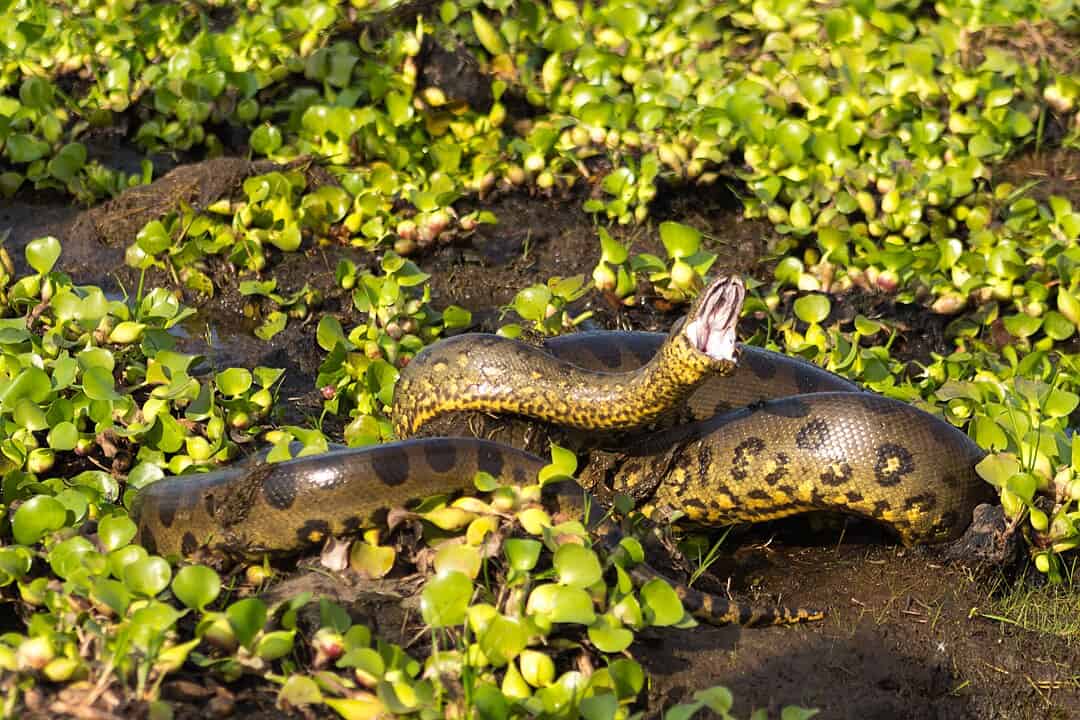
The green anaconda (Eunectes murinus) reigns as one of the most formidable predators of the Amazon River basin. As the world’s heaviest snake, these massive constrictors can grow to lengths exceeding 25 feet and weigh over 500 pounds. Unlike many reptiles, anacondas are primarily aquatic, spending much of their time submerged with only their eyes and nostrils breaking the water’s surface. Their olive-green coloration, patterned with black blotches, provides perfect camouflage among the riverine vegetation where they hunt for prey including capybaras, caimans, and even jaguars.
Anacondas employ a hunting strategy that relies on ambush and constriction rather than venom. When prey approaches, they strike with lightning speed, grabbing the animal with their powerful jaws before coiling their muscular bodies around it. Each breath the prey exhales allows the anaconda to tighten its grip further until suffocation occurs. Female anacondas are significantly larger than males, sometimes growing up to five times their size. During breeding season, “breeding balls” can form where multiple males surround a single female in a competition to mate, creating one of the Amazon’s most unusual wildlife spectacles.
Black Caiman: The River’s Apex Predator
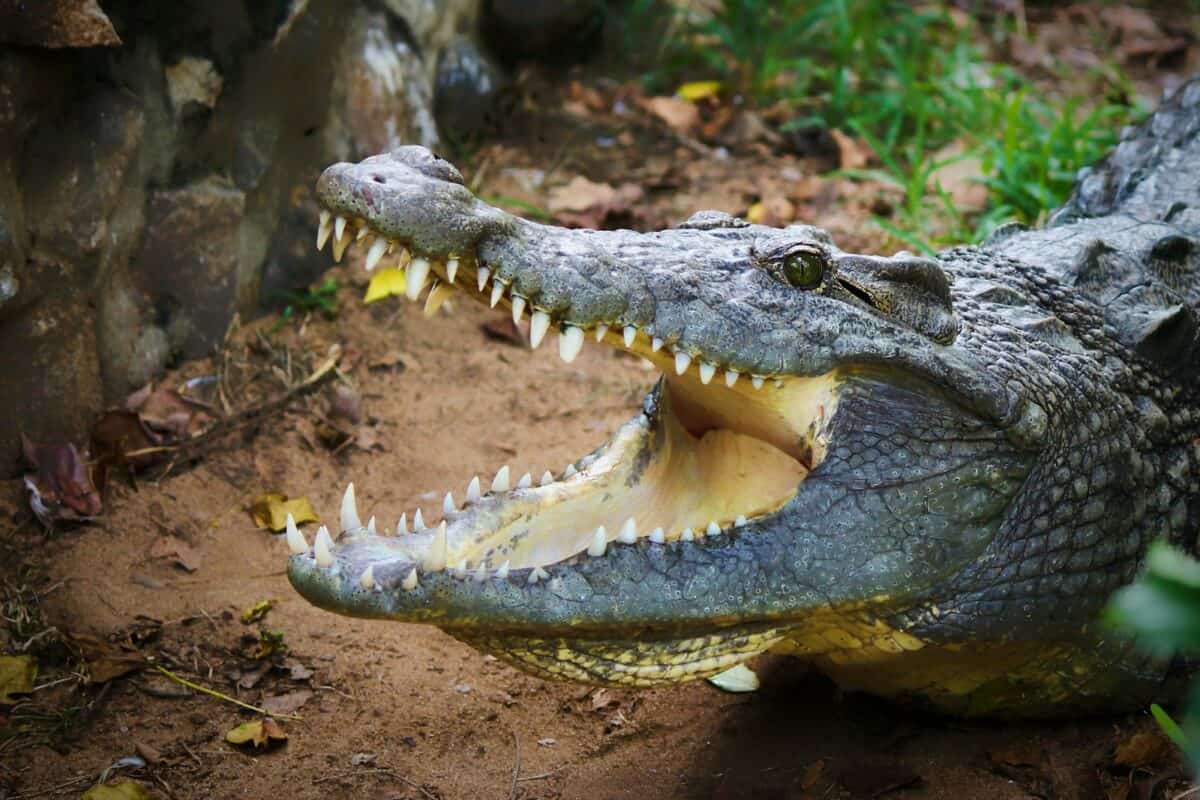
The black caiman (Melanosuchus niger) represents the largest predator in the Amazon ecosystem and the largest member of the alligator family. These imposing reptiles can reach lengths of up to 20 feet, with records of exceptional individuals growing even larger. Their dark, armored bodies provide excellent camouflage in the blackwater tributaries of the Amazon. Unlike many reptiles, black caimans display remarkable parental care, with females fiercely guarding their nests and carrying newly hatched young in their mouths to protect them from predators.
Historically, black caimans were hunted extensively for their valuable skin, bringing them to the brink of extinction by the 1970s. International trade restrictions and conservation efforts have allowed populations to recover in many areas, though they remain vulnerable. As apex predators, black caimans play a crucial role in maintaining the ecological balance of the Amazon River system. They primarily hunt at night, feeding on fish, turtles, capybaras, and occasionally larger mammals that come to the river’s edge to drink. Despite their fearsome reputation, unprovoked attacks on humans are rare, occurring typically only when their territory or young are threatened.
Piranhas: Misunderstood Aquatic Opportunists

Few Amazon River inhabitants have captured the public imagination quite like piranhas, though their reputation as bloodthirsty killers is largely exaggerated. The Amazon basin hosts several piranha species, with the red-bellied piranha (Pygocentrus nattereri) being the most notorious. These fish typically grow to about 14 inches in length and are instantly recognizable by their powerful jaws, sharp triangular teeth, and the distinctive red coloration on their undersides. Rather than indiscriminately attacking large animals, piranhas are primarily opportunistic feeders, consuming fruits, seeds, and insects that fall into the water, along with smaller fish.
Contrary to Hollywood depictions, piranha attacks on humans are extremely rare and almost never fatal. They typically only pose a threat during the dry season when water levels drop significantly, concentrating the fish in smaller pools where food becomes scarce. In fact, piranhas themselves often become prey for larger river inhabitants like caimans, river dolphins, and larger fish species. Local communities have long fished for piranhas, considering them a valuable food source rich in protein. Their powerful jaws have also led to unusual uses—indigenous tribes have historically used piranha teeth as tools for cutting and in ceremonial instruments, showcasing how even the Amazon’s most feared creatures have contributed positively to human cultures along the river.
Giant River Otters: Social and Endangered Hunters

The giant river otter (Pteronura brasiliensis) stands out as one of the Amazon’s most charismatic mammals and the world’s largest otter species. Growing up to 6 feet in length and weighing over 70 pounds, these social creatures live in family groups of 3-10 individuals that hunt cooperatively. Their sleek, chocolate-brown fur and distinctive white throat patches make them unmistakable as they patrol their territory. Highly vocal, giant river otters communicate through an impressive repertoire of sounds including barks, whines, and screams that echo across the waterways, earning them the nickname “river wolves” among locals.
Sadly, these remarkable animals are classified as endangered, with population declines of more than 50% over three generations. Their luxurious fur made them primary targets for the pelt trade until the 1970s, and while international protection has helped reduce hunting, they now face threats from habitat destruction, mercury pollution from gold mining, and conflicts with fisheries. Giant river otters require pristine waterways with abundant fish populations, making them excellent indicators of ecosystem health. Conservation efforts focus on protecting their remaining habitats and establishing protected areas where these intelligent, family-oriented predators can continue to thrive in the Amazon’s complex waterways.
Electric Eels: Nature’s Living Batteries
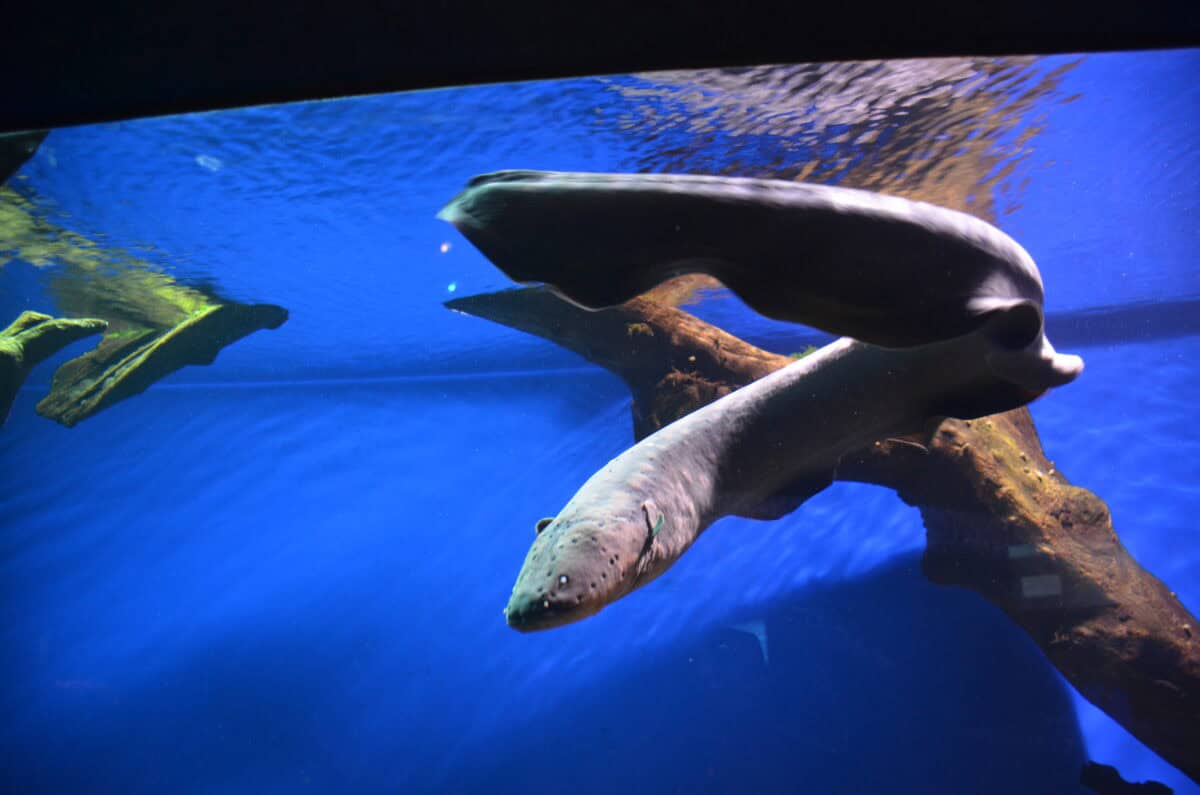
Despite their name and eel-like appearance, electric eels (Electrophorus electricus) are actually a species of knifefish, more closely related to catfish than true eels. These remarkable creatures can grow up to 8 feet long and generate electrical charges of up to 860 volts—enough to stun a horse or even a human. The electric eel’s body contains specialized cells called electrocytes that function essentially as biological batteries. When threatened or hunting, the eel can discharge these cells simultaneously, creating powerful electrical currents that both stun prey and deter predators.
Electric eels must surface to breathe air approximately every 10 minutes, as they obtain up to 80% of their oxygen through their highly vascularized mouths rather than their gills. Recent research has revealed sophisticated hunting behaviors where eels use lower-voltage pulses to locate hidden prey, then deliver powerful shocks to immobilize their victims. Scientists have long been fascinated by these living generators, studying their electrical systems as models for developing better batteries and biomedical devices. In 2019, researchers even identified three distinct species of electric eels in the Amazon basin, including one capable of delivering the strongest electrical discharge of any animal on Earth—highlighting how much remains to be discovered about these extraordinary Amazonian inhabitants.
Arapaima: Ancient Giants of the Floodplains
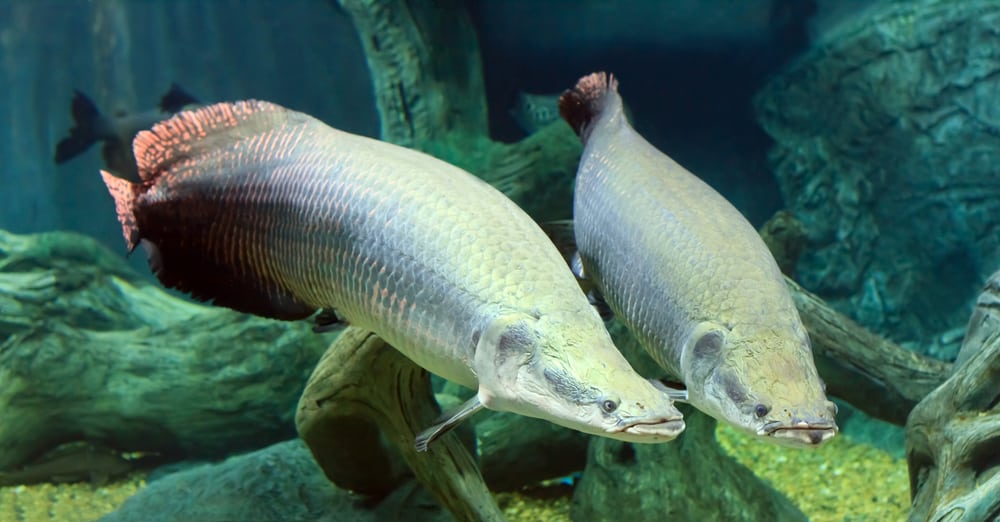
The arapaima (Arapaima gigas), also known as pirarucu, is one of the world’s largest freshwater fish species, reaching lengths of over 10 feet and weights exceeding 400 pounds. These prehistoric-looking giants have existed virtually unchanged for millions of years, earning them the nickname “living fossils.” Their most distinctive feature is their massive, armor-like scales that protect them from predators—so tough that indigenous peoples have traditionally used them as nail files and armor. Unlike most fish, arapaimas have adapted to oxygen-poor waters by developing a modified swim bladder that functions like a primitive lung, requiring them to surface for air every 10-20 minutes.
This unique breathing adaptation makes arapaimas vulnerable during these surfacing moments, a weakness that traditional fishermen have exploited using harpoons when the fish come up for air. Once abundant throughout the Amazon basin, arapaima populations have declined dramatically due to overfishing. Their large size and high-quality, boneless flesh make them valuable food sources, leading to commercial exploitation. Today, conservation programs involving local communities in sustainable management have shown promising results. In areas where harvesting is carefully regulated and monitored, arapaima populations have rebounded, providing both ecological benefits and sustainable income for riverside communities, demonstrating how conservation and economic interests can align for this magnificent Amazonian species.
Hoatzin: The Prehistoric-Looking “Stinkbird”

The hoatzin (Opisthocomus hoazin) stands out as one of the Amazon’s most unusual birds, instantly recognizable by its spiky crest and bright blue face. Often called the “stinkbird” due to the manure-like odor it emits from its digestive system, this unique creature resembles something from a prehistoric era. Hoatzins primarily inhabit the flooded forests along the Amazon River and its tributaries, building nests over water for protection from predators. What truly makes these birds extraordinary is their digestive system—they are the only birds known to use bacterial fermentation to break down the leaves they consume, similar to cows and other ruminants.
Perhaps the most fascinating aspect of hoatzin biology appears in their chicks. Young hoatzins possess two claws on each wing—vestiges of their dinosaur ancestry that disappear as they mature. When threatened, hoatzin chicks can drop from their nests into the water below, swim to safety, and then use these claws to climb back up to their nests. This remarkable adaptation, along with their unusual digestive system and appearance, has made the hoatzin a subject of intense scientific interest. Despite being poor fliers with an ungainly appearance, these birds have survived for millions of years through their specialized adaptations to the Amazon’s flooded forest environments, representing one of the river’s most distinctive avian inhabitants.
Jesus Lizards: The Water Walkers
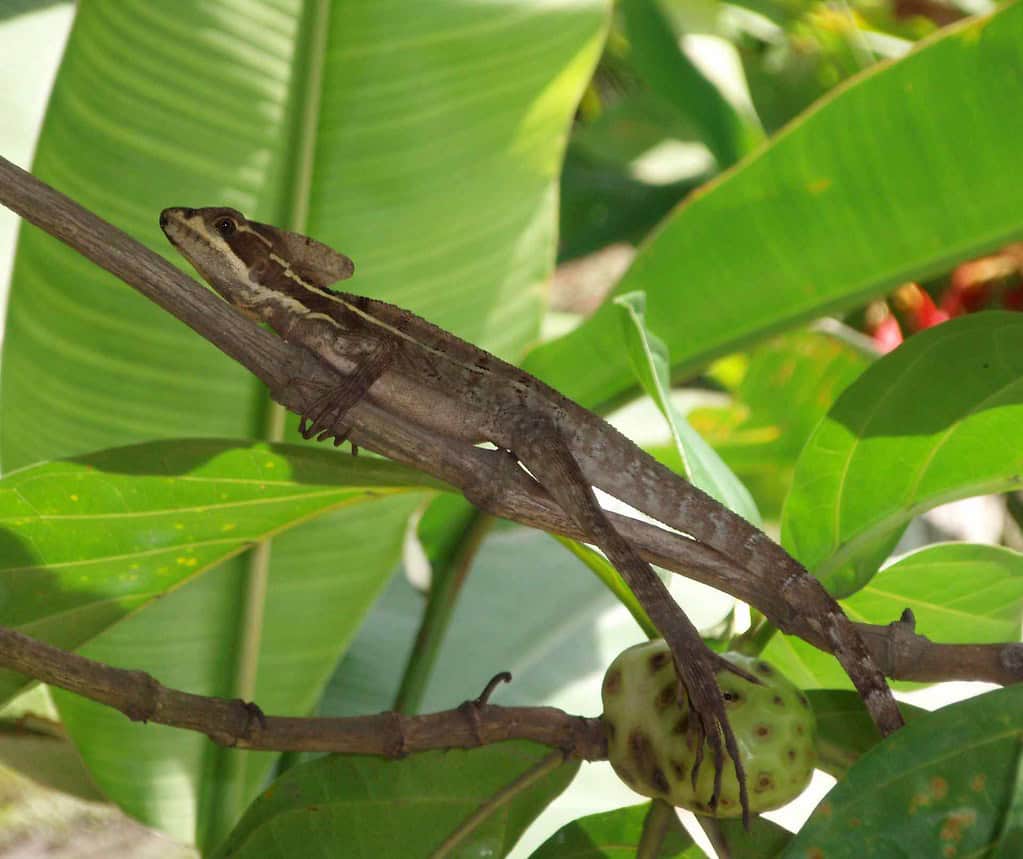
The common basilisk (Basiliscus basiliscus), colloquially known as the “Jesus lizard” for its remarkable ability to run across water surfaces, represents one of the Amazon’s most entertaining reptiles to observe. These lizards can reach up to 2 feet in length, with males distinguished by their prominent crests on their heads, backs, and tails. When threatened, basilisks demonstrate their namesake ability by rising onto their hind legs and sprinting across water surfaces at speeds of about 5 feet per second. This seemingly miraculous feat is possible thanks to specialized fringes on their toes that increase surface area, combined with their speed and lightweight bodies.
The science behind this water-walking ability has fascinated researchers for decades. Basilisks create tiny air pockets under their feet that prevent them from sinking, while their rapid stride keeps them above water before gravity takes over—they can typically run about 15 feet before needing to swim or reach land. While not exclusively Amazonian, these lizards thrive along the tributaries and smaller streams of the Amazon basin, where they feed primarily on insects, small vertebrates, and occasionally fruits and flowers. Their distinctive green coloration provides excellent camouflage among the riverside vegetation where they spend much of their time basking and hunting. Despite their remarkable abilities, these lizards remain vulnerable to predation from birds, snakes, and larger mammals, making their water-running skill an essential survival adaptation in their riverine habitat.
Freshwater Stingrays: Flat Predators with a Painful Defense

The Amazon River basin hosts several species of freshwater stingrays, unique among the world’s rays for having fully adapted to life in freshwater environments. The most common species, the ocellate river stingray (Potamotrygon motoro), is recognized by its distinctive eye-like spots scattered across its brown or olive-colored disc. These pancake-shaped predators can grow to over 3 feet in diameter and weigh up to 44 pounds. Unlike many river inhabitants, stingrays are primarily bottom-dwellers, using their flat bodies to partially bury themselves in sandy or muddy substrates while waiting for prey to pass overhead.
What makes Amazonian stingrays particularly noteworthy is their venomous tail spine—a defensive weapon that can cause excruciating pain to anyone unfortunate enough to step on them. Local fishermen and river communities have developed deep respect for these creatures, often shuffling their feet while wading to avoid direct contact. Freshwater stingrays are ovoviviparous, meaning females nurture their young inside their bodies and give birth to fully formed, miniature versions of themselves. Sadly, habitat degradation, pollution, and occasional targeting for the aquarium trade have placed pressure on some stingray populations. Scientists believe these fascinating creatures evolved from marine ancestors that colonized the Amazon basin millions of years ago, adapting over time to the unique challenges of freshwater environments and becoming an integral part of the river’s complex food web.
The Amazon’s Mesmerizing Biodiversity: A Treasure Worth Protecting

The ten amazing animals highlighted here represent just a tiny fraction of the extraordinary biodiversity found along the Amazon River and its vast watershed. From microscopic organisms to massive predators, this ecosystem supports more species than perhaps any other on Earth, with new discoveries continuing to emerge from scientific expeditions. The complex interrelationships between these creatures and their environment have evolved over millions of years, creating a delicate balance that allows this remarkable diversity to thrive. As deforestation, pollution, dam construction, and climate change threaten the Amazon’s integrity, the unique adaptations and survival strategies of these animals serve as powerful reminders of what stands to be lost.
Conservation efforts throughout the Amazon basin increasingly recognize that protecting these spectacular animals requires preserving entire ecosystems and involving local communities as stewards of their natural heritage. Many of the creatures featured here play crucial roles as ecological engineers—from seed dispersers to apex predators—maintaining the health and function of the entire river system. For travelers fortunate enough to visit this natural wonder, witnessing these animals in their native habitat offers not just unforgettable experiences but also deeper appreciation for the value of biodiversity conservation. The Amazon River and its extraordinary inhabitants represent one of our planet’s greatest natural treasures—a living laboratory of evolution and adaptation that continues to astonish scientists and nature enthusiasts alike.

From exploring the marine wonders in the Azores and witnessing the vast savannas of Kenya, to delving deep into the rich biodiversity of South Africa and traversing iconic landscapes in Australia and the US like Yellowstone, Chris's experiences are vast.
With a penchant for diving alongside sharks, the ocean holds a special place in his heart.
Through his academic insights, he champions wildlife conservation, striving with 'Animals Around The Globe' to cultivate a profound connection between humans and animals, enhancing our mutual appreciation.
Connect with him at Feedback@animalsaroundtheglobe.com.
- Meet the Mantis Shrimp: The Sea Creature That Punches Like a Bullet - July 18, 2026
- Dugongs and Their Slow Mating Rituals in the Ocean - July 18, 2026
- How Animal Exhibits Are Evolving to Promote Conservation - July 17, 2026