

Imagine a bear so massive it could look a modern grizzly directly in the eye while standing on all fours. A predator so formidable that it dominated the North American landscape for over 800,000 years. This wasn’t a creature of mythology but a very real apex predator that stalked the plains and mountains of prehistoric North America: Arctodus simus, commonly known as the short-faced bear. Standing up to 12 feet tall when rearing on its hind legs and weighing up to 2,000 pounds, this extinct bear species has earned its reputation as the most terrifying bear to ever walk the Earth.
The short-faced bear wasn’t just remarkable for its size, but for its unique adaptations that made it an exceptional hunter. With long limbs built for pursuing prey across open terrain and powerful jaws capable of crushing bones, this prehistoric giant was designed to instill fear. This article explores the biology, behavior, and legacy of this magnificent and terrifying apex predator that vanished from our world approximately 11,000 years ago, leaving behind only fossilized remains and a legendary reputation as nature’s perfect killing machine.
Fossil Discovery and Scientific Classification

The first short-faced bear fossils were discovered in the mid-19th century, but it wasn’t until 1897 that American paleontologist Joseph Leidy formally described and classified the species. The genus name Arctodus derives from Greek words meaning “bear tooth,” while the species name simus refers to its distinctive short, broad snout. Taxonomically, the short-faced bear belongs to the family Ursidae and the subfamily Tremarctinae, which today includes only one surviving member: the spectacled bear of South America. Two species of short-faced bears have been identified: Arctodus simus, the giant North American short-faced bear, and Arctodus pristinus, a smaller, earlier species.
Fossil discoveries across North America have provided crucial insights into these magnificent predators. Significant specimens have been unearthed from Alaska to Mexico, with notable finds in California’s La Brea Tar Pits, Natural Trap Cave in Wyoming, and various sites across the Yukon Territory. These fossil remains, consisting primarily of skull fragments, teeth, and limb bones, have allowed paleontologists to reconstruct the bear’s appearance and make educated hypotheses about its behavior and ecological niche. The remarkable preservation of some specimens has enabled scientists to study muscle attachments and bone structure, revealing the extraordinary physical capabilities that made the short-faced bear such a dominant predator.
Physical Characteristics and Size

The short-faced bear earned its superlative status through its sheer physical presence. Standing approximately 5.5 feet (1.7 meters) tall at the shoulder while on all fours—taller than most humans—and reaching up to 12 feet (3.7 meters) when standing on its hind legs, this prehistoric giant dwarfed even the largest modern bears. Weight estimates based on skeletal proportions suggest adult males typically weighed between 1,500 and 2,000 pounds (700-900 kg), though some exceptional individuals may have been even heavier. For perspective, a large male Kodiak bear today rarely exceeds 1,500 pounds, making the short-faced bear potentially 30% larger than the biggest modern bears.
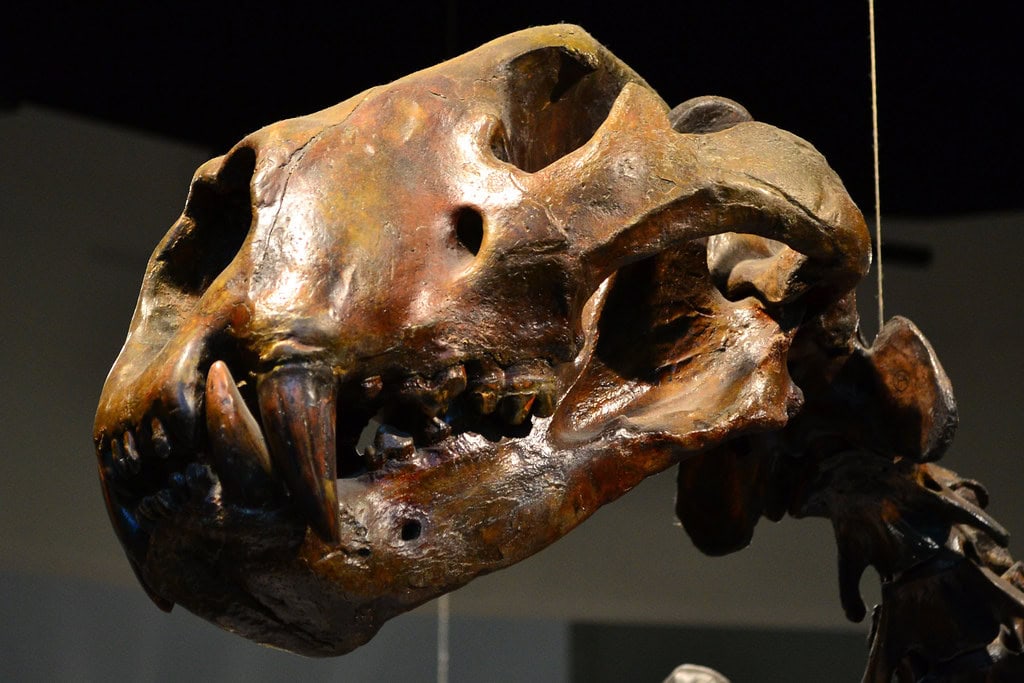
Beyond its size, the short-faced bear possessed several distinctive anatomical features. Its common name derives from its unusually short, broad snout—an adaptation that may have allowed for a more powerful bite. Unlike modern bears with their dish-shaped faces, the short-faced bear had a more elongated skull with forward-facing eyes that provided improved binocular vision, beneficial for a predator. Perhaps most striking were its extraordinarily long limbs, which gave it a leggier, less lumbering appearance than modern bears. These longer limbs enabled a more efficient striding gait and likely allowed the short-faced bear to reach estimated running speeds of 35-40 mph—far outpacing any human and many potential prey animals.
Hunting Abilities and Predatory Adaptations
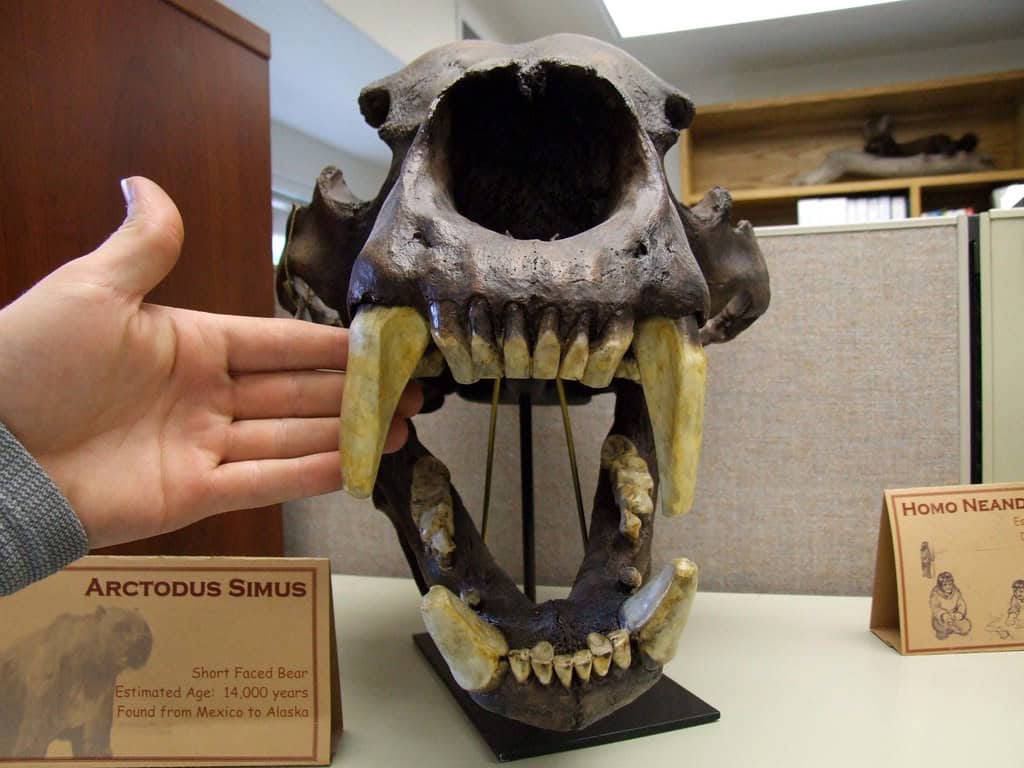
The short-faced bear’s arsenal of predatory adaptations made it one of the most efficient hunters in prehistoric North America. Its elongated limbs weren’t just for show—they provided the bear with remarkable speed and endurance, allowing it to chase down prey across open terrain. Unlike modern bears that typically employ ambush tactics, paleobiologists believe the short-faced bear may have been capable of extended pursuit hunting, similar to wolves but on a much more terrifying scale. This combination of speed, stamina, and overwhelming size would have made escape nearly impossible for most prey animals once the bear had committed to a chase.
The bear’s jaws and teeth were specialized instruments of destruction. With estimated bite forces exceeding 2,000 pounds per square inch—about twice that of a modern lion—the short-faced bear could easily crush bones to access nutritious marrow. Its dental structure featured large, sharp canines for delivering killing bites and specialized molars and premolars designed for slicing flesh and processing tough material. The shorter snout created a more mechanically efficient jaw with greater leverage, enhancing its ability to deliver catastrophic bites. These adaptations, combined with massive forelimbs tipped with 5-inch claws, made the short-faced bear not just a scavenger but a formidable active predator capable of taking down even the largest Ice Age mammals.
Diet and Hunting Strategies

The diet of the short-faced bear has been a subject of considerable scientific debate. Early theories suggested it was primarily a hyper-carnivore—a specialized meat-eater that obtained more than 70% of its nutrition from animal protein. More recent isotope analyses of fossil bones, which reveal chemical signatures of the foods an animal consumed during its lifetime, paint a more nuanced picture. These studies indicate that while meat certainly formed a substantial part of the short-faced bear’s diet, it was likely an omnivore that also consumed plant materials when available, similar to modern brown bears but with a stronger preference for meat.
As for hunting strategies, the short-faced bear likely employed a variety of techniques depending on the prey and environment. Its exceptional speed may have allowed it to chase down large herbivores like bison, horses, and young mammoths or mastodons. Evidence also suggests these bears were proficient at driving other predators like dire wolves and saber-toothed cats from their kills—a behavior known as kleptoparasitism. With their intimidating size and strength, short-faced bears could easily appropriate carcasses from other predators, making them not just skilled hunters but also dominant scavengers in the Ice Age ecosystem. This dietary flexibility, combined with their physical prowess, likely contributed to their long-term success as apex predators across varied landscapes and climatic conditions.
Habitat and Geographic Range
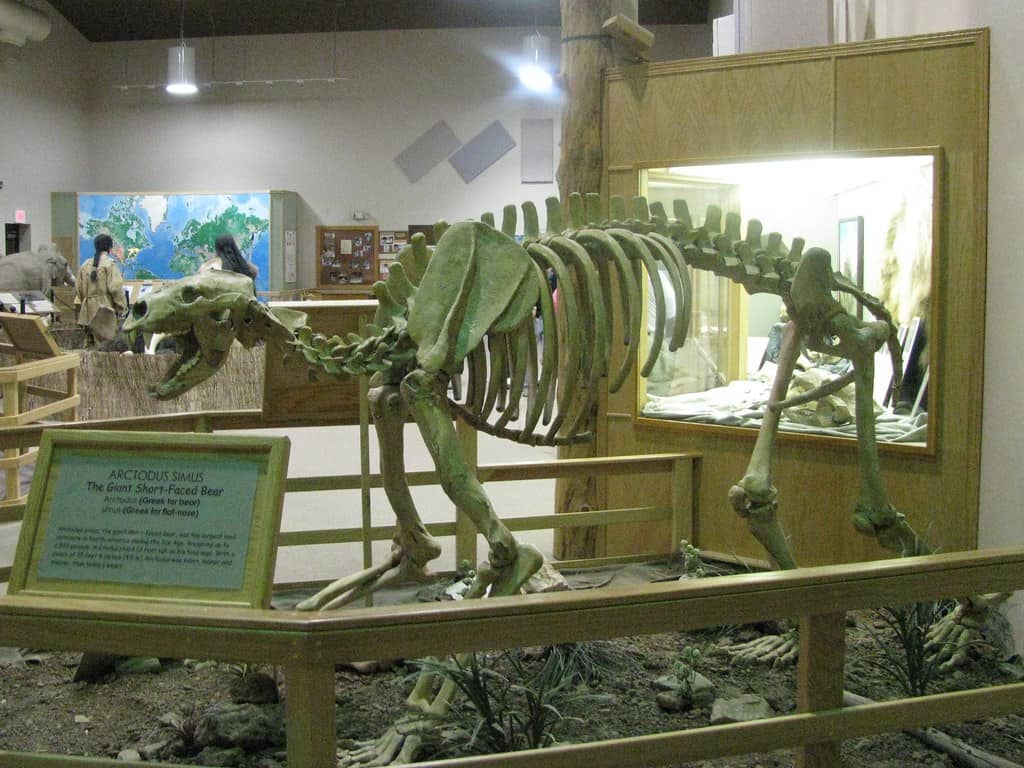
The short-faced bear was remarkably widespread throughout North America during the Pleistocene epoch, with fossil evidence documenting its presence from Alaska and the Yukon to central Mexico, and from California to the eastern seaboard. This extensive range encompassed diverse habitats including tundra, grasslands, woodlands, and mixed environments. Unlike some specialized Ice Age mammals, the short-faced bear appears to have been highly adaptable, thriving across various ecosystems. This adaptability likely contributed to its success as a species for hundreds of thousands of years, allowing it to adjust to the climatic fluctuations that characterized the Pleistocene.
The bear’s preference seems to have been for open or mixed terrain rather than dense forests. This habitat preference aligns with its physical adaptations—particularly its long limbs and running abilities that would be most advantageous in open spaces where it could pursue prey or travel efficiently between feeding areas. The highest concentration of short-faced bear fossils comes from regions that were characterized by mosaic environments during the Pleistocene: areas with patches of woodland interspersed with open grassland or steppe. These environments would have supported diverse prey populations while providing the open terrain where the bear’s speed and endurance could be fully utilized. Evidence suggests these bears may have undertaken seasonal migrations following prey herds, similar to how some modern predators track caribou or wildebeest migrations.
Ecological Role and Interactions with Other Predators
As an apex predator of extraordinary size and capability, the short-faced bear occupied a dominant position in the Pleistocene food web. Its ecological role extended beyond simply preying on herbivores; it helped shape the entire predator-prey dynamic of its time. The presence of such a formidable hunter likely influenced the behavior and evolution of prey species, potentially driving the development of enhanced vigilance, speed, or defensive capabilities in animals that shared its range. Additionally, by controlling populations of large herbivores, the short-faced bear indirectly influenced vegetation patterns and landscape structure—an ecological cascade effect similar to what has been observed with modern apex predators like wolves.
The short-faced bear existed alongside other fearsome predators including dire wolves, American lions, saber-toothed cats, and the American cheetah. Rather than directly competing with these predators, the short-faced bear’s size and strength allowed it to occupy a unique niche. It could target larger prey than most other predators and, as mentioned earlier, likely stole kills from smaller carnivores. This interspecific competition may have driven behavioral adaptations in other predators, such as accelerated consumption of kills or group defense of carcasses. Some paleontologists hypothesize that the intimidating presence of short-faced bears may have contributed to the evolution of social hunting strategies in wolves and lions, as group hunting would have provided better protection against bear intrusions.
Comparison to Modern Bears

While the short-faced bear belongs to the same family as modern bears, its appearance and behavior likely differed significantly from the bears we know today. Its body proportions—with longer legs, a more elongated skull, and that distinctive short snout—created a silhouette more reminiscent of a giant hyena than a typical bear. Modern bears, including grizzlies and polar bears, have evolved stockier builds with shorter limbs relative to their body size. These differences reflect divergent evolutionary paths adapted to different ecological niches; modern bears evolved for endurance and digging, while the short-faced bear specialized in pursuit and domination.
Behaviorally, the short-faced bear was likely more consistently predatory than most modern bears. While polar bears are dedicated carnivores and brown bears are opportunistic omnivores, the short-faced bear appears to have been more actively predaceous, with physical adaptations specifically geared toward hunting large mammals. Its sensory abilities may have also differed; the short snout suggests less reliance on smell compared to modern bears (which have exceptionally keen olfactory abilities) and greater emphasis on vision for hunting. Despite these differences, the short-faced bear probably shared some behavioral traits with its modern relatives, including seasonal patterns of activity, individual territories, and possibly maternal care of cubs—though fossil evidence of family groups remains scarce.
Scientific Reconstruction Methods

Reconstructing the appearance and biology of an extinct species requires detective work spanning multiple scientific disciplines. For the short-faced bear, paleontologists begin with the fossils themselves, measuring skeletal proportions and comparing them to modern relatives to establish basic parameters like height, length, and estimated weight. Muscle attachment points on bones provide crucial information about the animal’s strength and movement capabilities. For instance, pronounced attachment sites for neck muscles on short-faced bear skulls indicate powerful neck musculature, likely used for dragging large prey or processing tough carcasses.
Beyond skeletal analysis, scientists employ sophisticated techniques to flesh out our understanding of this prehistoric predator. Stable isotope analysis of fossil bones and teeth reveals dietary patterns by identifying the chemical signatures of different food sources. Dental microwear analysis—examining microscopic patterns of wear on tooth surfaces—provides insights into what the bears were actually chewing, distinguishing between soft meat, tough plant material, or bone. Computer modeling has allowed researchers to simulate the biomechanics of the short-faced bear’s movement, estimating its running speed and energy efficiency. Together, these varied approaches have transformed fragmentary fossils into a comprehensive scientific portrait of this remarkable predator, though many aspects of its biology and behavior remain subjects of ongoing research and debate.
Extinction Theories and Timeline

The short-faced bear disappeared from North America approximately 11,000 years ago, coinciding with the broader megafaunal extinction event that marked the end of the Pleistocene epoch. This timing has led to extensive debate about the causes of its extinction. The most prominent theories include climate change, human hunting pressure, or a combination of both factors. As the Ice Age ended and temperatures warmed, ecosystems transformed dramatically across North America. Grasslands and mixed habitats where the short-faced bear thrived began giving way to forests, potentially reducing the effectiveness of the bear’s running-based hunting strategy. Additionally, the extinction of many large herbivores that constituted its prey base would have placed tremendous pressure on short-faced bear populations.
The arrival of humans in North America, with their advanced hunting technologies and coordinated group tactics, presents another compelling factor in the bear’s demise. While direct evidence of human predation on short-faced bears is scarce, humans certainly competed with the bears for the same prey animals. Some researchers propose that human hunters may have been more adaptable to changing ecosystems and more efficient at exploiting remaining large mammal populations, effectively outcompeting the specialized short-faced bear. The “one-two punch” hypothesis suggests that climate-induced habitat changes weakened short-faced bear populations, making them vulnerable to the additional pressure of human competition. This complex interplay of factors likely drove this magnificent predator to extinction, ending its 800,000-year reign as North America’s most terrifying carnivore.
Cultural Significance and Human Interactions

Although the short-faced bear went extinct before written human history, it likely left a significant impression on the earliest human inhabitants of North America. Paleolithic peoples who arrived in North America would have encountered these massive predators, creating what must have been deeply impactful encounters. Some researchers speculate that memories of the short-faced bear might be preserved in Native American oral traditions and mythology. Certain indigenous stories describe enormous, fearsome bears with supernatural strength and speed that could potentially reference ancestral encounters with short-faced bears, though such connections remain speculative without direct evidence.
In modern culture, the short-faced bear has become an iconic symbol of the lost megafauna of the Ice Age. It features prominently in natural history museum exhibits, documentaries, and popular books about prehistoric life. As one of the most impressive land predators to have ever existed, it captures public imagination in ways similar to Tyrannosaurus rex or the megalodon shark. Scientific illustrations and museum reconstructions of the short-faced bear—towering over modern bears and humans alike—provide a visceral reminder of the impressive biodiversity that once existed on our continent. The bear’s extinction story also serves as a powerful case study in discussions about current conservation issues, highlighting how even the most dominant species can disappear when ecological conditions change dramatically.
Recent Discoveries and Ongoing Research

Research on the short-faced bear continues to evolve as new fossils are discovered and more sophisticated analytical techniques become available. Recent findings have helped refine our understanding of this apex predator’s biology and behavior. A 2020 study using geometric morphometrics—a technique that quantifies shape variations in fossils—revealed more precise information about the bear’s skull mechanics and bite force. Other recent research has focused on the bear’s metabolic requirements, suggesting that its enormous size and active hunting lifestyle would have demanded substantial daily caloric intake, estimated at up to 35 pounds of meat per day for large males.
Cutting-edge DNA analysis has opened new windows into the short-faced bear’s evolutionary history. Though ancient DNA is difficult to recover from fossils this old, several successful extractions have allowed scientists to place the short-faced bear more precisely on the ursid family tree and estimate when it diverged from the lineage leading to modern bears. Paleoproteomics—the study of ancient proteins preserved in fossils—is another promising research frontier that may yield new insights about the bear’s physiology and adaptation. Field research continues as well, with paleontologists actively searching for new short-faced bear fossils in previously unexplored regions of North America. Each new discovery has the potential to enhance our understanding of this magnificent predator and the prehistoric world it dominated.
Conclusion: Legacy of the Ultimate Ursine Predator

The short-faced bear stands as nature’s experiment in creating the ultimate bear—a superpredator that combined the power and intelligence of the ursid family with specialized adaptations for pursuing and subduing the largest prey of the Pleistocene epoch. With long limbs built for speed, immense jaws capable of crushing bone, and a towering presence that dwarfed modern bears, Arctodus simus reigned over Ice Age North America. Though extinction eventually claimed this apex predator, its legacy endures through the fossil record, offering a glimpse into a time when giants ruled the land—and reminding us of the ever-changing dynamics of evolution and survival.

- The Glasswing Butterfly: Nature’s Invisible Beauty - July 21, 2026
- What Happens If a Whale Dies in the Ocean? - July 21, 2026
- Why You Should Stop Feeding Ducks at the Park - July 21, 2026