

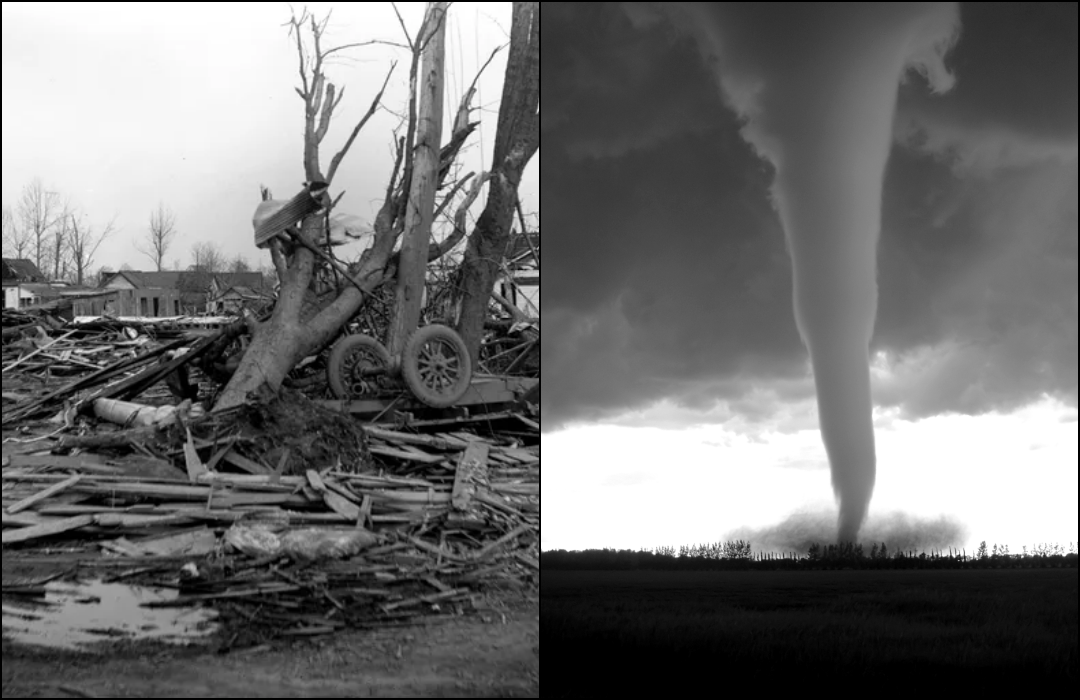
You think of tornadoes as brief, spectacular, scary—but rare. But what if I told you that the deadliest and most relentless twister in U.S. history carved a path of destruction longer than some states are wide, and that even today its legacy looms large over how we forecast, warn, build, and survive? Imagine a storm so powerful, so sustained, that its fury went un-warned, its devastation unbounded—and its ghost still influencing our tornado response 100 years later.
In this article, we’ll travel through the history of America’s 8 most fearsome tornadoes, culminating in the one that meteorologists—and history—often call the most powerful tornado to threaten the United States in a century. By the end, you’ll see why, despite modern warning systems and engineering advances, the Tri-State Tornado remains the benchmark of tornado ferocity—and why its 100th anniversary in March 2025 was marked not just by remembrance, but by renewed vigilance.
#8 The Tuscaloosa–Birmingham EF-4 Tornado (April 27, 2011)
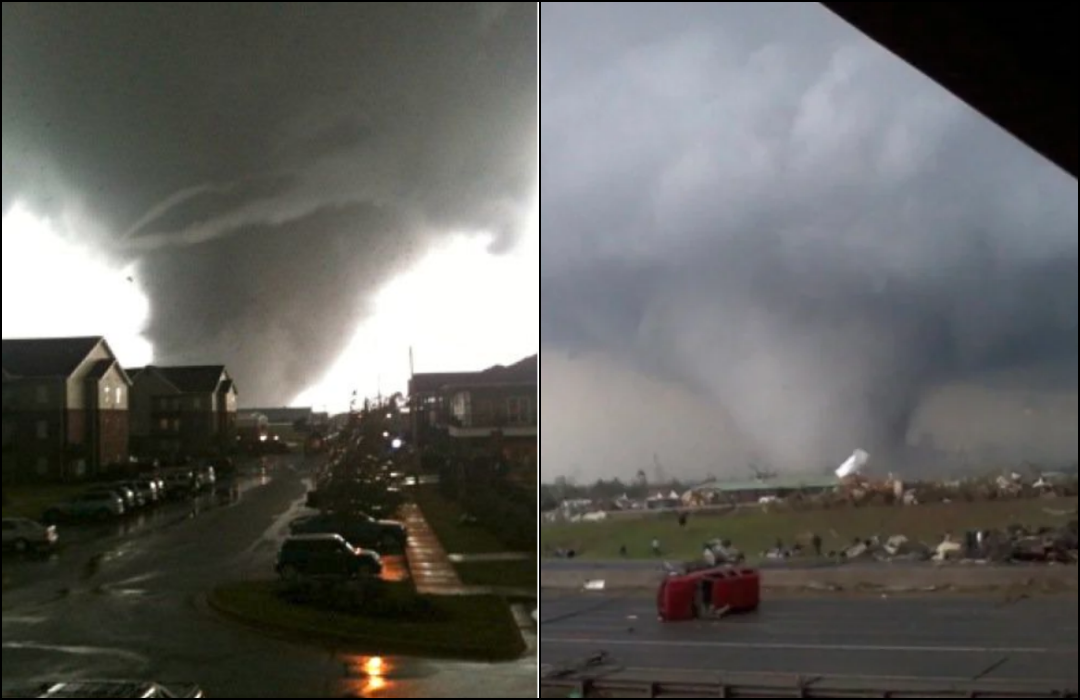
On April 27, 2011, a multi-vortex EF-4 tornado tore through Tuscaloosa and Birmingham, Alabama, as part of the 2011 Super Outbreak. While not an EF-5, the storm was one of the most destructive in modern U.S. history, with estimated damages of $2.4 billion and hundreds of fatalities.
The Tuscaloosa–Birmingham tornado helped illustrate that, even with modern warnings, extreme tornadoes can do catastrophic economic and human damage when they hit densely populated or highly industrialized regions. It underscored the reality that tornado preparedness must extend beyond rural “tornado alley” to urban and suburban zones.
#7 The 1974 Xenia, Ohio Tornado (April 3, 1974)
During the infamous Super Outbreak of April 1974—the worst tornado outbreak in U.S. history until 2011—the tornado that struck Xenia, Ohio, stands out for its sheer destructive power. With winds estimated in the F5 range, it destroyed roughly half the city of 25,000 people, killing 32 and leaving thousands homeless.
What made the Xenia tornado especially chilling was how fast it arrived and how little warning people had, even in a major outbreak. Its devastation prompted widespread reforms in tornado warning protocols, siren systems, and emergency response planning across the country.
#6 The Natchez Tornado (May 7, 1840)
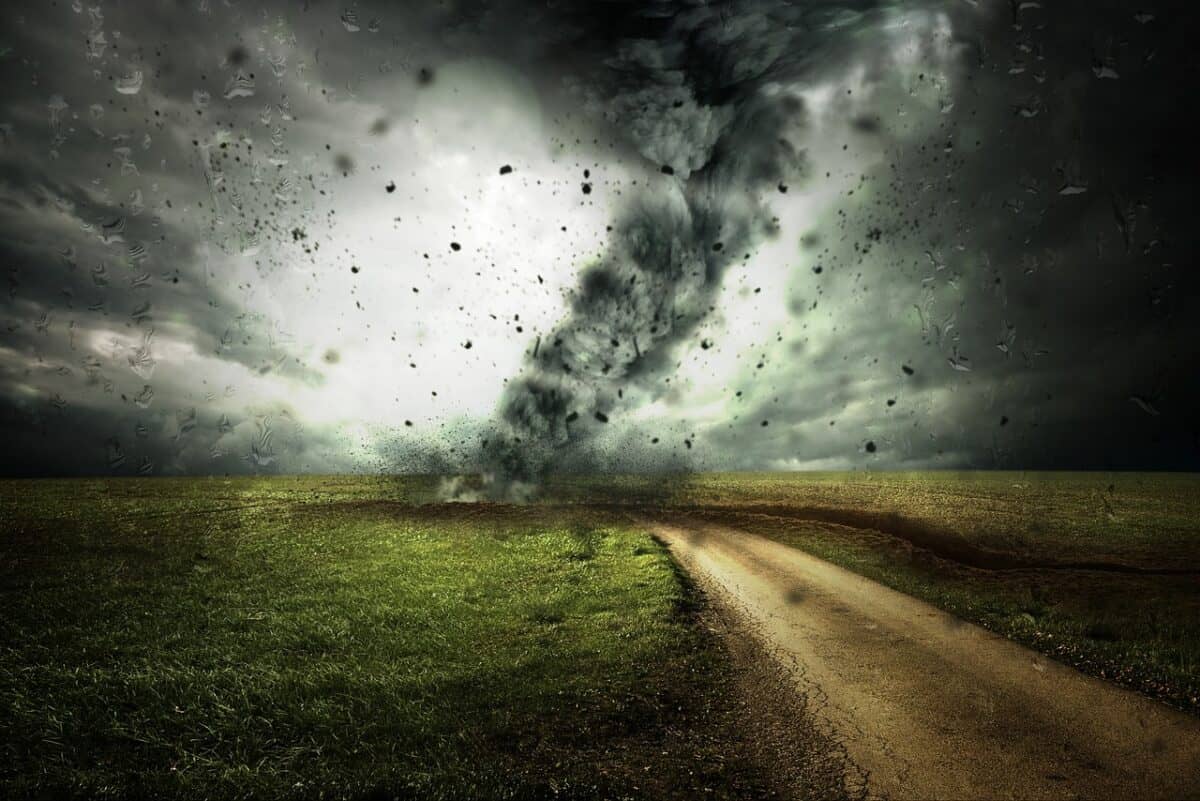
Long before the advent of radar or even telegraph warnings, the Natchez Tornado of May 7, 1840 carved a 150-mile path through southwestern Mississippi, striking the river town of Natchez with devastating effect. At least 317 people died, and many more were likely uncounted—especially enslaved people at the time, whose deaths were often poorly recorded in official records.
The tornado’s path cut not only across land but across the Mississippi River itself, sinking flatboats and scouring riverbanks. The scale of hydrological disruption and the sheer human toll underscored the danger of tornadoes even in an era of very primitive forecasting, and the Natchez event remains one of the deadliest tornadoes in U.S. history.
#5 The Tupelo–Gainesville Outbreak (April 5–8, 1936)
Although technically a multi-storm outbreak rather than a single tornado, the 1936 Tupelo–Gainesville outbreak merits inclusion in any list of America’s most powerful tornadic threats. In this series of storms, at least two separate tornadoes each killed over 200 people—one devastating Tupelo, Mississippi, and the other Gainesville, Georgia.
Combined fatalities from the outbreak exceeded 450, making it one of the worst tornado disasters of the early 20th century. Communities caught little warning—meteorology was still nascent, and the storms struck with speed and a ferocity that few could escape.
#4 The Great St. Louis Tornado (May 27, 1896)
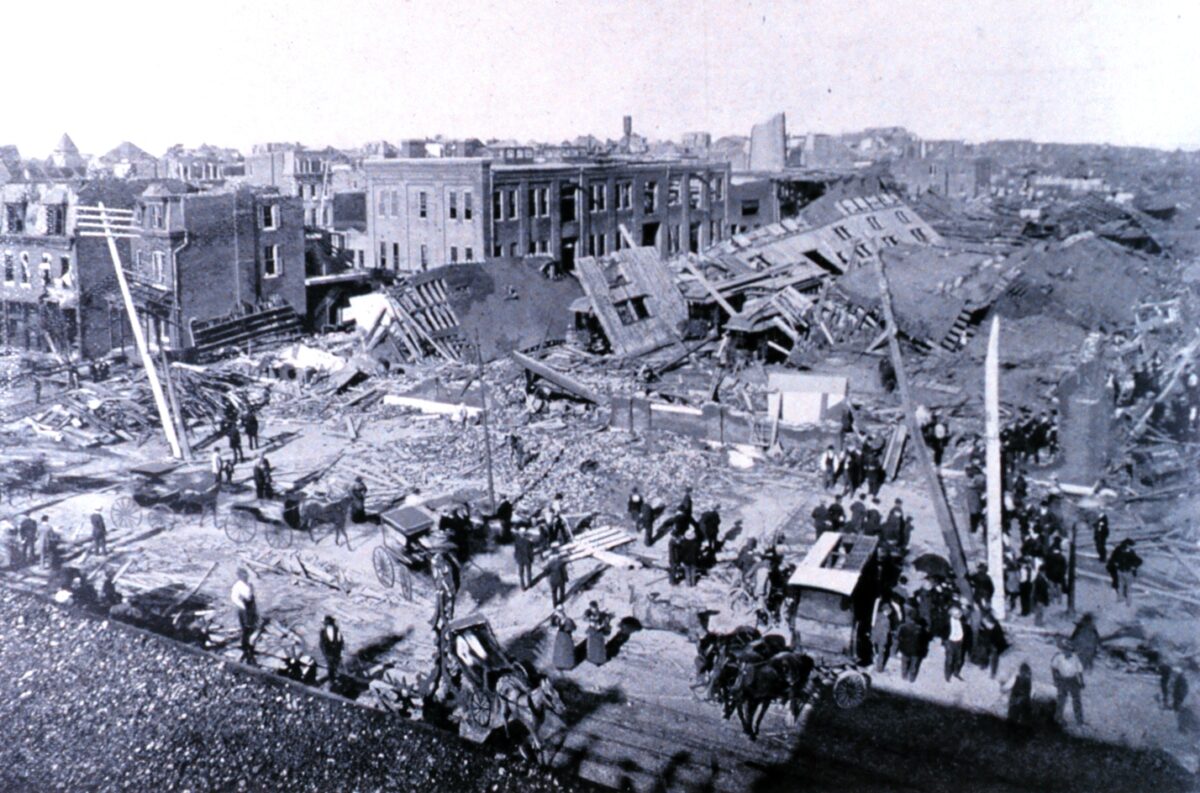
Before modern meteorology, the Great St. Louis–East St. Louis tornado of May 27, 1896 was a shock of apocalyptic scale. Estimated as an F4 storm, it tore through the heart of a rapidly growing metropolitan region, killing at least 255 people and injuring over 1,000.
In its wake, an estimated 12,000 buildings were seriously damaged, and property losses at the time equated to a modern multibillion-dollar impact.
The 1896 St. Louis tornado showed what could happen when a violent twister strikes a densely populated city without warning—and helped drive early efforts to better understand tornado formation and public messaging.
#3 Bridge Creek–Moore, Oklahoma F5 Tornado (May 3, 1999)
One of the most intensely powerful tornadoes ever recorded touched down in Oklahoma on May 3, 1999, particularly in the Bridge Creek–Moore area. Doppler radar measured wind speeds of up to 318 mph, making this one of the strongest-ever observed tornadoes in U.S. history.
Although its death toll (36) was far lower than Joplin’s or the Tri-State Tornado’s, its ferocity—and the scientific insight gained by having mobile Doppler radar measurements so close to the core—had profound implications for tornado science, warning lead times, and building standards in tornado country.
#2 The Joplin, Missouri EF-5 Tornado (May 22, 2011)
Fast-forward to May 22, 2011, when a mile-wide EF-5 tornado plowed directly through Joplin, Missouri, in the evening. The storm cut a 21.6-mile path through the city, reached widths approaching one mile, and caused almost unfathomable destruction in just 38 minutes on the ground.
With 158 lives lost (plus several indirect fatalities) and over 1,100 people injured, Joplin became the deadliest single tornado to strike the U.S. since official records began.
The economic toll was historic as well: nearly $2.8 billion in damage, making it the costliest tornado in U.S. history.
#1 The Tri-State Tornado (March 18, 1925)
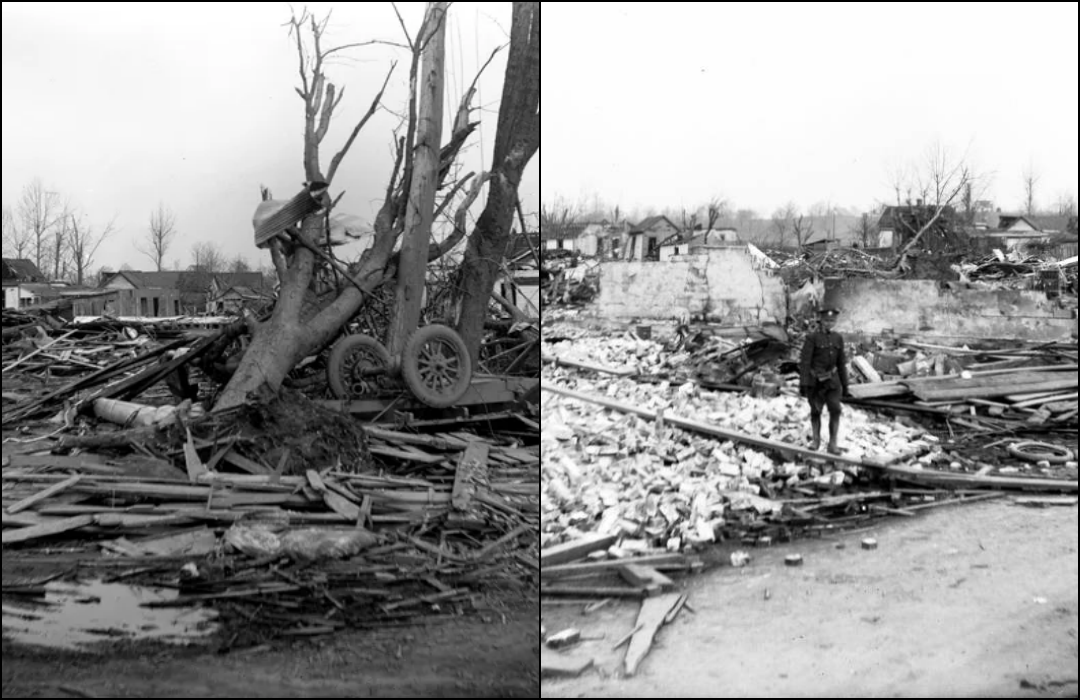
The Tri-State Tornado ripped through southeastern Missouri, southern Illinois, and southwestern Indiana on March 18, 1925, traveling some 219 miles in a single, continuous track over about 3½ to 4 hours. It remains the deadliest tornado in U.S. history, claiming 695 lives and injuring more than 2,000, and destroying roughly 15,000 homes.
Modern meteorologists believe it was an F5 tornado, with winds exceeding 300 mph.
The storm occurred in an era before radar, before modern warnings, when people could only react once the funnel appeared. Early forecasts that day merely warned of “rains and strong shifting winds”—nowhere near the scale of what was to come.
Modern Warning Systems vs. Natural Fury
One of the enduring legacies of the Tri-State Tornado—and of every major tornado disaster is the push to improve the forecasting, warning, and sheltering systems. Modern meteorology now uses satellites, Doppler radar, storm spotters, and real-time computer models to predict tornadic storms days to hours ahead of time, and issue watches and warnings that save lives.
Still, even with such improvements, tornadoes like Joplin in 2011 and Moore in 1999 show that sheer storm intensity, rapid storm evolution, and unexpected storm paths can severely test even the best systems. Real-world survival still often depends on rapid sheltering, the quality of construction, and public awareness more than on any prediction model.
Why the Tri-State Tornado Still Reigns Supreme
After reviewing eight of the most violent, destructive, and deadly tornadoes and tornado outbreaks in U.S. history, one might reasonably ask: which was the most powerful tornado to threaten the U.S. this century?
The answer: it’s still the Tri-State Tornado of 1925. Not because mobile Doppler radar measured 300 mph winds, or because modern damage assessment rated it an EF-5 on every stretch of its journey—those tools didn’t exist in 1925. No, the Tri-State storm earned its title by a different measure: by duration, path-length, mortality, and sheer uninterrupted evil. 219 miles on the ground in one continuous track, hundreds of lives lost, thousands injured, entire towns wiped off maps.
Even with the best modern forecasting, it remains almost inconceivable to imagine a storm on that scale today—or if such a storm did develop, how effectively we could warn and shelter a modern population in its path. In a century of tornadoes, none have quite matched the sustained love affair with destruction that the Tri-State Tornado conducted.
Can we ever truly tame the tornado?
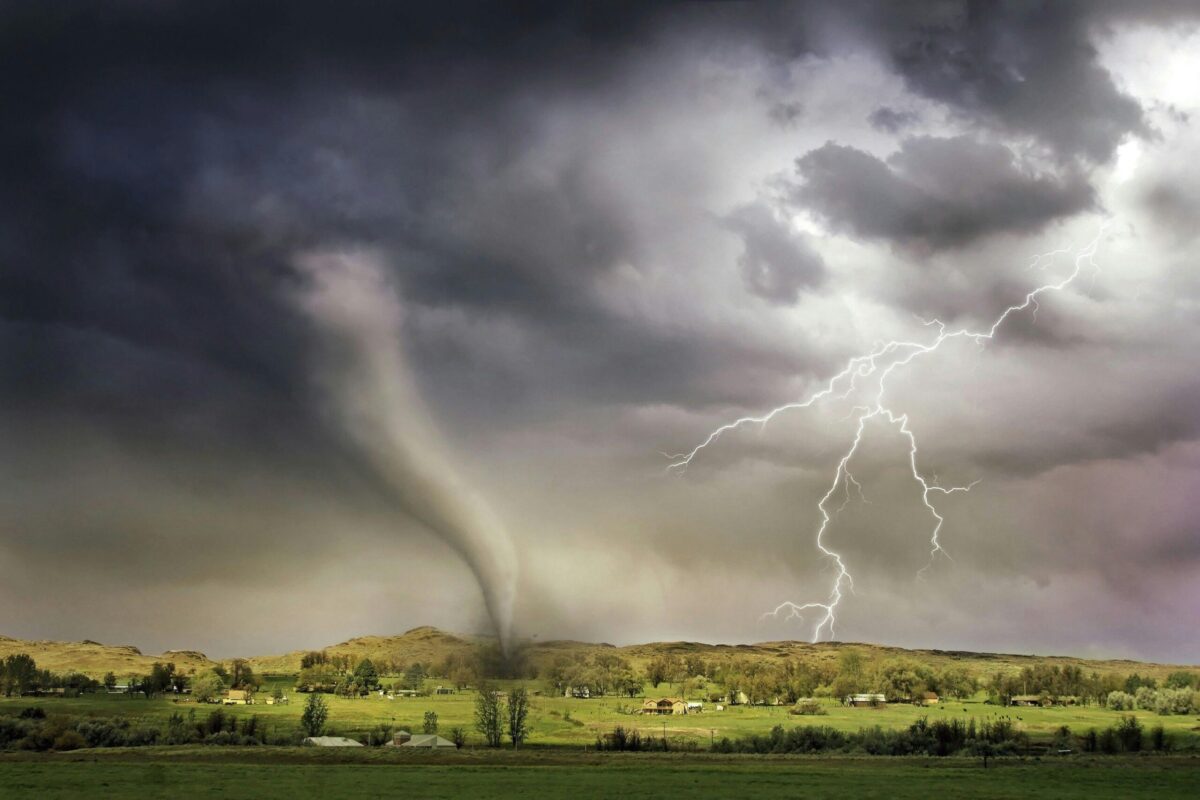
From Natchez in 1840 to Joplin in 2011, the United States has been repeatedly reminded that tornadoes are among the most violent, unpredictable forces of nature. Each disaster has taught us something: better warnings, stronger shelters, smarter urban planning, more resilient infrastructure. And yet when we name the most powerful tornado to threaten the U.S. this century, the old Tri-State storm still haunts us—not because of radar data, but because of what it did, unchecked, in a world where people could do almost nothing to stop it.
What do you think? Could a Tri-State-scale tornado happen again today, given modern forecasting and building practices? Or would advances in warning lead time, forced sheltering, and preparedness make such a storm a very different story? I’d love to hear your thoughts.
