

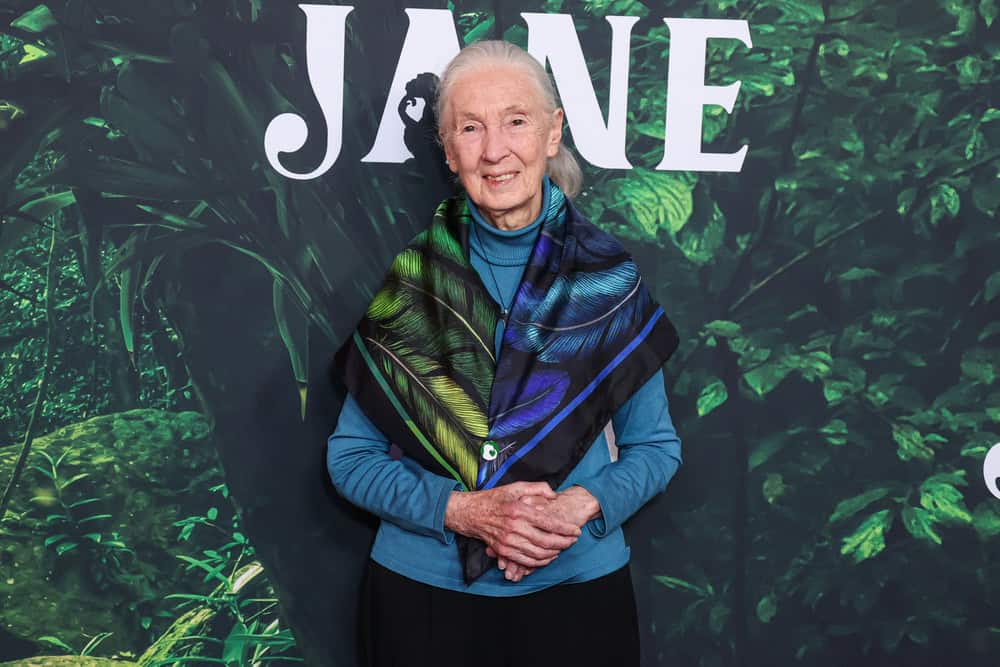
When I first stumbled across the Newsweek article titled “What Jane Goodall Said About Donald Trump,” I couldn’t help but chuckle — and then pause. Jane Goodall, the serene, deeply empathetic icon of wildlife conservation, comparing the behavior of a modern political figure to chimp dominance rituals? It reads like a satirical cartoon. But the more I read, the more it becomes clear: Goodall was drawing from a lifetime of observing primate social dynamics — not hurling insults. Her analogies were thought experiments as much as critiques. And now, with her recent passing at age 91, these reflections take on even sharper poignancy.
The Chimp Comparison: What Did She Actually Say?
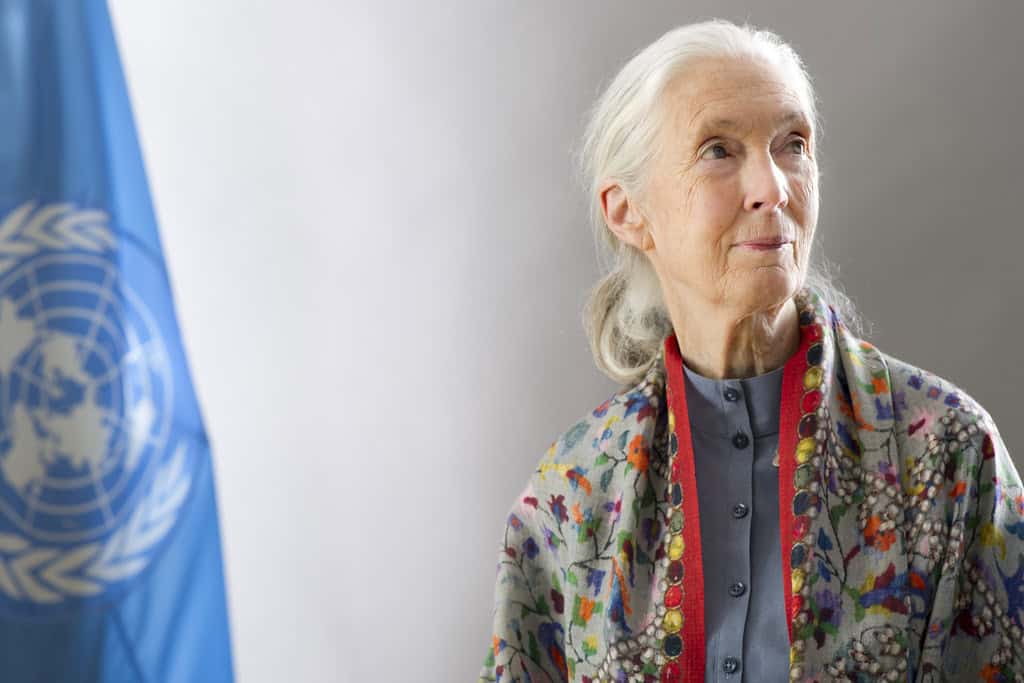
In that 2016 interview — which resurfaced following her death — Jane Goodall remarked, “In many ways the performances of Donald Trump remind me of male chimpanzees and their dominance rituals.”
She elaborated that male chimpanzees competing for status often engage in exaggerated displays: stamping, slapping the ground, dragging branches, throwing objects — all to signal strength, intimidate rivals, and climb social hierarchies.
Goodall suggested Trump’s public persona sometimes mirrors those “spectacular displays” intended to impress or dominate.
She also told MSNBC’s Ari Melber in 2022 that Trump exhibits “the same sort of behavior as a male chimpanzee will show when he’s competing for dominance with another.”
Her tone wasn’t mean-spirited so much as analytical: a biologist stepping outside fences to reflect on patterns she’s seen in the field — but drawing them back to human behavior.
Of course, some readers took offense, deeming it a demeaning metaphor. But to Goodall, comparisons across species aren’t about insults — they are tools for self-reflection, for seeing how our evolved social instincts can play out on the human stage.
A Glimpse Into Jane Goodall’s Life: From Gombe to Global Icon
To understand why her metaphor carries weight, it helps to know the backdrop. Jane Goodall (born April 3, 1934, in London) redefined primate studies with her groundbreaking, decades-long work at Gombe Stream National Park in Tanzania.
She was the first researcher to name (rather than number) individual chimpanzees, documenting tool use, emotional expression, conflict, and social bonding — showing that our closest relatives share much of what we once thought uniquely human.
Over time, Goodall expanded her mission: she founded the Jane Goodall Institute, launched the Roots & Shoots youth program, became a UN Messenger of Peace, and increasingly focused on conservation, climate change, and human-animal coexistence.
Her work made her not just a scientist, but a moral voice: urging humanity to recognize that we share this planet — and its burdens — with countless other species.
Over her life, she received many honors: she was made Dame Jane Goodall (DBE), awarded the Templeton Prize, and — shortly before her death — the U.S. Presidential Medal of Freedom.
Her Final Chapter: Passing at Age 91
Tragically, Jane Goodall passed away on October 1, 2025, at the age of 91. As reported by outlets including Reuters, Goodall’s death underscores the urgency of conservation in our rapidly changing world — a cause she championed relentlessly until her final days.
In tributes pouring in worldwide, she is celebrated as a bridge between the wild and the human world — someone who made us rethink what it means to be human.
Though she’s gone, her voice — in careful analogies and moral urgings — persists.
Why the Chimp Analogy Still Resonates

Goodall’s comparison taps into a deeper truth: human social life is not devoid of animal roots. In chimp society, dominance contests involve displays, aggression, alliances, and signaling. Translating that lens to politics allows us to see how public figures perform strength, intimidate rivals, or dramatize conflict to gain followers or status. When Goodall saw Trump’s rallies, bombastic speeches, gestures, and strutting presence, she saw echoes of these ancient theatre rituals.
Some fear the metaphor reduces humans to animals — yet Goodall’s intent was the opposite. By recognizing biological continuity, she invites reflection: how much of our combative, status-seeking behavior is mediated by deeper instincts? Recognizing that doesn’t excuse it, but offers a mirror. And in Goodall’s hands, that mirror is less insult, more invitation to introspection.
Criticism, Misinterpretation, and the Limits of Analogy:
Of course, analogies have limits. Politics is laden with ideology, history, values, and reasoning far beyond primate dominance models. Some critics view her remarks as belittling, or as an overly simplistic lens. But Goodall never claimed a perfect equivalence — she used metaphor as a conversation starter, not a final judgment.
In the end, Jane Goodall’s unexpected comparison of Trump to male chimpanzees was less a punchline than a question: What do we see when we view human behavior through nature’s lens? As the world mourns her loss — and as we parse her reflections — perhaps her greatest gift is compulsion: to look inward, to ask uncomfortable questions about dominance, spectacle, and what kind of humanity we wish to be.

- 8 Mysterious Spirit Animals Associated with the Zodiac Sign Scorpio - July 29, 2026
- 23 Dog Breeds Trainers Say First-Time Owners Regret - July 29, 2026
- 18 Horse Breeds Farriers Say Are Hard on Hooves - July 29, 2026