

Have you ever wondered what goes on behind those piercing amber eyes when a tiger looks at you? Most people assume these magnificent predators view humans as either threats or prey, nothing more. However, emerging research suggests something far more extraordinary. Tigers might possess the remarkable ability to recognize and remember individual humans they’ve encountered before, challenging everything we thought we knew about these solitary hunters.
The implications are staggering when you consider the cognitive complexity this would require. We’re talking about animals that can distinguish between thousands of individual faces, store these memories for extended periods, and recall them when needed. Let’s explore the fascinating world of tiger cognition and discover what scientists have uncovered about their extraordinary mental capabilities.
The Remarkable Tiger Memory System

Tigers possess short-term memory that lasts approximately thirty times longer than humans, creating a cognitive foundation that would make individual recognition possible. This extraordinary memory capacity isn’t just impressive on paper. Tigers have memory that is twelve times better than primates and several hundred times better than dogs and domestic cats.
What makes this even more remarkable is how their brains are structured for memory retention. Their memories are formed with stronger brain synapses, which means these felines do not forget as easily as humans. Tigers have a large brain relative to their body size and a highly developed hippocampus, a region responsible for memory formation and retrieval. This biological architecture suggests they’re neurologically equipped for complex recognition tasks.
The practical implications become clear when researchers observe tigers in action. Their memory plays a crucial role in their daily lives, allowing them to remember the location of prey and water sources, as well as the territories of other tigers. If they can remember territorial boundaries and hunting grounds with such precision, recognizing individual humans seems entirely within their capabilities.
Evidence From Captive Tiger Behavior

Some individuals in captivity display friendly behavior not only towards their keepers but towards strangers as well, suggesting sophisticated social recognition abilities. This behavioral evidence goes beyond simple conditioning or food association. These tigers have been seen greeting humans by snorting and emitting their famous prusten, a non-threatening vocalization intended to say hello or show good intentions.
Zoo keepers regularly report experiences that support tiger recognition abilities. Studies have shown that positive interactions with keepers and caretakers can mean tigers are more relaxed in their environment. This relaxation response suggests tigers can distinguish between familiar and unfamiliar humans, adjusting their behavior accordingly.
Tigers also remember people they’ve met before, according to multiple observational studies. The consistency of these reports across different facilities and contexts strengthens the case for individual human recognition. Repeat interactions between the same animal and human can cause a relationship to develop, implying ongoing recognition over time rather than momentary awareness.
The Neuroscience Behind Recognition

Recent neurological research reveals how tigers might process individual faces. Tigers possess impressive memory and learning capabilities, can remember locations of watering holes and hunting grounds, and learn from experiences to apply lessons to future encounters. This adaptive learning system would be essential for human recognition.
The tiger’s sensory equipment supports sophisticated recognition abilities. Tigers have excellent hearing and can detect sounds from up to two miles away, while their sense of smell is highly developed, allowing them to track prey over long distances. These enhanced senses would contribute to a multi-layered recognition system combining visual, auditory, and olfactory cues.
Tigers demonstrate advanced cognitive abilities including problem-solving, memory, communication, empathy, imitation, innovation, and self-awareness. Self-awareness, in particular, suggests the cognitive sophistication necessary for complex social recognition. When combined with their exceptional memory systems, these abilities create the perfect foundation for recognizing individual humans.
Comparing Human and Animal Recognition Systems

Scientists studying facial recognition have discovered that multispecies facial detectors trained on carnivores show detection accuracies of 0.98 for tigers, suggesting their facial features contain enough unique information for individual identification. This technological capability mirrors what might occur naturally in tiger cognition.
Human face recognition research provides insights into how tigers might process individual features. Even a split-second glimpse of a person’s face tells us their identity, sex, mood, age, race, and direction of attention. If tigers possess similar rapid processing abilities, they could easily distinguish between different humans based on facial characteristics, body posture, and movement patterns.
The parallel processing systems in mammalian brains suggest tigers might use similar recognition pathways. Information about individual identity develops about 150-200 milliseconds after initial face detection in human brains. Tigers likely have comparable processing speeds, allowing for quick human identification during encounters.
Field Evidence From Wild Tigers

A study found that tigers who had never been exposed to humans before still remembered how to respond to human cues such as voices and gestures even after a long time had passed. This research suggests an innate capacity for human recognition that extends beyond learned behavior from repeated contact.
Wild tiger behavior often supports recognition theories. Tigers have been known to emulate calls of other animals to attract prey, and they imitate bear calls to lure bears close enough to attack. This vocal mimicry demonstrates sophisticated auditory processing and memory systems that could easily extend to human voice recognition.
The territorial nature of tigers provides additional context for recognition abilities. Since they maintain large territories and must distinguish between various threats and opportunities, the ability to recognize individual humans would provide significant survival advantages. Remembering which humans are dangerous versus those who are harmless could be crucial for their continued existence in human-dominated landscapes.
The Role of Tiger Intelligence in Recognition

Of all big cats, the tiger is by far the most intelligent, with brain size exceeding that of lions by at least sixteen percent. This cognitive superiority suggests enhanced processing capabilities that would support complex recognition tasks. Researchers have observed tigers using tools and strategizing to access food in challenging situations, indicating advanced cognitive skills.
Tigers display innovation by adapting hunting strategies to different environments and prey, modifying their approach to stalking and ambushing based on terrain type and prey habits. This behavioral flexibility indicates the kind of cognitive adaptability that would enable human recognition and appropriate behavioral responses.
Problem-solving abilities further support recognition theories. Studies on captive tigers reveal they possess object permanence and demonstrate self-awareness through mirror tests, indicating high cognitive complexity and consciousness levels. These advanced cognitive abilities create the mental framework necessary for sophisticated social recognition, including distinguishing between individual humans.
Social Bonds Between Tigers and Humans
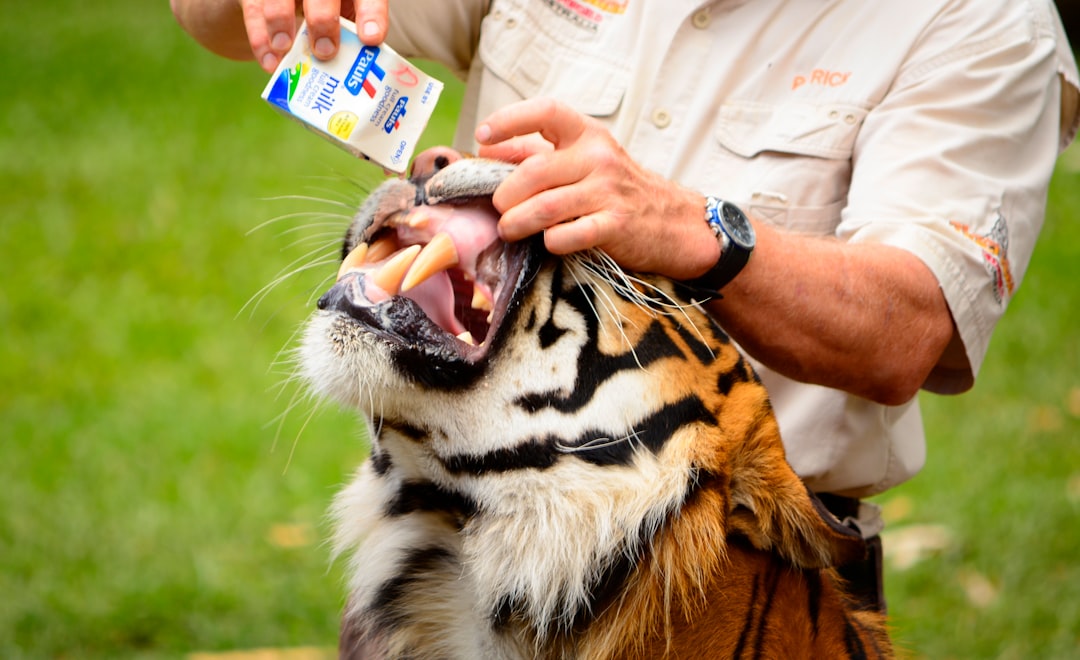
The development of relationships between tigers and their human caretakers provides compelling evidence for recognition abilities. Benefits of keeper interaction include improved physical health through better monitoring, enhanced psychological well-being through stronger bonds, increased control within their environment, and cognitive stimulation that reduces negative behaviors.
Keeper behavior during interactions with tigers mainly involves intercepting fighting, clapping hands to elicit behavioral changes, and pushing them to make them move, with keeper personality having strong connections to interactive behavior. The consistency of these interactions suggests tigers learn to recognize individual keeper personalities and behavioral patterns.
Long-term relationships develop between tigers and familiar humans. Stereotypic behavior in tigers decreases with positive keeper attitudes, accounting for significant variations in behavioral patterns. This behavioral modification based on specific human interactions strongly suggests individual recognition rather than generalized responses to all humans.
Implications for Conservation and Human-Tiger Coexistence

Understanding tiger recognition abilities has profound implications for conservation efforts. Organizations continue monitoring human-tiger interactions as part of welfare assessments to gain valuable information. This research could revolutionize how we approach tiger conservation in human-populated areas.
The ability to recognize individual humans might explain varying tiger responses to different people in the same geographical area. Some humans might be categorized as neutral or positive, while others could be remembered as threats. This recognition system could help explain why some villages experience fewer conflicts than others, even when tiger populations are similar.
For conservationists working directly with wild tigers, recognition abilities offer both opportunities and responsibilities. Tigers might develop positive associations with consistent, non-threatening human contact, potentially making conservation work more effective. However, negative experiences with humans could also be remembered and generalized, making future conservation efforts more challenging.
Conclusion: A New Understanding of Tiger Cognition

The evidence overwhelmingly suggests that tigers do possess the remarkable ability to recognize individual humans. From their extraordinary memory systems to their complex cognitive abilities, these magnificent predators have all the neurological tools necessary for sophisticated social recognition. The behavioral evidence from both captive and wild tigers supports this conclusion, revealing creatures far more intellectually complex than previously imagined.
This recognition ability transforms our understanding of human-tiger relationships and has significant implications for conservation strategies. Rather than viewing tigers as simple predators operating on instinct alone, we must acknowledge them as intelligent beings capable of forming individual assessments of the humans they encounter. This cognitive sophistication demands a new level of respect and consideration in our conservation approaches.
The next time you see those piercing tiger eyes, remember that behind them lies a mind capable of recognizing, remembering, and perhaps even judging you as an individual. What do you think about this remarkable cognitive ability? Does it change how you view these incredible predators?

- 8 Ways Bobcats Move Through Suburbs Without Being Seen - August 9, 2026
- 7 Reasons Black Bears Return to the Same Food Source - August 9, 2026
- Animal Cognition Says Horses Remember People Who Treated Them Well and Those Who Did Not - August 9, 2026