
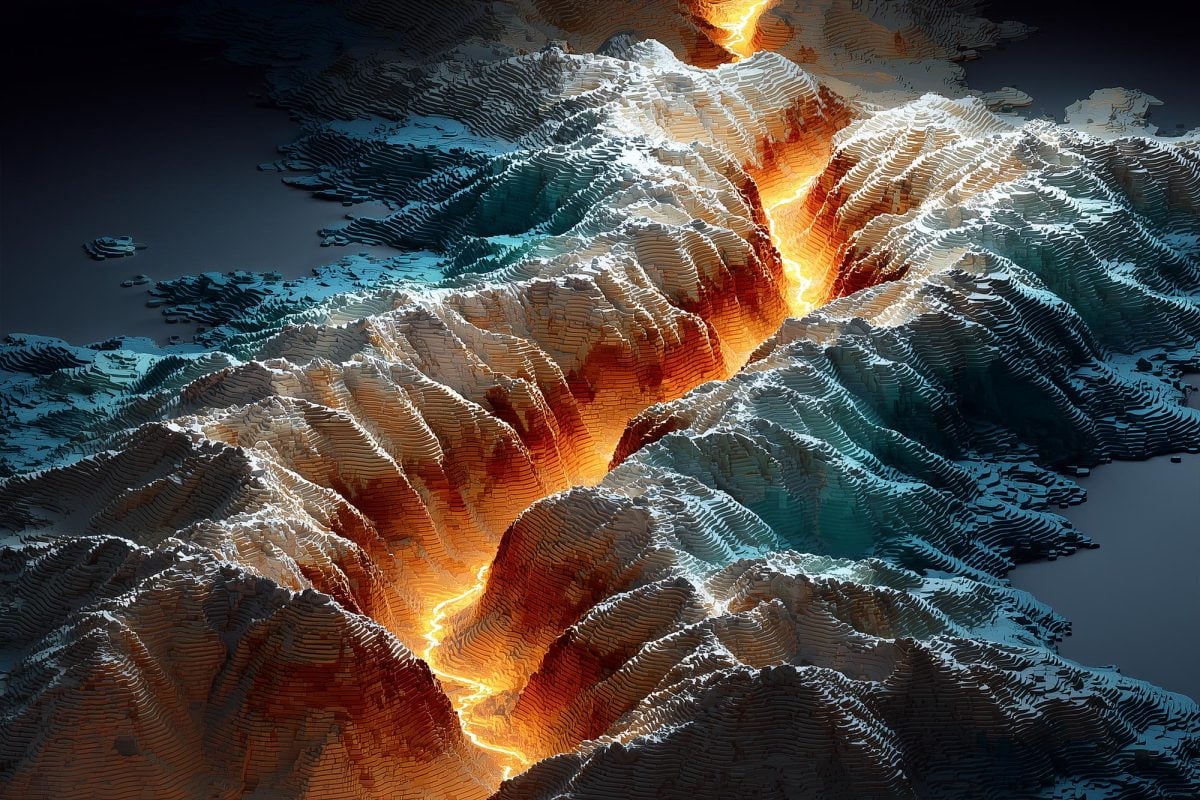
Deep beneath the Pacific Ocean off California’s coast lies evidence of a terrifying possibility that could redefine earthquake disaster planning for the entire West Coast. What started as a simple navigational error during a 1999 research cruise has led to one of the most alarming geological discoveries in recent decades. Scientists now have compelling evidence that two of North America’s most dangerous fault systems might work together in ways we never imagined.
Picture this scenario: a massive earthquake tears through the Pacific Northwest, sending buildings tumbling and triggering devastating tsunamis. Emergency responders rush northward to help Seattle and Portland. Then, hours or even minutes later, the San Andreas Fault responds with its own catastrophic rupture, leaving San Francisco and the Bay Area in ruins while rescue resources are stretched impossibly thin. This isn’t science fiction anymore.
A Discovery Born from Navigation Error
Sometimes the most groundbreaking discoveries happen by accident. During a 1999 research study led by Dr Chris Goldfinger, a paleoseismologist at Oregon State University, the team accidentally drilled a core 55 miles south of their intended site, crossing from Cascadia into the San Andreas system. What they found in that wayward core sample would change everything scientists thought they knew about West Coast earthquake behavior.
That “mistake” produced an unusual sediment layer – one with coarse grains on top and fine grains below, essentially upside-down compared to typical deposits. Subsequent analysis revealed that the fine base layer likely came from a large Cascadia quake, and the coarse top from a near-immediate San Andreas rupture. This strange upside-down pattern shouldn’t exist unless something extraordinary happened.
Reading Earth’s Earthquake Diary
To uncover this story, Goldfinger’s group turned to one of Earth’s most meticulous archives: the seafloor. When major offshore quakes hit, they shake loose vast underwater landslides that send plumes of mud and sand racing through deep ocean canyons. These flows settle into layers known as turbidites – each a timestamped page in the planet’s earthquake diary.
The team analyzed 137 sediment cores gathered along both fault systems – including samples from the Noyo Channel, Trinidad Canyon, and southern Cascadia. Think of these cores as geological time capsules, preserving evidence of every major earthquake that shook the seafloor over the past three millennia. Each layer tells a story of violence and destruction frozen in time.
The Doublet Mystery Unfolds
Yet many of the layers in both the Noyo Canyon and Cascadia cores appeared in distinctive pairs. “There were these big, thick, sandy doublet events where it had a fine-grained element, and on top of it was a very coarse grained sandy unit. And we were just scratching our heads,” says Goldfinger.
Radiocarbon dating revealed that many of these paired deposits north and south of Cape Mendocino formed at nearly the same time, within the limits of dating accuracy. That synchronicity was too frequent to be coincidental. The researchers found these mysterious doubled layers scattered throughout their cores, each one a potential smoking gun pointing to synchronized devastation.
Three Thousand Years of Synchronized Destruction
The researchers’ findings, published recently in Geosphere, reveal that the fault systems have produced several synchronized earthquakes over the past 3,000 years. Analysis of the ages of shells in the sediments suggest there were at least eight large earthquakes along the San Andreas Fault over the past 3,000 years that occurred within decades of significant quakes along the Cascadia Subduction Zone.
The evidence spans centuries of geological time, painting a picture of two massive fault systems that occasionally dance together in a deadly waltz. The 1906 San Francisco earthquake, the 1992 Cape Mendocino quake, and the massive 1700 Cascadia megathrust event all left visible marks on both sides of the triple junction. Even modern earthquakes left their signatures in this underwater archive.
The Stress Triggering Phenomenon
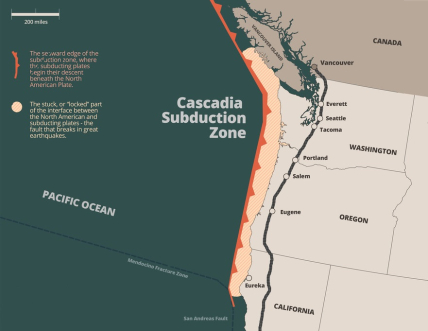
The triggers can go either way, with a quake in the San Andreas Fault causing a quake in the Cascadia Subduction Zone or vice versa. Researchers wrote that this was evidence of “partial synchronization” between the two faults, a phenomenon in which stress released by one rupture triggers shaking on the other fault within “minutes to hours.”
Goldfinger’s team argues that large Cascadia quakes might subtly increase pressure along the northern San Andreas, while major San Andreas ruptures could, in turn, send stress waves back into Cascadia’s southern edge. Imagine two enormous springs under incredible tension, where releasing one can cause the other to snap moments later.
A Nightmare Scenario for Emergency Response
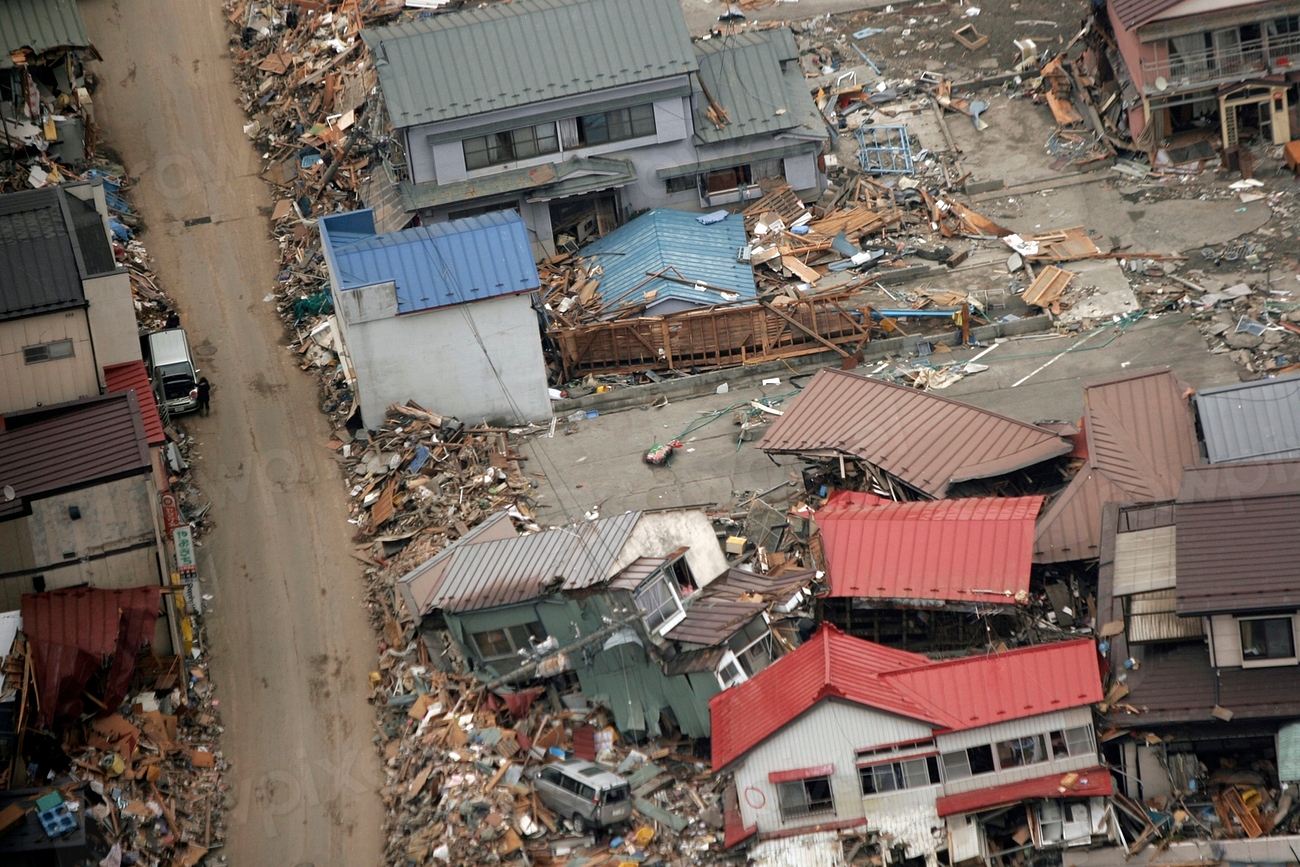
Goldfinger said. “We could expect that an earthquake on one of the faults alone would draw down the resources of the whole country to respond to it,” And if they both went off together, then you’ve got potentially San Francisco. Portland, Seattle and Vancouver all in an emergency situation in a compressed timeframe.”
In some cases, Goldfinger said, the time separation between paired Cascadia and San Andreas quakes may have been just minutes or hours. That’s close enough for emergency planners to take notice. The implications are staggering: imagine trying to coordinate disaster relief across multiple major metropolitan areas simultaneously, with transportation networks crippled and communication systems down.
Beyond The Big One: A Double Catastrophe
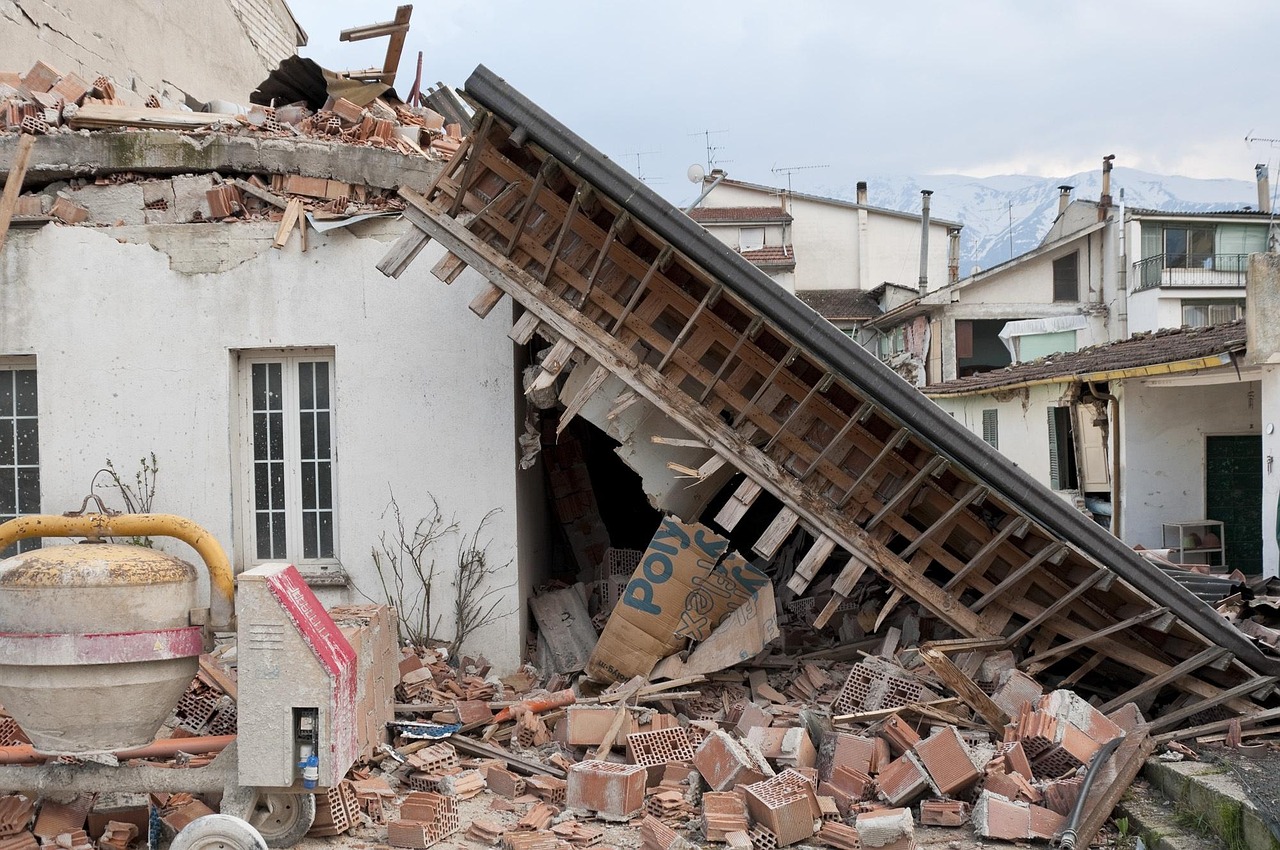
Chris Goldfinger, a marine geologist at Oregon State University and lead author of the study. “We’re used to hearing the ‘Big One’ – Cascadia – being this catastrophic huge thing,” “It turns out it’s not the worst case scenario.” The worst case scenario, it appears, involves not one but two massive earthquakes striking in rapid succession.
The Cascadia subduction zone, which stretches from Northern California to British Columbia, is capable of producing magnitude 9 earthquakes like the one that struck in 1700. In April, separate research published in Proceedings of the National Academy of Sciences showed that a future Cascadia megathrust quake could instantly sink parts of the coastline by several feet and expand floodplains by more than 100 miles. Now add a major San Andreas rupture to that scenario, and you have a recipe for unprecedented disaster.
Conclusion
The discovery that the San Andreas Fault and Cascadia Subduction Zone might trigger each other fundamentally changes how we must think about West Coast earthquake preparedness. When Cascadia and San Andreas events occur far apart in time, the cores show single, clean layers. Doublets appear only when the two systems’ quakes coincide closely.
While scientists emphasize that such synchronized earthquakes are relatively rare, occurring perhaps every few centuries, the consequences would be so catastrophic that ignoring this possibility would be irresponsible. Emergency planners now face the daunting task of preparing for not just one “Big One,” but potentially two massive earthquakes that could transform the entire western seaboard into a disaster zone in a matter of hours.
The sediment cores have spoken, revealing a hidden connection that stretches back thousands of years. The next time the earth begins to shake along one of these great faults, we might have only minutes to brace for what could follow. What’s your family’s emergency plan if both fault systems decide to dance together again?

- What Guardian Dog Breed Are You According to Your Zodiac Sign - August 9, 2026
- Animal Science Says Chimpanzee Grooming Builds Alliances as Much as It Removes Dirt - August 9, 2026
- The Real Animals That Inspired Disney Sidekicks - August 9, 2026