


Far beneath the waves and out of the sight of most humans, scientists have stumbled on something truly remarkable: a fish so unusual and endearing it might change how we think about the deep ocean. Meet the newly described bumpy snailfish (scientific name Careproctus colliculi) — a pale-pink, bumpy-skinned deep-sea fish with oversized blue eyes and beard-like appendages. Discovered in the dark depths of the Monterey Canyon off California, this creature opens a window into one of Earth’s least-explored habitats. What follows is a look at when, where and how this humble but extraordinary fish was brought from invisibility into scientific record.
The Deep-Sea Encounter
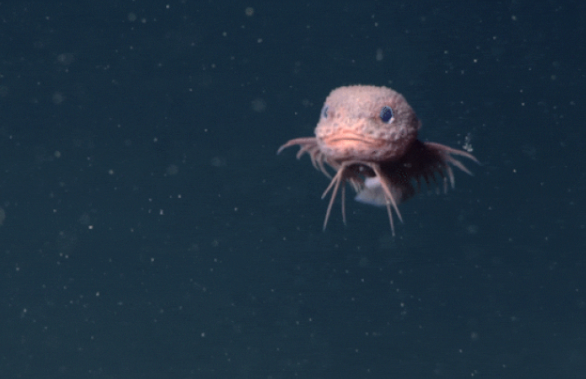
In 2019, researchers from the Monterey Bay Aquarium Research Institute (MBARI) descended into Monterey Canyon, off California’s central coast, and filmed a small snailfish at a staggering depth of around 3,300 meters (about 10,700 feet).The location: the muddy seafloor of Monterey Canyon, where light is gone and pressure is immense. The fish, later identified as the bumpy snailfish, stood out due to its bubble-gum pink color, distinctive bumpy texture and long fin rays.
The Formal Discovery and Publication
After years of study, the team confirmed that this creature was in fact a new species. The findings were published in the journal Ichthyology and Herpetology on 27 August 2025. Live Science The media coverage of this work broke out in September 2025 — for example, a report dated 12 September 2025 from LiveScience described the discovery. The official scientific publication thus preceded public attention, and both the date and location of discovery are well documented.
Unique Features and Significance
What makes the bumpy snailfish remarkable isn’t just that it’s new — it’s the way it looks and where it lives. At a depth of 10,700 feet (3,300 m) the environment is extreme, and yet this fish thrives. It features a rounded head, blue-tinged eyes, a textured pink body covered in little bumps and long fin rays. The species was named for the bump-pattern—“colliculi” referencing a hill-like texture.
Beyond appearance, the discovery highlights the richness of deep-sea biodiversity and our still-limited knowledge of it: even in areas studied by experts such as Monterey Canyon, entirely new species are being found.
What Happens Next: Why It Matters
This find is more than just a curiosity. The fact that the bumpy snailfish lives at such depths means it likely has adaptations to extreme pressure, no sunlight, cold temperatures and scarce food. By studying it and its relatives, scientists can learn more about how life survives (and thrives) in conditions once thought nearly inhospitable.
It also raises the bar for how we assess and protect deep-ocean ecosystems. If species like this are still unknown in relatively accessible deep-sea areas, the implications for conservation, climate change impact and human ocean-use are huge.
Final Thoughts: A New Friend from the Abyss
The bumpy snailfish has slipped out of the dark into our awareness — a tiny pink ambassador of the deep sea, reminding us that there’s still so much we don’t know about the planet’s “final frontiers”. Its discovery on 27 August 2025, following the 2019 dive in Monterey Canyon, marks a measurable milestone in marine biology. With its adorable appearance and extreme habitat, it invites us to pause, wonder and consider that even the most remote corners of Earth are full of surprises.
