
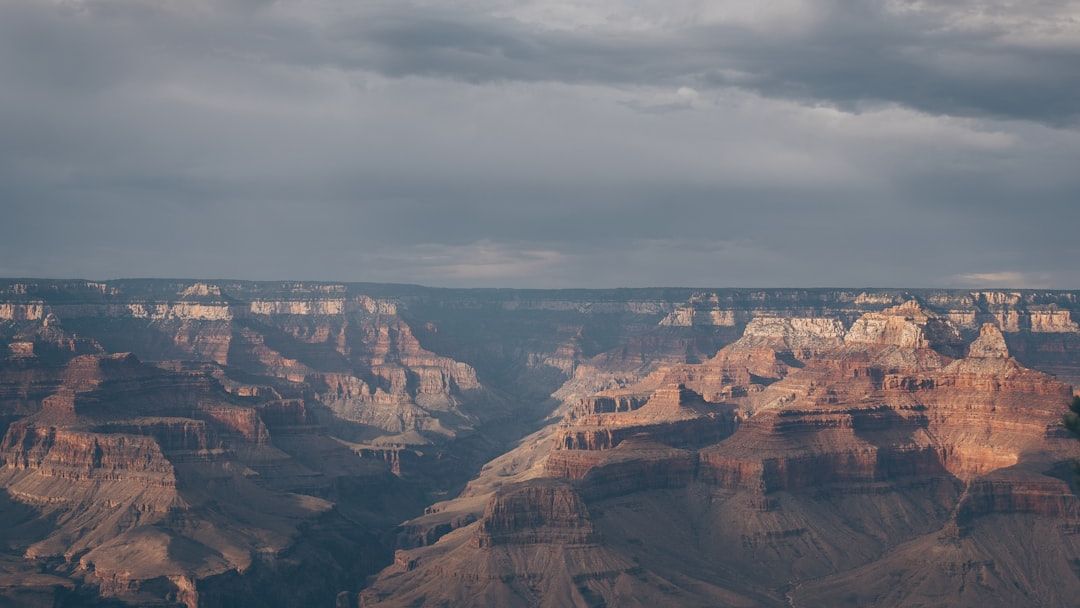
There’s something special about America’s national parks beyond the stunning landscapes and abundant wildlife. Sure, we all know about the majestic canyons and towering peaks. Yet scattered across these protected lands are weather events so unusual they almost seem like magic tricks performed by Mother Nature herself. Some of these phenomena happen rarely, maybe once a year or even less frequently. Others occur with more regularity, though catching them still requires the right conditions and a bit of luck.
Think about it this way: when you visit most places, you might check the forecast for rain or sunshine. In these seven national parks, the weather itself becomes part of the attraction. We’re talking about rocks that appear to move on their own, clouds that fill an entire canyon like a bathtub, and atmospheric displays that photographers wait years to capture. Let’s dive in.
Death Valley National Park and the Mysterious Sailing Stones
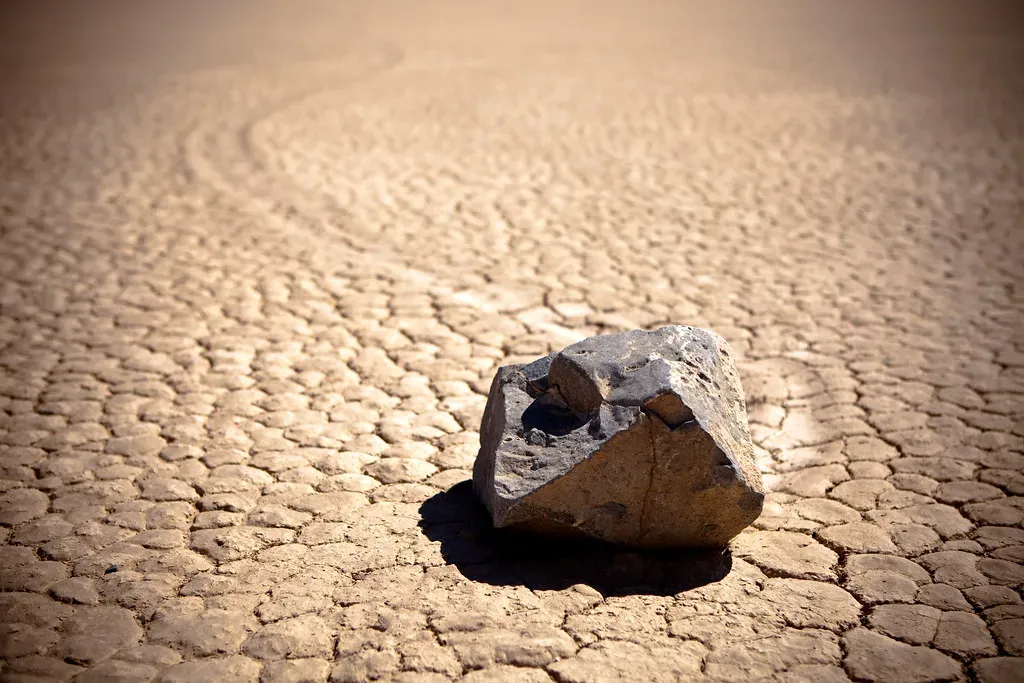
Picture rocks sliding across a dry lakebed, leaving long trails behind them with no apparent cause. Located on the border of California and Nevada, Death Valley National Park was designated in 1933, and is home to one of the world’s strangest phenomena: rocks that move along the desert ground with no gravitational cause. Known as “sailing stones,” the rocks vary in size from a few ounces to hundreds of pounds. Though no one has ever seen them actually move in person, the trails left behind the stones and periodic changes in their location make it clear that they do. For decades, scientists scratched their heads trying to figure out how these stones, some weighing hundreds of pounds, could glide across Racetrack Playa.
In 2014, scientists were able to capture the movement of the stones for the first time using time-lapse photography. The results strongly suggest that the sailing stones are the result of a perfect balance of ice, water, and wind. The mystery that had stumped researchers since the early 1900s finally had an answer. The largest observed rock movement involved >60 rocks on December 20, 2013 and some instrumented rocks moved up to 224 m between December 2013 and January 2014 in multiple move events. In contrast with previous hypotheses of powerful winds or thick ice floating rocks off the playa surface, the process of rock movement that we have observed occurs when the thin, 3 to 6 mm, “windowpane” ice sheet covering the playa pool begins to melt in late morning sun and breaks up under light winds of ∼4 meters per second. It’s wild how something so simple creates such an eerie effect.
Grand Canyon National Park’s Incredible Cloud Inversions
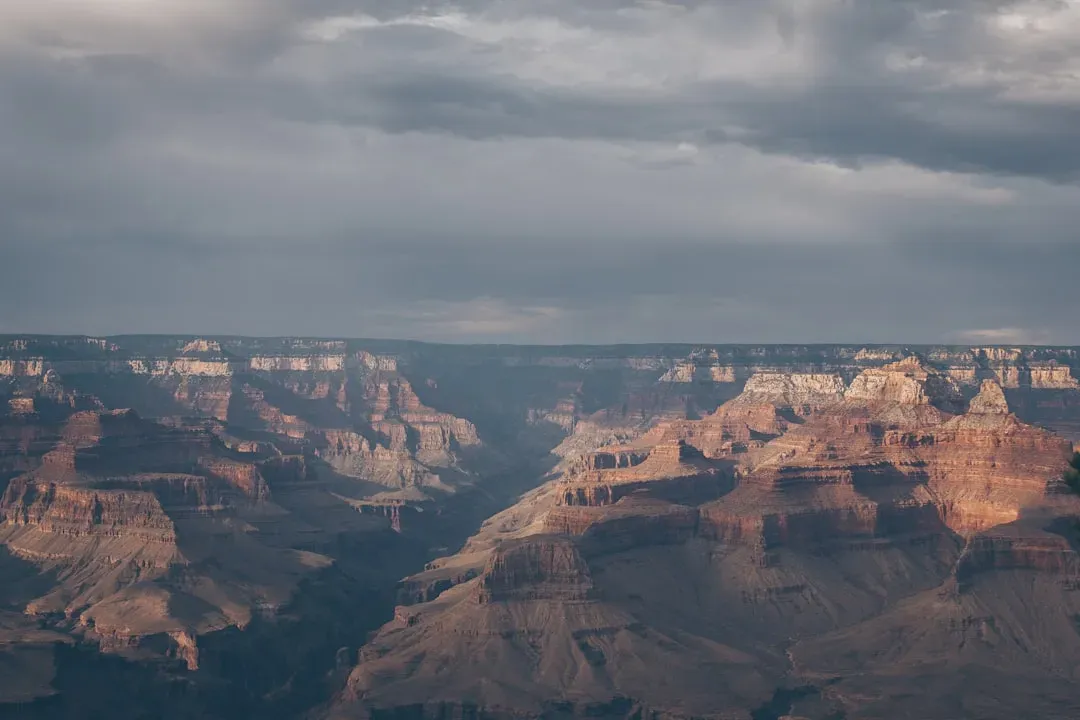
Imagine standing on the rim of the Grand Canyon and instead of looking down into the chasm, you’re looking across an ocean of clouds. A cloud inversion occurs when cool air becomes trapped under warm air, an “inversion” of the usual order. The towering walls of the Grand Canyon are one of the most spectacular places to see this happen. A rare meteorological event filled the canyon with an ocean of clouds. Such events are so rare that National Park Service rangers – who see the canyon every day – wait for years to see the ground-hugging fog.
A cloud inversion, particularly one as complete as seen at the end of the video, is not common. “We were extremely lucky to be there to capture it,” Harun Mehmedinovic, one-half of the skyglowproject team who took the images, told IFLScience. “It only happens one day a year on average. Let’s be real, rangers who work at the canyon every single day consider themselves fortunate if they witness this phenomenon even once in their career. They happen in the winter, when long nights provide extra time for the inner canyon to really cool down. Then, when a warm air mass passes over the cold inner-canyon, Grand Canyon gets a temperature inversion. But there’s one more ingredient that’s necessary to fill the canyon with clouds: Water vapor. When a temperature inversion follows a precipitation event, water vapor gets trapped by the inversion, forming clouds.
Yellowstone National Park’s Geothermal Weather Magic
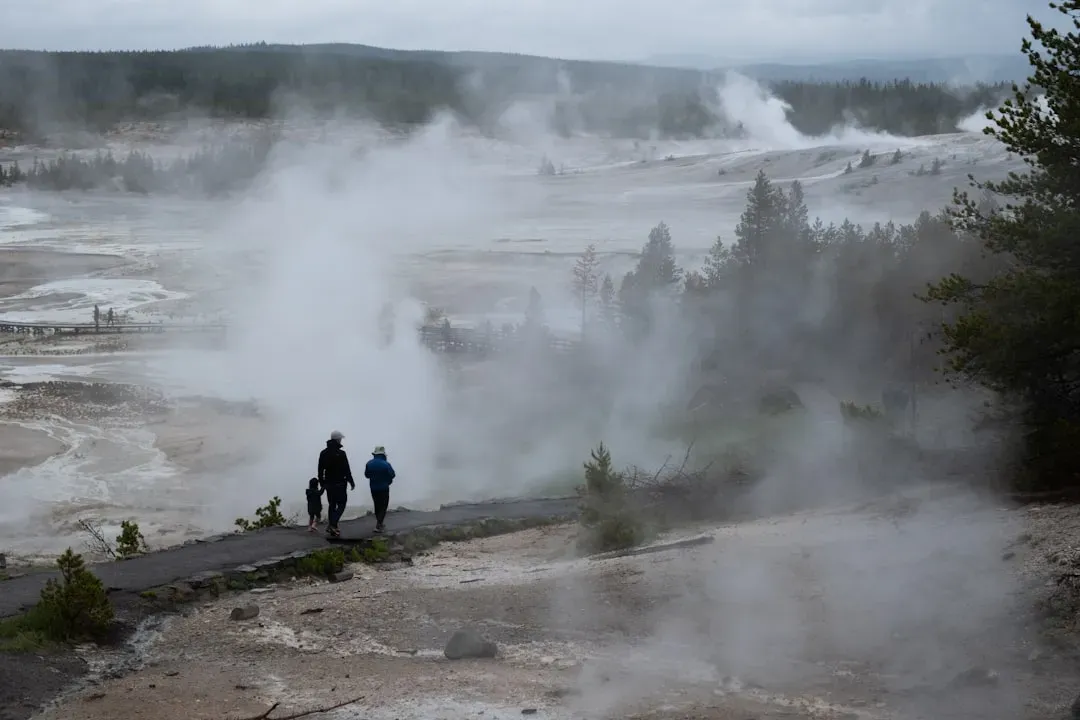
Yellowstone isn’t just famous for its geysers and hot springs. The park creates its own microclimate thanks to all that geothermal activity bubbling beneath the surface. The mean annual temperature is 2.2°C (36°F), barely above the freezing point of water. However, Yellowstone is also an active geothermal area with hot springs emerging at ~92°C (~198°F) (the boiling point of water at Yellowstone’s mean altitude) and steam vents reported as high as 135°C (275°F). This extreme contrast creates some pretty bizarre atmospheric conditions.
On frigid winter mornings, steam from the geothermal features rises into the freezing air, creating massive plumes that can be seen for miles. Since most Yellowstone lies at an elevation of 6,000 feet above sea level or higher, unpredictability characterizes the park’s weather. Expect big temperature swings, rain, or snow during every month of the year. Field observations in August 2019 confirmed that this was a steam-heated, acid-sulfate thermal area, with an arc-shaped zone of hydrothermally altered soil and heated ground, with surface temperatures of 60–80°C, several steaming fumaroles, and boiling temperatures (93°C) just beneath the surface. You might be wearing a winter coat while standing next to ground hot enough to brew coffee. Honestly, it’s hard to say for sure what kind of weather you’ll encounter from one thermal basin to the next.
Mount Rainier National Park’s Lenticular Cloud Displays
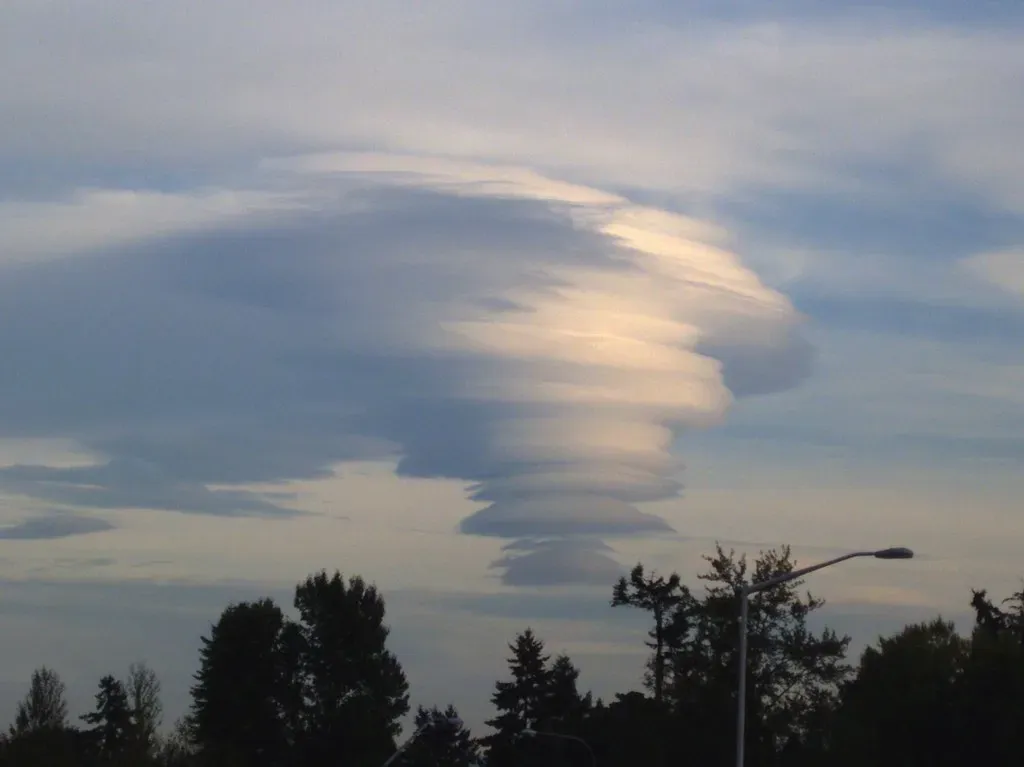
Lenticular clouds (Altocumulus lenticularis, meaning “shaped like a lentil” in Latin) mostly develop among the crests and valleys of mountainous terrain. They are associated with waves in the atmosphere that form when moist air flow is forced up, over and partway down a mountaintop. The moist air cools, causing it to condense into a disk-shaped cloud. At Mount Rainier, these formations appear regularly, sometimes stacking on top of each other like pancakes hovering over the summit. Often a lenticular cloud resembles a spaceship hovering near a mountain’s summit. Sometimes, however, multiple clouds will pile on top of each other like a stack of pancakes.
Why is Mount Rainier such a hotspot for lenticular sightings? Probably because wind and moisture coming off the Pacific Ocean are forced to rise over our region’s tallest peak. Also, since lenticular clouds form before the arrival of a storm, thick clouds aren’t yet present to obscure lenticulars from view. Not only do lenticulars look unique but they also behave differently than other clouds by not moving with the wind flow. By reforming over and over again in the crest of the mountain wave, they can stay in one location for several hours. The way they just hover there, defying what we normally expect from clouds, makes them particularly captivating for anyone lucky enough to spot them.
Yosemite National Park’s Famous Firefall Effect
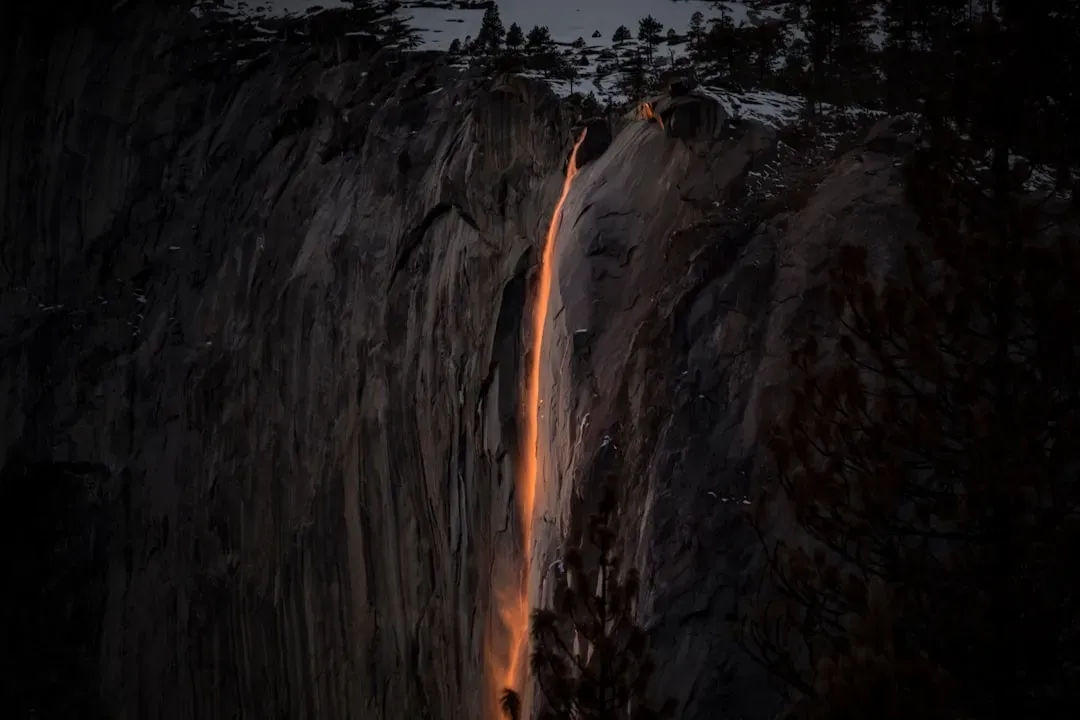
The Yosemite Firefall is a rare and incredible weather phenomenon that occurs in Yosemite National Park in California. During the last two weeks of February, the setting sun illuminates the Horsetail Fall waterfall, creating the illusion of a glowing, fiery cascade. This incredible phenomenon only occurs when the conditions are just right, with clear skies and the sun at the perfect angle. The waterfall appears to transform into flowing lava, glowing orange and red against the granite cliffs.
Here’s the thing: this isn’t actually a weather phenomenon in the traditional sense, but rather a perfect alignment of sunlight, water flow, and atmospheric clarity. Still, it’s so dependent on weather conditions that many photographers make multiple trips without success. The waterfall needs sufficient water flow from snowmelt, the sky must be clear, and the sun has to hit at precisely the right angle during sunset. Miss any one of these elements and you’re out of luck. When everything aligns, though, the result is absolutely spectacular, drawing crowds of photographers and nature enthusiasts who’ve planned their visit months in advance.
Olympic National Park’s Extreme Rain Shadow Effect
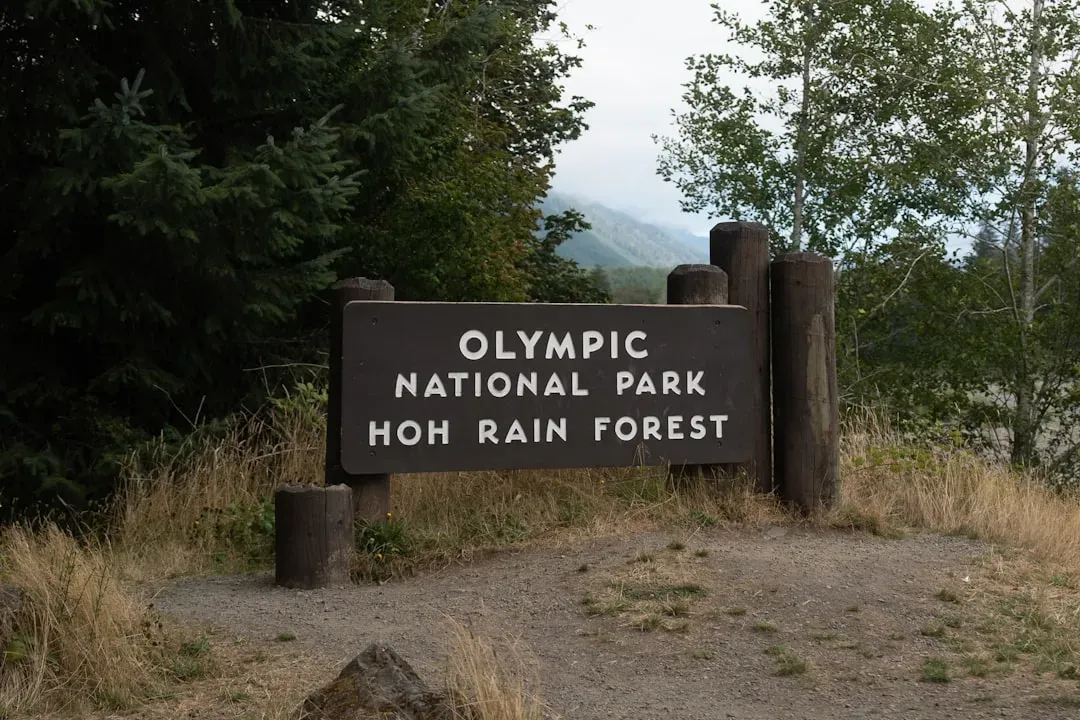
Olympic National Park experiences one of the most dramatic rain shadow effects in North America. The western side of the park receives absolutely staggering amounts of precipitation, making it one of the wettest places in the continental United States. Some areas get well over 12 feet of rain annually. Yet drive to the northeastern portion of the park, and you’ll find near-desert conditions with some areas receiving less than 20 inches per year.
The Olympic Mountains create this wild disparity. Moist air from the Pacific Ocean hits the western slopes and dumps massive amounts of rain, creating temperate rainforests draped in moss and ferns. By the time the air reaches the eastern side, it’s been wrung dry like a towel. You can literally drive from a rainforest to an area with cacti in less than an hour. The contrast is so extreme that different sides of the park host completely different ecosystems, all within a relatively small geographic area. It’s nature’s way of showing just how much topography can influence local weather patterns.
Acadia National Park’s Unique Fog Phenomenon
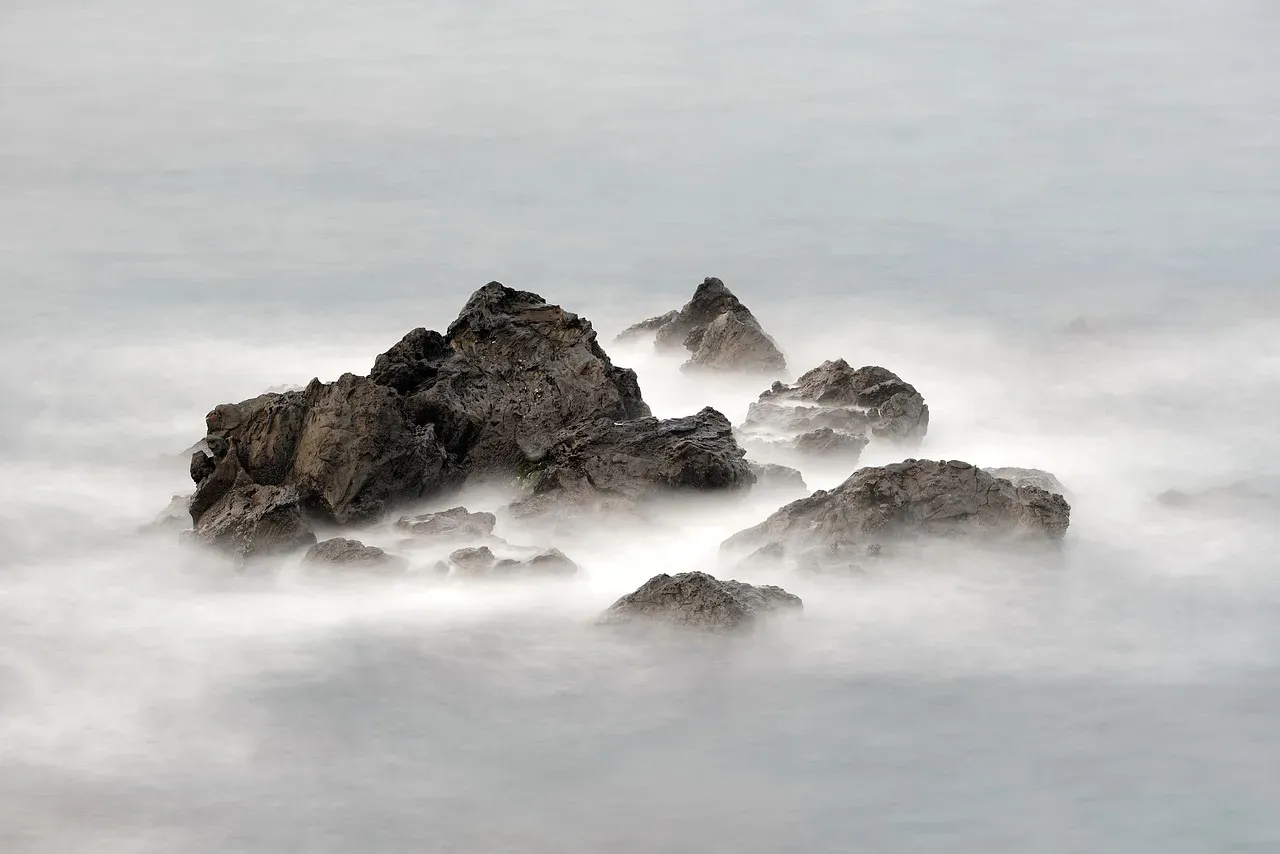
Acadia National Park in Maine experiences some of the most frequent and dramatic fog events on the East Coast. The park sits where cold ocean currents meet warmer air, creating perfect conditions for dense fog that can roll in within minutes. Cadillac Mountain, the highest point on the eastern seaboard, often pokes above the fog layer like an island in a white sea. Visitors standing on the summit watch the fog flow between islands and peninsulas like a slow-motion river.
The fog here isn’t just frequent, it’s unpredictable and transformative. One moment you’re enjoying crystal-clear views of the rocky coastline and distant islands. Fifteen minutes later, visibility drops to almost nothing as thick fog envelops everything. The rapid changes occur because of the unique geography where the Gulf of Maine’s cold waters interact with the warmer land and air masses. Summer visitors often experience this phenomenon multiple times in a single day. The fog creates an otherworldly atmosphere, particularly along the rocky shores where foghorns echo and waves crash invisibly nearby.
Conclusion
These seven national parks prove that weather can be just as much of an attraction as the landscapes themselves. From rocks that mysteriously slide across desert floors to clouds that fill entire canyons, these phenomena remind us that nature still holds plenty of surprises. The best part is that these events are real, verifiable, and sometimes even predictable, though catching them still requires patience and often a bit of luck.
What makes these weather phenomena truly special is their rarity and the precise conditions needed for them to occur. Rangers dedicate entire careers to these parks and might witness some of these events only once or twice. So next time you’re planning a national park visit, maybe check what unique weather patterns occur there. You might just witness something that photographers and scientists have waited years to see. What’s the most unusual weather phenomenon you’ve encountered? Have you been fortunate enough to catch any of these rare displays?

- 15 Tender Things Old Dogs Do the Closer the End Quietly Comes - July 21, 2026
- 14 Ways a Rescue Cat Shows It Has Given You Its Fragile Heart - July 21, 2026
- 13 Familiar Things That Bring an Aging Dog Deep, Quiet Comfort - July 21, 2026