

You’ve probably looked into your dog’s eyes and felt certain they understood your sadness. Or watched your cat sulk after being scolded. These moments feel deeply real, yet for centuries, science has struggled to prove what pet owners have always known. Now, with cutting-edge technology and fresh perspectives, researchers are finally peeling back the layers of animal emotional life. What they’re discovering might make you see the natural world in a completely different light.
The answers emerging from labs around the globe are both fascinating and unsettling. They challenge our assumptions about which creatures deserve moral consideration and force us to confront uncomfortable questions about how we treat animals in farms, zoos, and research facilities.
Artificial Intelligence Cracks the Emotional Code

Picture this: a computer algorithm listening to thousands of animal vocalizations and accurately distinguishing between joy and distress. It sounds like science fiction, yet it’s happening right now. Researchers have successfully trained a machine-learning model to distinguish between positive and negative emotions in seven different ungulate species, achieving an impressive accuracy of 89.49%. The species studied included cows, pigs, and wild boars.
What makes this breakthrough particularly compelling is the consistency researchers found. Vocal patterns of emotions were somewhat consistent across species, suggesting that fundamental vocal expressions of emotions are evolutionarily conserved. Think about what that means for a moment. Whether you’re a pig or a cow, happiness and fear might sound fundamentally similar at their acoustic core.
The AI-powered classification model could be used to develop automated tools for real-time monitoring of animal emotions, transforming livestock management, veterinary care, and conservation efforts. Imagine farmers receiving alerts when their animals experience stress before behavioral problems emerge. This technology could revolutionize how we care for billions of animals worldwide.
The implications ripple outward in unexpected ways. If machines can detect animal emotions with nearly 90 percent accuracy, what does that say about our own ability to read these signals? Honestly, it suggests we’ve been missing a lot.
The Facial Expressions Animals Use to Communicate
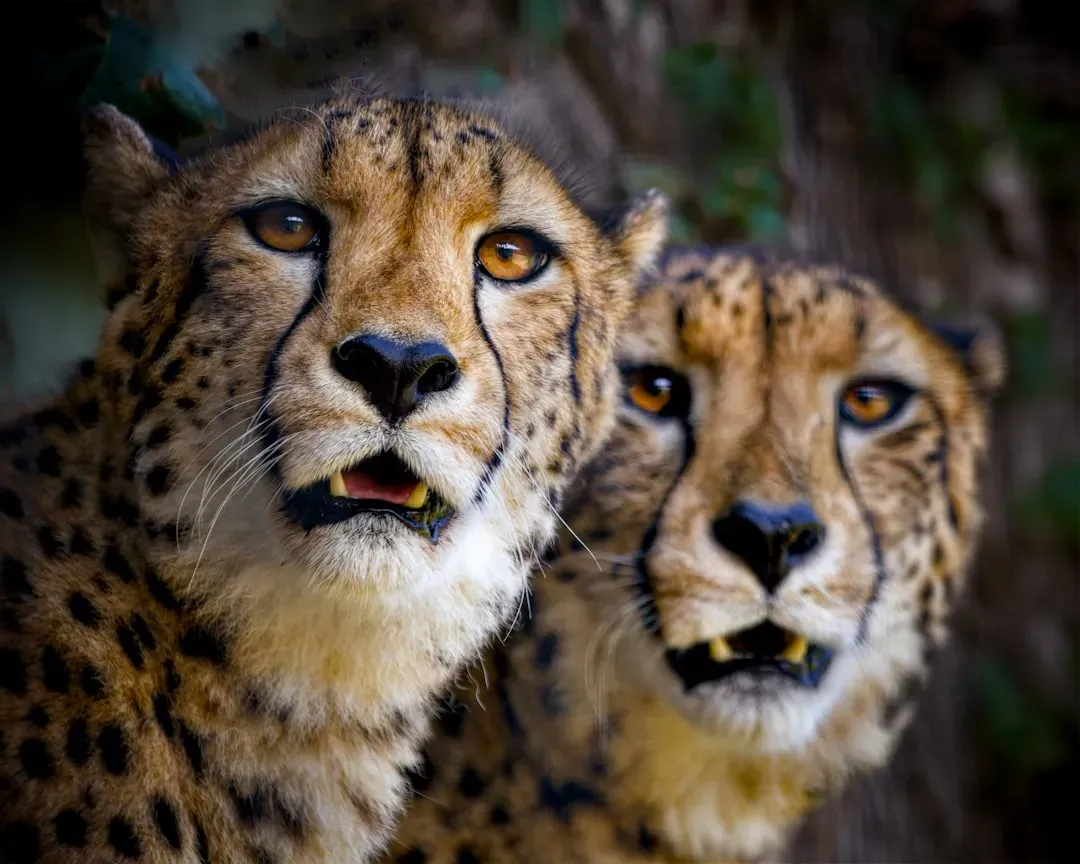
Your pet’s face isn’t just adorable. It’s a communication device more sophisticated than scientists once believed. Recent studies examine the connection between the neurobiology of emotions and facial expressions in non-human mammals and their significance in understanding nonverbal communication. Researchers have developed specialized coding systems called AnimalFACS to document every tiny muscle movement in various species.
The neurobiological bases of basic emotions share remarkable similarities between humans and animals, with facial nucleus receiving input from the limbic system and motor cortex, allowing emotional states to influence facial muscle activity directly. This is crucial information. It means the neural pathways connecting emotion to expression aren’t uniquely human.
Here’s the thing: while we’ve made progress, challenges remain. Studies associating certain facial action units with emotional valence are limited in animals, and the neural pathways comprising control of facial expressions during emotional management are poorly understood. Scientists can map the muscles that move, yet pinning down exactly what those movements mean emotionally requires much more work.
Studies on whether humans can identify the emotional expressions of dogs and cats have been conducted extensively, however the results consistently show that humans do not achieve high levels of accuracy in these tasks. We think we’re great at reading our pets, yet the data tells a humbling story. Most of us are actually pretty terrible at it.
What Pet Owners Believe About Animal Emotions

Let’s be real: most people with pets are convinced their companions experience complex feelings. A recent survey explored this fascinating topic. Owners believed dogs could feel more emotions than cats, and that pets could express a wide range of emotions grouped into primary basic emotions and secondary complex emotions. The list included everything from anger and fear to embarrassment and pride.
The details get interesting when you look at how owners identify these emotions. Body posture, facial expression, and head posture were the three most frequent sources of cues used by both dog and cat owners. People watch their animals carefully, building mental libraries of behavioral patterns over months and years.
Dog owners believed they identified emotions in their pets roughly 65 percent of the time, while cat owners trailed slightly behind at 58 percent, with dogs having a unique propensity for revealing subtle emotions like empathy and guilt. Cats, meanwhile, excel at one particular emotion: anger. A whopping 85 percent of cat owners had witnessed anger in their felines.
Still, there’s a catch. Owner perception of pet emotions is naturally subjective and susceptible to anthropomorphic bias, attributing human emotion characteristics to animals. We project our own experiences onto creatures whose inner worlds might differ significantly from ours. That doesn’t mean pets don’t feel emotions, yet we must remain cautious about assuming those emotions match ours exactly.
Elephants and the Profound Reality of Grief
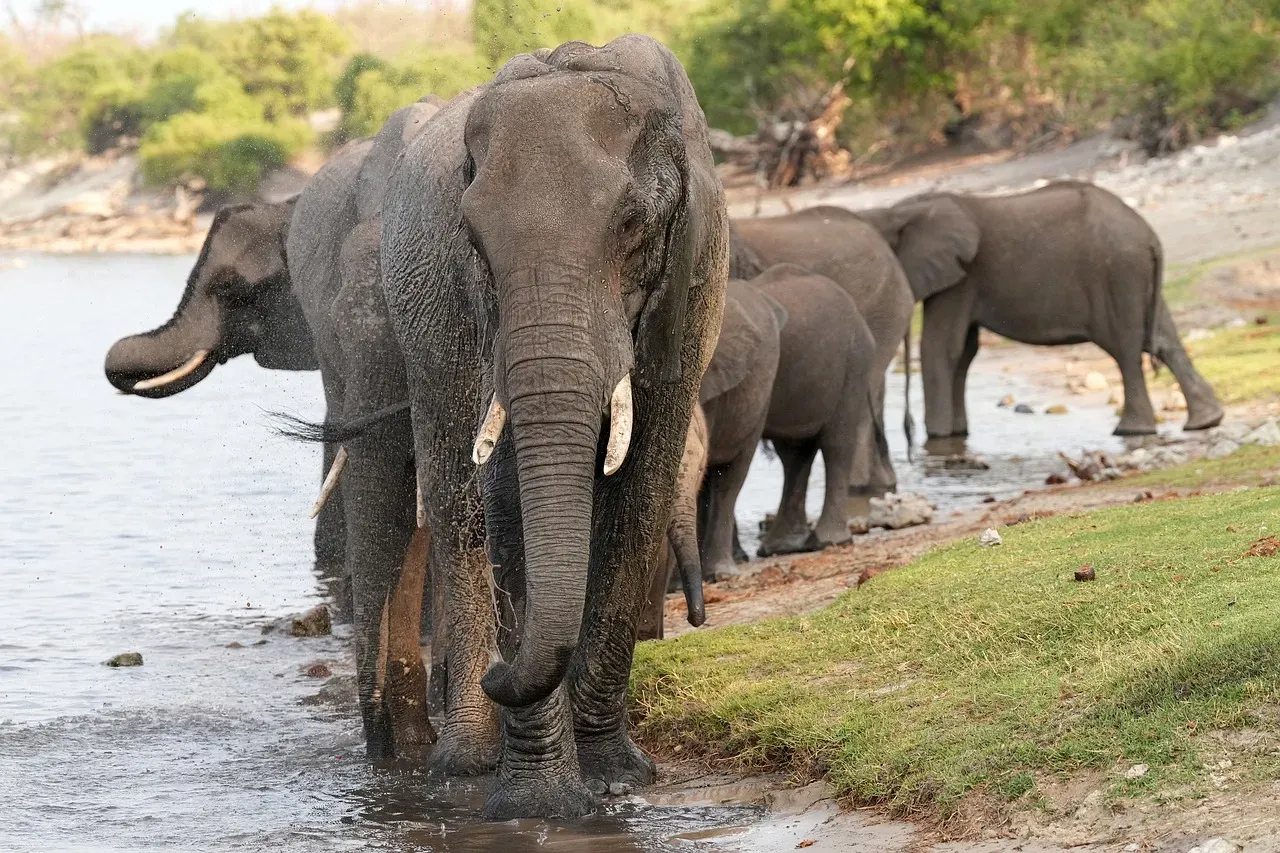
Few animal behaviors are as emotionally powerful as elephant mourning rituals. These gentle giants perform ceremonies around their dead that seem hauntingly human. The most commonly recorded behavior of elephants towards their dead included touching, approaching the animal and investigating the carcass, with elephants appearing to use their advanced sense of smell to identify dead individuals and vocalizing and attempting to lift fallen elephants that had just died.
What stunned researchers most was the breadth of this behavior. Elephants show broad interest in their dead regardless of the strength of former relationships with the dead individual. They don’t just mourn close family members. They investigate any elephant carcass they encounter, from fresh bodies to sun-bleached bones.
When a mother elephant was grieving the death of her calf, other elephants made a circle around the mother and her baby’s body and stood in silence for hours, standing motionless as they joined the mother in her mourning. This sacred vigil demonstrates something profound about elephant society and emotional capacity. They understand loss and respond with compassion.
Asian elephants loudly mourn and bury their dead calves, with herds carrying deceased calves by trunk and legs before burying them with legs facing upward, sometimes roaring and trumpeting around the buried calf. The ritualistic nature of these burials suggests deliberate, meaningful action rather than instinctive response. It’s hard to say for sure, but this looks an awful lot like grief.
Consciousness Beyond Mammals: The New Scientific Consensus

The conversation about animal consciousness is shifting dramatically. Far more animals than previously thought likely have consciousness, top scientists say in a new declaration, including fish, lobsters and octopus, with recent research backing them up. This represents a seismic change in how science approaches the question.
A group of 39 cross-disciplinary scientists released The New York Declaration of Animal Consciousness, acknowledging strong scientific support of conscious experience in birds and mammals and the realistic possibility of conscious experience in all vertebrates and many invertebrates. The signatories include some of the most prominent consciousness researchers in the world.
The evidence keeps accumulating in unexpected places. Recent research showed that bees display apparent play behavior, zebrafish show signs of curiosity, and fruit flies have active and quiet sleep, with social isolation disrupting their sleep patterns. These findings paint a picture of surprisingly rich inner lives across the animal kingdom.
Scientists are being forced to reckon with this larger question: not which animals are sentient, but which animals aren’t. The burden of proof is flipping. Instead of needing to prove consciousness exists in animals, researchers now must justify excluding any species from consideration. That’s a paradigm shift with enormous ethical implications.
The Evolution of Emotional Systems Across Species

One neuroscientist made a bold claim decades ago that’s now gaining mainstream acceptance. In 1998, American neuroscientist Jaak Panksepp claimed that the brains of all mammalian species can generate emotional experiences. His research identified seven core emotional systems hardwired into mammalian brains: seeking, fear, rage, lust, care, panic, and play.
Cognitive bias tests and learned helplessness models have shown feelings of optimism and pessimism in a wide range of species including rats, dogs, cats, rhesus macaques, sheep, chicks, starlings, pigs, and honeybees, with Panksepp identifying seven core emotional feelings reflected through neuro-dynamic limbic emotional action systems. The breadth of species displaying these responses is remarkable.
The evolutionary perspective helps explain why emotions exist at all. Feeling emotions may not require significant cognitive processes, rather they could be motivated by processes to act in an adaptive way, as suggested by Darwin. Emotions drive survival behaviors. Fear makes you flee from danger. Joy encourages you to repeat beneficial activities.
Laughter might have evolved as a form of social bonding among mammals, helping individuals feel relaxed and playful in close proximity and not misinterpret tickling as aggressive physical attack, representing clear emotional intelligence through animals monitoring their own emotions and reading emotional cues in others. Yes, rats laugh when tickled. Let that sink in for a moment. The capacity for positive emotional experiences extends far beyond what most people imagine.
What does this all mean for how we live alongside animals? The science is giving us an increasingly clear message. The creatures sharing our planet aren’t biological machines. They experience their lives subjectively, with feelings that matter to them. Whether we’re talking about the family dog or the fish in the ocean, consciousness and emotion appear to be widespread features of animal life. The question now isn’t whether animals feel emotions, but what we’re going to do with that knowledge.
What do you think about these discoveries? Does it change how you see the animals around you?
