

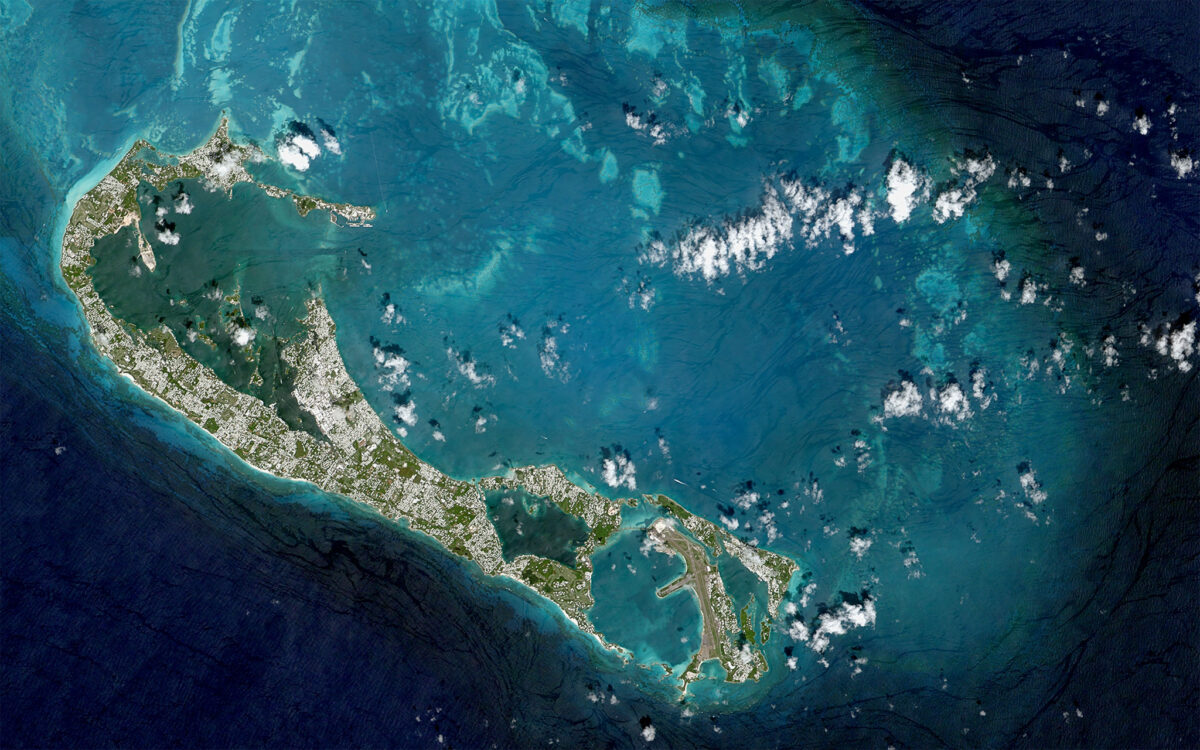
Bermuda’s geology has taken a surprising turn with the discovery of a massive, previously unknown rock layer deep below the Atlantic seabed that defies expectations and expands scientific understanding of ocean island structures. Using seismic recordings from distant earthquakes, researchers have uncovered an unusually thick layer—about 12.4 miles (20 kilometers) deep—embedded beneath the oceanic crust under Bermuda. This geological feature stands out because it is far thicker and compositionally different from layers typically found beneath ocean islands, and it may help explain why the island’s seafloor remains elevated despite a long absence of volcanic activity.
Published in the journal Geophysical Research Letters, the findings offer a rare glimpse into Earth’s interior processes and challenge conventional explanations for oceanic swells that generally rely on volcanic hotspot theory. The research has sparked intrigue in the scientific community about whether similar structures exist elsewhere and what such discoveries might mean for models of tectonic and volcanic evolution.
A Subsurface Puzzle Beneath the Atlantic
Standard models of oceanic crust envision a straightforward transition from the crust down into the dense mantle below. However, the newly detected layer beneath Bermuda interrupts this pattern, appearing as a distinct, buoyant layer of rock sandwiched between the crust and the mantle. At around 20 kilometers thick, this intermediate zone is far more substantial than analogous features found beneath other islands.
Researchers believe this material is less dense than the surrounding mantle, a property that may help “prop up” the Bermuda seafloor and sustain its elevated position without the support of ongoing volcanic uplift. Such a structure challenges geologists to rethink how these island swells persist long after volcanic activity has ceased.
Mapping the Hidden Layer
To visualize the subsurface beneath Bermuda, scientists analyzed seismic waves recorded by instruments on the island from hundreds of distant earthquakes. By measuring how these waves changed as they passed through different layers, the team was able to reconstruct a 3D image of the crust and underlying structures.
The results showed four distinct zones beneath Bermuda: a volcanic edifice layer, the oceanic crust, a fossil boundary known as the Moho, and the newly identified underplated layer. The discovery of this thick intermediate rock zone is unprecedented for oceanic locations, making it a profound finding in geoscience.
Implications for Island Elevation and Swells
Bermuda sits atop what geologists call an oceanic swell, where the seafloor rises hundreds of meters above the surrounding ocean bottom. These swells are typically formed by active mantle plumes—columns of hot material rising from deep within the Earth that produce volcanic chains like Hawaii.
Yet Bermuda has shown no evidence of volcanic activity for over 31 million years, a conundrum that this newly discovered rock layer may help resolve. The buoyant, thick underplated rock may act as a kind of geological raft, supporting the island’s elevation long after its volcanic roots went silent.
Ancient Origins and Geological History
Some researchers suggest that this rock layer may be a remnant of ancient volcanic episodes that accompanied the breakup of Earth’s supercontinent Pangea, when magmatic material was pushed into the lithosphere and later solidified. Variations in geochemical markers such as low silica and high carbon content in rocks from Bermuda support the idea that material deep in the mantle was involved in the island’s formation long ago.
The presence of such ancient, buoyant material offers a window into processes that shaped the early Atlantic and may differ significantly from the volcanic mechanisms observed in older ocean basins like the Pacific.
Scientific Reactions and Future Exploration
The striking nature of the discovery has excited geologists and seismologists. Some describe the structure as “unlike anything else on Earth,” reflecting how unique this configuration appears when compared to other oceanic islands. A major question now is whether similar layers exist beneath other islands or seafloor regions, and if so, what role they play in Earth’s tectonic and volcanic systems.
The research team plans to extend seismic studies to other parts of the world in search of comparable features, potentially reshaping broader theories about how islands evolve and how Earth’s deep interior influences surface topography.
A Geological Revelation With Broader Significance
The discovery of this massive rock layer not only provides clues about Bermuda’s unusual geology but also underscores how much of Earth’s interior remains unknown. By revealing complex layering and buoyant rock beneath a seemingly simple island, scientists are reminded that our planet still holds deep secrets waiting to be uncovered.
If similar structures are found elsewhere, it could prompt a major reassessment of geological models used to explain island formation, seafloor elevation, and tectonic history across the globe.
This astonishing find beneath Bermuda highlights how even well-studied regions of the Earth can surprise us with their complexity. The discovery of a thick, buoyant rock layer challenges traditional ideas about how oceanic crust and mantle interact and may reshape our understanding of island geology. While some mysteries remain—such as the precise origin of the layer and how widespread such features are—this research underscores the importance of probing Earth’s deep interior with modern seismic tools. In an age where much of scientific attention is focused on outer space, Bermuda’s hidden depths remind us that our own planet still holds fundamental questions and groundbreaking revelations waiting to be explored.

- Urban Coyotes Show Remarkable Adaptability, Learning to Thrive in City Environments - July 22, 2026
- Beavers Are Nature’s Engineers, Creating Vital Habitats for Other Wildlife Species - July 21, 2026
- The Recovery of the California Condor Offers Hope for Other Critically Endangered Birds - July 21, 2026