

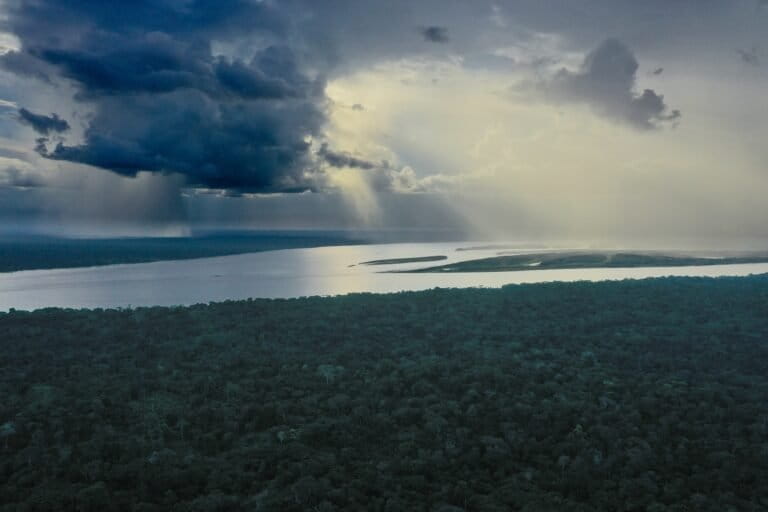

The Alarming Toll on Defenders and Habitats (Image Credits: Imgs.mongabay.com)
Latin America – a region brimming with unparalleled natural wealth – faced intensifying conflicts in 2025 between ambitious conservation initiatives and the relentless advance of organized crime and industrial extraction.
The Alarming Toll on Defenders and Habitats
In 2025, Latin America solidified its position as the most dangerous place for those protecting the environment, with reports indicating a sharp rise in violence against land defenders. Criminal networks, often intertwined with illegal logging, mining, and drug operations, targeted indigenous communities and activists who stood in their way. This surge in threats not only silenced voices but also accelerated habitat destruction across vital ecosystems like the Amazon. Governments struggled to curb these activities, as criminal groups diversified into environmental crimes, exploiting weak regulations to fuel their operations.
The human cost remained stark throughout the year. Data from organizations tracking such incidents revealed that the region accounted for the vast majority of global killings of environmental defenders in the preceding year, a trend that persisted into 2025. Meanwhile, wildlife populations continued to plummet, with historical declines reaching nearly 94% in some areas since the 1970s due to habitat loss. These pressures created a vicious cycle, where protected areas shrank under the weight of illicit activities, leaving species like jaguars and macaws increasingly vulnerable.
Illegal Trade and Extraction’s Hidden Networks
Organized crime expanded its grip on Latin America’s natural resources in 2025, turning biodiversity hotspots into lucrative frontiers for illegal wildlife trafficking and unchecked extraction. Smugglers exploited regulatory gaps to ship exotic animals from countries like Brazil and Colombia to markets in Europe and North America, undermining years of conservation work. Illegal gold mining scarred riverbanks and poisoned waterways, while drug cartels cleared vast swaths of forest for coca plantations, displacing entire ecosystems.
These networks operated with alarming sophistication, blending traditional drug trafficking with new revenue streams like extortion and human smuggling. In the Amazon Basin, armed factions such as the Comando Vermelho and ELN controlled territories, dictating access to resources and clashing with rangers and locals. The result was a fragmented landscape where legal mining concessions often overlapped with criminal zones, blurring lines between lawful and illicit exploitation. Conservationists reported that such intrusions not only decimated populations of endangered species but also eroded community trust in protective measures.
Indigenous Leadership and Collaborative Gains
Despite the shadows cast by crime, indigenous groups emerged as pivotal forces in 2025 conservation battles, leveraging their deep knowledge to push back against extractive threats. Leaders highlighted how ancestral territories served as bulwarks against deforestation, yet they faced disproportionate risks from criminal incursions. A notable shift occurred when regional bodies recognized the limits of state-led efforts, fostering partnerships that amplified indigenous roles in policy-making.
One key development involved the establishment of mechanisms within international frameworks to integrate indigenous perspectives into Amazon-wide strategies. This move granted diplomatic weight to native voices, enabling co-leadership in conservation decisions for the first time in decades. Communities in Ecuador and Peru documented successes in community patrols that deterred illegal loggers, preserving habitats for species like the giant otter. Still, experts noted that without stronger enforcement, these gains risked being overshadowed by broader criminal expansion.
- Deforestation driven by agriculture and mining fragments wildlife corridors, isolating populations.
- Illegal wildlife trade exploits 40% of global species diversity in the region, fueling international black markets.
- Climate change exacerbates vulnerabilities, with rising temperatures stressing already pressured ecosystems.
- Organized crime’s diversification into extortion threatens local economies dependent on sustainable resources.
- Weak governance allows extractive industries to encroach on protected areas, displacing indigenous guardians.
Key Takeaways
- Latin America’s 40% share of global biodiversity demands urgent, unified action against criminal threats to prevent irreversible losses.
- Indigenous mechanisms offer a pathway to inclusive conservation, but require international support to counter violence.
- Addressing regulatory loopholes in trade and extraction could safeguard habitats and reduce defender risks in the coming years.
As 2025 drew to a close, the collision of conservation hopes and criminal realities underscored a critical truth: Latin America’s wild heritage hangs in the balance, reliant on bold collaborations to outpace destruction. What steps do you believe could turn the tide for the region’s ecosystems? Share your thoughts in the comments.

- Urban Coyotes Show Remarkable Adaptability, Learning to Thrive in City Environments - July 22, 2026
- Beavers Are Nature’s Engineers, Creating Vital Habitats for Other Wildlife Species - July 21, 2026
- The Recovery of the California Condor Offers Hope for Other Critically Endangered Birds - July 21, 2026