

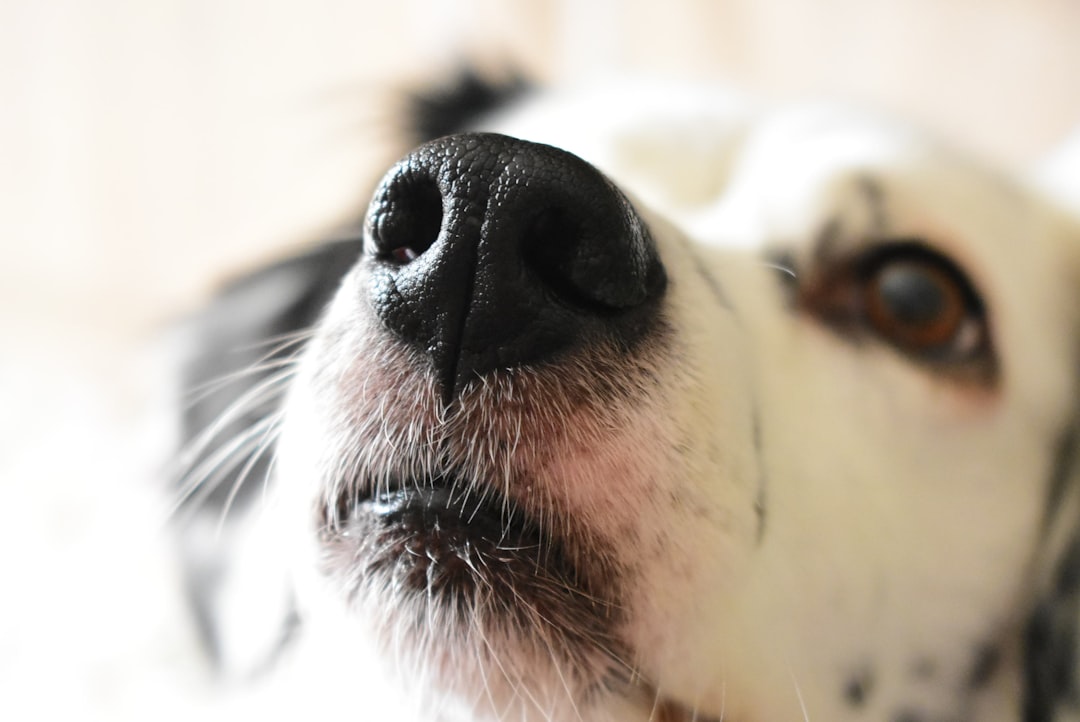

A Nose Designed for Distances (Image Credits: Unsplash)
Dogs navigate their surroundings through an acute sense of smell that far surpasses human capabilities, allowing them to pick up faint odors from impressive distances.
A Nose Designed for Distances
Dogs possess between 220 and 300 million olfactory receptors in their noses, compared to just five to six million in humans. This biological advantage enables them to detect scents at concentrations up to 100,000 times lower than what people can perceive. Under ideal conditions, such as calm winds and familiar terrain, a dog’s nose can identify a scent trail from as far as 12 miles away. Researchers have noted that this sensitivity stems from a specialized nasal structure that separates inhaling and exhaling airflows, maximizing odor capture. For instance, working dogs in open fields have demonstrated the ability to follow human tracks left hours earlier, even when diluted by environmental factors.
Experts emphasize that while the upper limit sounds extraordinary, everyday detection often occurs over shorter ranges. A dog’s brain dedicates about 40 times more space to processing smells than a human’s does. This neural commitment turns scent into a primary map of the world for canines. Studies from institutions like the University of Adelaide highlight how these traits evolved over millennia, aiding survival in hunting and social bonding.
What Limits and Enhances Scent Range
Several variables affect how far a dog can smell a particular odor. Wind direction plays a crucial role; favorable breezes can carry scents for miles, while opposing gusts scatter them quickly. Terrain also matters – open plains allow odors to travel farther than dense forests, where foliage absorbs and diffuses smells. Age and health influence performance too; younger, fit dogs typically outperform older ones with diminished senses. Training sharpens these abilities, as handlers teach dogs to ignore distractions and focus on target scents.
Water and soil present unique challenges. Dogs can detect submerged or buried odors, though the range shortens significantly. For example, they might locate items underwater from a few feet away, relying on surface ripples or adjacent air currents. Posts on platforms like X often share anecdotes of dogs sensing familiar people from 11 miles out by following overlapping scent circles, akin to cellular signal networks. However, these accounts underscore that real-world distances rarely reach theoretical maxima without optimal setup.
Breeds That Excel in Olfactory Feats
Certain breeds stand out for their exceptional scent-tracking prowess, thanks to larger nasal cavities and more receptors. Bloodhounds top the list, with their loose skin and long ears funneling scents effectively. These dogs have aided law enforcement in trailing suspects over miles of varied landscapes. German Shepherds follow closely, boasting around 225 million receptors and versatility in detection work. Labrador Retrievers also shine, often deployed in airport security for their reliable noses.
- Bloodhound: Renowned for trailing over one to two miles on average, with potential for more in ideal scenarios.
- German Shepherd: Excels in police and military roles, detecting scents from hundreds of yards amid chaos.
- Beagle: Compact size belies a strong sense, used in agriculture to sniff out pests from afar.
- English Springer Spaniel: Field hunters that pick up game scents across open expanses.
- Basset Hound: Low-slung build keeps the nose close to the ground for persistent tracking.
These breeds demonstrate how genetics amplify natural talents, though any dog can benefit from scent enrichment activities.
Practical Uses in Modern Detection
Canine olfaction powers numerous professional applications today. Search-and-rescue teams rely on dogs to locate missing persons in disaster zones, where scents linger despite time and elements. In medical fields, trained dogs identify conditions like seizures or infections by smelling subtle body chemistry changes. Conservation efforts use them to detect invasive species or protected wildlife, such as newts in construction sites, from distances that save hours of human effort. Drug enforcement benefits immensely, with dogs alerting to narcotics hidden in vehicles or cargo.
Recent advancements pair dogs with technology, like GPS trackers, to extend their effective range. For pet owners, understanding this sense explains behaviors like greeting rituals or anxiety when scents change. According to sources like Whole Dog Journal, appreciating these capabilities fosters better training and bonding. Yet, over-reliance on smell means dogs sometimes overlook visual cues humans prioritize.
Key Takeaways
- Dogs’ olfactory receptors number in the hundreds of millions, granting detection ranges up to 12 miles under perfect conditions.
- Wind, terrain, and training significantly impact how far scents travel to a dog’s nose.
- Breeds like Bloodhounds lead in scent work, supporting vital roles from rescue to security.
The dog’s nose remains one of nature’s most efficient tools, bridging gaps that technology still struggles to match. As we uncover more about these sensory superpowers, it prompts reflection on how we can better support our canine companions in a scent-filled world. What fascinates you most about a dog’s sense of smell? Share your thoughts in the comments.

- Urban Coyotes Show Remarkable Adaptability, Learning to Thrive in City Environments - July 22, 2026
- Beavers Are Nature’s Engineers, Creating Vital Habitats for Other Wildlife Species - July 21, 2026
- The Recovery of the California Condor Offers Hope for Other Critically Endangered Birds - July 21, 2026