
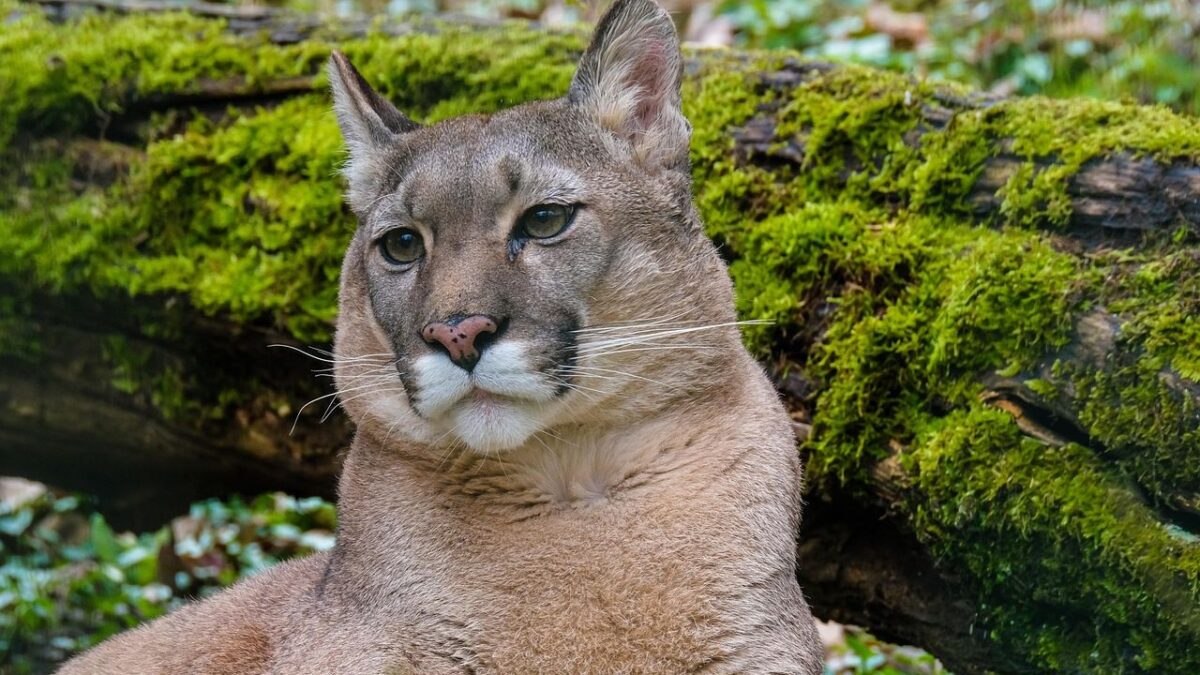
Have you ever wondered where America’s most elusive big cat makes its final stand? Picture a sleek predator stalking through swamplands and pine forests, a phantom of the wilderness that few will ever glimpse in person. This isn’t some mythical creature from folklore or a tall tale told around campfires. It’s real, it’s endangered, and it calls just one state home.
While mountain lions prowl across the western United States from California to Colorado, one particular subspecies has drawn a line in the sand in the southeastern corner of the country. This mysterious feline represents both a conservation triumph and an ongoing battle for survival. What makes this big cat so special, and why does it cling to existence in such a specific location? Let’s dive into the remarkable story of America’s most endangered wild cat.
Florida: The Last Eastern Stronghold
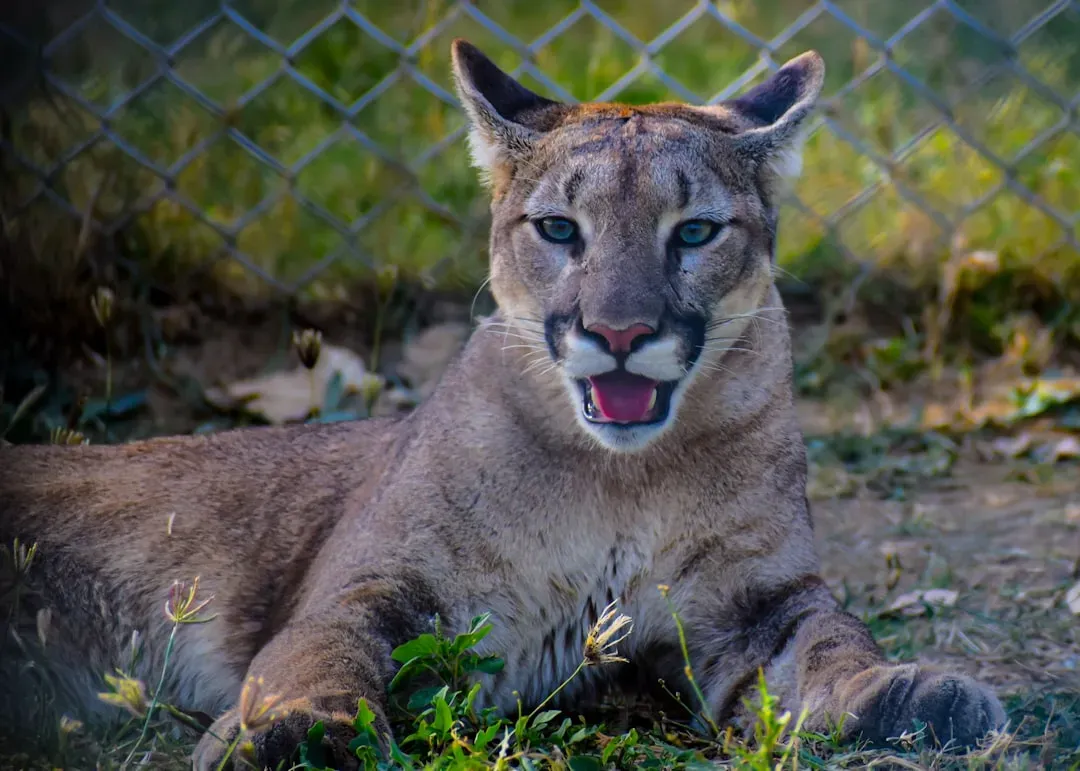
Florida stands alone as the only state east of the Mississippi River with an established cougar population roaming free. The Florida panther, scientifically known as Puma concolor coryi, is a subspecies found only in southern Florida and nowhere else on Earth. Think about that for a moment. In a nation where these magnificent cats once ranged from coast to coast, Florida represents the sole surviving pocket in the entire eastern half of the country.
The panther’s current range includes the Big Cypress National Preserve, Everglades National Park, Florida Panther National Wildlife Refuge, Picayune Strand State Forest, and rural communities in counties like Collier, Hendry, Lee, Miami-Dade, and Monroe. This territory represents only about five percent of the species’ historic range. Honestly, it’s staggering to consider how much ground these animals have lost.
The southwestern tip of Florida has become ground zero for panther conservation. The core population exists south of Lake Okeechobee, though male panthers have been documented venturing much farther. Males have been known to roam further, with the furthest-known location recently for a male panther being in Georgia.
These cats aren’t just surviving in one habitat type either. They live in pinelands, tropical hardwood hammocks, and mixed freshwater swamp forests. Their adaptability to different environments makes their dramatic range reduction even more heartbreaking.
What’s remarkable is that Florida has embraced this elusive predator as its identity. In 1982, the Florida panther was chosen by students throughout the state as the official Florida state animal. It’s hard to say for sure, but that kind of public recognition might have helped galvanize support for conservation efforts.
A Population on the Brink
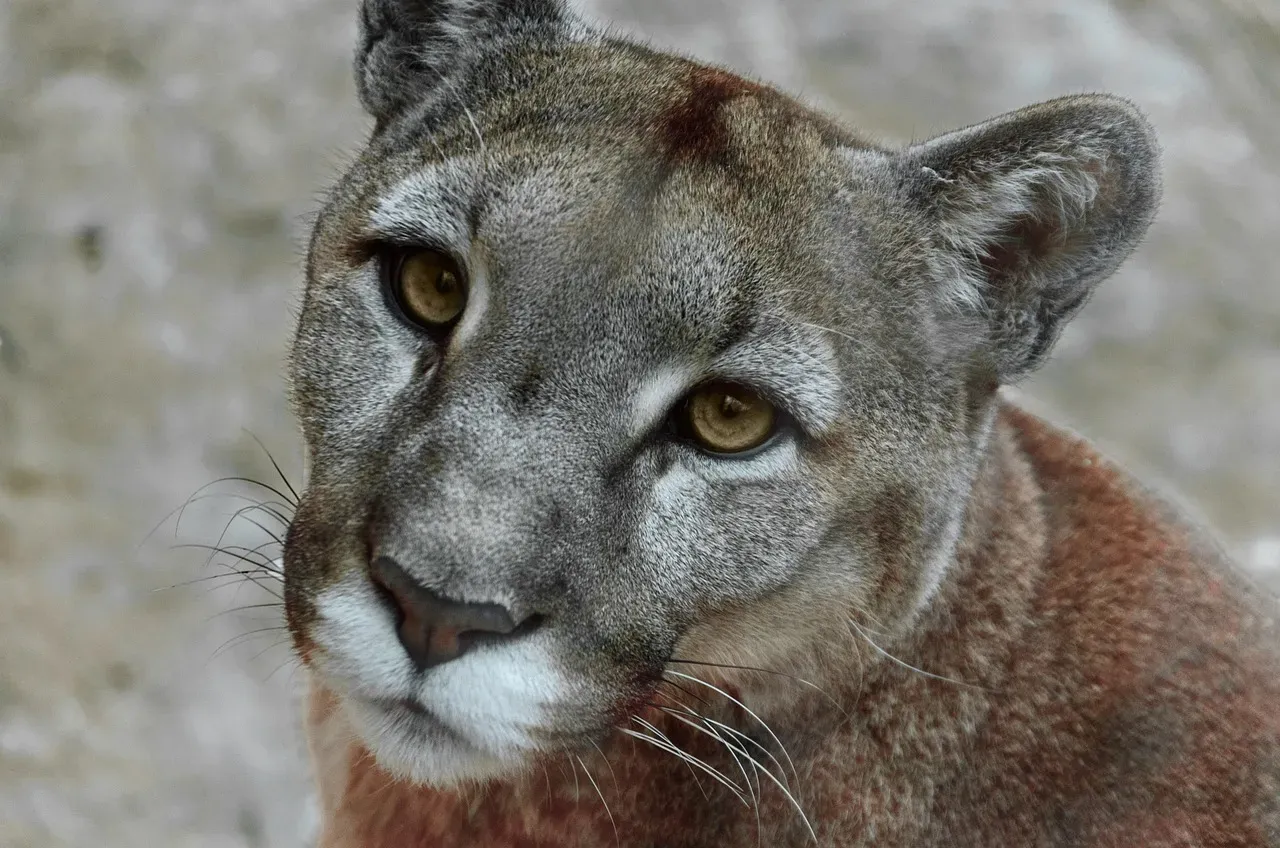
The numbers tell a sobering story about just how close this species came to disappearing forever. During the 1970s, only about twenty to thirty Florida panthers remained in the wild. Let that sink in. Fewer than three dozen individuals stood between this subspecies and complete extinction.
As of 2024, about 200 individuals are left in the wild. While that represents a tenfold increase from the darkest days, we’re still talking about a critically small population. Current estimates place the number at roughly 120 to 230 adults and subadults, with the only breeding population concentrated primarily in southwest Florida.
The endangered Florida panther has made a long journey back from the brink of extinction, with the population rebounding from an estimated low of ten animals to over 200 since it was put on the first Endangered species list in 1967. Here’s the thing though: conservation success brings its own challenges. As their numbers rise, urban sprawl hems them in, with development associated with an estimated 1,000 people moving to Florida every day consuming and fragmenting panther habitat.
The small population size creates a vicious cycle of vulnerability. Early research revealed that the population consisted of only about twenty to thirty sub-adults and adults during the early 1990s, and many panthers suffered from biomedical and morphological abnormalities rare in healthy populations. These included heart defects, reproductive issues, kinked tails, and compromised immune systems.
What Makes the Florida Panther Unique
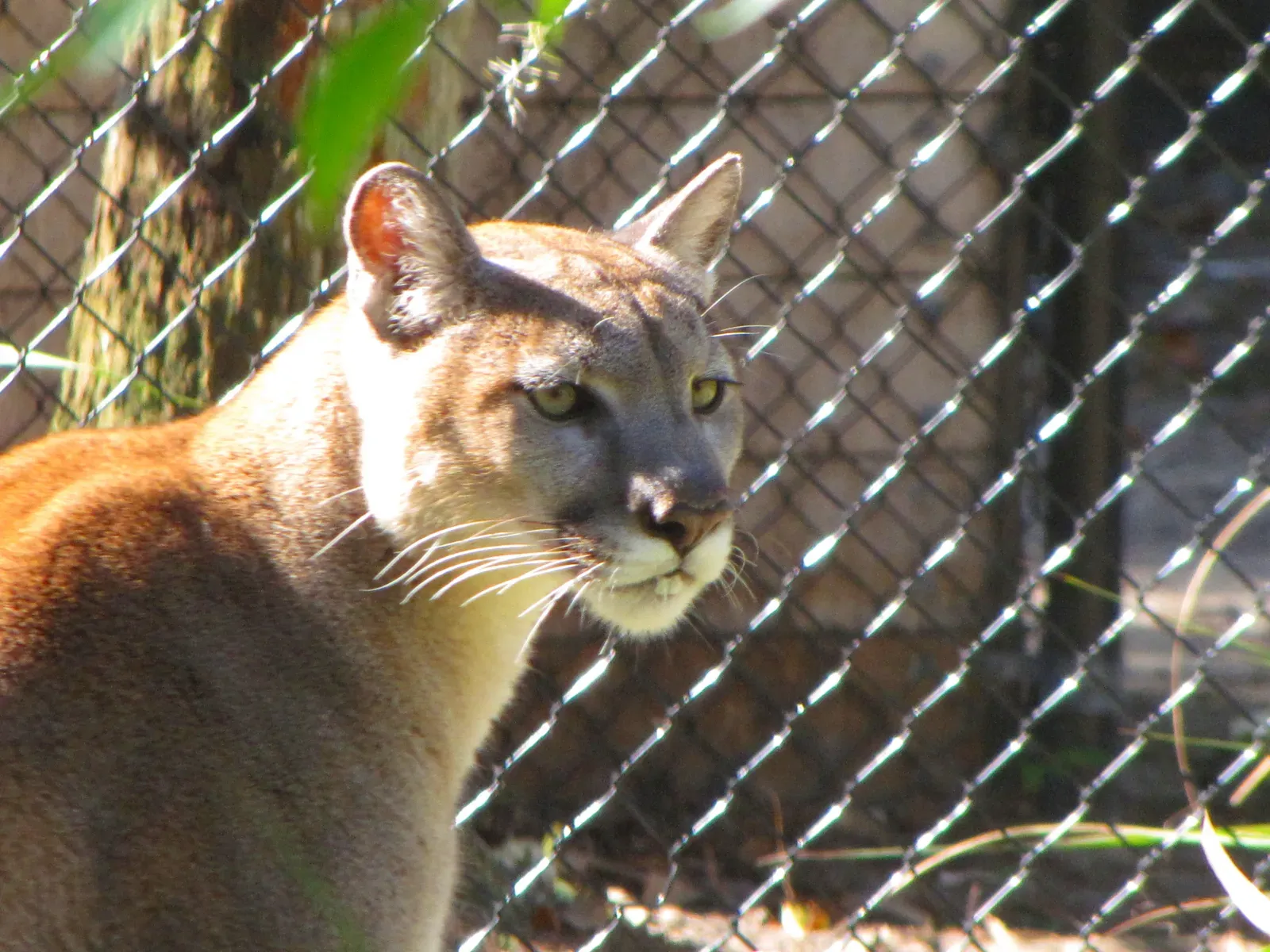
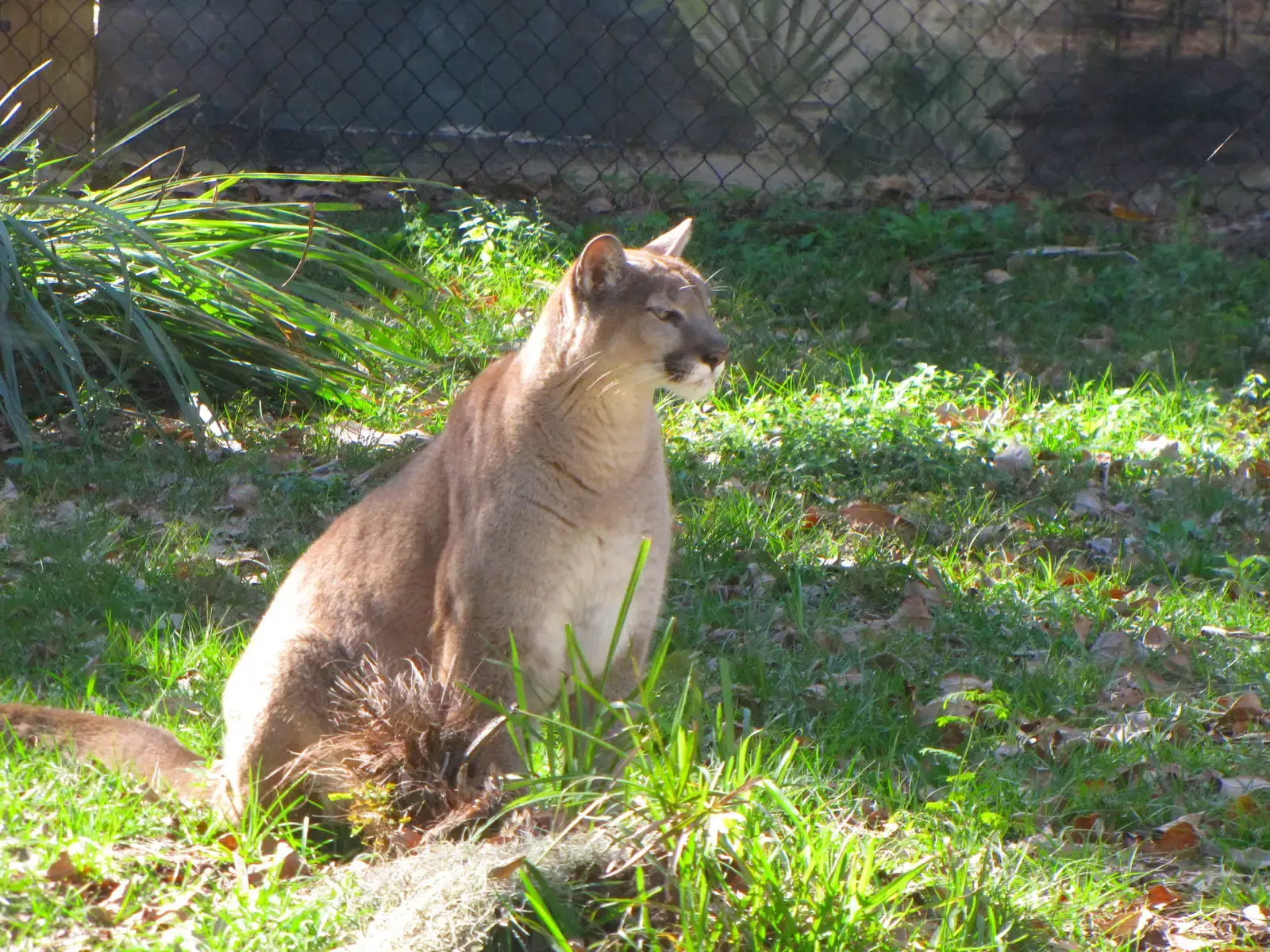
If you spot a big cat in Florida, how do you know it’s actually a panther and not just a regular mountain lion? A good way to tell a Florida panther from other subspecies of mountain lion is by looking at the tail and back, as Florida panthers usually have a crooked tail and a unique patch of fur on the back. The back fur is almost like a cowlick, not conforming to the rest of the panther’s fur.
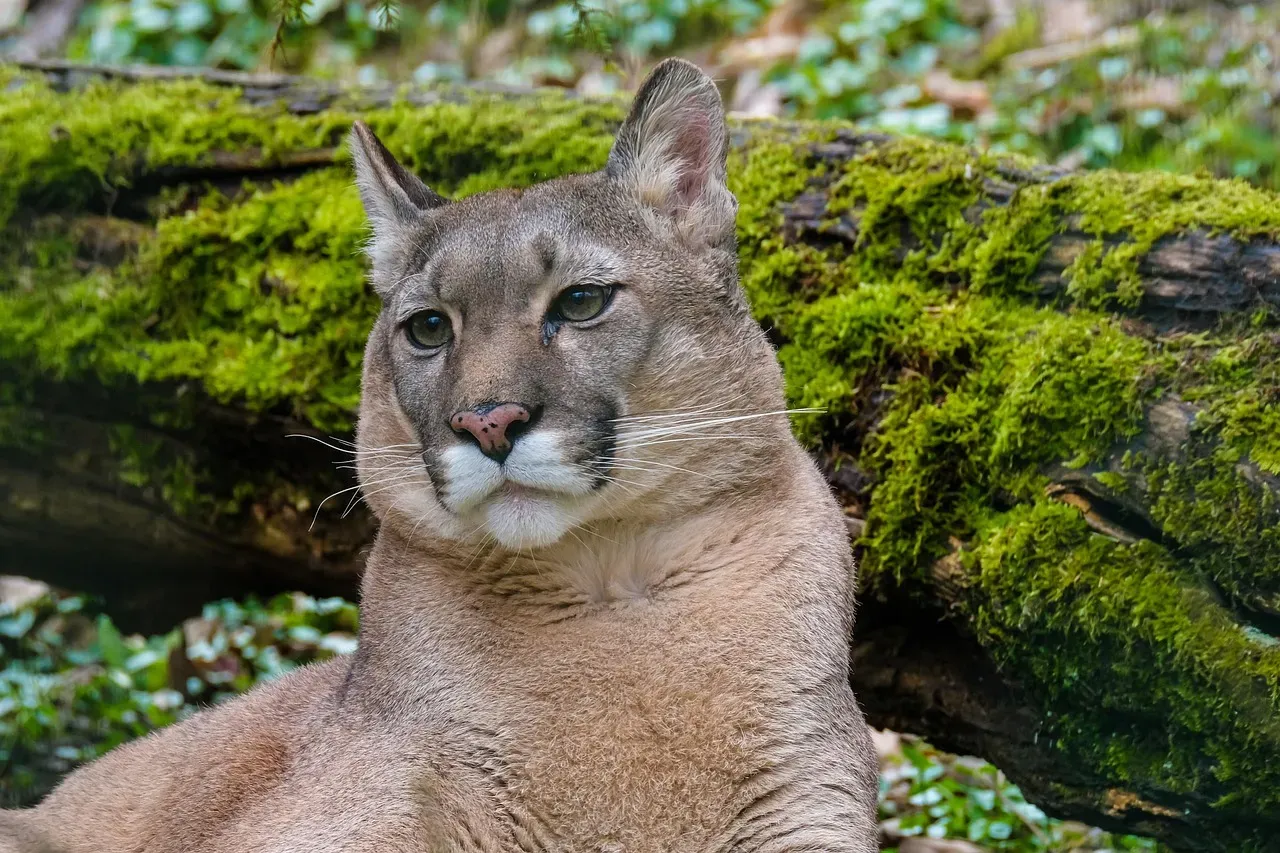
Florida panthers are spotted at birth and typically have blue eyes, but as the panther grows, the spots fade and the coat becomes completely tan, while the eyes typically take on a yellow hue, with the underbelly remaining a creamy white and black tips on the tail and ears. Adult female panthers weigh between 64 and 100 pounds, whereas the larger males weigh between 100 and 161 pounds.
Here’s something surprising: Not all large cats roar, and in fact, Florida panthers can’t roar at all, instead purring, hissing, snarling, growling, and yowling to communicate. I know it sounds crazy, but these apex predators sound more like oversized house cats than you’d expect.
Those distinctive kinked tails and cowlicks are actually traits resulting from inbreeding, generally leading to increased birth defects, lower genetic variation, and reduced fitness. It’s a visible reminder of how dangerously low the population once fell. Over time, the prevalence of kinked tails and cowlicks has decreased as Florida panther populations have begun to grow once again.
The Road to Recovery and Remaining Threats
Let’s be real: Florida panthers face an uphill battle every single day. Roadway mortality is the largest human cause of panther deaths. Vehicles kill more panthers than anything else, with 21 dying by automobile in one recent year, 22 the year before, and eight killed by cars in just the early part of another year.
Many Florida panthers face daily challenges of crossing busy roads and highways in the fight for survival, with roughly four-fifths of panther fatalities between 2014 and 2023 being from vehicles. It’s happened before, and tragically, it keeps happening. A record 34 panthers were killed crossing roads in 2016, while 2024 was the second highest record with 26 panthers killed from vehicles and a train.
Panthers need a lot of space, with males claiming 200-square-mile territories and sometimes fighting other males to death if their territories overlap. That’s roughly the size of Chicago. Now imagine trying to find that much undeveloped land in one of America’s fastest-growing states.
Habitat loss, fragmentation and degradation are the major threats to panther survival. Development consumes and fragments panther habitat in southwestern Florida and narrows escape routes from sea-level rise. The panthers are literally running out of room.
Conservation efforts have included creating wildlife corridors and protective underpasses. When a camera captured a female panther in 2017 leading her kittens north of the Caloosahatchee River for the first time in more than 40 years, it was considered a milestone, as increasing the range and size of the population represents the progress of recovery.
A Genetic Rescue Mission

Sometimes saving a species requires thinking outside the box. Genetic diversity became a significant issue with such low population numbers, so in an attempt to save the Florida panthers, eight panthers from Texas were brought in to supplement the gene pool, and the plan worked, with the Florida panther population tripling to an estimated 100 individuals by 2007 that were more genetically resilient.
Introducing the female Texas pumas into the population increased panther numbers, genetic diversity, and survival rates. It was a controversial move at the time, with some questioning whether introducing genes from another region would compromise the Florida panther’s distinct identity. The alternative, though, was watching them slowly succumb to inbreeding depression.
The infusion of new genetics helped address serious health problems. Abnormalities included atrial septal defect (a heart defect) and cryptorchidism (undescended testicles in males), with males that were bilaterally cryptorchid being incapable of reproducing. These weren’t minor inconveniences but species-threatening conditions.
Still, new challenges keep emerging. Biologists have recently documented a new neurological disorder afflicting some Florida panthers and bobcats that causes varying degrees of rear leg weakness and difficulty walking. In August 2019, Florida’s Fish and Wildlife Conservation Commission identified eight endangered panthers affected by an apparent neurological disorder through game cameras. The cause remains under investigation.
Why Florida Panthers Matter
You might wonder why we should care so deeply about saving one subspecies of big cat when mountain lions still roam across the western states. At the top of the food chain, these cats help keep feral hog numbers in check and keep deer, raccoon and other prey populations balanced and healthy in their core range.
Panthers are an umbrella species, meaning protecting them and the vast unspoiled wild territory each one needs to survive can help protect many other plants and animals that live there, as well as watersheds. When you save habitat for a panther, you’re simultaneously protecting countless other species that share that ecosystem.
Florida panthers once prowled and flourished in woodlands and swamps throughout the Southeast, but European settlers arrived in the 1600s and began clear-cutting, building and performing other human activities that destroyed habitat, while fear and misconceptions also led to widespread panther persecution. In 1887, the state of Florida offered a bounty of five dollars per panther pelt, equivalent to over 150 dollars in today’s money.
The panther’s near-extinction and gradual recovery tell a larger story about humanity’s relationship with predators. For centuries, we viewed large carnivores as threats to eliminate. Now we recognize their ecological importance and intrinsic value. Let’s be honest: that shift in perspective came almost too late for the Florida panther.
Florida panthers are not aggressive toward people but are elusive, solitary animals that prefer to avoid human contact whenever possible, posing little to no threat when given space and respect, while being far more threatened by humans than the other way around due to habitat loss and fragmentation pushing them to the brink.
Conclusion: A Future Hanging in the Balance
Florida’s status as the sole eastern stronghold for free-roaming cougars carries enormous responsibility. This isn’t just about saving one state’s wildlife. The Florida panther represents the last surviving link to a time when these magnificent cats roamed freely across the entire southeastern United States, from the Carolinas to Louisiana.
The panther’s story encapsulates the best and worst of conservation. We nearly lost them completely through habitat destruction and persecution. Then we mounted an extraordinary rescue effort involving habitat protection, genetic restoration, and public education. Yet the battle continues daily as development pressure intensifies and panthers navigate an increasingly fragmented landscape.
What happens next depends largely on whether Floridians can find ways to coexist with their state animal. Conservation corridors, wildlife crossings, and protected lands offer hope. So does the growing recognition that preserving space for panthers means preserving something irreplaceable for everyone.
The Florida panther’s survival hinges on choices being made right now. Will there be room for these mysterious big cats in Florida’s future, or will we look back with regret at what we allowed to slip away? What do you think about sharing space with apex predators? Tell us in the comments.
