

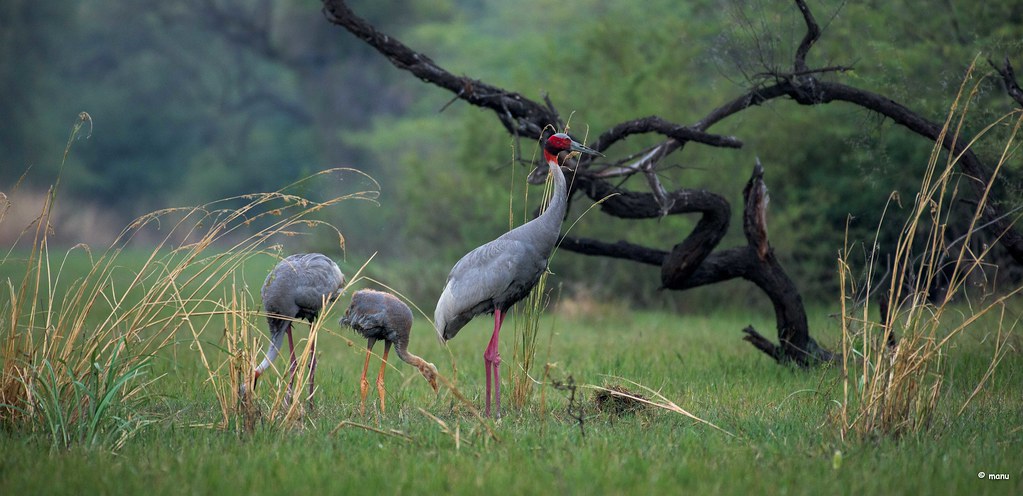

A Precarious Breeding Season Unfolds (Image Credits: Flickr)
In the vast wetlands and agricultural fields of India, the Sarus crane endures as a symbol of resilience amid escalating environmental pressures.
A Precarious Breeding Season Unfolds
Conservationists reported a starkly low number of nests during the recent breeding period, highlighting the immediate vulnerabilities facing this iconic bird. Only three nests appeared in monitored areas, yielding five chicks, yet survival rates proved disheartening with just two young cranes making it through the early stages. One devoted pair, after suffering the loss of its initial offspring, attempted to relaid eggs in a bid to sustain their lineage.
Such outcomes underscore the breeding challenges that Sarus cranes confront annually. These tall, elegant birds, known for their lifelong partnerships, typically nest in shallow waters during the monsoon season. However, disrupted habitats and human encroachment have curtailed these opportunities, forcing pairs into riskier locations where predation and environmental stressors take a heavier toll.
Experts attribute these difficulties to broader ecological shifts. Wetlands, once abundant, now shrink under the weight of development, leaving cranes with fewer safe havens to raise their young. This season’s data serves as a urgent reminder of the need for targeted interventions to bolster nesting success.
Habitat Degradation: The Silent Erosion of Crane Territories
India’s Sarus cranes, classified as vulnerable by the International Union for Conservation of Nature, once thrived across expansive marshlands and riverine plains. Today, their numbers hover below 10,000, driven largely by the relentless loss of wetland habitats. Agricultural expansion, urbanization, and infrastructure projects like highways have fragmented these vital ecosystems, converting them into croplands or built environments.
In regions such as Maharashtra’s Gondia district, where small populations cling to survival, the transformation of natural wetlands into paddy fields offers a mixed blessing. While rice paddies provide temporary foraging grounds, they expose cranes to pesticides, machinery, and flooding irregularities that disrupt nesting cycles. Studies indicate that nearly half of surveyed locals perceive a contraction in the birds’ range over the past decade, mirroring the physical shrinkage of their habitats.
Conservation efforts highlight the role of community awareness in mitigating these threats. Farmers, despite occasional crop damage from foraging cranes – estimated at less than 1% of yields – often view the birds positively, recognizing their ecological value in maintaining wetland balance and controlling pests.
Human-Wildlife Tensions and Emerging Solutions
Balancing agricultural needs with crane conservation presents ongoing challenges. In areas like Uttar Pradesh, where Sarus populations have rebounded slightly due to protective measures, farmers have stepped up to safeguard nests amid shrinking wetlands. Such initiatives demonstrate how coexistence can foster recovery, yet broader threats persist, including hunting and pollution that further endanger the species.
Organizations like the Wildlife Conservation Trust emphasize education and habitat restoration as key strategies. By restoring degraded wetlands and promoting sustainable farming practices, these groups aim to create buffer zones that support both cranes and local livelihoods. Recent surveys in Nepal’s Lumbini Province reveal similar patterns, with 44% of respondents citing habitat loss as the primary concern, underscoring the regional scope of the issue.
Positive shifts emerge from these efforts. In some Indian districts, community-led monitoring has increased nesting observations, though overall declines in sites signal the urgency for scaled-up action.
Key Threats and Protective Measures
The Sarus crane’s plight involves multiple interconnected dangers that demand multifaceted responses. To illustrate the primary concerns and countermeasures, consider the following overview:
- Habitat Loss: Draining of wetlands for agriculture and development; countered by wetland restoration projects and legal protections for key sites.
- Hunting and Poaching: Illegal targeting for feathers or sport; addressed through stricter enforcement and awareness campaigns.
- Breeding Disruptions: Predation and human interference in nesting areas; mitigated by nest guarding programs and seasonal farming adjustments.
- Pollution and Climate Impacts: Chemical runoff and erratic monsoons; tackled via eco-friendly pesticides and climate-resilient habitat planning.
- Range Contraction: Perceived decline in distribution; monitored through citizen science and satellite tracking for adaptive management.
Key Takeaways
- Sarus cranes mate for life and rely on monsoon-flooded wetlands for breeding, making them highly sensitive to seasonal changes.
- Despite low survival rates in recent seasons, community involvement offers hope for population stabilization.
- Global vulnerability status calls for international collaboration to protect this tallest of flying birds.
As Sarus cranes symbolize enduring grace in India’s landscapes, their fading presence warns of deeper environmental imbalances that affect us all. Protecting these magnificent birds requires collective commitment to preserve the wetlands they call home. What steps can communities take to support crane conservation in your area? Share your thoughts in the comments.

- Urban Coyotes Show Remarkable Adaptability, Learning to Thrive in City Environments - July 22, 2026
- Beavers Are Nature’s Engineers, Creating Vital Habitats for Other Wildlife Species - July 21, 2026
- The Recovery of the California Condor Offers Hope for Other Critically Endangered Birds - July 21, 2026