

A Monumental Journey Begins (Image Credits: Cdn.mos.cms.futurecdn.net)
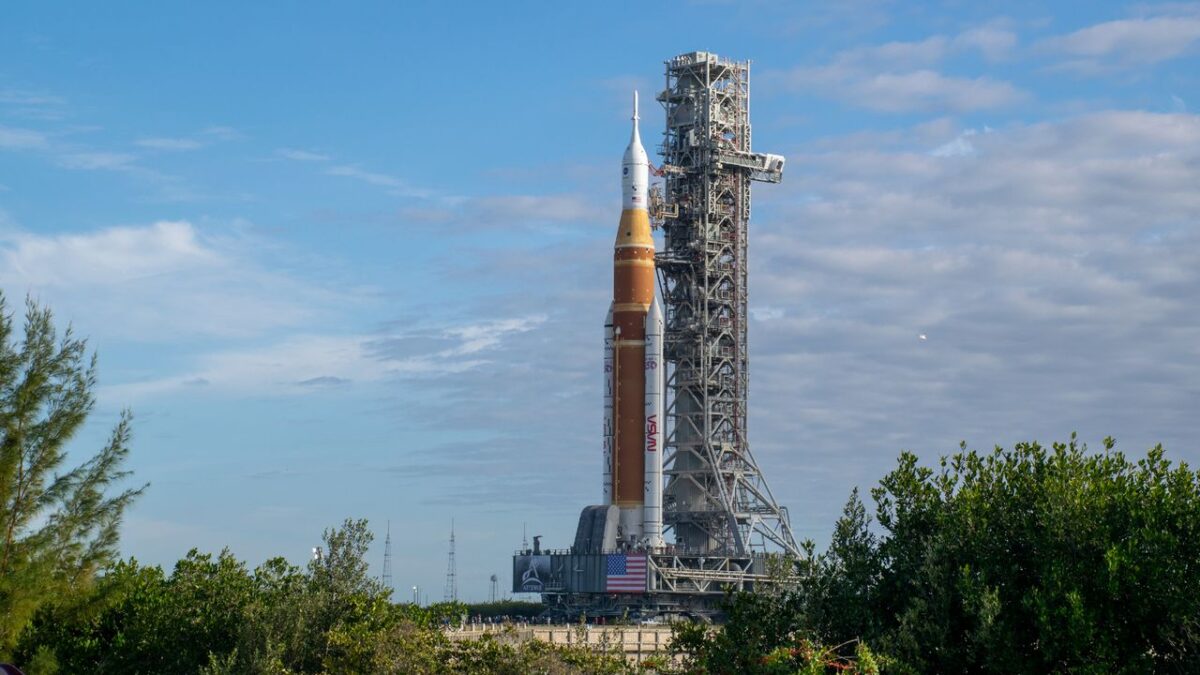
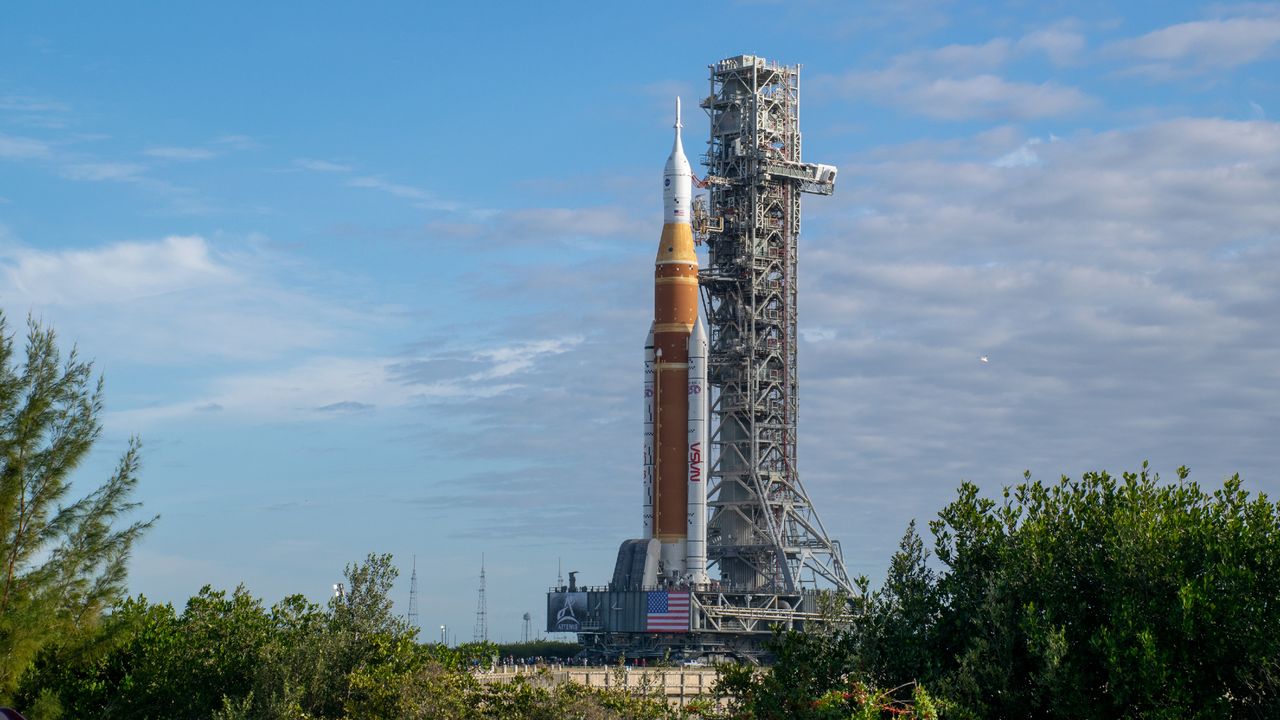
Kennedy Space Center, Florida – The massive Space Launch System rocket stacked with the Orion spacecraft for NASA’s Artemis II mission arrived at its launch pad on January 17, 2026, marking a crucial step toward humanity’s return to the Moon.
A Monumental Journey Begins
The rollout of the Artemis II rocket captivated observers as it slowly traversed the four-mile path from the Vehicle Assembly Building to Launch Pad 39B. This event, which took nearly 12 hours, highlighted the precision engineering required for such a colossal endeavor. Teams at the Kennedy Space Center meticulously guided the 322-foot-tall structure, weighing over 11 million pounds, to its destination. The operation concluded successfully at 6:42 p.m. EST, setting the stage for upcoming tests and preparations.
Engineers celebrated the milestone, knowing it represented years of development and collaboration. The rocket’s arrival allows for critical ground systems checks, including integration with pad infrastructure. This phase ensures the vehicle can withstand the rigors of launch and spaceflight. As the first crewed Artemis mission, it carries profound implications for future lunar exploration.
Behind the Scenes of Rocket Preparation
Preparations for the Artemis II rollout involved extensive testing and upgrades at the Kennedy Space Center. Workers processed the solid rocket boosters and core stage in dedicated facilities before stacking them with Orion. The mobile launcher, a towering platform, supported the entire assembly during its journey. Recent enhancements to Launch Pad 39B, such as the emergency egress system and a new liquid hydrogen storage sphere, fortified the site for this generation of missions.
The process drew international attention, with live coverage from NASA providing real-time updates. Ground crews monitored every inch of the crawl to avoid any disruptions. This careful rollout minimized risks associated with moving such a powerful rocket. Now positioned at the pad, the stack will undergo vibration tests and fueling simulations to verify system integrity.
The Crew and Mission Objectives
Artemis II will send four astronauts – Commander Reid Wiseman, Pilot Victor Glover, Mission Specialist Christina Koch, and Canadian Space Agency astronaut Jeremy Hansen – on a 10-day journey around the Moon. The crew expressed confidence in the mission during recent briefings, emphasizing their readiness for this historic flight. Scheduled for launch as early as February 6, 2026, the mission tests Orion’s capabilities in deep space for the first time with humans aboard.
Unlike Apollo-era flights, Artemis II focuses on orbital maneuvers without landing, validating technologies for sustained lunar presence. The SLS rocket provides the thrust needed to escape Earth’s gravity, while Orion ensures crew safety through reentry. This test flight paves the way for Artemis III, which aims to land astronauts on the Moon’s surface.
Key Milestones and Future Steps
The rollout joins a series of achievements in the Artemis program, following the uncrewed Artemis I launch in 2022. NASA’s teams now shift focus to pad-based activities, including propellant loading rehearsals. Weather conditions during the rollout remained favorable, aiding the smooth operation. International partners, including the European Space Agency, contributed components to Orion, underscoring global cooperation.
Upcoming briefings will detail the integrated system verification and validation tests. These evaluations confirm that ground systems align with the rocket’s requirements. The mission’s success hinges on these meticulous preparations, ensuring a safe voyage for the crew.
- Rocket height: 322 feet, taller than the Statue of Liberty.
- Weight: Over 11 million pounds when fully fueled.
- Rollout distance: Approximately four miles from assembly building to pad.
- Expected launch window: Starting February 2026.
- Crew duration: 10 days in space, circling the Moon.
Key Takeaways
- The Artemis II rollout advances NASA’s goal of sustainable lunar exploration.
- Launch Pad 39B upgrades support multiple future missions.
- International collaboration strengthens the program’s scope.
As NASA edges closer to relaunching humans toward the Moon, the Artemis II mission embodies renewed ambition in space exploration. This rollout not only tests hardware but reignites public wonder about our place in the cosmos. What aspects of the Artemis program excite you most? Share your thoughts in the comments.

As a little kid, I fell in love with nature, wildlife, and animals. Living in the USA, South Africa, Italy, China and Germany gave me the opportunity to discover the world's Wildlife. My favorite animals are Mountain Gorillas, Siberian Tigers, and Great White Sharks.
I'm a certified PADI Open Water Diver, went to Everest Base Camp and Trekked Gorillas in Uganda. I hold a Master of Science in Economics and Finance.
Please send any feedback to feedback@animalsaroundtheglobe.com
- 10 Signs a Wolf Is Thriving And 4 That Spell Trouble - July 29, 2026
- 14 Signs Your Cat Is Trying to Communicate with You - July 29, 2026
- 11 Strange Weather Events Scientists Still Can not Explain - July 29, 2026