
You’ve probably heard the stories. Dogs barking relentlessly in the dead of night. Cats hiding in places they never go. Birds flying in strange, erratic patterns when the sky is perfectly clear. Hours later, or maybe just minutes, the ground begins to shake.
These anecdotes have been passed down for generations, whispered about in the aftermath of earthquakes from ancient Greece to modern-day California. People swear their pets knew something was wrong before the earth moved. So is there truth behind these tales, or are we simply seeing patterns where none exist? Let’s be real, the answer isn’t as simple as you might hope.
Ancient Observations and Modern Curiosity

The idea that animals can predict earthquakes isn’t exactly new. The earliest recorded observation dates back to ancient Greece in 373 BC, when rats, weasels, snakes, and centipedes reportedly abandoned their homes and headed for safety days before a devastating earthquake struck. Fast forward a couple thousand years, and these stories haven’t stopped.
In 1975, hundreds of snakes slithered out of their hibernation dens despite freezing temperatures in the weeks before a magnitude 7.3 earthquake hit the Chinese city of Haicheng, and the reptiles’ behavior helped persuade authorities to evacuate the city hours before the quake. That evacuation potentially saved tens of thousands of lives. Stories like this make it hard to dismiss the phenomenon entirely.
Anecdotal evidence abounds of animals, fish, birds, reptiles, and insects exhibiting strange behavior anywhere from weeks to seconds before an earthquake. Dogs howling without reason. Caged birds becoming restless when they’re usually calm. Honestly, if you’ve ever lived through a quake, you probably know someone who swears their pet warned them.
Yet here’s the thing. Consistent and reliable behavior prior to seismic events, and a mechanism explaining how it could work, still eludes us. Scientists are split on whether these observations mean anything at all. Some dismiss them as coincidence, while others believe we’re onto something profound.
The United States Geological Survey notes that even though there have been documented cases of strange animal behavior prior to earthquakes, a reproducible connection between a specific behavior and the occurrence of a quake has never been made. So the mystery deepens rather than resolves.
Think about it this way. If your dog barks at three in the morning and nothing happens, you forget about it. If an earthquake strikes an hour later, suddenly that barking becomes significant in your memory. This psychological bias makes studying animal behavior incredibly tricky.
What Science Says About P-Waves and S-Waves

When an earthquake occurs, it produces two types of energy waves: the smaller P wave (or compressional wave) arrives just before the larger S wave (or shear wave), and it moves faster than the S wave because it can travel through solids, liquids, and gases, while the S wave only travels through solids and shakes the ground in a rolling motion. Most humans barely notice the P wave, if at all. It’s subtle, quick, and usually too faint for us to register.
Many animals with more keen senses are able to feel the P wave seconds before the S wave arrives. This could explain why your dog suddenly acts spooked moments before you feel the ground shake. They’re not predicting the future. They’re simply experiencing something you haven’t felt yet.
Certain animals have specialized abilities that give them an edge. Elephants can perceive low-frequency sound waves and vibrations from foreshocks that humans can’t detect at all. These massive creatures are like living seismographs, tuned to frequencies we’ll never hear.
Research on dogs suggests that those with smaller head sizes showed a far greater increase in activity and anxiety levels before earthquakes compared to dogs with larger heads, providing potential evidence that high-frequency seismic sounds are alerting dogs to upcoming quakes. Size matters when it comes to hearing the unhearable.
It’s hard to say for sure, but what seems clear is that some animals are reacting to physical phenomena that occur just before or during the early stages of an earthquake. Some animals may be able to detect P-waves before the S-waves arrive, which would give them less than two minutes’ notice for any quake near enough to affect them. That’s not long, yet it’s enough time to flee or seek shelter.
Still, sensing something seconds before it happens is very different from predicting it days or weeks in advance. The gap between those two things is enormous, and that’s where the real controversy begins.
Farm Animals Under Scientific Surveillance
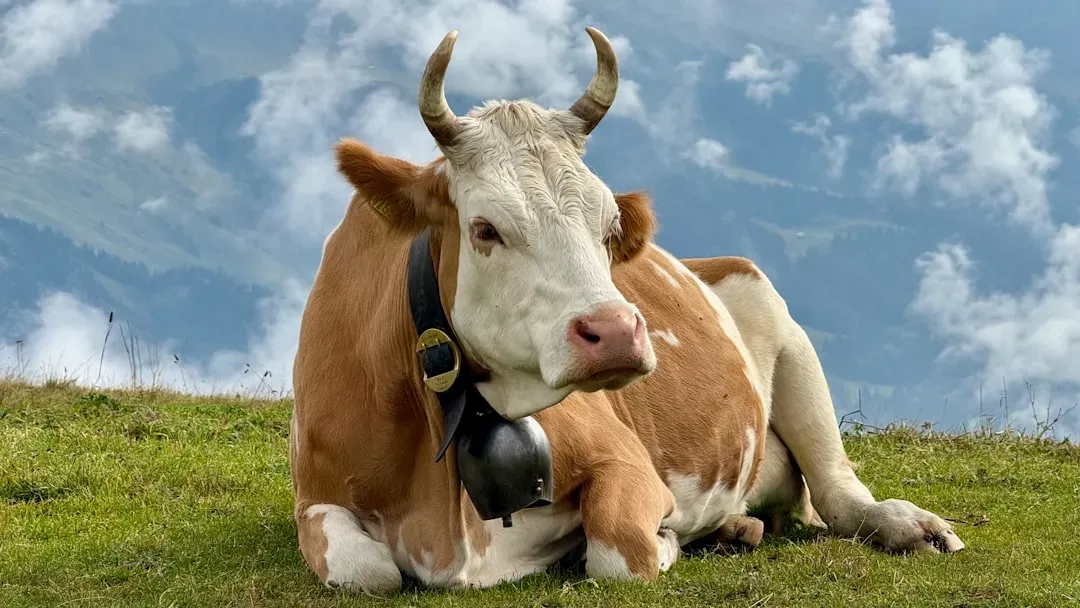
Researchers wanted hard data, not just stories, so they decided to track animals with sensors. During periods totaling about four months in 2016 and 2017, scientists attached biologgers and GPS sensors to six cows, five sheep, and two dogs living on a farm in an earthquake-prone area of northern Italy, and more than 18,000 tremors occurred during the study periods. That’s a lot of shaking ground to observe.
Movement data showed that the animals were unusually restless in the hours before earthquakes, and the closer the animals were to the epicenter of the impending quake, the earlier they started behaving unusually. This pattern is exactly what you’d expect if animals were detecting some kind of physical change emanating from the earthquake’s origin point.
The researchers say the farm animals appeared to anticipate tremors anywhere from one to twenty hours ahead, reacting earlier when they were closer to the origin and later when they were farther away. Twenty hours. That’s significant if it holds up under further scrutiny.
Interestingly, their activity significantly increased before magnitude 3.8 or greater earthquakes when they were housed together in a stable, but not when they were out to pasture. This suggests that collective behavior might amplify individual sensitivity. Animals seem to respond to each other, creating a kind of feedback loop of anxiety.
When researchers looked at all the animals together, they found abilities that weren’t easily recognized on an individual level, suggesting that collectively, the animals show heightened sensitivity. There’s something about the group dynamic that matters. One nervous cow might not mean much, but when the whole herd starts acting strangely, pay attention.
These findings are promising, though scientists warn that much more research is needed. Before animal behavior can be used to predict earthquakes, researchers need to observe a larger number of animals over longer periods of time in different earthquake zones around the world. The sample size needs to grow exponentially before we can rely on this method.
The Mystery of Long-Range Detection
Here’s where things get really interesting, and honestly, a bit controversial. Some reports suggest animals behave strangely not just seconds or minutes before an earthquake, but days or even weeks in advance. If true, this would be game-changing. The problem? Science hasn’t figured out how this would even be possible.
Animals may sense the ionization of the air caused by large rock pressures in earthquake zones with their fur, and it’s also conceivable that animals can smell gases released from quartz crystals before an earthquake. These theories are intriguing, yet they remain speculative without hard proof.
If there are precursors to a significant earthquake that we have yet to learn about, such as ground tilting, groundwater changes, or electrical or magnetic field variations, it’s possible that some animals could sense these signals and connect the perception with an impending earthquake. The key word here is “if.” We’re still in the dark about what exactly these precursors might be.
Some researchers have even looked at whether electromagnetic changes play a role. Electromagnetic variations have been observed after earthquakes, but despite decades of work, there is no convincing evidence of electromagnetic precursors to earthquakes. That’s disappointing for those hoping animals might be tuning into some invisible field.
A 2018 review of 180 academic papers found a strong correlation between unusual animal behavior and the typical pattern of foreshocks before earthquakes, hypothesizing that the animals observed were reacting in the aftermath of smaller tremors rather than in anticipation of the main event. In other words, what looks like prediction might just be reaction to something already happening.
I think this is one of the most frustrating aspects of the whole debate. We want animals to be oracles, but they might simply have better hearing and more sensitive feet. That’s still impressive, just not mystical.
Can We Ever Use This as a Warning System?

Let’s be practical for a moment. Even if animals do sense earthquakes in advance, could we actually use that information to save lives? The answer is complicated. Animals can sense a quake, usually just minutes before humans do, but that’s a reaction, not a special talent for predicting when or where a quake might hit.
Minutes of warning are better than nothing, yet they’re not enough to evacuate a city or take major precautions. You might have time to get under a desk or step away from windows, assuming you’re paying attention to your dog’s sudden panic at that exact moment.
Neither the USGS nor any other scientists have ever predicted a major earthquake, and we do not know how, and we do not expect to know how any time in the foreseeable future. That’s a sobering reality. If our best technology can’t predict earthquakes, relying on animals seems like a long shot.
However, some researchers remain optimistic. Researchers recently proposed that crowdsourcing and social media might help predict earthquakes, developing a prototype that would use social media posts about abnormal animal behavior, such as dog barking, to help warn of oncoming earthquakes. Imagine a system where thousands of pet owners report unusual behavior in real time, creating a kind of biological early warning network.
It sounds far-fetched, yet it’s not entirely crazy. With smartphones and social media, we have the infrastructure to gather massive amounts of data quickly. The challenge is filtering out the noise. Dogs bark for a million reasons that have nothing to do with earthquakes.
While it makes sense that we should grasp for clues that might help avert the impacts of natural disasters, the science behind animal forecasting is pretty shaky, as there is insufficient long-term baseline data on normal animal behavior with which to compare unusual behavior, and reports tend to be gathered retrospectively. We’re essentially working backwards, which isn’t ideal for prediction.
Conclusion

So The truth is, it depends on what you mean by “before.” If you’re talking about seconds to minutes, the evidence is pretty compelling that many animals detect subtle vibrations and sounds that escape human perception. They’re not psychic, just better equipped to feel the earth moving beneath their feet.
If you’re hoping for days or weeks of advance warning, the science just isn’t there yet. We have tantalizing clues and fascinating stories, but no reliable mechanism has been proven. The collective behavior of animals might hold answers we haven’t uncovered, and ongoing research with sensors and satellites could change everything.
For now, your dog’s frantic barking in the middle of the night probably isn’t a sign of an impending disaster. Then again, maybe it is. What’s certain is that animals experience the world in ways we’re only beginning to understand, and that alone makes them worth paying attention to. What’s your take on this? Have you ever witnessed strange animal behavior before an earthquake? Tell us in the comments.

- 5 Dog Behaviors That Puzzle Even Experts - August 7, 2026
- Best Flowers to Attract Hummingbirds to Your Backyard - August 7, 2026
- Top 10 Animals and Wildlife in Chile - August 7, 2026