

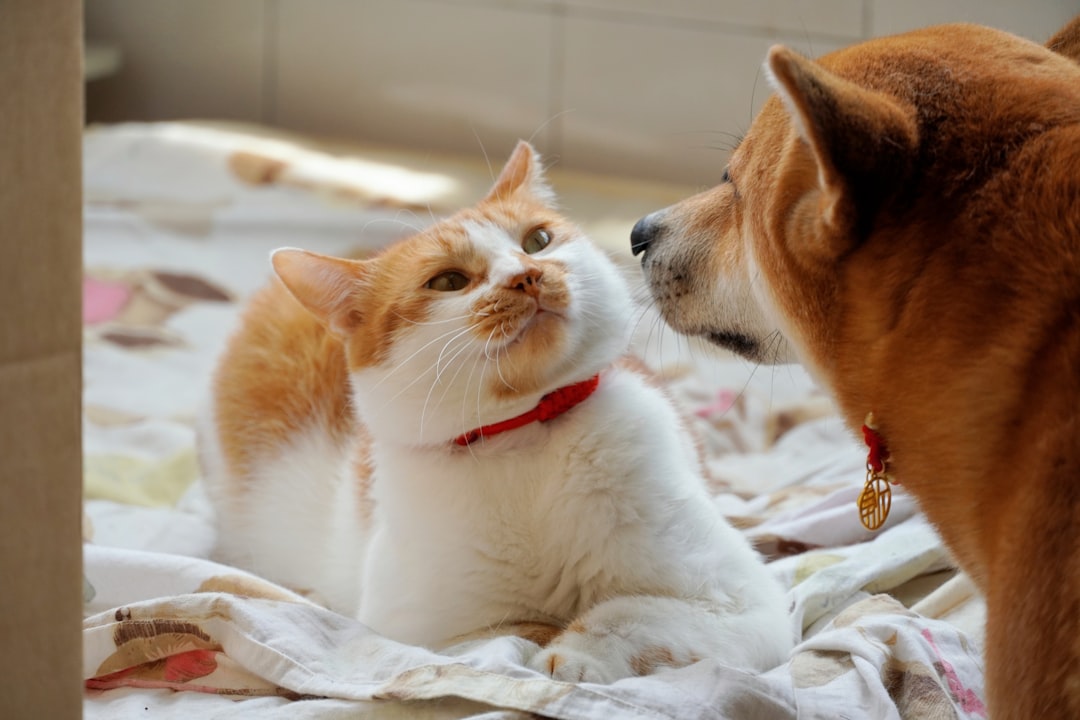
Gifted Dogs Redefine Word Mastery (Image Credits: Unsplash)
Household cats demonstrate surprising aptitude for linking human words to images, challenging long-held views on pet intelligence.
Gifted Dogs Redefine Word Mastery
Researchers identified a select group of dogs capable of learning hundreds of object names through casual observation alone. These “gifted word learner” dogs, often border collies, picked up new vocabulary by eavesdropping on owners’ conversations about toys, achieving success rates around 80 percent in retrieval tasks.[1] Such feats placed their skills on par with 18- to 23-month-old children.
Studies showed these canines retained words for months without direct training, highlighting selective breeding’s role in enhancing human-directed cognition. Average dogs understood about 89 words, but elites far exceeded that threshold.[2]
Cats Distinguish Names with Precision
Household cats differentiated their own names from similar-sounding words and fellow pets’ names, even when strangers spoke them. In habituation tests, cats perked up ears and turned heads upon hearing their moniker after tuning out other nouns.[3]
Further experiments revealed cats linked housemates’ names to faces through everyday exposure, without rewards or formal lessons. Café cats lagged in distinguishing peers’ names, likely due to noisier social settings.[4] This phoneme-based recognition marked the first solid proof of cats parsing human speech content.
Lightning-Fast Picture-Word Links
A 2024 study tested 31 cats with animated images paired to nonsense words voiced by owners, like “keraru” for a shrinking pegasus. After just four trials – about nine seconds per pair – cats detected mismatches, gazing 33 percent longer at screens when words swapped.[5][2]
This outpaced human infants, who needed four 20-second exposures for similar results. Human speech triggered stronger responses than mechanical sounds, suggesting cats tune into our voices naturally.[5]
Both café and home cats performed equally, indicating an innate skill untouched by environment.
Why Cats Differ from Dogs in Action
Cats formed associations implicitly via attention shifts, unlike dogs’ explicit fetching under training. Experts noted cats grasped 10 to 15 cues like “treat” or “play” through repetition and rewards, but motivation waned without personal gain.[6]
- Cats prioritize independence from self-domestication, responding on their terms.
- Dogs, bred for cooperation, eagerly demonstrated knowledge.
- Tone, repetition, and high-value treats bridged the gap for feline training.
- Both species processed speech similarly, but cats favored observation over performance.
Behaviorists emphasized consistency built bonds, turning words into predictors of meals or play.
Key Takeaways
Science underscores cats’ subtle smarts: they comprehend more than they reveal, thriving on association over commands. Pet owners might unlock deeper connections by speaking deliberately. What words does your cat seem to know? Tell us in the comments.

- Urban Coyotes Show Remarkable Adaptability, Learning to Thrive in City Environments - July 22, 2026
- Beavers Are Nature’s Engineers, Creating Vital Habitats for Other Wildlife Species - July 21, 2026
- The Recovery of the California Condor Offers Hope for Other Critically Endangered Birds - July 21, 2026