

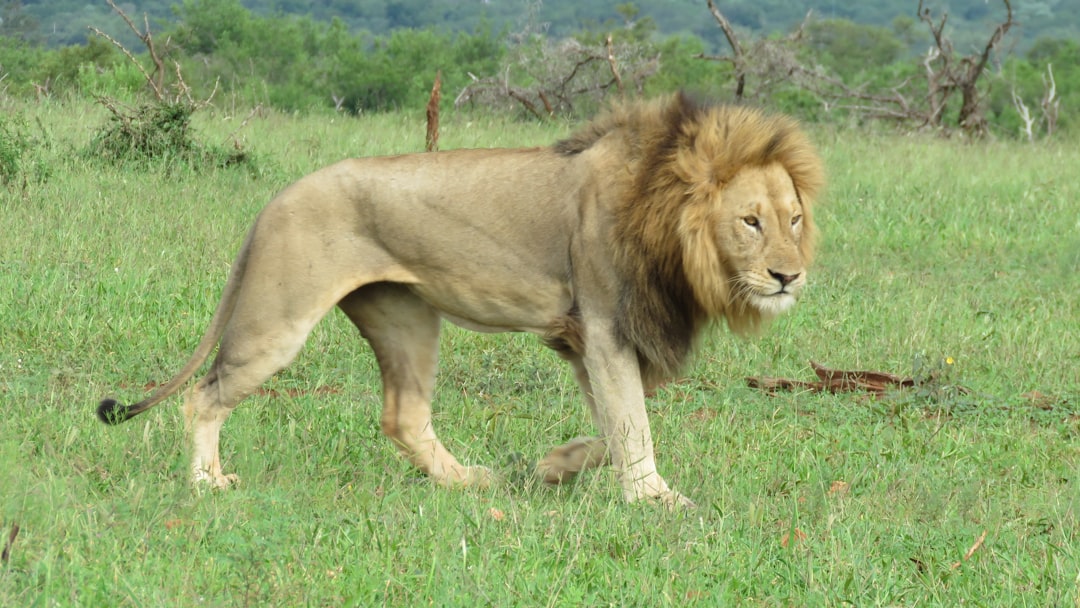
Shocking Decline Signals New Danger (Image Credits: Unsplash)
Africa’s lions face a rapidly intensifying peril from organized poachers harvesting their body parts for illicit trade.[1][2]
Shocking Decline Signals New Danger
Once numbering in the hundreds of thousands, African lions now total roughly 23,000 to 25,000 individuals confined to just 6% of their historical range.[1][3] Habitat loss, prey depletion, and human-lion conflicts drove past reductions, but researchers identified targeted poaching as an emerging killer.
A peer-reviewed study published in January 2026 documented deliberate killings for bones, claws, teeth, and skins, warning of an existential threat without swift intervention.[1][2] Lead author Peter Lindsey noted that poachers increasingly used poisoned bait and snares, methods capable of decimating entire prides in one strike.[1]
This shift marked a departure from opportunistic harvesting, signaling organized networks at work.
Poison and Snares: Tactics That Devastate Prides
Poachers exploited lions’ social nature by poisoning large carcasses like giraffes to lure and kill multiple animals at feeding sites.[1][2] Such incidents not only wiped out prides but also collateralized vultures and other scavengers essential for ecosystem health.
Seizures underscored the scale: authorities intercepted 17 lion skulls in Zambia and over 300 kilograms of parts in Mozambique.[1][2] These cases revealed links to broader criminal syndicates trafficking ivory, rhino horn, and pangolin scales.
Detection remained elusive, with estimates suggesting only 20% of killings surfaced in remote areas.[3]
Demand Spans Continents and Cultures
Cultural and spiritual uses drove demand in at least 37 African countries, where parts symbolized power and protection.[1][2] In Senegal, markets required 32 to 169 lions annually despite a wild population of just 35 to 45.
Southeast Asian buyers sought bones as tiger substitutes in traditional medicines, amplifying cross-border flows.[3] Dr. Samantha Nicholson highlighted the variety: claws, skulls, teeth, and organs all fetched prices in these dynamic markets.[3]
- West African hubs like Senegal fueled regional networks.
- Transnational routes connected southern poaching grounds to distant consumers.
- Overlaps with other wildlife crimes hardened supply chains.
Hotspots Reveal Continent-Wide Spread
Mozambique emerged as a focal point, where 25% of 426 human-related lion deaths from 2010 to 2023 tied to targeted poaching, rising from one case yearly pre-2018 to seven thereafter.[2]
In South Africa’s Kruger National Park, northern lion numbers plunged 63% over 18 years amid rising incidents.[2] Cases surfaced in Zimbabwe’s Gonarezhou, Botswana, Namibia, and Uganda, showing geographic expansion from January 2019 to September 2025.[3][2]
The African Lion Database proved vital for standardizing mortality records and pinpointing trends.
Charting a Coordinated Response
Experts urged action across six fronts: bolstered protection and monitoring, community partnerships, trade network mapping, enforcement disruption, legal strengthening, and demand reduction campaigns.[1][2]
Simon Nampindo of WCS Uganda stressed ground-level safeguards and community ties to avert crisis escalation.[1]
Key Takeaways
- Targeted poaching kills prides efficiently via poison, underreported at 20% detection.
- Demand in 37 African nations and Asia drives organized trade.
- Immediate multi-stakeholder action can prevent local extinctions.
Lions persist in reintroduction successes like Rwanda’s Akagera, proving recovery potential with resolve. Yet time grows short. What steps should governments prioritize to save these apex predators? Share your thoughts in the comments.

- Urban Coyotes Show Remarkable Adaptability, Learning to Thrive in City Environments - July 22, 2026
- Beavers Are Nature’s Engineers, Creating Vital Habitats for Other Wildlife Species - July 21, 2026
- The Recovery of the California Condor Offers Hope for Other Critically Endangered Birds - July 21, 2026