

Have you ever wondered why your dog suddenly seems restless for no reason? Or why flocks of birds abandon the sky moments before something feels off? Nature has a secret language, and animals are fluent in it. Long before humans invented seismographs and early warning systems, creatures across the planet seemed to possess an uncanny ability to sense when the earth was about to rumble. From ancient Greek historians documenting mass animal migrations to modern scientists attaching sensors to farm animals, the mystery continues to captivate us. Let’s explore what science reveals about these remarkable vanishing acts.
The Ancient Mystery That Still Puzzles Scientists

The earliest reference to unusual animal behavior prior to a significant earthquake dates back to Greece in 373 BC, when rats, weasels, snakes, and centipedes reportedly left their homes and headed for safety several days before a destructive earthquake. Think about that for a moment. More than two millennia ago, people were already noticing something we still struggle to understand today.
Anecdotal evidence abounds of animals, fish, birds, reptiles, and insects exhibiting strange behavior anywhere from weeks to seconds before an earthquake, yet consistent and reliable behavior prior to seismic events, and a mechanism explaining how it could work, still eludes us. It’s genuinely fascinating that with all our technology, we haven’t cracked this code. The stories persist across cultures and centuries, suggesting there’s something real beneath the folklore.
The P-Wave Connection: Nature’s Split-Second Alert

Here’s where things get interesting. Scientists have one solid explanation that makes perfect sense, at least for last-minute reactions.
Some animals can detect the vibrations of an earthquake a few seconds before it occurs through their keen senses; when an earthquake occurs, it produces two types of waves, with the smaller P wave arriving just before the larger S wave, and while very few humans notice the vibration of the P wave, animals can often sense it. Think of it like this: the P wave is nature’s text message saying “brace yourself,” while the S wave is the actual punch.
Certain animals with highly sensitive hearing or vibrational senses, such as dogs and elephants, are especially plausible candidates for detecting the Earth’s vibrations through their body or hearing seismic sounds at frequencies beyond human perception. Their bodies are basically biological early warning systems that put our gadgets to shame.
The Deeper Mystery: Days and Weeks Before Disaster

The P-wave explanation works beautifully for seconds-before reactions. However, what about the animals that flee days or even weeks ahead of time? That’s where things become genuinely puzzling.
Despite freezing temperatures, scores of snakes slithered out of their hibernation dens in the weeks before a magnitude 7.3 earthquake struck the Chinese city of Haicheng on February 4, 1975, and the reptiles’ behavior, along with other incidents, helped persuade authorities to evacuate the city hours before the massive quake. This evacuation likely saved thousands of lives, making it one of the few successful earthquake predictions in history.
A six-year investigation of a group of toads in Italy documented a significant change in their breeding behavior five days before the 2009 L’Aquila earthquake, and another intriguing case is the earthquake that hit the Indian Ocean in December 2004. Five days. Not five seconds. How could they possibly know?
Competing Theories: What Are Animals Actually Sensing?
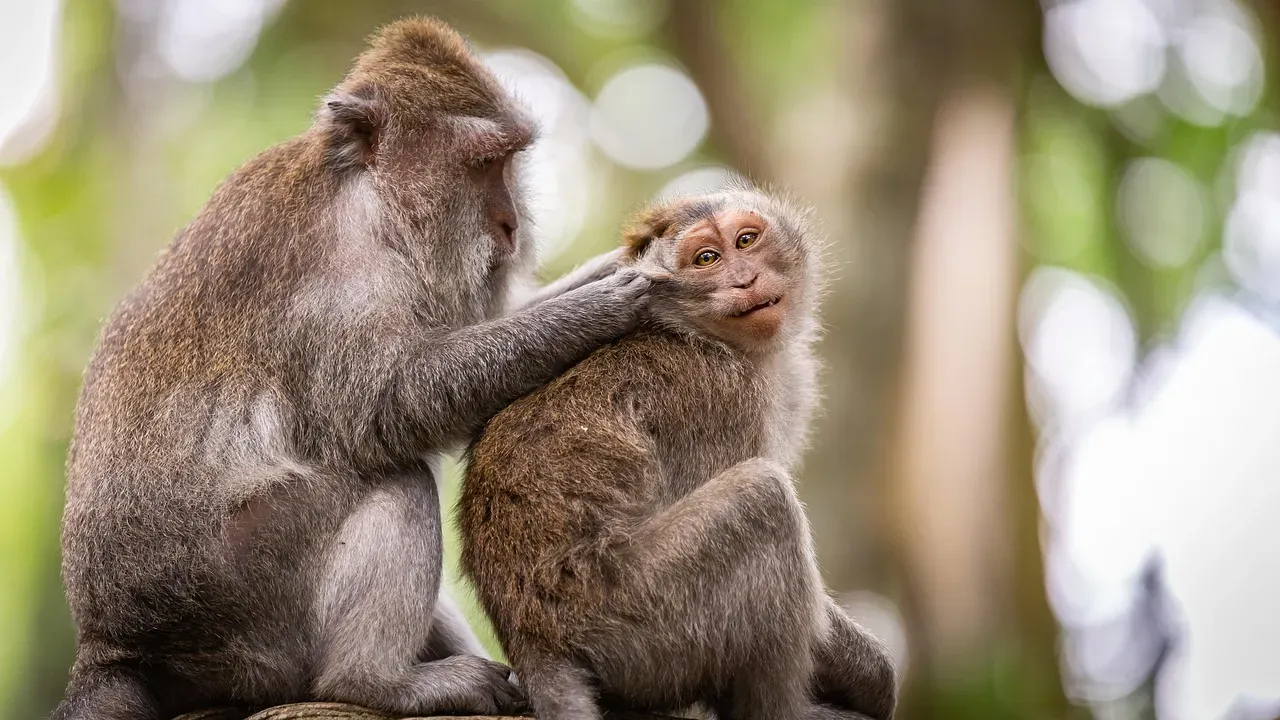
Scientists have proposed several fascinating possibilities, though none are proven beyond doubt. One theory suggests animals may be sensitive to changes in the Earth’s magnetic field or variations in atmospheric or ionospheric electric fields caused by seismic activities, while another suggests that animals might react to gases released from the Earth’s crust prior to an earthquake.
Research results have confirmed the long-standing assumption that cows become less active shortly before an earthquake, virtually freezing, and when dogs and sheep see this, they then become nervous and restless, suggesting the animals are reacting to each other as much as they are to environmental stimuli. It’s like a domino effect of anxiety rippling through the animal kingdom.
A 2018 review of 180 academic papers found a strong correlation between unusual animal behavior and the typical pattern of foreshocks , hypothesizing that the animals observed were reacting in the aftermath of these smaller tremors rather than in anticipation of the main earthquake event. So maybe they’re not predicting at all, just responding to subtle quakes we don’t even notice.
The Skeptical Scientific View: Why We Can’t Rely on Rover

Let’s be real: the scientific community remains deeply divided. The United States Geological Survey says a reproducible connection between a specific behavior and the occurrence of a quake has never been made, with one geophysicist noting that animals react to so many things like being hungry, defending their territories, mating, and predators, making it hard to have a controlled study to get that advanced warning signal.
On one hand there are numerous reports of chickens, sheep or dogs that behaved strangely before a quake, yet on the other hand, there are many earthquakes before which such abnormal animal behavior has precisely not been observed. This inconsistency drives scientists crazy. If animals could truly predict earthquakes, wouldn’t they react every single time?
There’s no conclusive scientific evidence yet that dogs can predict tremors, and we still don’t know what dogs and other animals might be reacting to, even if they could warn us with their actions. Until we understand the mechanism, animal behavior remains unreliable for practical earthquake prediction.
What’s clear is that animals aren’t fortune tellers, but they might be sensitive instruments tuned to frequencies and signals our technology hasn’t fully mapped yet. Whether they’re detecting electromagnetic shifts, chemical releases, or simply reacting to tremors too subtle for us, their behavior continues to fascinate and perplex us. Perhaps one day we’ll crack the code and learn to read nature’s warning signs as fluently as our animal neighbors do. What do you think? Could your pet be smarter about earthquakes than your smartphone? Tell us in the comments.
