

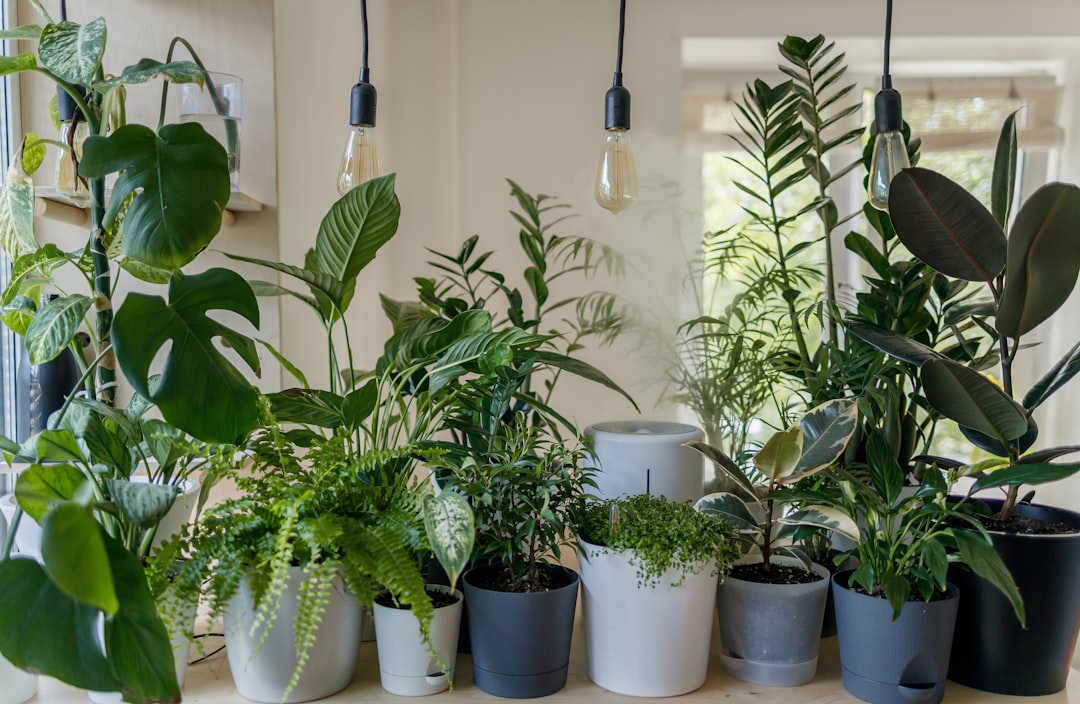
Decoding the Full Spectrum Advantage (Image Credits: Unsplash)
Indoor cultivation has reached new heights thanks to full spectrum LED technology that mimics sunlight to enhance plant vitality across all seasons.
Decoding the Full Spectrum Advantage
Plants respond to light through complex photomorphogenetic processes driven by specific wavelengths. Full spectrum LED grow lights deliver a broad range from ultraviolet to far-red, closely replicating natural sunlight’s distribution. This coverage includes photosynthetically active radiation between 400 and 700 nanometers, plus extensions vital for overall health.[1]
Blue light around 400-500nm activates receptors for chlorophyll production and compact growth. Red wavelengths from 600-700nm boost photosynthesis and flowering. Green light aids deeper canopy penetration, while far-red promotes stem elongation and shade responses.
LED Technology Outshines Legacy Options
Modern LEDs surpass fluorescent and high-pressure sodium lights in efficiency and precision. They maintain consistent spectral output with low heat, ensuring even photon distribution. Advanced designs incorporate UV to strengthen plant defenses and metabolite production.[1]
Energy metrics highlight the shift. LEDs achieve photosynthetic photon efficacy above 2.5 μmol/J, far exceeding traditional systems.
| Technology | Efficacy (μmol/J) | Lifespan (Hours) | Heat Output |
|---|---|---|---|
| LED Full Spectrum | 2.5-2.9 | 50,000+ | Low |
| High-Pressure Sodium | 1.0-1.4 | 24,000 | High |
| Fluorescent T5 | 1.1-1.7 | 20,000 | Medium |
Essential Parameters for Peak Performance
Daily light integral guides optimal exposure, varying from 5-15 mol/m²/day for seedlings to 25-40 for flowering plants. Photoperiod control matches species needs, with LEDs enabling precise day-night cycles. Gradual dimming simulates natural transitions, reducing stress.[1]
“The optimization of photosynthetic efficiency requires precise control over not just light intensity, but temporal distribution and spectral composition throughout the entire cultivation cycle.”
Products like the Lumenize Jungle Dawn LED Bar exemplify this with thermal management and uniform coverage for diverse plants. Details appear in the original analysis.
Strategic Setup for Uniform Results
Mounting height and arrangement follow the inverse square law to balance intensity. Multiple units prevent shadows better than single fixtures. Reflective surfaces amplify delivery.
- Measure space dimensions precisely
- Target species-specific PPFD levels
- Factor in reflections and airflow
- Select adjustable mounts
- Prioritize ventilation
Key Takeaways
- Full spectrum LEDs provide complete wavelengths for robust growth, color, and yields.
- Higher efficiency cuts costs and heat compared to older lights.
- Precise control over light parameters maximizes plant health indoors.
Full spectrum LED lighting equips growers with tools for consistent success, transforming indoor spaces into productive havens. How has LED technology changed your cultivation routine? Share your thoughts in the comments.

- Urban Coyotes Show Remarkable Adaptability, Learning to Thrive in City Environments - July 22, 2026
- Beavers Are Nature’s Engineers, Creating Vital Habitats for Other Wildlife Species - July 21, 2026
- The Recovery of the California Condor Offers Hope for Other Critically Endangered Birds - July 21, 2026