
Picture this: You’re standing at the edge of a canyon or wandering through a tropical wetland when suddenly a flash of brilliant scarlet or shocking pink catches your eye. You freeze. Your heart races a bit. Was that really what you think it was?
Let’s be real, when most people think about national parks, they imagine towering mountains, sweeping vistas, and maybe a bear or two. Birds usually take a backseat to the big mammals. Yet hiding within these protected landscapes are some of the most strikingly exotic birds you’ll find anywhere on the planet. I think it’s one of the best-kept secrets of America’s wild places. These aren’t your everyday sparrows or robins. These are birds with feathers so vibrant they look photoshopped, beaks shaped like bizarre tools from another era, and stories that’ll make you want to pack your binoculars immediately.
Ready to meet six of the most exotic feathered residents calling U.S. national parks home? Trust me, once you’ve seen them, you’ll never look at birdwatching the same way again.
California Condor: The Giant with a Second Chance
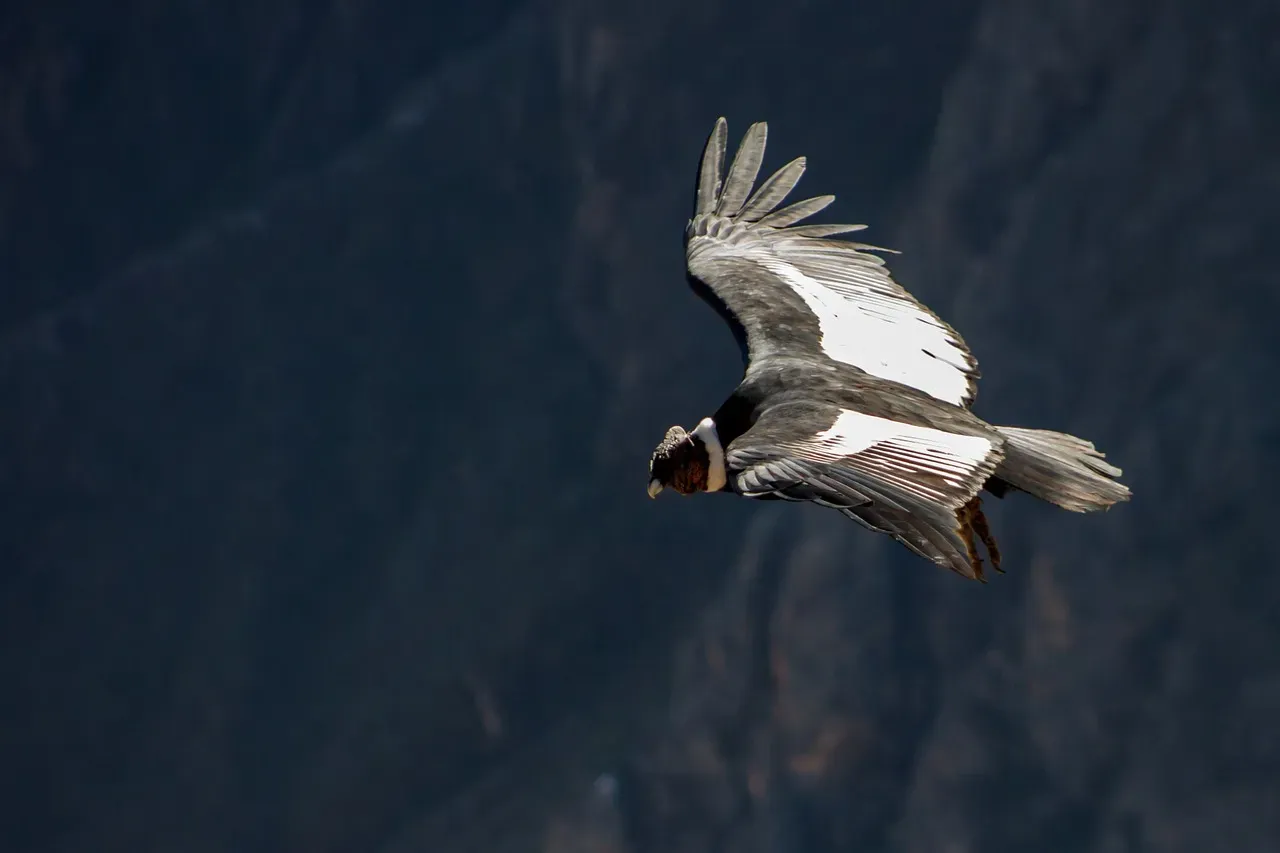
The California condor, the largest bird in North America, extends its range to Grand Canyon National Park in Arizona and Pinnacles National Park in central California. This prehistoric-looking creature has a wingspan that can stretch nearly 10 feet across. Honestly, when you see one soaring overhead, it’s like watching a piece of living history glide through the air.
What makes the condor’s story so remarkable is how close it came to vanishing forever. The California condor faced almost certain extinction until a captive breeding program was initiated. Having almost gone extinct in the 1980s, the California condor was rescued by a successful breeding program and released back into the wild.
These birds are scavengers, feeding on carrion, and you can spot them most reliably around the North Rim of the Grand Canyon or at Pinnacles. Reintroduced to northern Arizona in 1996, the huge birds hover in the updrafts above the North Rim, Marble Canyon along the park’s eastern flank, and the nearby Vermillion Cliffs National Monument. Look for their distinctive bald orange heads and enormous dark wings with white patches underneath.
Roseate Spoonbill: Florida’s Pink Masterpiece
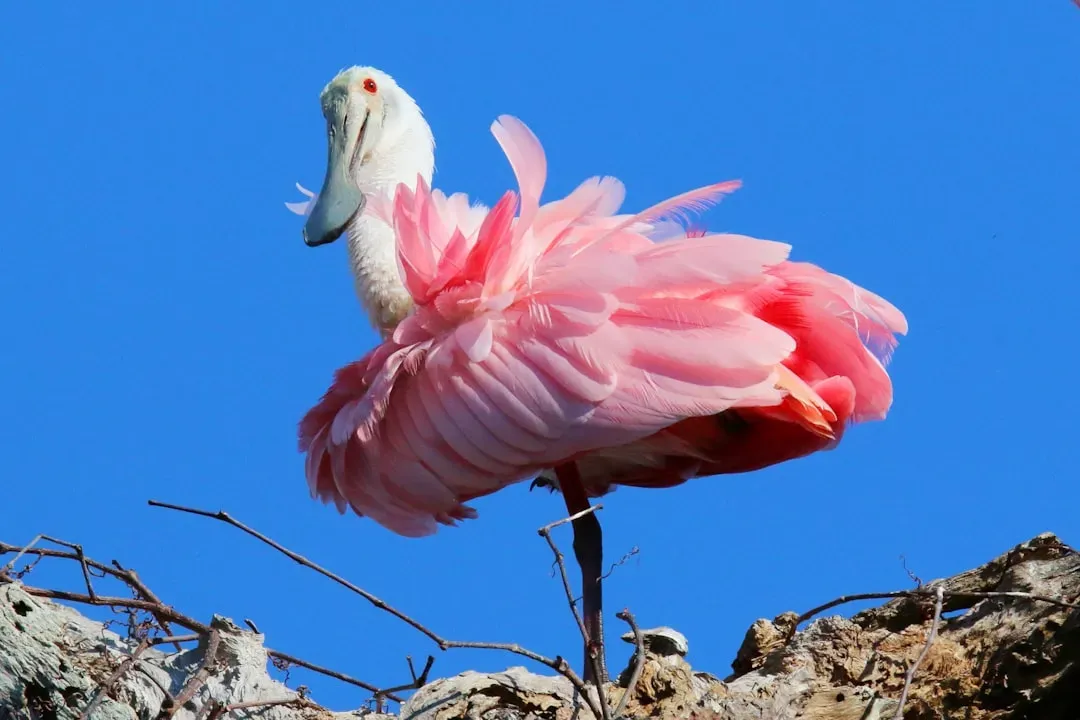
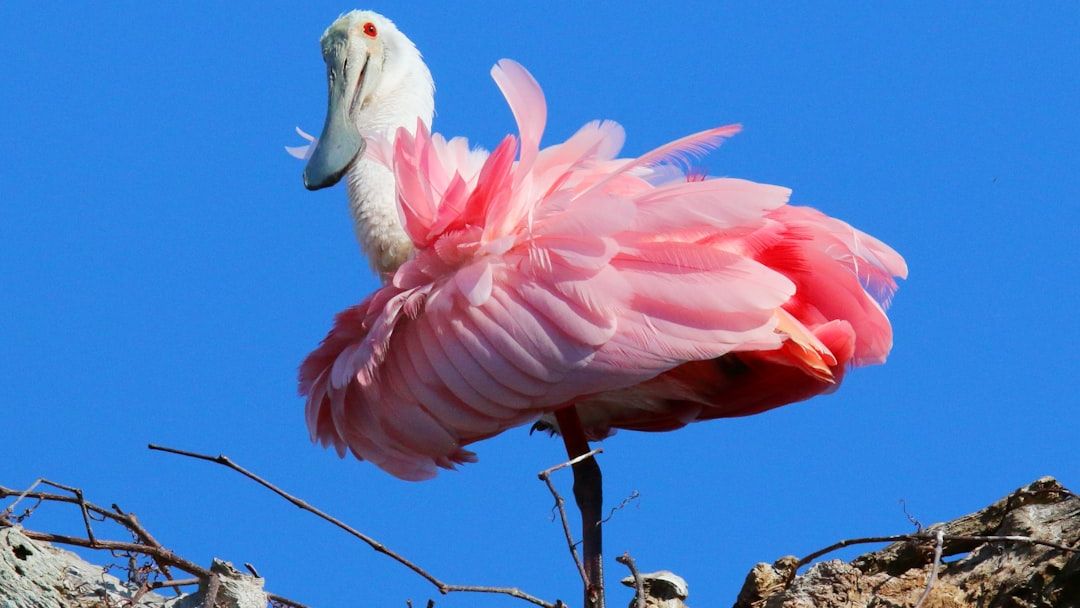
If you thought flamingos were the only shocking pink birds you’d find in America, think again. The roseate spoonbill is a social wading bird of the ibis and spoonbill family, Threskiornithidae. It is a resident breeder in both South and North America. Their pink coloring comes from their diet, similar to flamingos.
In Florida Bay, the Everglades, and other parts of South Florida, roseates nest during November and December. The spoon-shaped bill is what really sets them apart. They wade through shallow waters, sweeping that odd bill from side to side like they’re conducting an underwater orchestra. There are sometimes flamingos around the boardwalk at Snake Bight Trail, but if you don’t see any and still need a little extra pink in your life, try Paurotis Pond instead. It’s often full of the blush-colored roseate spoonbills.
Here’s the thing: these birds were nearly wiped out by plume hunters in the 1800s and early 1900s. Their comeback is another conservation win, though they’re still expanding their range northward, likely due to climate change.
Hawaiian Honeycreeper: Rainbow Jewels of the Pacific
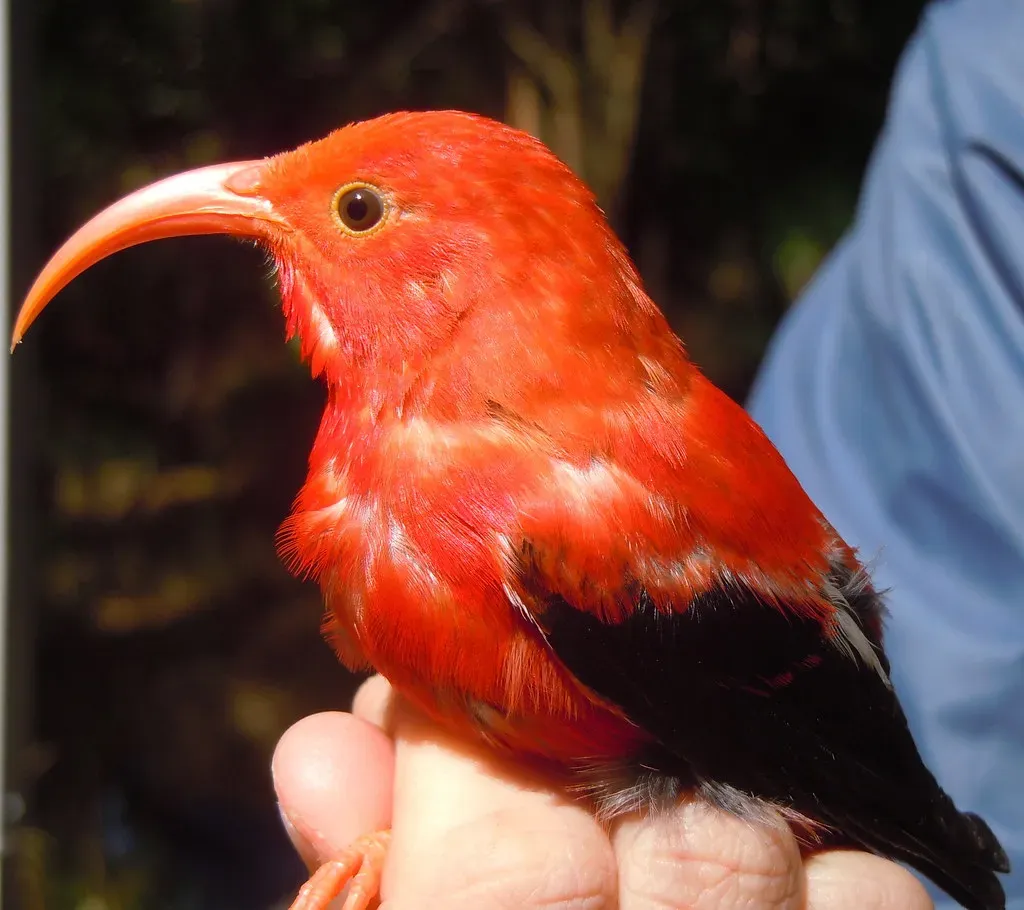
Many members of this group of endemic Hawaiian birds are extremely rare and endangered, yet others can be seen relatively easily in parks and nature reserves. These nectar-eating birds have evolved curved and other specialized bills, while their plumage is often spectacularly colorful. You can see several honeycreepers in Hawaii’s two national parks – Haleakala and Hawai’i Volcanoes.
The ‘i’iwi is perhaps the most iconic. One of the largest of the Maui honeycreepers, the ‘i’iwi is about six inches long and covered in bright scarlet feathers with a black tail and wings. Its bright orange, curved beak has evolved for optimal efficiency when gathering nectar from the long tubular flowers like those on the Hawaiian Lobelioid. Watching one feed is mesmerizing. The bird seems purpose-built for its ecological role.
Although some are very rare, there are six species of Hawaiian honeycreepers that can be found within the forests of the park: ‘akohekohe, ‘apapane, Hawai’i ‘amakihi, ‘i’iwi, kiwikiu, and Maui ‘alauahio. These Hawaiian honeycreepers are all endemic to the Hawaiian Islands, meaning they can be found nowhere else in the world, and some are even endemic to just the island of Maui. Sadly, mosquito-borne diseases and habitat loss threaten many of these species. You’ll need to venture into higher elevations at Haleakalā to spot them.
Painted Bunting: A Tiny Explosion of Color
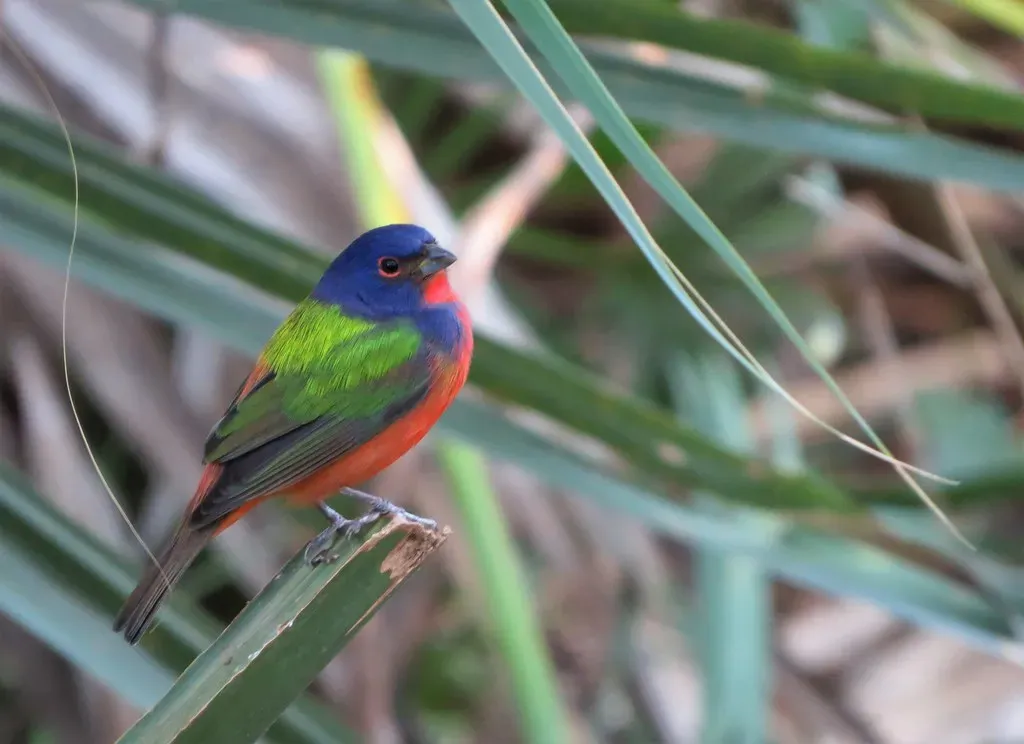
The adult male painted bunting is one of the most colorful birds in North America. A bright red underside stretches from its chin down to its tail. Equally bright, a blue head and shoulders set up a vivid contrast. He has a green back and additional red on his rump. I know it sounds crazy, but it looks like someone took three different birds and mashed them together with crayons.
While painted buntings are more commonly found in the southeastern United States, they do make appearances near certain national park areas, particularly in Gulf Coast regions. These small songbirds prefer dense, shrubby habitats. The males are the flashy ones, while females sport a more subdued lime-green plumage that helps them blend in while nesting.
Spotting one requires patience and a good ear. Listen for their sweet, musical warbling during breeding season, typically from April through July. They’re shy despite their bold appearance, often staying hidden in thick vegetation.
Vermilion Flycatcher: Desert Fire on Wings
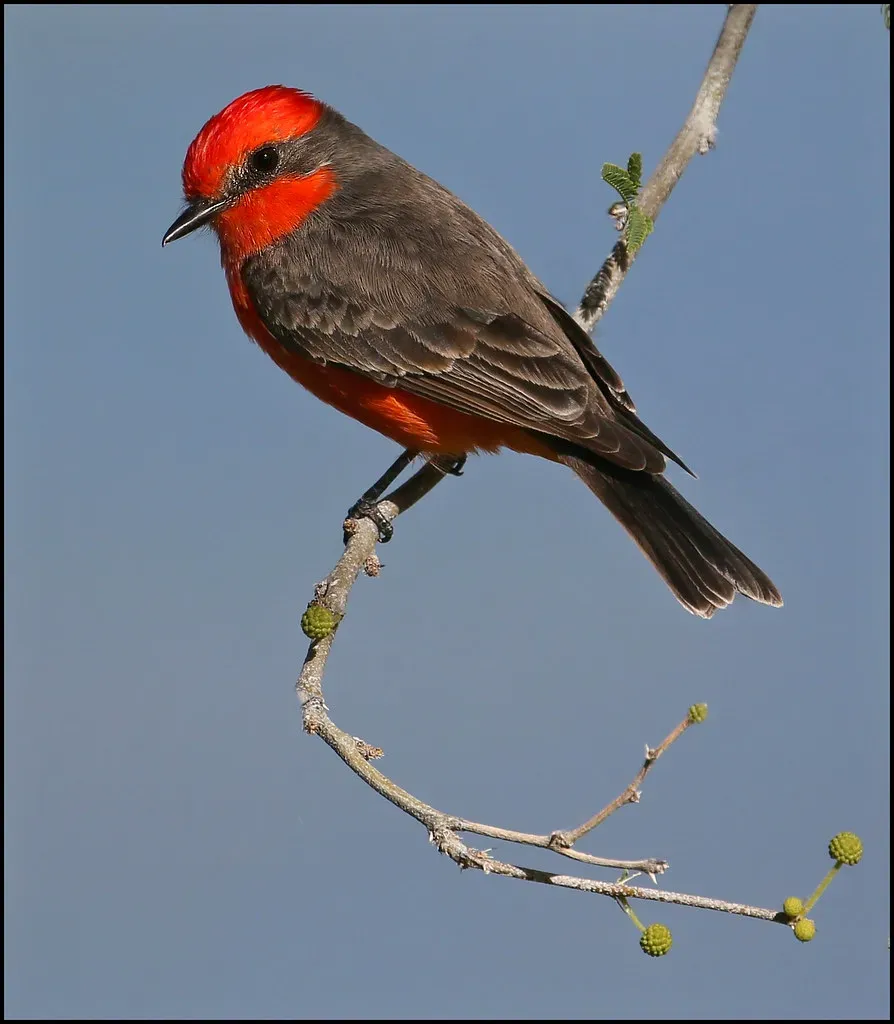
Water in the desert isn’t just good for thirsty travelers, it’s good for birds, too, and more than 300 different species have been recorded at the Rattlesnake Springs unit of this park alone. Keep an eye out for: vermillion flycatcher The vermilion flycatcher is one of those birds that makes you stop dead in your tracks.
These small flycatchers live in desert riparian areas and open woodlands across the Southwest. The males are impossible to miss, with brilliant red plumage covering their head and underparts, contrasted by dark brown wings and a mask across the eyes. Females are much more muted, with peachy undersides and grayish backs.
They hunt by sitting on an exposed perch, then darting out to snatch flying insects mid-air before returning to their lookout. It’s aerial acrobatics at its finest. Carlsbad Caverns, Big Bend, and other southwestern parks offer excellent opportunities to witness these fiery little hunters in action. Early morning and late afternoon are your best bets.
Nēnē: Hawaii’s Comeback Goose
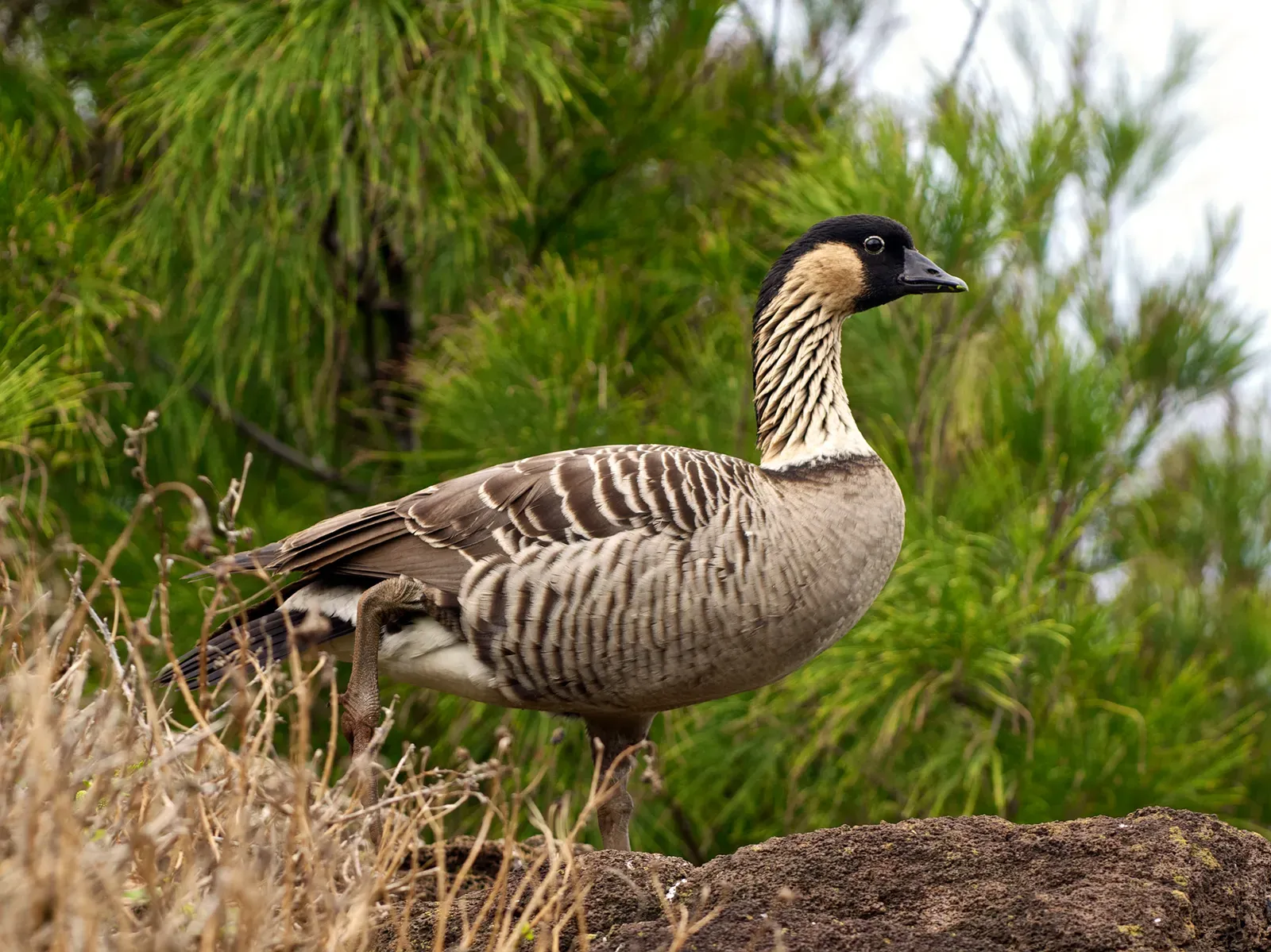
The Nēnē, a cousin of the Canadian goose, is the official bird of Hawaii. However, due to a history of hunting and flourishing predators, its numbers once dwindled down to a measly 30 total birds. Luckily, their presence has recovered somewhat, though there are still estimated to be only around 3,800, so spotting them can be tricky.
Maui has an estimated population of 600 nēnē with around 200 in Haleakalā National Park. They are found in variety of habitats including high-elevation lava flows, volcanic deserts, grasslands, and shrublands. Unlike their mainland cousins, nēnē have adapted to life on volcanic terrain, developing reduced webbing on their feet for walking on rough lava rock.
These medium-sized geese have distinctive black heads and faces with cream-colored cheeks, and their necks are beautifully patterned with deep furrows in the feathers. They’re surprisingly tame around visitors, though you should never feed them. Watch for them grazing on native grasses and berries, particularly in the morning hours when they’re most active.
Conclusion: Beyond the Ordinary
America’s national parks offer far more than dramatic landscapes and charismatic megafauna. These six exotic bird species represent just a fraction of the incredible avian diversity tucked away in protected wildlands. From condors reclaimed from the brink of extinction to honeycreepers found nowhere else on Earth, each species tells a story of adaptation, survival, and the ongoing struggle between nature and human impact.
The next time you visit a national park, bring binoculars. Slow down. Listen. You might just witness one of these exotic treasures in a moment you’ll remember forever. These birds don’t just add splashes of color to the wilderness. They remind us why conservation matters and why these protected spaces are irreplaceable.
What’s the most striking bird you’ve ever encountered in the wild? Have any of these species made it onto your must-see list?

- The Ancient River System Hidden Beneath the Sahara of North America - June 22, 2026
- The one city in the US sinking under its own weight. - June 22, 2026
- 10 Fascinating Nocturnal Animals You Never Knew Existed - June 22, 2026