

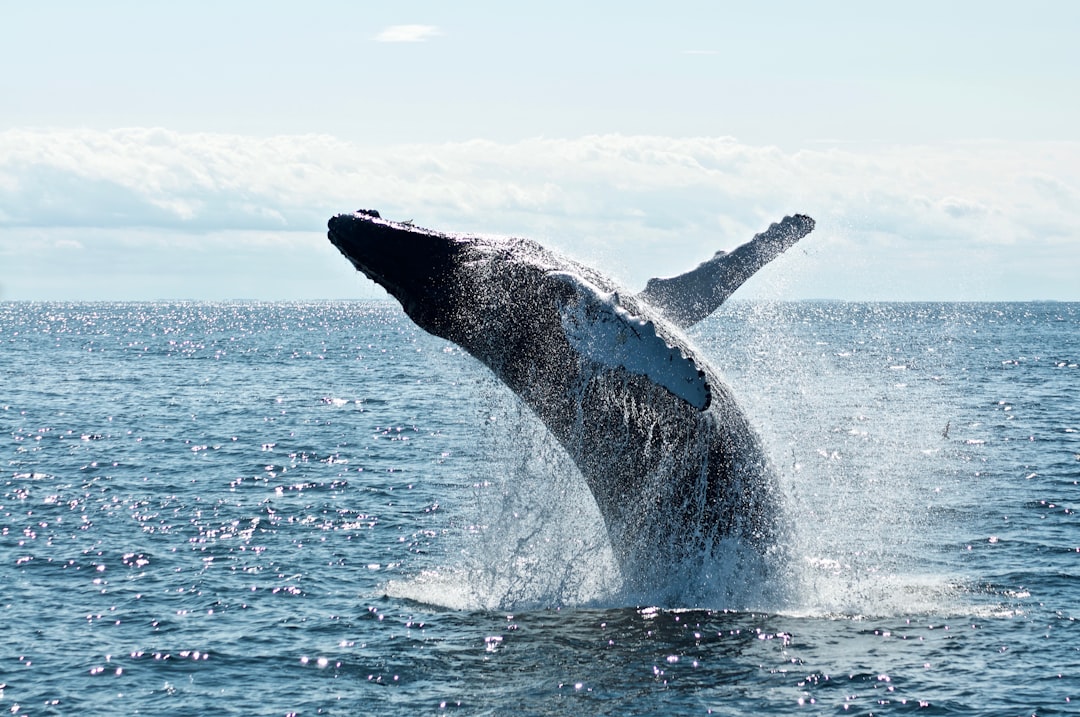
Whale Tissues Track a Turning Point in Pollution (Image Credits: Unsplash)
North Atlantic – Long-finned pilot whales have registered a substantial decline in concentrations of PFAS, the notorious forever chemicals, signaling that phaseout efforts are finally penetrating remote marine environments.[1]
Whale Tissues Track a Turning Point in Pollution
A Harvard University study uncovered a pivotal shift in PFAS burdens carried by these apex predators. Levels of extractable organofluorine, a reliable proxy for overall PFAS exposure, climbed through the early 2000s before peaking around 2011. By 2023, those concentrations had plummeted more than 60 percent from their high point.
Targeted analysis pinpointed four legacy PFAS compounds as the primary contributors, accounting for over 75 percent of the detected organofluorine in muscle tissues. These declines occurred despite ongoing global production of PFAS variants. Pilot whales proved ideal sentinels, their deep-diving habits and squid-heavy diet biomagnifying contaminants from vast ocean expanses.[3]
The Persistent Threat of Forever Chemicals
PFAS entered commerce in the mid-20th century, prized for resistance to water, grease, and stains in products from cookware to firefighting foams. Their carbon-fluorine bonds render them virtually indestructible, allowing buildup in water, soil, and wildlife worldwide.
North Atlantic pilot whales accumulate these substances through their prey, reflecting broad-scale ocean contamination. Legacy versions, longer-chain molecules like PFOS and related compounds, dominated early exposures. Shorter-chain replacements emerged after initial restrictions, though their environmental paths differ.[1]
- PFOS (20 percent of targeted PFAS): Peaked 2017-2020, then fell 11-29 percent annually.
- FOSA (45 percent): Declined steadily from the earliest samples.
- PFUnDA and PFTrDA (C10/C12 PFCAs, 15 percent): Peaked 2013-2016, dropped 13-17 percent per year afterward.
- C4 FASA: The lone short-chain compound showing consistent increases over two decades.
Phaseouts Take Hold, But With a Decadal Delay
Major producers phased out long-chain PFAS in the early 2000s through voluntary agreements and regulations, including efforts by companies like 3M. Whale tissues lagged about a decade behind, as ocean currents slowly transported residues from coastal sources to the open Subarctic.
Modeling confirmed transport times of years to decades, distinct from quicker atmospheric deposition for volatile forms like FOSA. “Production phase-outs, which were initially voluntary and later driven by regulation, have been quite effective at reducing concentrations of these chemicals in near-source communities as well as more remote ecosystems,” noted senior author Elsie Sunderland.[4] This pattern underscores regulations’ reach into isolated habitats.
Unseen Risks from Next-Generation PFAS
While legacy chemicals wane, newer variants pose unresolved questions. Unlike predecessors, they fail to accumulate substantially in open-ocean predators, hinting at retention in soils, sediments, or nearshore zones. Human serum levels remain stable or rising, driven by direct exposures near production sites.
Only one novel PFAS, a short-chain FASA used in semiconductors, climbed steadily in whales. Broad suspect screening detected 16 long-chain alternatives, all trending downward. Researchers likened the challenge to whack-a-mole, where bans on one compound spur introductions of others.[1]
Key Takeaways
- PFAS levels in pilot whale livers dropped over 60 percent since 2011, validating phaseout impacts.
- Ocean currents delayed declines by about a decade from early-2000s bans.
- Newer chemicals evade open-ocean buildup, demanding class-wide regulations.
These findings affirm that targeted policies can cleanse even the planet’s farthest reaches, yet vigilance against substitutes remains essential. Pilot whales remind us of pollution’s long shadow – and the power of collective action to shorten it. What steps should follow to protect marine life? Share your thoughts in the comments.

- Urban Coyotes Show Remarkable Adaptability, Learning to Thrive in City Environments - July 22, 2026
- Beavers Are Nature’s Engineers, Creating Vital Habitats for Other Wildlife Species - July 21, 2026
- The Recovery of the California Condor Offers Hope for Other Critically Endangered Birds - July 21, 2026