

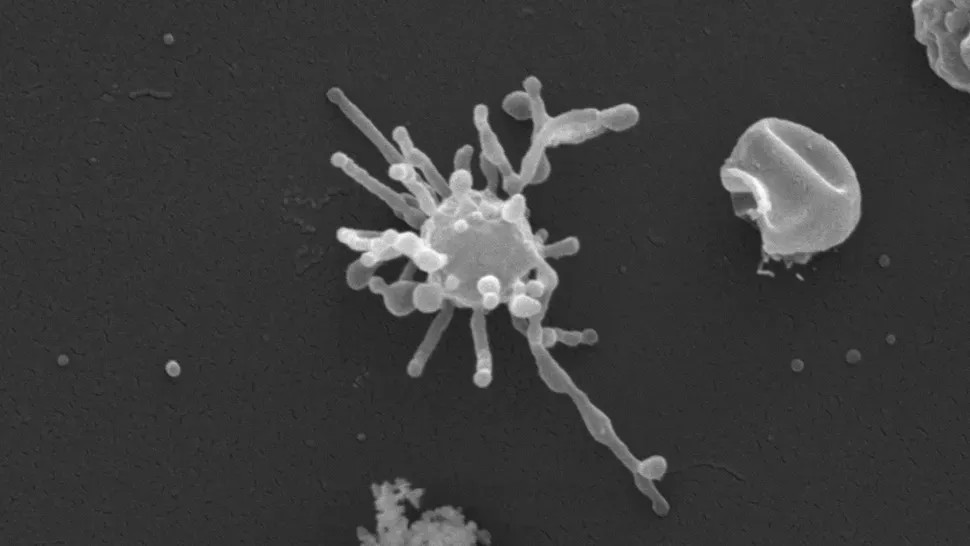
There’s something quietly mind-bending about the idea that a microscopic organism, buried in ancient ocean sediment, may have rewritten our understanding of how complex life began. Scientists have been puzzling over the origins of eukaryotes, the cell type that makes up every plant, animal, and fungus on Earth, for decades. The answers, it turns out, might be hiding in a group of ancient microbes with a very dramatic name.
Meet the Asgard archaea. Named after the realm of Norse gods, these microbes were only discovered in recent years, and they keep surprising researchers. A new study suggests one lineage of Asgard archaea may have been using oxygen long before it was widely available on Earth. If that holds up, it changes a lot of what we thought we knew. Let’s dive in.
What Exactly Are Asgard Archaea, and Why Do They Matter?
Most people have never heard of archaea, let alone the Asgard variety, and honestly, that’s a shame. Archaea are single-celled microorganisms, superficially similar to bacteria but genetically quite distinct. They’ve been around for billions of years, quietly thriving in some of the most extreme environments on the planet, from deep-sea hydrothermal vents to salty lakes and oxygen-starved sediments.
Asgard archaea are a special subgroup that grabbed scientists’ attention because their genomes contain genes previously thought to exist only in eukaryotes, that is, in complex cells like ours. This makes them the closest known prokaryotic relatives to eukaryotes. Think of them as a living fossil record, carrying ancient molecular clues to one of biology’s greatest mysteries: how did simple cells ever evolve into complex ones?
The Surprising Oxygen Discovery That Turned Heads
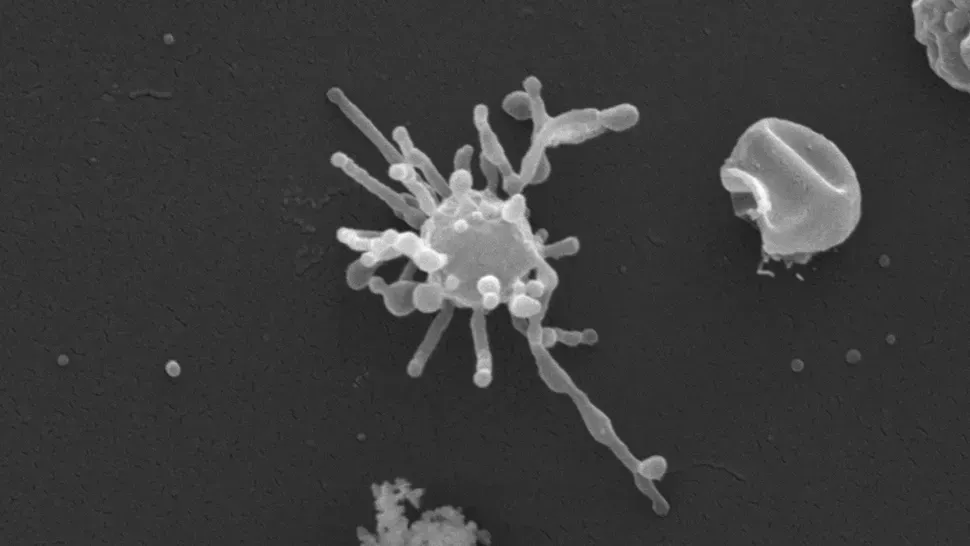
Here’s the thing that genuinely shocked researchers. A lineage of Asgard archaea called Hermodarchaeota appears to carry genes associated with oxygen metabolism. That alone is noteworthy. What makes it stunning is the timing: these microbes likely existed long before the Great Oxidation Event, the point roughly two and a half billion years ago when oxygen began accumulating meaningfully in Earth’s atmosphere.
For most of early Earth’s history, oxygen was essentially a trace gas. Life was anaerobic, meaning organisms had no use for or tolerance of oxygen. So finding evidence that an Asgard lineage may have been metabolizing oxygen during that era is, to put it lightly, unexpected. It suggests oxygen interaction in early life may be far older, and far more widespread, than current models account for.
How Scientists Pieced This Together
The research team reconstructed the genomic history of Hermodarchaeota using metagenomics, a technique that allows scientists to sequence genetic material directly from environmental samples without needing to culture the organisms in a lab. This is important because Asgard archaea are notoriously difficult to grow in laboratory conditions. Most of what we know about them comes from DNA pulled out of sediment cores and similar environmental samples.
By analyzing the genetic sequences and comparing them against known metabolic pathways, the researchers identified genes linked to oxygen-related processes. They then used phylogenetic analysis, essentially building a family tree of genes, to estimate when these traits may have emerged. The picture that emerged suggested these oxygen-processing capabilities predated the widespread availability of oxygen itself. It’s a bit like finding a creature with gills long before there were any oceans.
What This Tells Us About the Origins of Complex Life
The prevailing theory for the origin of eukaryotic cells involves an ancient merger, a symbiotic event in which an archaeon essentially engulfed a bacterium, eventually giving rise to the mitochondria that power our cells today. Asgard archaea are considered the archaeal partner in this ancient relationship. Understanding their biology, especially their metabolic capabilities, helps fill in the story of how that merger may have happened and under what conditions.
If Asgard archaea were already experimenting with oxygen metabolism early on, it opens up a fascinating possibility: maybe the transition to complex, oxygen-dependent life wasn’t as sudden or environmentally driven as once believed. Perhaps the molecular groundwork was being laid quietly in ocean sediments for millions of years before oxygen became a planetary force. That’s not a settled conclusion, but it’s a genuinely compelling hypothesis that researchers are now keen to explore further.
The Role of Oxygen in the Bigger Evolutionary Picture
Oxygen has a complicated reputation in evolutionary biology. We think of it as essential for complex life, and it is, but early in Earth’s history it was essentially a toxic byproduct of photosynthetic cyanobacteria. The Great Oxidation Event, when oxygen levels spiked dramatically, caused what some call the first mass extinction, wiping out many anaerobic organisms that had no defense against it.
Yet oxygen also unlocked entirely new metabolic efficiencies. Aerobic respiration, the process that mitochondria use to generate energy, is dramatically more powerful than anaerobic alternatives. Roughly speaking, aerobic metabolism yields many times more energy per glucose molecule than anaerobic fermentation. That energy advantage is a core reason complex, large-bodied life became possible. If Asgard archaea were already tinkering with oxygen long before the Great Oxidation Event, it suggests the evolutionary transition toward aerobic life may have had deeper, quieter roots than previously imagined.
Why Researchers Are Being Careful About These Claims
It’s worth pumping the brakes slightly here, because the scientific community is appropriately cautious. Identifying genes associated with oxygen metabolism doesn’t definitively prove an organism used oxygen in the way modern aerobic organisms do. Gene functions can be repurposed over evolutionary time, and ancient metabolic pathways don’t always mean what they appear to mean at face value.
There’s also the challenge of environmental contamination in ancient samples, and the inherent difficulty of reconstructing metabolic activity from genomic data alone. I think it’s genuinely exciting research, but it’s the kind of finding that opens doors rather than closes them. The researchers themselves are careful to frame this as a clue, not a conclusion. More studies, ideally involving cultivated Asgard archaea and experimental metabolism testing, will be needed to confirm what these genes were actually doing billions of years ago.
What Comes Next in Asgard Archaea Research
The scientific interest in Asgard archaea has been growing fast since their initial discovery roughly a decade ago. Researchers around the world have been working to isolate and culture these organisms, with a small number of successful cultivations achieved in Japan, where scientists spent years patiently growing a species called Candidatus Prometheoarchaeum syntrophicum. That kind of painstaking work gives researchers the ability to study Asgard archaea in real time, testing what genes actually do rather than inferring from sequence data alone.
The discovery of potential oxygen metabolism in Hermodarchaeota adds fresh urgency to that work. If these microbes truly processed oxygen before it was abundant, understanding the mechanism could illuminate not just the origins of eukaryotic life on Earth, but also broaden how we think about where complex life might arise elsewhere in the universe. Life, it seems, is more resourceful and surprising than we give it credit for.
Conclusion: A Tiny Microbe With an Outsized Evolutionary Story
It’s almost poetic that one of the biggest clues to the origin of complex life comes from organisms so small they’re invisible to the naked eye, buried in ancient seafloor sediment, quietly carrying molecular secrets across billions of years. The possibility that Asgard archaea were engaging with oxygen long before it dominated Earth’s atmosphere is the kind of finding that reshuffles our mental models in a healthy way.
Science rarely delivers clean, tidy revelations. More often, it hands you a thread and dares you to pull it. This Asgard discovery is exactly that kind of thread. It doesn’t resolve the mystery of how complex life began, but it adds a new, vivid dimension to the question. Honestly, I find that more exciting than a definitive answer. What does it say about life’s ingenuity that the groundwork for complexity may have been laid in a world without oxygen? What do you think about it? Tell us in the comments.

- Urban Coyotes Show Remarkable Adaptability, Learning to Thrive in City Environments - July 22, 2026
- Beavers Are Nature’s Engineers, Creating Vital Habitats for Other Wildlife Species - July 21, 2026
- The Recovery of the California Condor Offers Hope for Other Critically Endangered Birds - July 21, 2026