
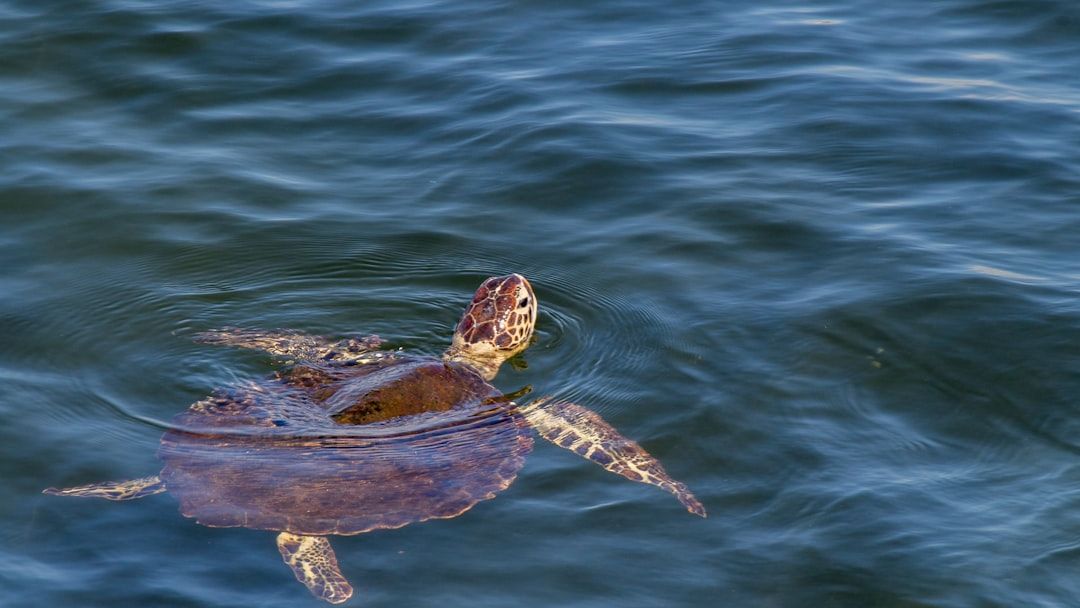
Every single day, creatures great and small accomplish something we humans struggle to do even with a smartphone in hand: they find their way. Perfectly. Across thousands of miles of open ocean, featureless desert, or pitch-black sky. No satellite signal. No road signs. No maps. Just something innate, invisible, and honestly a little mind-blowing.
The deeper scientists look into animal navigation, the stranger and more spectacular it gets. Some animals carry something closer to a sixth sense, wired right into their biology, that we’re only beginning to understand. Ready to feel a bit humbled by nature? Let’s dive in.
The Earth Is Their Compass: Magnetoreception Explained

Here’s the thing that took scientists decades to fully accept: many animals can literally feel the Earth’s magnetic field. Not metaphorically. Physically. The Earth has a magnetic field, and although humans usually cannot detect it without a compass, some animals have the ability to detect and use it for their migrations.
Some species can sense the Earth’s magnetic field and use it as a compass to determine their spatial orientation, using what scientists call “magnetoreception.” This is essential for animals who can’t detect celestial cues, such as those that migrate in overcast weather or swim deep underwater.
Two main theories exist for how this actually works on a biological level. One mechanism might involve crystals of magnetite, a form of iron oxide, that serve as microscopic compass needles inside cells, swinging to align with magnetic fields as animals change direction. Another possibility involves a chemical reaction triggered by light that generates free-radical molecules with electrons whose quantum spin makes them behave as subatomic magnets.
Regardless of exactly how it works, magnetoreception seems to be a noisy sense, and animals probably combine it with signals from other navigational cues. Think of it like a car’s GPS cross-referencing with a cell tower and a map at the same time.
Butterflies, Birds, and the Sky as a Map

If you’ve ever watched a monarch butterfly flutter about your garden, you’d never guess it’s carrying one of nature’s most sophisticated navigation systems. I know it sounds crazy, but it’s true. Each autumn, millions of monarch butterflies make an epic journey from Canada to the Michoacan mountains in Mexico. Despite making this roughly 2,500 mile journey for the first and only time in their lives, the butterflies find their way to the same place as previous generations.
According to a University of Washington study, butterflies use an internal compass that integrates two specific pieces of information: the time of day and the Sun’s position on the horizon. To process this information, they monitor the Sun’s position using their extremely complex compound eyes and an internal clock-like system within their antennae. They then send this information through specific neurons to their brain to determine which direction is southwest.
On cloudy days, a backup system kicks in. Light-sensitive molecules called cryptochromes can detect small changes in Earth’s magnetic field. The cryptochromes in monarch butterflies specifically need light on the UV-A side of the spectrum to operate.
Birds work with a similar multifunction toolkit. Birds use the sun as one of their primary navigational tools, essentially turning our nearest star into a reliable compass. Research has demonstrated that many birds possess an internal clock that allows them to compensate for the sun’s movement across the sky throughout the day. This “time-compensated sun compass” means a bird can maintain a consistent heading regardless of the time of day. Meanwhile, migratory songbirds also use a star compass, knowing that dots of light in the night sky rotate around a centre corresponding to north or south depending on the hemisphere.
Pigeons, Salmon, and the Art of the Mental Map
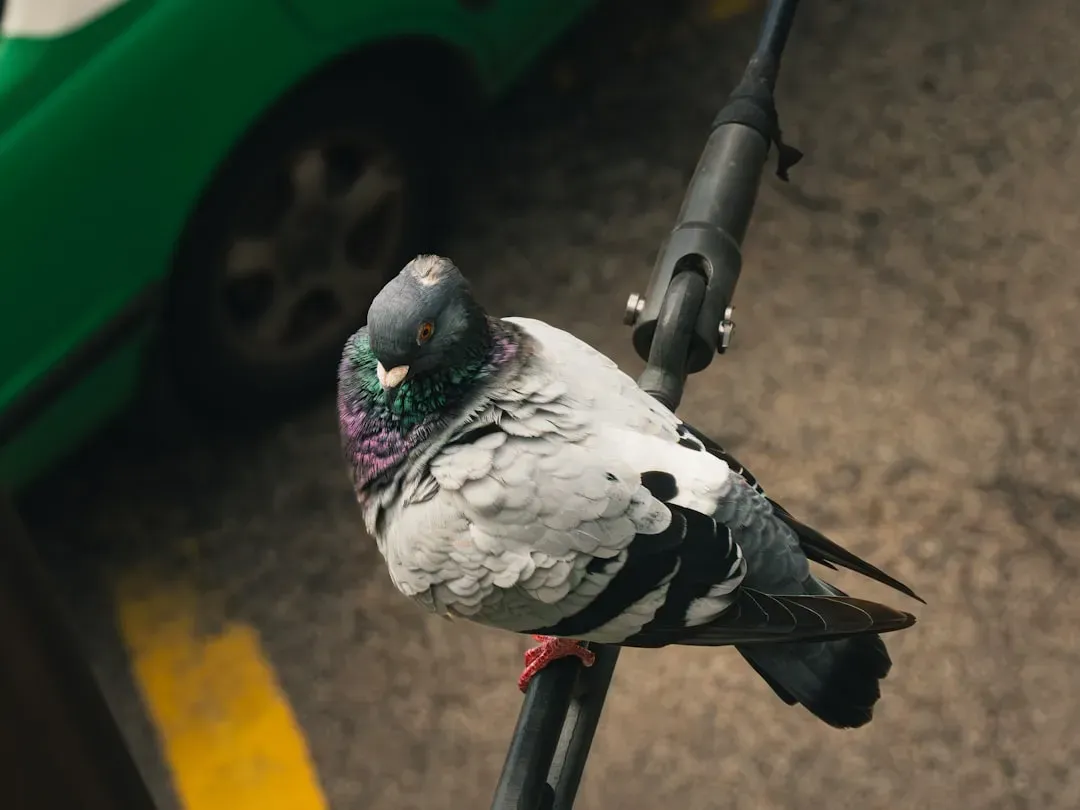
Pigeons are the unsung heroes of animal navigation. Not only did they serve as wartime messengers, but they can fly thousands of miles and return to the same location every time. Honestly, they deserve far more credit than they get.
Scientists surmise the pigeon’s ability to home in on various locations with such precision is a result of a “map and compass” type of navigation system. In other words, they orient themselves relative to a goal site, using a combination of the sun and other celestial light patterns, sight and smell, various gravity anomalies, and the Earth’s magnetic field.
Pigeons create intricate olfactory maps, using environmental odors to guide them home. In experiments, pigeons deprived of their sense of smell became disoriented and struggled to find familiar locations. This suggests scent-based mental maps are a vital aspect of their navigational system.
Salmon take a different but equally extraordinary approach. Scientists found that salmon use Earth’s magnetic field like a map, much like hatchling turtles. Birds, by contrast, use magnetic fields more like a compass: they know what direction they’re facing, but need other information to know where they’re supposed to go. Every year, thousands of juvenile salmon, with no prior migratory experience, make their way downstream to specific oceanic feeding grounds hundreds of miles from the riverbed where they were born. Several years later, with pinpoint accuracy, they return to that same river to breed. It’s like they were born carrying a printed address.
Sea Turtles and the Discovery of Magnetic Memory
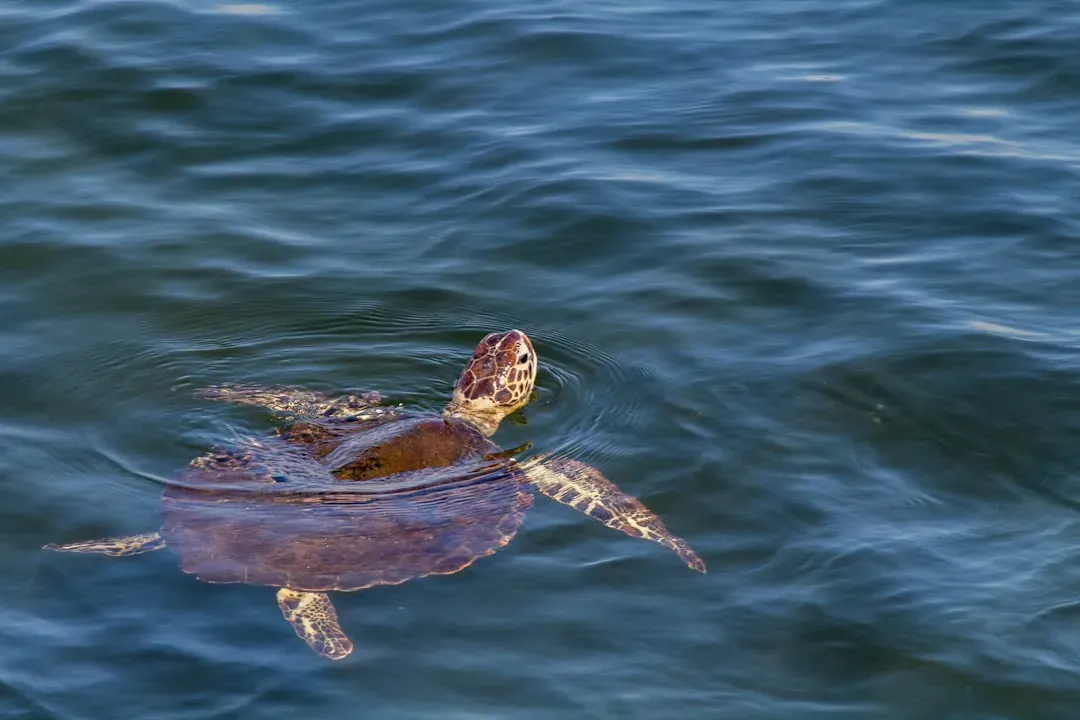
Sea turtles might just be the most remarkable navigators on the planet, and a groundbreaking study published in Nature in early 2025 proves it. Researchers at the University of North Carolina at Chapel Hill provided the first empirical evidence that loggerhead sea turtles can learn and remember the unique magnetic signatures of different geographic regions. This discovery offers new insights into how turtles and other migratory animals navigate vast distances to reach specific foraging and breeding grounds.
The findings suggest that sea turtles possess two distinct magnetic senses that function differently to detect the Earth’s magnetic field. Loggerhead turtles are famous for their extraordinary migrations, guided by an internal magnetic map that enables them to determine their location by detecting variations in Earth’s magnetic field.
In effect, sea turtles have a low-resolution biological equivalent of a global positioning system, but one that is based on geomagnetic information instead of satellite signals.
What makes this even more jaw-dropping is the memory aspect. Research results could explain how sea turtles can accurately return to their nesting beaches and foraging regions, even after long time periods. Sea turtles can go several years between visits to their home nesting beaches. Years. They’re away for years and still come home to the exact same beach.
Dead Reckoning: The Navigator Inside Every Ant
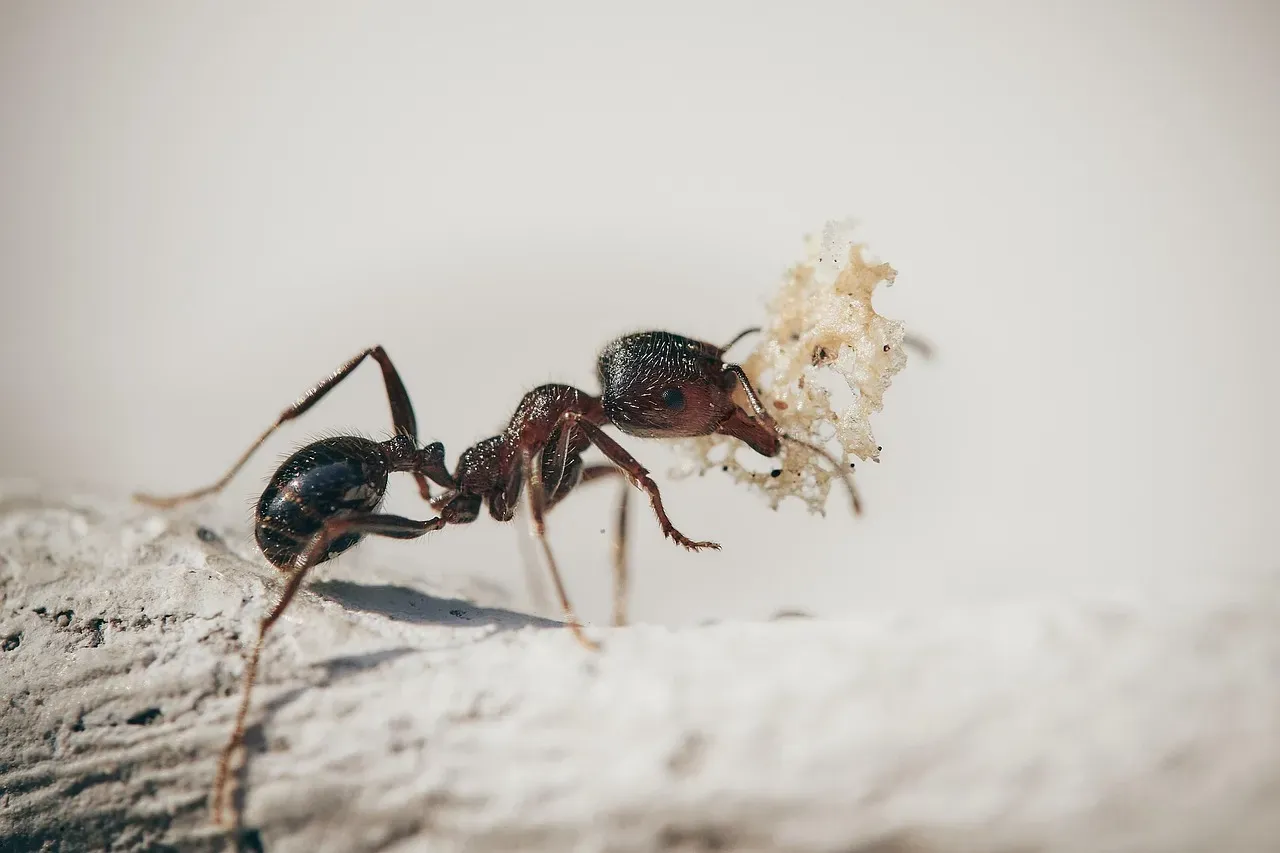
Here’s where it gets philosophical. Some animals don’t rely on stars, magnetic fields, or smell at all. They literally just keep track of every step they take. Path integration, also termed “dead reckoning,” is a navigational process by which signals generated during locomotion allow the subject to update its position in relation to its point of departure.
Desert ants are the gold standard here. While foraging, Cataglyphis desert ants follow a circuitous path, but once they have found food, they return to the starting point not by retracing their outbound path but by setting a straight course back home. The home vector is determined by the integration of the outbound path rather than by reference to landmark information. The path-integration system works even in areas that are entirely devoid of any reliable landmark cues, such as in the vast expanses of the Saharan salt pans.
Think of it like this: imagine walking blindfolded through a maze, constantly computing turns and distances in your head, then drawing a straight line back to the entrance from memory. That’s what ants do, every single foraging trip, without a second thought. This so-called path integration system allows the animal to return to its home, or to a familiar feeding place, even when external cues are absent or novel.
Bees add yet another layer. Karl von Frisch studied the European honey bee and demonstrated that bees can recognize a desired compass direction in three different ways: by the Sun, by the polarization pattern of the blue sky, and by the Earth’s magnetic field. He showed that the Sun is the preferred or main compass, and the other mechanisms are used under cloudy skies or inside a dark beehive. Redundancy built into biology. Nature’s idea of a backup system.
Conclusion: Nature’s Navigation Puts Us to Shame

We’ve built satellites, smartphones, and turn-by-turn GPS systems. Yet a monarch butterfly with a brain the size of a pinhead crosses an entire continent and lands on the same tree its great-grandparents visited. A sea turtle swims thousands of miles and returns to the beach where it was born. A desert ant wanders through the Sahara and walks a straight line home without ever looking back.
There’s something quietly humbling about all of this. Animals carry navigation systems refined over millions of years of evolution, layered with redundancy, precision, and elegance that no human-made device has yet matched in miniaturization. Caribou and pigeons’ extreme navigational abilities offer valuable inspiration for developing new human technologies. For instance, magnetoreception technologies could be applied to wearable devices that tap into the Earth’s magnetic field.
We’re still uncovering the secrets. Science is still genuinely surprised. And that, to me, is the most exciting part of all of this. When nature continues to outpace our understanding of it, the only reasonable response is awe.
What navigational ability of animals surprises you most? Tell us in the comments.
