
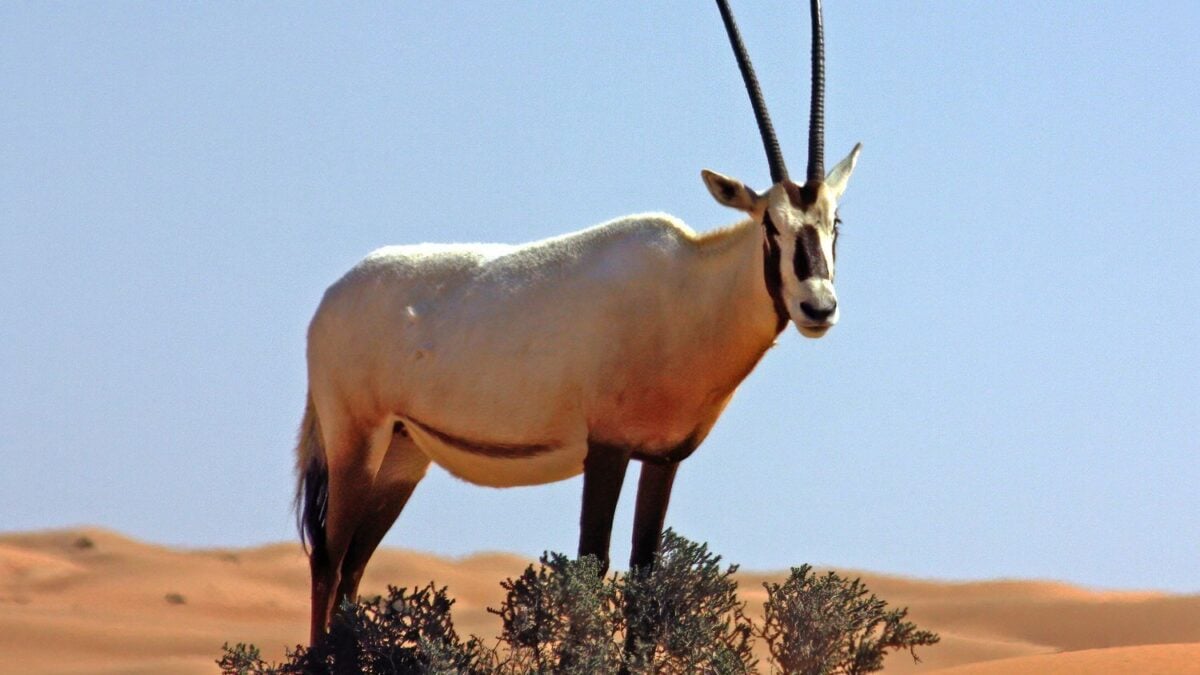
There is something almost mythical about seeing an oryx crest a sun-scorched dune, its long horns cutting against the sky like twin spears. Robust, dignified, and courageous, the sight of a spear-tipped oryx silhouetted against a setting sun is iconic – an embodiment of Africa’s desert spirit. It is a creature that looks like it was designed by someone who wanted to prove that life could exist anywhere, under any conditions.
Few animals on Earth are quite so perfectly built for adversity. Known for its elegant horns, striking coat, and ability to survive in brutal heat, the oryx is often called the ultimate desert antelope – found from the Arabian Peninsula to eastern and southern Africa, adapting to dry landscapes where few other large mammals can live. What follows may surprise even the most seasoned wildlife enthusiasts. Let’s dive in.
Those Horns Are Not Just For Show
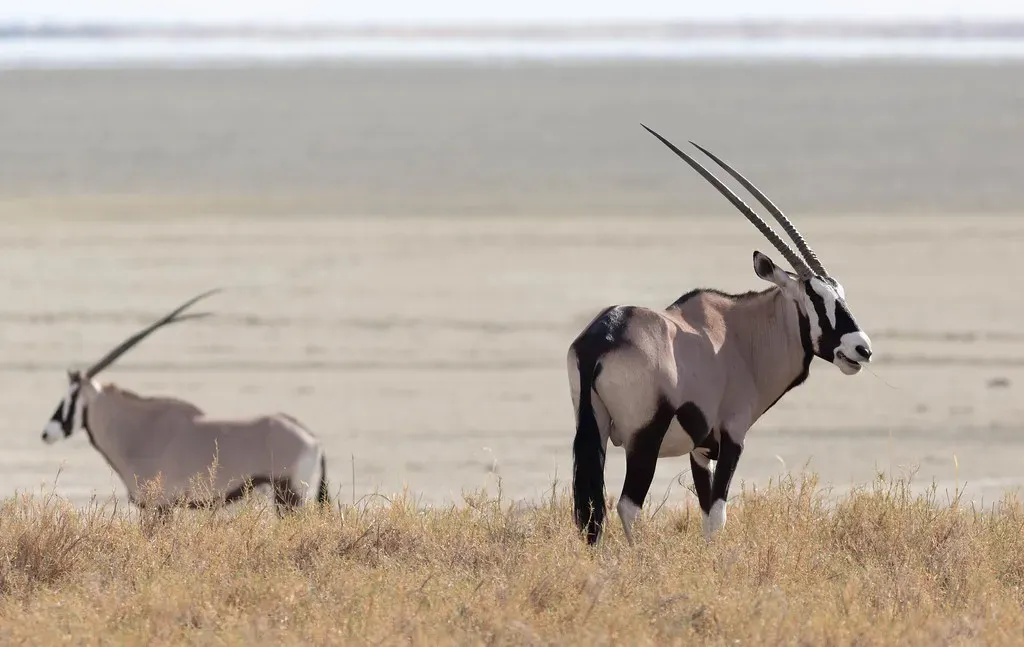
Let’s be real – when most people see an oryx, the first thing that grabs them is the horns. Long, narrow, and almost impossibly straight, they are remarkable in both form and function. Both males and females possess permanent horns, which are narrow and straight except in the scimitar oryx where they curve backwards like a scimitar – and these horns can be lethal, as oryxes have been known to kill lions with them.
That last detail is worth sitting with for a moment. A desert antelope that can kill a lion. Those long horns come in handy for protection from predators like lions, leopards, and hyenas, and if threatened, oryx display a unique behavior – standing sideways to appear larger – before using their horns to defend or attack if intimidation fails. Think of it less like a gentle deer and more like a lance-carrying knight who happens to graze on thorny shrubs.
A Body Temperature That Defies Belief
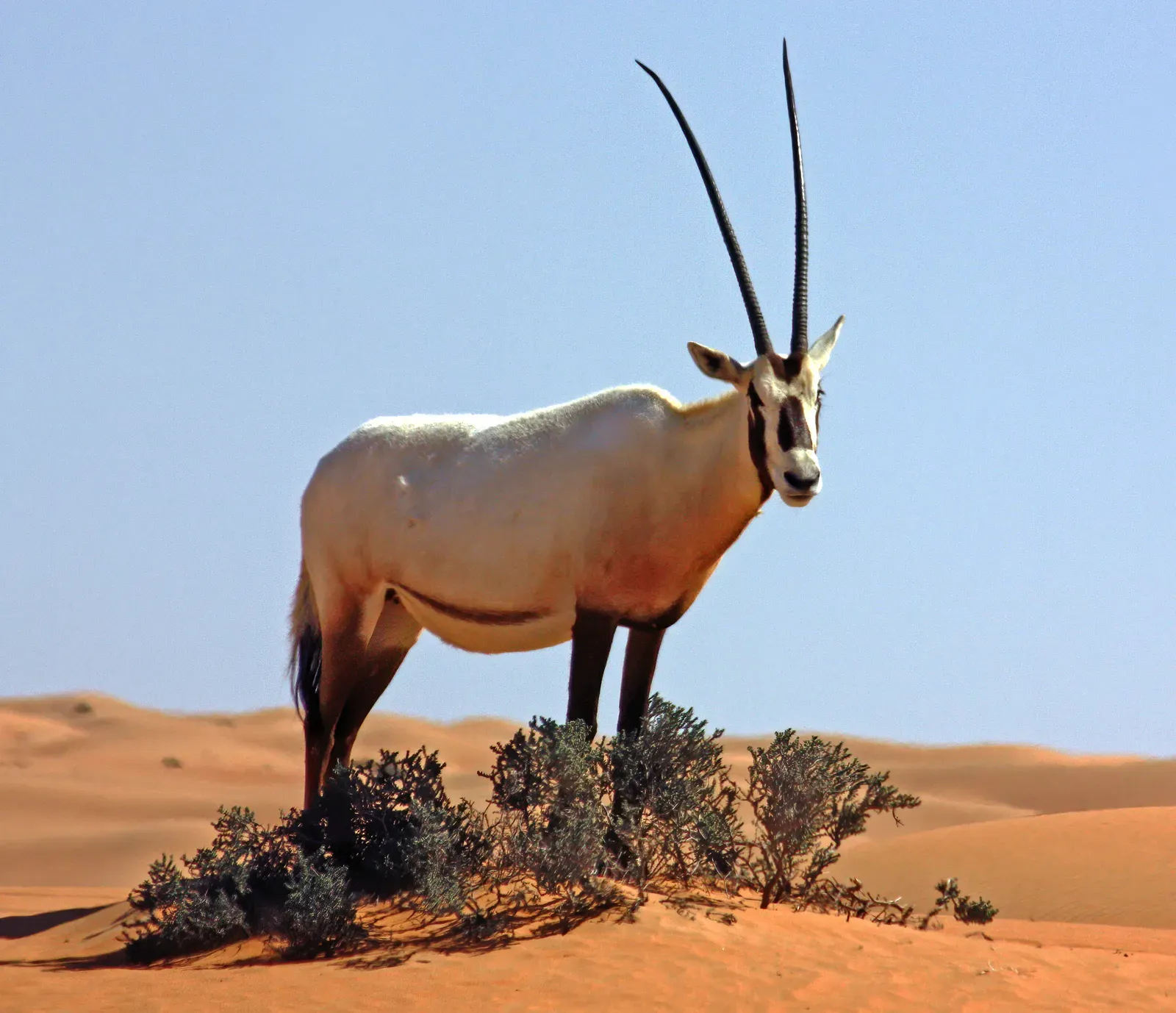
Here is something genuinely jaw-dropping. Most mammals, humans included, start suffering serious damage when their body temperature rises even a couple of degrees above normal. The oryx, however, seems to play by entirely different rules. All oryx species are adapted to living in arid areas where daytime temperatures can easily exceed a sweltering 50°C – yet instead of fighting a losing battle like a sweating human would, oryx metabolisms are adapted to run at higher temperatures than most other mammals, something they share with camels.
The biological mechanism behind this is genuinely fascinating. Research on scimitar-horned oryx showed that their body temperatures could increase to over 46°C before they began to perspire, primarily due to the carotid rete – a network of blood vessels that essentially tricks the brain’s hypothalamus into thinking the animal is cooler than it actually is. It is, honestly, one of the most elegant engineering solutions nature has ever produced.
Masters of Going Without Water
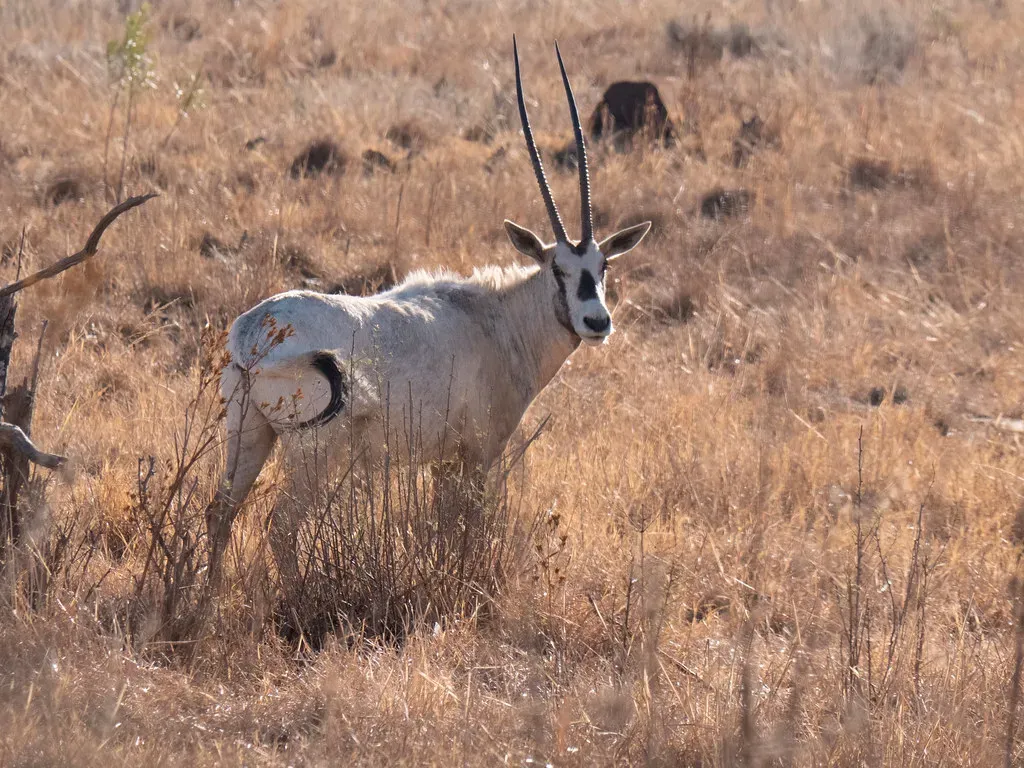
Imagine going months without a single drink of water. For us, that is a nightmare. For the oryx, it is Tuesday. Oryx can survive without water for nine to ten months thanks to their adaptation to desert habitats. That is not a typo. Nearly a full year without drinking.
The secret lies in a combination of behavioral and dietary tricks. Plants collect dew, which is gradually released during the hotter parts of the day, and some plants increase their water content by as much as a quarter to nearly half – so when oryxes feed late at night or early in the morning, they maximize both food and water sources simultaneously. They also produce very dry fecal pellets and highly concentrated urine – every drop of moisture is jealously conserved.
The Unicorn Is Actually an Oryx in Disguise
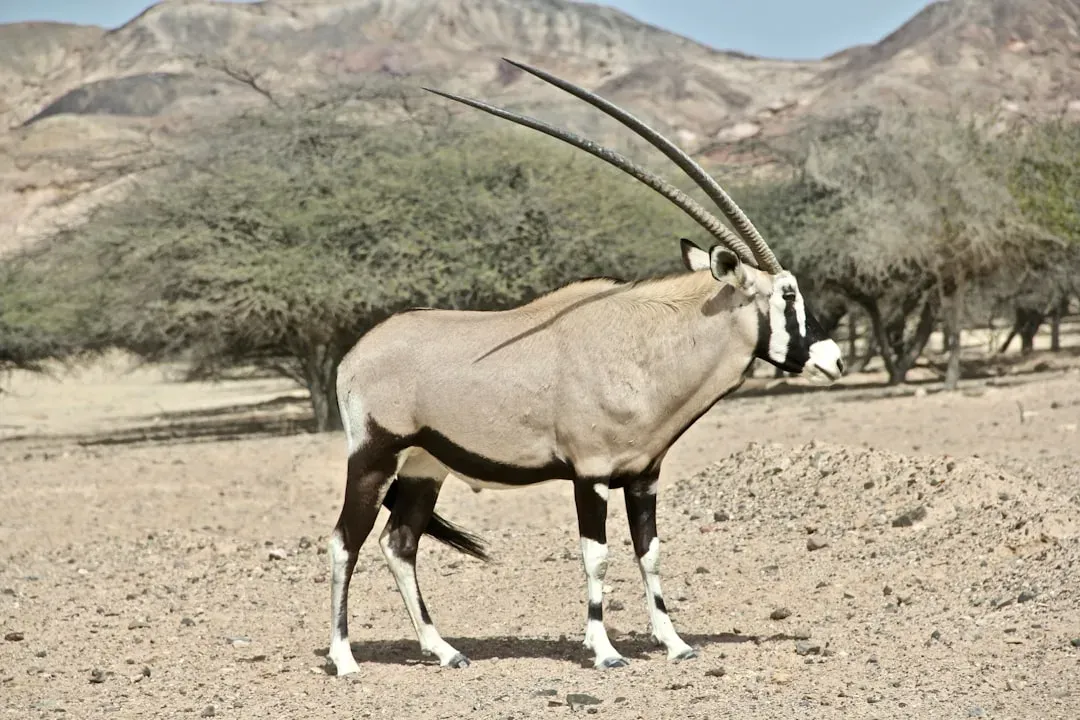
This one always catches people off guard, and honestly, I think it is one of the most charming wildlife origin stories out there. The unicorn myth may have originated from the Arabian oryx, which can appear to have only one horn when viewed in profile. Ancient travelers observing the animal from the side would have seen just one long, straight horn projecting forward – and the legend was born.
An elegant, graceful antelope, the scimitar-horned oryx is supremely adapted to desert life and carries this mythological weight with quiet dignity. It is hard to say for sure exactly how widespread that ancient misidentification was, but the connection is well documented and delightful. A creature that inspired centuries of fantasy, currently grazing on scrubland. Not bad.
A Coat That Works Like a Smart Fabric
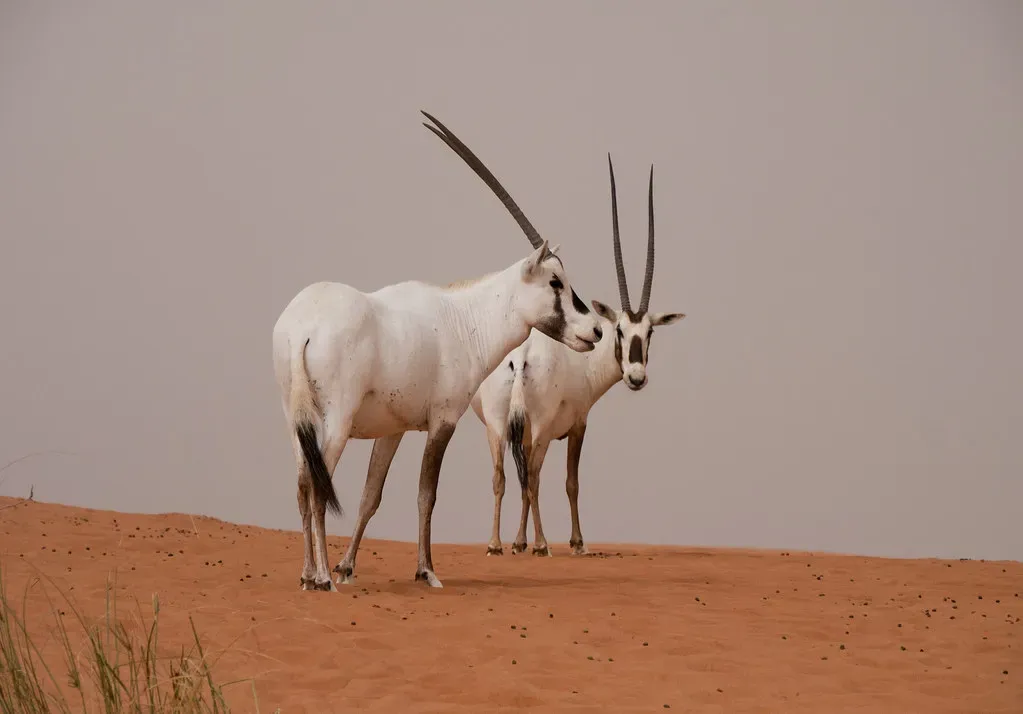
The oryx’s coat is not just pretty. It is, in effect, a sophisticated thermal management system that would impress a materials scientist. The Arabian oryx is the most specialized oryx for living in true desert extremes – its light color reflects the desert heat and sunlight, it can erect its hair on cold winter mornings to capture warmth in its thick undercoat, and its legs even darken in the winter to absorb more of the sun’s heat.
Think of it like a jacket that automatically adjusts its insulation depending on whether you are walking into a freezer or stepping onto a sun-baked parking lot. The white coat helps reflect the heat of the desert, while their black skin and tongue tip protects against sunburn, enlarged hooves enable easy movement on sand, and dense eyelashes with strong eyelids protect against windblown sand. Every single detail has a purpose.
The Arabian Oryx Came Back From the Dead
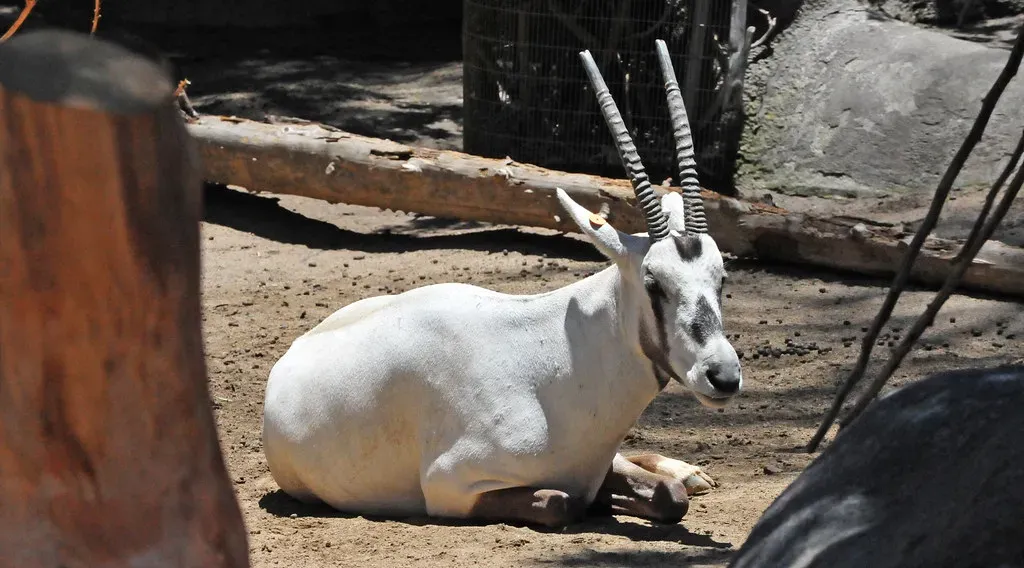
This is, without question, one of conservation’s most extraordinary chapters. The Arabian oryx was declared extinct in the wild by the early 1970s due to hunting. Gone. Finished. A species erased from its homeland by human greed and modern weaponry. In the 1930s, Arabian princes and oil company workers began hunting Arabian oryxes with automobiles and rifles, and some hunts were reported to employ as many as 300 vehicles.
Yet the story did not end there. The plight of this desert antelope was not seriously addressed until 1962, when the Fauna Preservation Society devised and executed an ambitious rescue plan called Operation Oryx – mounting an expedition to what is now South Yemen to capture several of the last surviving wild individuals to form the nucleus of a captive herd. In 1986 the Arabian oryx was classified as endangered, and in 2011 it became the first animal to revert to vulnerable status after previously being listed as extinct in the wild. That is a comeback story for the ages.
Nomads With a Nose for Rain
The oryx does not just survive the desert. In a very real sense, it reads it. These animals seem able to detect rainfall a great distance away and live an almost nomadic life, traveling vast areas searching for precious new growth after the intermittent rains. Picture an animal with a built-in weather radar, perpetually scanning the horizon for the faintest promise of green.
The Arabian oryx can smell rain in the distance, and when the lead female gets the scent, she leads her herd to find the fresh grasses that the rain will help sprout. They are highly nomadic, following rare seasonal rains and subsequent green flushes. There is something deeply moving about a herd moving silently across a scorched landscape, following nothing but the ghost of a smell toward the possibility of life.
A Symbol That Crossed Continents
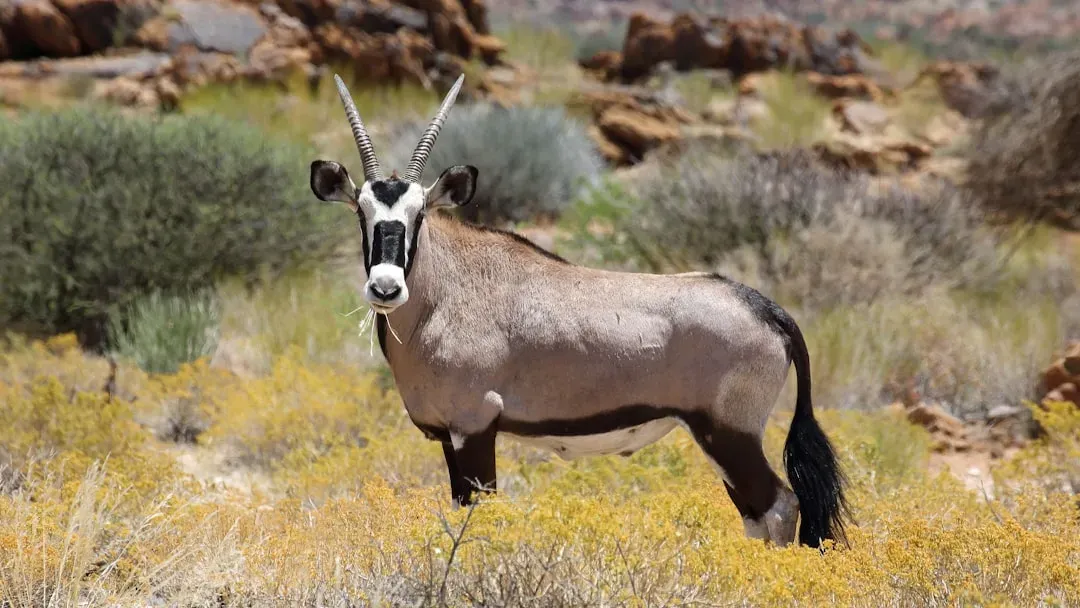
The oryx’s cultural footprint is surprisingly wide. The Arabian oryx is the national animal of Jordan, Oman, the United Arab Emirates, Bahrain, and Qatar – and is also the symbol of Qatar Airways. Few animals carry that kind of diplomatic weight across so many nations simultaneously. It is not hard to understand why. The oryx embodies something people want to be associated with: resilience, elegance, and the capacity to endure.
Between 1969 and 1977, the New Mexico Department of Game and Fish in the US intentionally released 95 gemsbok into the White Sands Missile Range – and that population has since flourished dramatically on foreign soil, a testament to just how adaptable the species really is. The oryx is more than a desert survivor; it is a symbol of resilience – with horns that curve backwards, adaptations for desert heat, and a story of extinction and recovery, it embodies both fragility and strength.
Conclusion
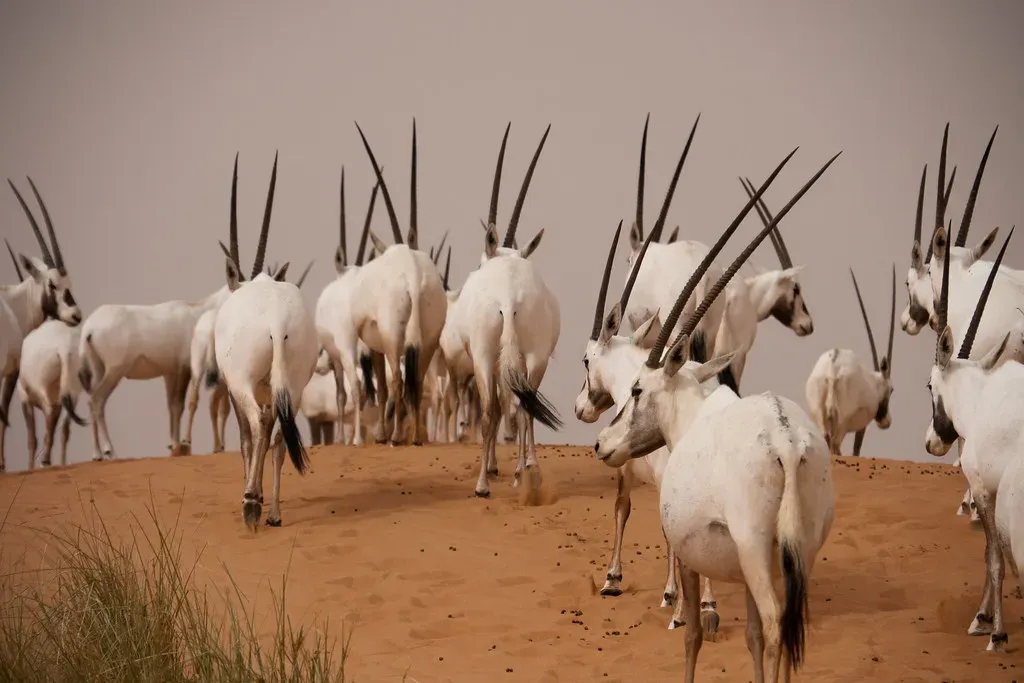
The oryx is, in nearly every measurable way, one of nature’s most astonishing achievements. It is an animal that tolerates temperatures that would hospitalize a human, navigates landscapes with almost no water for months on end, defends itself against lions, and inspired the unicorn myth all in a day’s work. Stripped of its dramatic desert backdrop, the oryx still commands respect.
What strikes me most, personally, is the conservation story. A species hunted to extinction, saved by a handful of dedicated people and a small group of captive animals, and now walking free again across Arabian sands. If that does not make you feel something, honestly, I am not sure what will.
The next time you look up at the night sky and spot a constellation, consider that somewhere in the Sahara or the Arabian Peninsula, an oryx is standing in that same darkness, nose tilted toward a distant rain cloud, quietly defying everything the desert throws at it. What animal do you think deserves that kind of admiration most? Tell us in the comments.

- 10 Fascinating Facts About the Amazing Osprey - July 23, 2026
- The Impact of Heatwaves on Animal Behavior and Survival - July 23, 2026
- The Enduring Loyalty of Elephants Shows Us the True Meaning of Family Bonds - July 23, 2026