
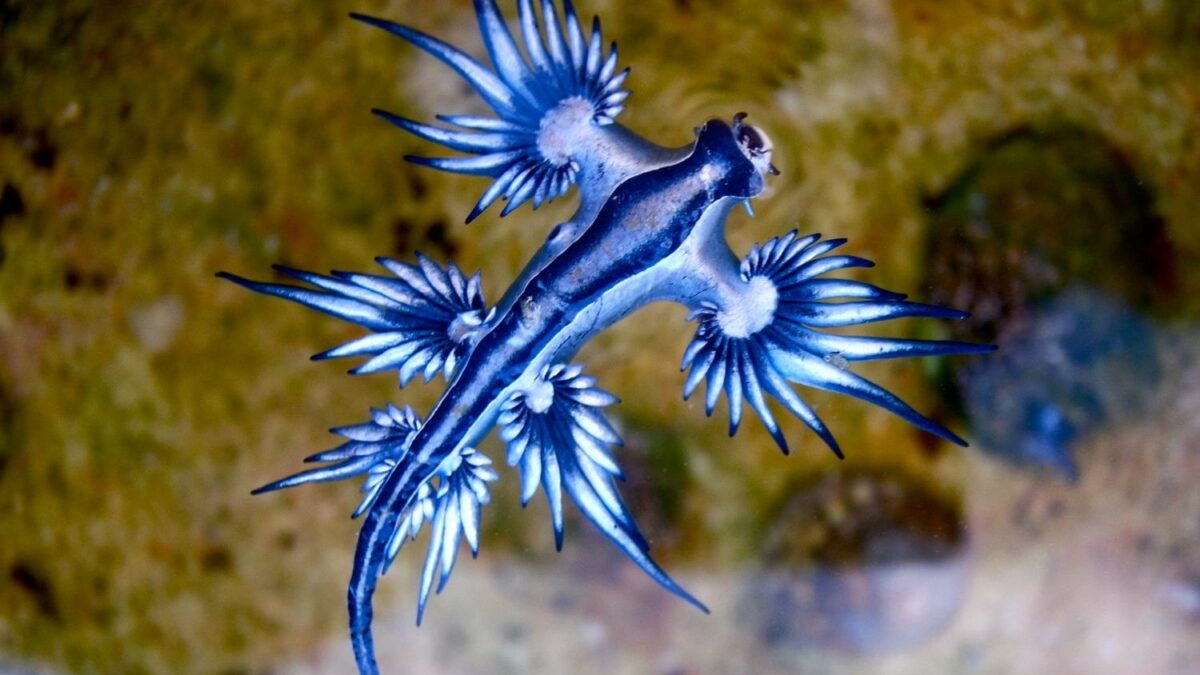
Imagine spotting a cluster of iridescent blue creatures gliding across the ocean surface, looking like escaped jewels from a dragon’s hoard. These aren’t mythical beasts. They’re blue dragon sea slugs, or Glaucus atlanticus, tiny nudibranchs that punch way above their weight in the wild seas. Their vibrant hues and sneaky survival tricks make them ocean enigmas worth uncovering.
Here’s the thing. This little wanderer thrives in warm waters worldwide, defying expectations at every turn. Ready to uncover what makes it the sea’s pint-sized powerhouse? Let’s plunge into six standout facts.[1][2]
1. Floats Upside Down on an Air Bubble
derivative work: dapete, CC BY 2.0)
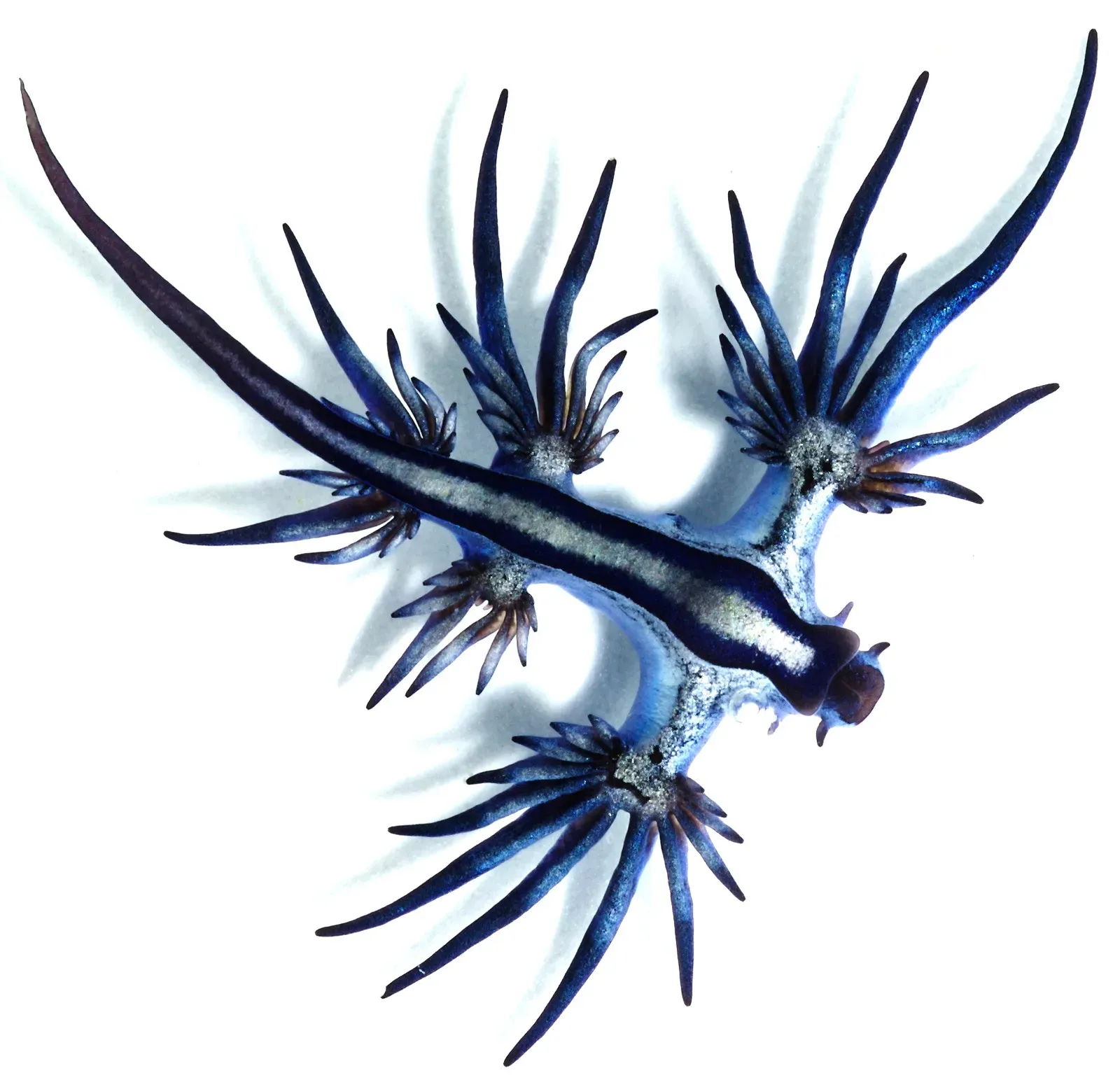
The blue dragon defies gravity in the most peculiar way. It stores air in its stomach to bob along upside down at the ocean’s surface. This pelagic lifestyle lets ocean currents whisk it across vast distances.[2]
Picture it exposing its electric blue belly to the sky while the silvery back mimics the shimmering water below. This orientation isn’t random. It maximizes camouflage and hunting opportunities among floating prey. Honestly, it’s like the slug hacked the ocean’s drift system for a free ride.[3]
2. Countershading Camouflage Fooled Predators
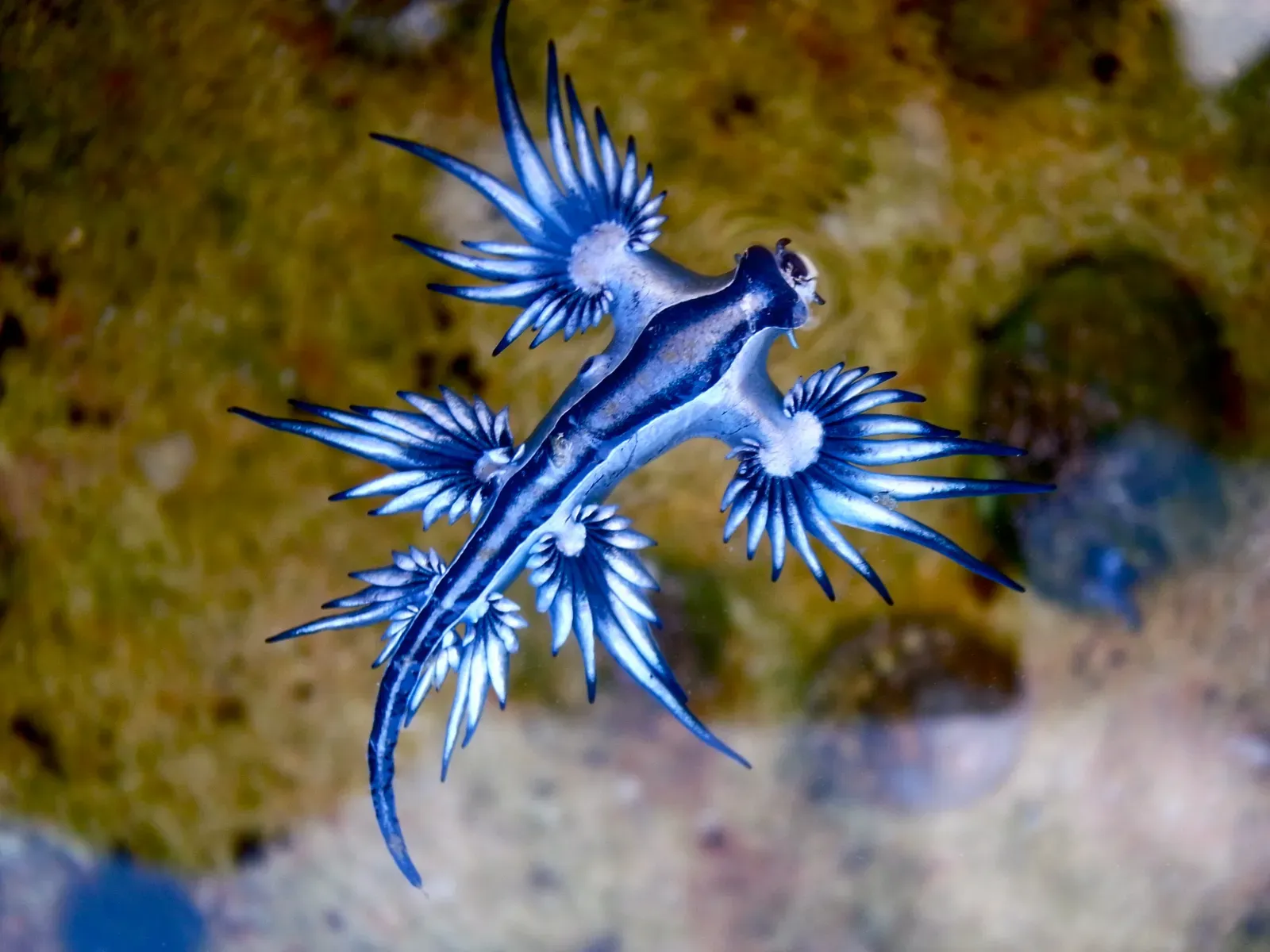
Camouflage here works like a double-edged illusion. The vivid blue underside blends seamlessly with the deep sea when viewed from above. Meanwhile, the pearlescent silver dorsal side mirrors the sunlit surface from below.[1]
No wonder birds and fish overlook it so often. This countershading rivals great white sharks in cleverness. It keeps the blue dragon hidden during its surface drifts. I think it’s nature’s perfect vanishing act for open water.[4]
Predators like loggerhead turtles rarely spot them. The effect proves devastatingly effective.
3. Steals and Supercharges Venom from Prey
Uploaded by Jacopo Werther, CC BY-SA 2.0)
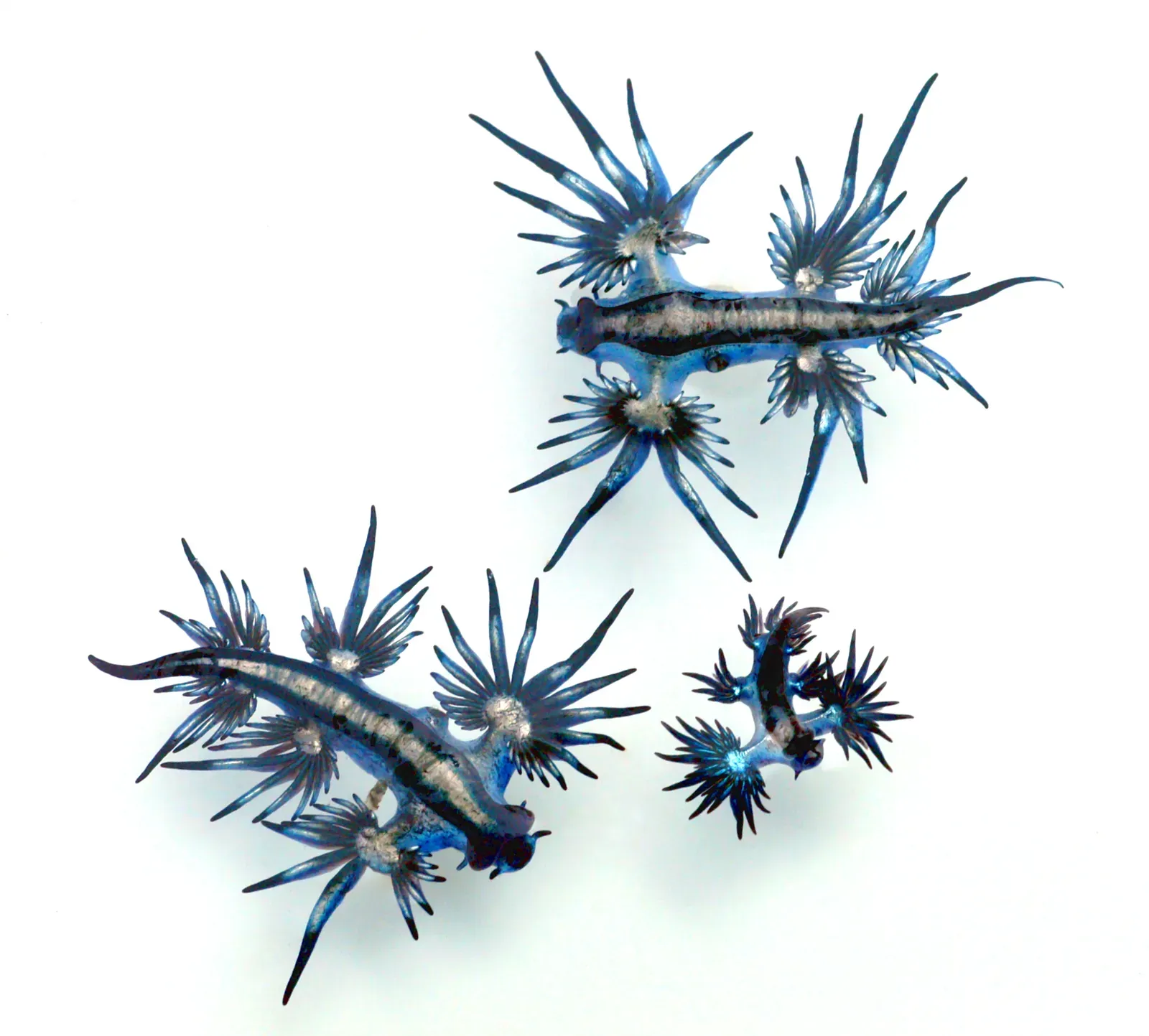
This sea slug turns the tables on venomous foes. It munches on Portuguese man o’ wars and other siphonophores, immune to their stings. Then it hijacks their nematocysts, storing them in finger-like cerata appendages.[2]
The twist? These stolen stinging cells pack more punch in the slug than in the original host. Touch one, and you feel a fiery barrage worse than the man o’ war alone. Humans report intense pain, nausea, even welts. Let’s be real, handling feels like grabbing live wires.[1]
4. Tiny Body Tackles Giant Meals
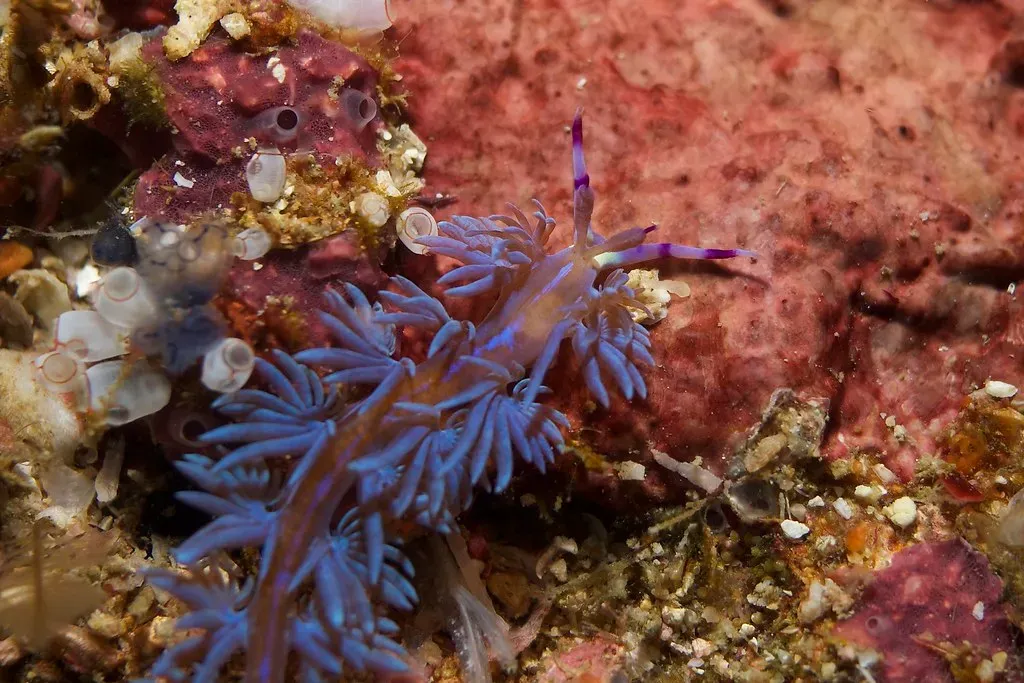
At just three centimeters long, it seems harmless. Yet this nugget devours creatures dozens of times bigger. Serrated radular teeth in its chitinous jaw shred through tough prey like a tiny chainsaw.[1]
Chitin, the stuff of crab shells, forms that jaw for extra bite. Air whooshes from its stomach noisily during feasts. No wonder it thrives on venomous giants. Size deceives with this feisty drifter.[4]
It chips away relentlessly. Predatory prowess shines through.
5. Hermaphrodites with Specialized Love Lives
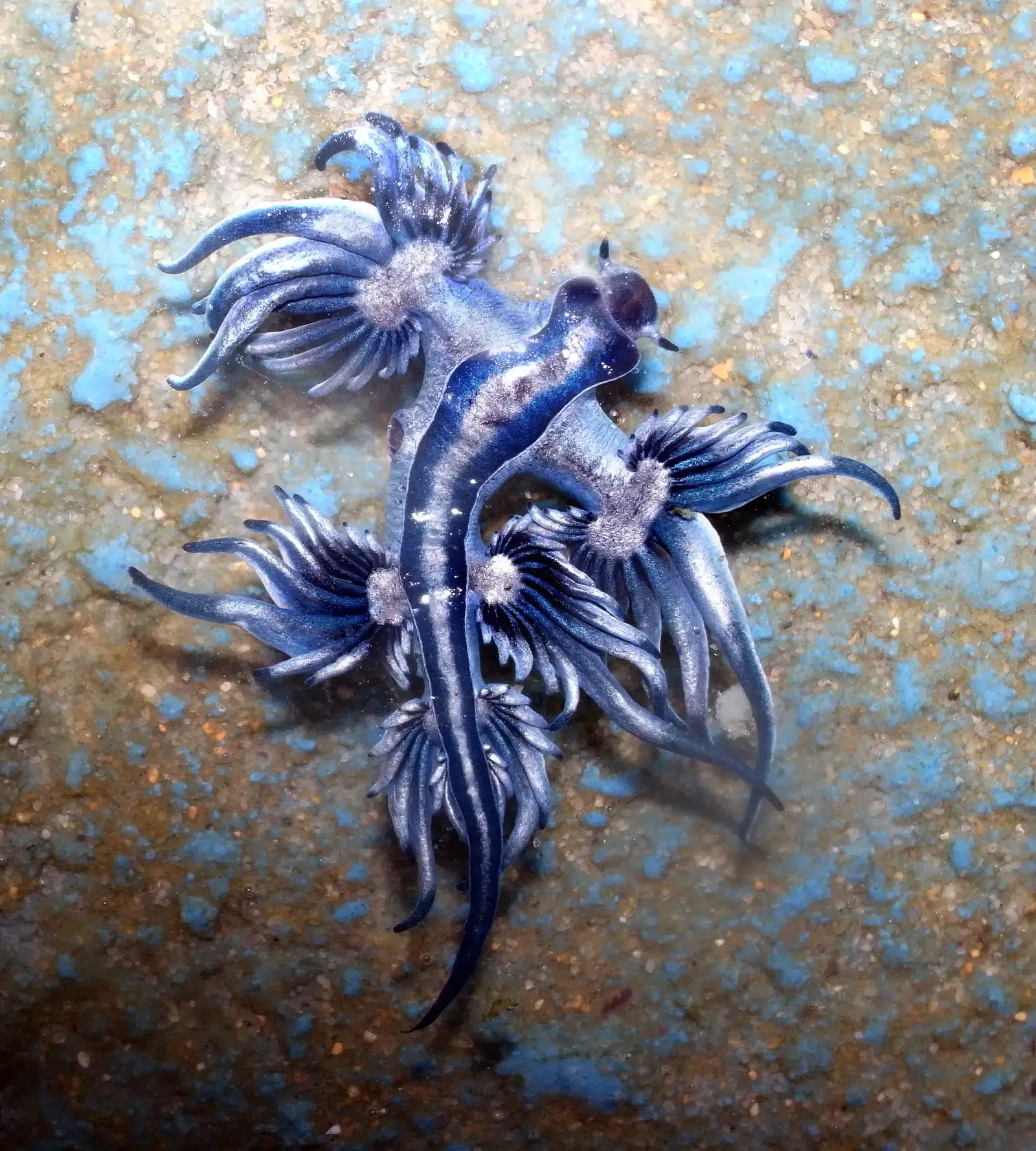
Every blue dragon boasts both male and female organs. Self-fertilization stays off-limits, though. They pair up, exchanging hooked penises in a careful dance to dodge stings from cerata.[2]
Eggs emerge in strings of about 20, laid on driftwood or carcasses. Larvae hatch fast, ready for planktonic adventures. This setup ensures gene mixing across ocean basins. It’s evolution’s quirky romance novel.[1]
6. Gathers in Blue Fleets for Feasts and Flings
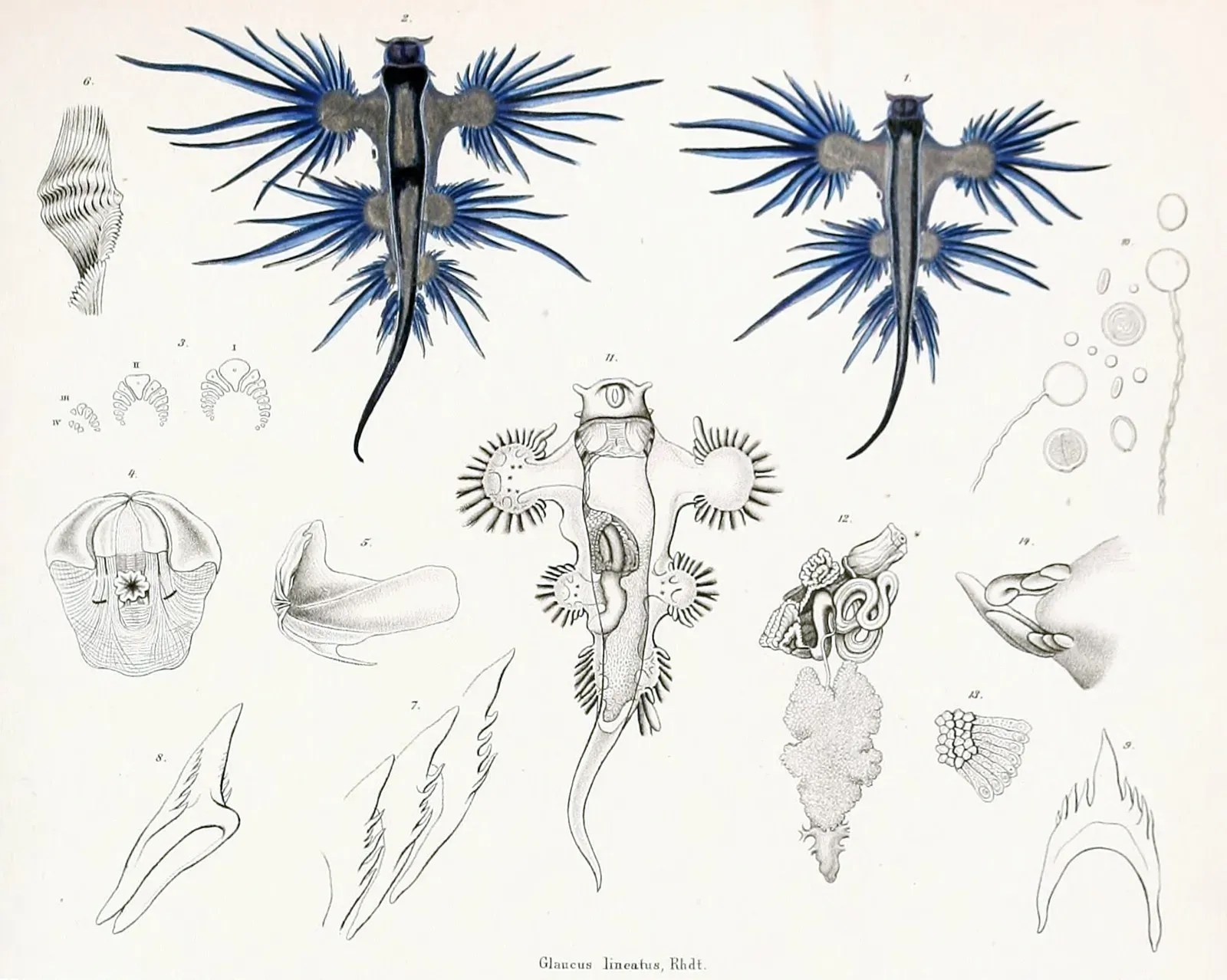
Solitary drifts turn social near prey blooms. They cluster into “blue fleets,” easing hunts and hookups. Winds sometimes strand these groups on beaches, where they curl into protective balls.[1]
Found worldwide in warm currents, from Atlantic to Indian Oceans. Warming seas push them into new spots lately. Cerata even propel them slowly toward mates or meals. These gatherings reveal a communal side to the lone wanderer.[4]
The ocean’s tiny electric flame leaves us marveling at its bold survival. What surprises you most about this sea marvel? Share your thoughts below.
