

Most people, if asked to picture a mammal, will conjure something with weight and presence. Something you can see coming. A wolf, a bear, maybe a deer darting across a road at dusk. But the mammal kingdom hides another side entirely, one that plays out in the cracks of rocks, under leaf litter, and in the dark interiors of limestone caves. These creatures are so small they could rest in the bowl of a teaspoon, yet they are some of the most biologically intense life forms on this planet.
In the animal kingdom, being small doesn’t mean being defenseless. In fact, some of the tiniest creatures on our planet have developed the most extraordinary survival skills, and they’ve evolved remarkable adaptations that allow them to thrive in environments where larger animals might struggle. Honestly, the more you learn about these miniature survivors, the more your assumptions about fragility and power get completely flipped on their head. Let’s dive in.
Built Like Nature’s Most Extreme Machines
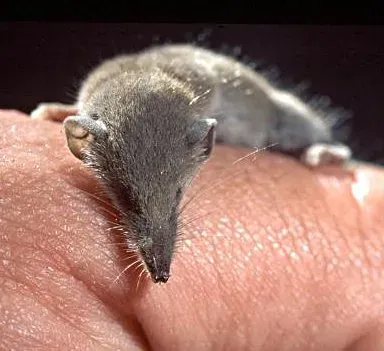
derivative work: Materialscientist (talk), CC BY-SA 3.0)
Here’s a fact that stopped me cold the first time I read it. The Etruscan shrew, also known as the white-toothed pygmy shrew, is the smallest known mammal by mass, weighing only about 1.8 grams on average, as much as a paperclip. A paperclip. A living, breathing, hunting animal with a heartbeat, fur, and fully formed bones. It’s almost impossible to wrap your head around.
The Etruscan shrew has a very fast heart rate, up to 1,511 beats per minute, and a relatively large heart muscle mass at 1.2 percent of body weight. That means its heart is hammering away at roughly twenty-five beats every single second. Think of the most intense sprint you’ve ever witnessed in any animal, and the Etruscan shrew’s heart is running that fast just sitting still.
Due to its small size and consequent high surface-area-to-volume ratio, the Etruscan shrew is at a constant risk of hypothermia, and would quickly freeze to death if not for its extremely rapid metabolism. This is what I think is so astonishing about these creatures. Their entire design is a biological arms race against their own physics. They are simultaneously their own greatest threat and their own greatest solution.
Characterized by very rapid movements and a fast metabolism, the Etruscan shrew eats about one and a half to two times its own body weight per day, feeding on various small vertebrates and invertebrates, mostly insects, and can hunt individuals of the same size as itself. For context, that would be like a 180-pound person consuming nearly 360 pounds of food in a single day. The math is staggering.
Eating up to twenty-five times a day due to their high metabolism, these tiny mammals are also distinguished by having the largest brain-to-body-weight ratio of any animal in the world. So not only are they relentless hunters driven by metabolic necessity, they may also be the most proportionally brainy creatures on Earth. Let that sit for a moment.
Survival Tricks That Sound Like Science Fiction
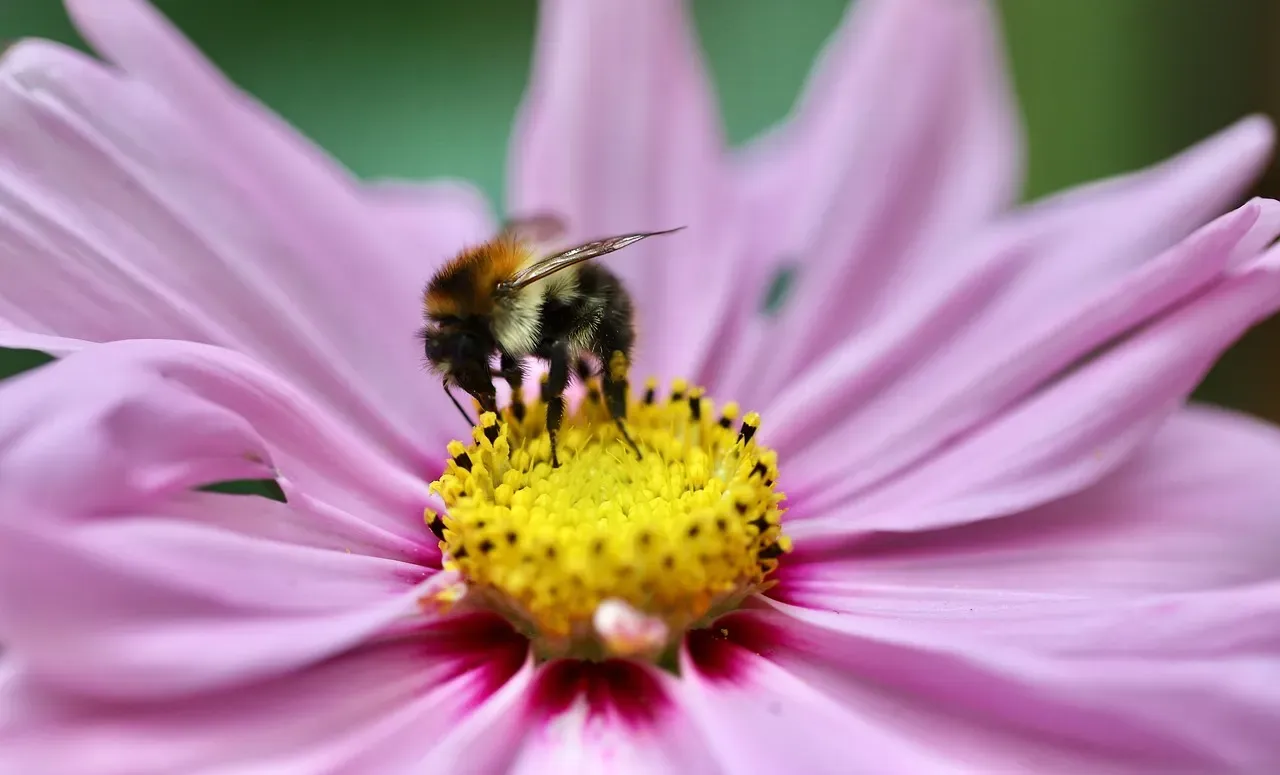
If the Etruscan shrew is nature’s tiny furnace, then the bumblebee bat is its flying ghost. Kitti’s hog-nosed bat measures approximately 29 to 33 millimeters long and weighs around 2 grams, earning its common name “bumblebee bat.” It is, by body length, the smallest mammal in the world. Kitti’s hog-nosed bat was unknown to the world at large prior to 1974, and its common name refers to its discoverer, Thai zoologist Kitti Thonglongya. I know it sounds crazy, but one of the planet’s most extraordinary mammals went completely unrecorded by science until the modern era.
The bumblebee bat uses echolocation to navigate and hunt insects in the dark, a skill that compensates for its tiny size. It can fly with remarkable precision through dense forest environments and detect insects as small as two millimeters in size. That’s an insect the width of a pencil lead, detected in complete darkness, at speed. It’s the kind of precision that makes modern sonar technology look clumsy by comparison.
The bumblebee bat is an endangered species that can only be found in a few locations in Thailand and Myanmar, making it a rare and valuable species that needs to be protected. There’s something deeply unsettling about that. An animal that went undiscovered for almost all of human history is now threatened with disappearing before most people even know it exists.
In cold seasons and during shortages of food, Etruscan shrews lower their body temperatures down to about 12°C and enter a state of temporary hibernation to reduce energy consumption. Recovery from this state is accompanied by shivering at a frequency of 58 muscle contractions per second. This induces heating at a rate that is among the highest values recorded in mammals, with heart rate increasing from 100 to over 800 beats per minute as they revive. It’s essentially a biological reboot. Imagine powering down completely, then surging back to full throttle in a matter of minutes.
Some small mammals, like the pygmy jerboa, create intricate burrows to hide from predators and escape extreme temperatures. The pygmy jerboa can even survive without water for months, thanks to its ability to extract moisture from the insects it eats. That is desert survival engineering at its absolute finest.
The long-tailed planigale holds the distinction of being the smallest marsupial, thriving in the rugged landscapes of the Australian outback. Its flattened body allows it to navigate through tight crevices and burrows, showcasing an incredible adaptation to its environment. This tiny marsupial is a testament to the diverse strategies of survival in the wild. It’s like nature gave each species a completely different rulebook for staying alive, and every single one of them works brilliantly.
The Ancient Legacy of Being Small and What It Means Today
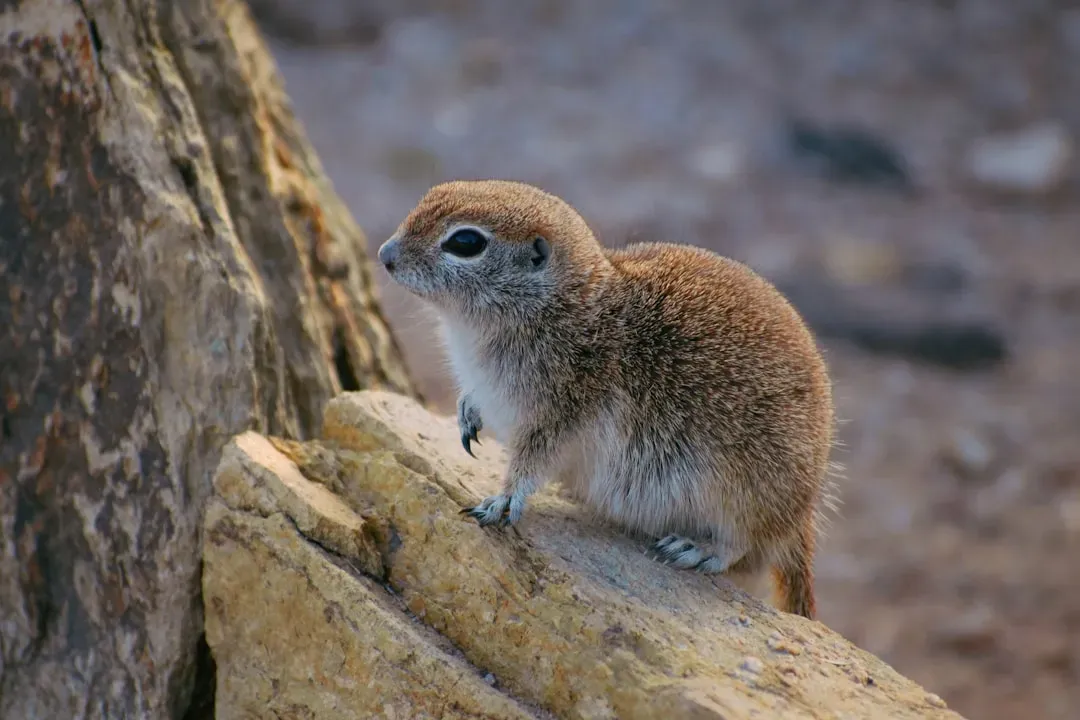
Here’s the thing that really reframes everything: being tiny isn’t a compromise. It’s an ancient, proven strategy. All mammals on Earth today descended from one common ancestor called the Morganucodon, a tiny shrew-like creature that lived alongside the dinosaurs roughly 200 million years ago, and competing for resources with the planet’s early Jurassic reptilian giants kept the mammal lineages that existed at the time relatively small.
Smallness is not a recent experiment. It was the original mammalian condition. So when we marvel at the Etruscan shrew or the bumblebee bat, we’re really looking at living echoes of the very first mammals. They didn’t fall behind evolution. In many ways, they stayed closest to the original winning formula.
Small mammals often have short gestation periods and produce multiple offspring to ensure survival. The Etruscan shrew can have several litters a year, each with up to six young. Speed of reproduction is another survival weapon. When your individual lifespan is measured in months, producing the next generation fast becomes everything.
The mother Etruscan shrew relocates her young by leading them with her tail in a train-like formation, a behavior known as caravanning, with each cub biting the tail of the one in front. That image honestly stopped me in my tracks. A chain of creatures, each the weight of a raindrop, moving in single file through the undergrowth. Ancient. Effective. Quietly beautiful.
Many small mammals use high-pitched sounds to communicate, which are often beyond human hearing. This allows them to coordinate activities without alerting predators. They are essentially operating on a frequency the rest of the world can’t detect. Invisible, silent, and perfectly coordinated.
These tiny mammals face significant threats from habitat loss and climate change. After surviving for two hundred million years through ice ages, asteroid impacts, and the rise and fall of entire ecosystems, it would be a particular kind of tragedy if the threats they couldn’t overcome turned out to be ones we created.
Conclusion
The world’s smallest mammals are not footnotes in the animal kingdom. They are its oldest and most quietly extraordinary chapter. They carry hearts that beat faster than a hummingbird’s wings, brains proportionally larger than any creature alive, and survival strategies that took millions of years to perfect. They hunt in total darkness, revive from near-frozen states in minutes, cross entire continents, and raise their young in caravanning chains through the undergrowth.
Let’s be real: we spend a lot of time celebrating the biggest and the loudest. The blue whale, the African elephant, the great white shark. Yet it may be the smallest creatures, the ones most of us will never see, that deserve our deepest respect. After all, they were here long before us, and with a little more care on our part, they could be here long after.
What do you think would surprise people most: that the world’s tiniest mammal weighs less than a paperclip, or that it has the largest brain-to-body ratio of any animal alive? Tell us in the comments.
