

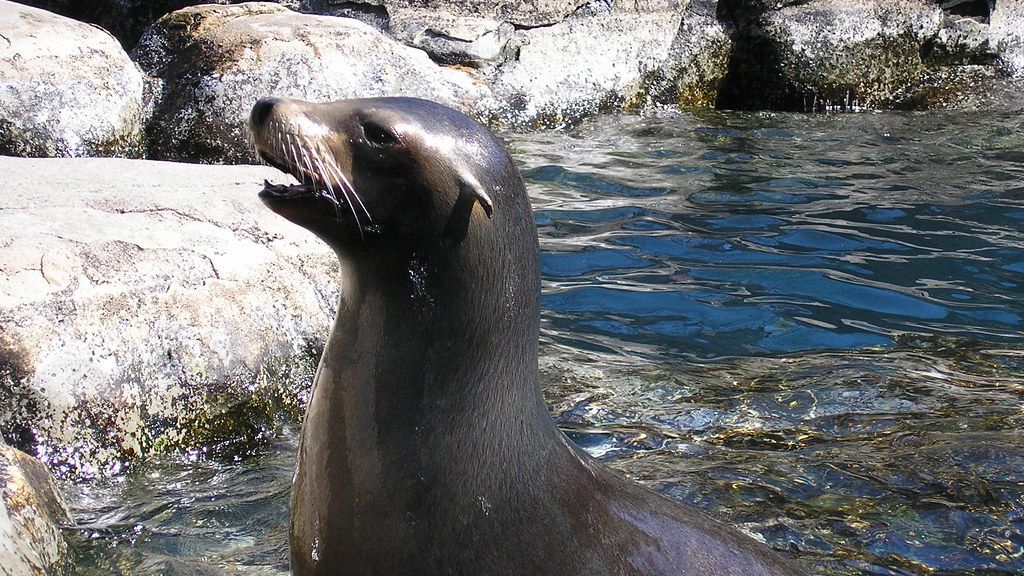
There’s something almost eerie about watching a sea lion respond to a rhythmic beat, tilting its whiskered head, syncing its movements to sound in a way that feels oddly familiar. We tend to think of complex communication, especially the kind involving learned vocalizations, as a distinctly human gift. Something that sets us apart.
It turns out, the ocean has been quietly holding clues we never thought to look for. Researchers studying sea lions are uncovering surprising links to the evolutionary roots of human speech, and the findings are genuinely reshaping how scientists think about where our ability to talk actually came from. Let’s dive in.
The Question That’s Been Bugging Scientists For Decades
How did humans evolve the ability to learn and produce complex vocalizations? It’s one of those questions that sounds simple until you start pulling at it. Most animals communicate, sure, but very few can actually learn new sounds the way humans do.
For a long time, scientists believed this vocal learning ability was extremely rare in the animal kingdom, shared only with certain birds like parrots and songbirds, some cetaceans, and a handful of other species. Sea lions weren’t really on that radar. Honestly, they weren’t even close to the top of anyone’s list.
Why Sea Lions Are Now at the Center of This Research
Here’s the thing about California sea lions specifically: they’re remarkably capable of mimicking sounds, including human speech-like patterns, and they can synchronize their vocalizations with external rhythms. That’s not trivial. That’s actually a big deal scientifically.
Researchers have found that sea lions demonstrate a form of vocal learning that overlaps with the cognitive and physiological systems thought to underpin human speech development. What makes this so compelling is that sea lions are not closely related to humans on the evolutionary tree. The implication? Vocal learning may have evolved independently, more than once, across very different lineages.
What the New Research Actually Found
The study, drawing from behavioral and neurological observations of sea lions, points to shared neural pathways involved in auditory processing and vocal production. These pathways look structurally similar to mechanisms identified in human brains when we process and produce speech. That’s a striking convergence.
Scientists observed that sea lions could adjust their vocalizations in response to auditory feedback, a skill that is considered foundational to human language acquisition. Think of it like this: when a toddler learns to say a word, they hear themselves, compare it to what they intended, and adjust. Sea lions appear to do something remarkably analogous, which really challenges old assumptions.
The Concept of Convergent Evolution in Vocal Learning
Convergent evolution is when completely unrelated species independently develop similar traits because they solve the same biological problem. Wings on bats and birds are the classic example. Now, vocal learning may be joining that list.
This is where things get philosophically interesting, at least for those of us who like to ask big questions. If something as complex as vocal learning evolved independently in sea lions, birds, and humans, it suggests there may be a kind of universal biological logic pushing certain species toward sophisticated communication. It’s hard to say for sure, but that idea is both humbling and a little mind-blowing.
The Role of Rhythm and Beat Synchronization
One particularly fascinating element of this research involves rhythmic entrainment, which is the ability to synchronize movement or sound to an external beat. Humans do this naturally. We tap our feet, clap along, match our speech cadence to a conversation partner without even thinking about it.
Sea lions have demonstrated this same ability in controlled experimental settings. This matters because beat synchronization was previously thought to be tightly linked to vocal learning, almost like two sides of the same coin. The fact that sea lions show both abilities adds serious weight to the theory that these cognitive skills are deeply intertwined, and not uniquely human at all.
What This Means for Understanding Human Language Origins
I think this is where the research becomes genuinely exciting for anyone curious about what makes us human. If sea lions share core mechanisms with us for learning and producing sounds, it forces a reconsideration of the timeline and pathway through which human language evolved.
Language didn’t just appear out of nowhere. It almost certainly built on pre-existing neural architecture that was already present in ancestral species, refined over millions of years. Studying sea lions gives scientists a kind of living laboratory to examine those ancient building blocks in action, without needing a time machine. The sea lion, in this sense, is less a curiosity and more a mirror.
Where This Research Goes Next
Scientists are now keen to map the neurological underpinnings of sea lion vocal learning in much greater detail. Advances in brain imaging and genetic analysis mean researchers can probe deeper than ever before into how these animals process and produce sound at the cellular level.
There’s also growing interest in comparing sea lion vocal learning with that of other marine mammals, particularly dolphins and certain seal species, to understand how widespread these abilities truly are across the ocean-dwelling branches of the animal kingdom. The broader the comparison, the clearer the evolutionary picture becomes. And the clearer that picture, the closer we get to understanding not just how sea lions communicate, but how we do too.
A Surprising Mirror in the Ocean
It’s a strange kind of humility, realizing that a barking, flipper-clapping animal sunbathing on a California dock might hold answers to one of humanity’s oldest mysteries. We’ve spent centuries looking inward, into our own brains and history, for the origins of speech. The ocean, apparently, had something to say all along.
This research is still unfolding, and the full picture is far from complete. Still, the evidence is compelling enough to shift the conversation. Vocal learning, once thought to be the near-exclusive province of humans and a few birds, is looking more like a recurring solution to a universal evolutionary challenge. What other abilities do we assume are uniquely ours, only to find them quietly perfected by an animal we never thought to study? Worth thinking about, don’t you think?

- Urban Coyotes Show Remarkable Adaptability, Learning to Thrive in City Environments - July 22, 2026
- Beavers Are Nature’s Engineers, Creating Vital Habitats for Other Wildlife Species - July 21, 2026
- The Recovery of the California Condor Offers Hope for Other Critically Endangered Birds - July 21, 2026