

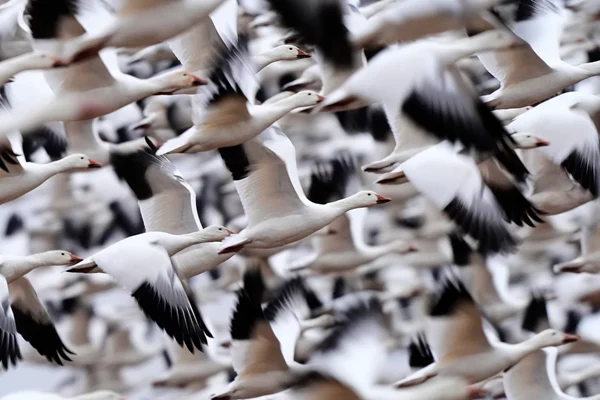
Snow Geese Resume their Northern Migration (Image Credits: AP Photo/Robert F. Bukaty)
Pennsylvania – Vast flocks of snow geese have transformed the skies over Middle Creek Wildlife Management Area into a whirlwind of white and sound during their annual spring migration. These birds, numbering in the tens of thousands at their peak this year, gathered on the reservoir before launching northward toward the Arctic breeding grounds. The spectacle draws bird enthusiasts from across the region, eager to witness the raw power of nature in motion.[1][2]
Aerial Spectacles That Stun Onlookers
Picture thousands of snow geese erupting from the water at dawn, their wings beating in unison to form a swirling vortex often called a “bird tornado.” The noise alone rivals a roaring crowd, as the birds honk and circle briefly before dispersing to nearby fields. This ritual unfolded vividly at Middle Creek earlier this month, captivating visitors who arrived early for the best views.[1]
The Pennsylvania Game Commission, which manages the 6,300-acre site, reported peak activity around early March. Snow geese have visited in increasing numbers since the late 1990s, turning the area into a premier migration hotspot. More than 280 bird species have been documented here, including bald eagles and ospreys that share the airspace.[2][3]
This Year’s Migration: Peaks and Swift Decline
Cold weather delayed arrivals in 2026, but flocks built quickly once conditions improved. Counts reached 60,000 on February 24 and climbed to 65,000 by March 6. Tundra swans and Canada geese joined the gathering, with 860 swans and 780 Canada geese noted alongside the geese on recent mornings.[4][3]
Numbers plummeted soon after, dropping to 8,000 on March 3 amid fog and freezing rain, and just 600 by March 10. Freezing temperatures and ice cover limited feeding, prompting the rapid exodus. Officials expect the main migration to conclude shortly, though stragglers may linger with warmer forecasts.[5]
The Habitat Magnet Behind the Masses
Middle Creek’s reservoir, constructed over 50 years ago, provides open water and nearby farmland ideal for refueling. Snow goose populations exploded from a few thousand in the early 1900s to over a million today, making stopovers like this essential. Tundra swans have similarly surged, from dozens in the 1970s to thousands now.[2]
Historical data reveals the site’s growing importance:
| Year | Snow Geese Peak | Tundra Swans Peak |
|---|---|---|
| 2025 | 100,000 | 1,350 |
| 2022 | 105,000 | 4,500 |
| 2018 | 200,000 | 5,500 |
These figures underscore why Middle Creek remains a focal point each late winter.[3]
Essential Viewing Guide for Enthusiasts
Birdwatchers flock to the site for sunrise and sunset takeoffs, when the action peaks. The Visitors Center at 100 Museum Road in Stevens operates Tuesday through Sunday from 8 a.m. to 4 p.m. A self-guided driving tour leads to prime overlooks, while hikes reach Willow Point for close-up sights.[5]
- Arrive before dawn with binoculars, warm layers, and a camera.
- Check the live webcam for real-time flock updates.
- Report sick or dead birds to 1-833-PGC-WILD due to avian influenza risks – do not approach.
- Explore smaller impoundments for gadwall, pintails, and other waterfowl.
- Scan skies for raptors like northern harriers and red-tailed hawks.
Tour Road opens in March, weather permitting, enhancing access.[3]
Key Takeaways
- Snow geese peaked at 65,000 this season before a swift departure.
- Middle Creek hosts up to 200,000 historically, drawing global visitors.
- Live streams and trails make it accessible year-round.
As the last snow geese vanish northward, Middle Creek quiets, but memories of the thunderous flights endure. This migration highlights nature’s resilience amid changing climates. What experiences have you had with wildlife spectacles like this? Share in the comments.

- Urban Coyotes Show Remarkable Adaptability, Learning to Thrive in City Environments - July 22, 2026
- Beavers Are Nature’s Engineers, Creating Vital Habitats for Other Wildlife Species - July 21, 2026
- The Recovery of the California Condor Offers Hope for Other Critically Endangered Birds - July 21, 2026