
There is something almost overwhelming about standing at the edge of the US coastline, whether you’re watching the Pacific shimmer off California or breathing in the salt air of a New England morning, knowing that just beneath the surface, a whole universe of creatures is going about its business. From ancient giants that predate the dinosaurs to tiny hunters armed like miniature medieval knights, American waters are genuinely some of the most biologically extraordinary on the planet.
Most people never get to witness any of it up close. They see the ocean as a backdrop, a holiday destination, maybe a place to surf or fish. But honestly, if they knew what was down there, they’d never look at the water the same way again. Let’s dive in.
1. The North Pacific Right Whale: The Rarest Giant You’ve Never Heard Of
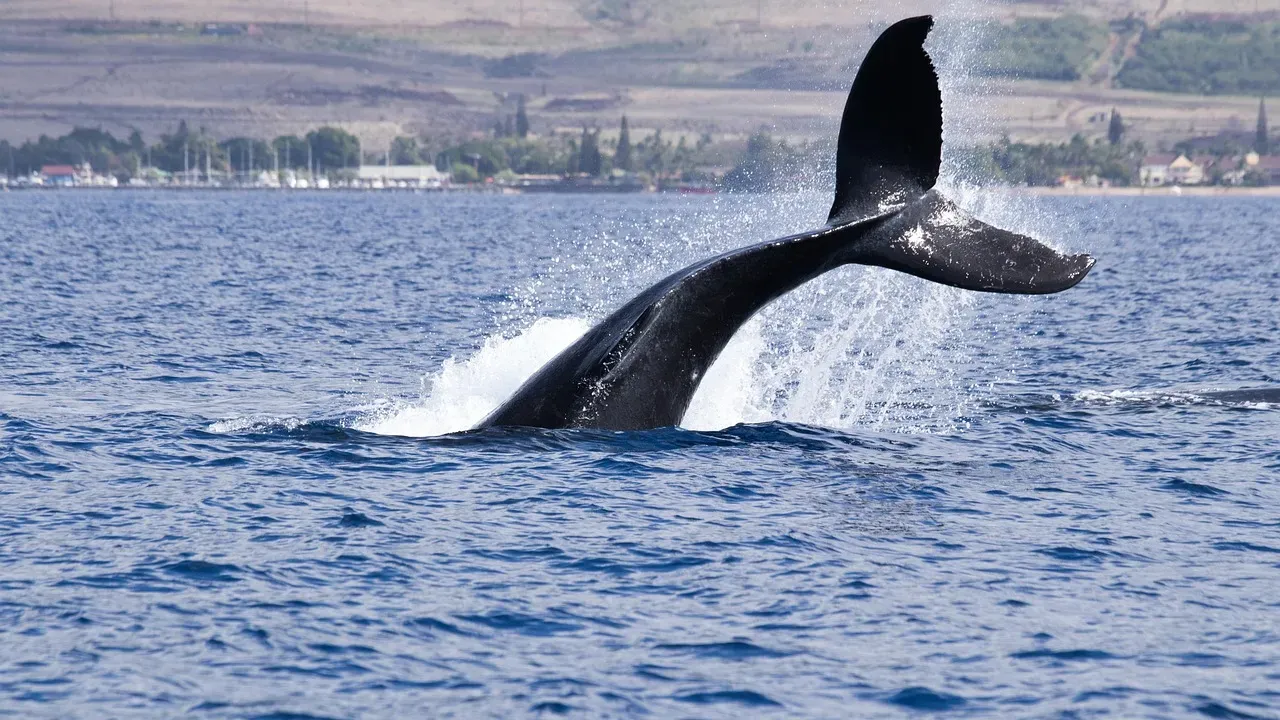
Here’s a number that should stop you in your tracks: the North Pacific right whale population remains extremely small, with likely fewer than 500 individuals across the entire North Pacific, and less than 50 in U.S. waters. To put that in perspective, that’s fewer individuals than can fit in a typical school cafeteria.
The right whale got its name from whalers who called it the “right” whale to hunt. Right whales made ideal prey because they swim slowly, can be close to the surface, produce a high yield of oil, and float after death. That dark irony haunts this species to this day.
These whales are gentle, playful, and surprisingly acrobatic despite their size. They are known to breach and slap their flippers against the water as they roll. One of their most fascinating behaviors is using their tails as sails, sticking their tail flukes out of the water to catch the breeze. What a creature. What a tragedy it would be to lose it.
2. The Great White Shark: America’s Most Iconic Ocean Predator
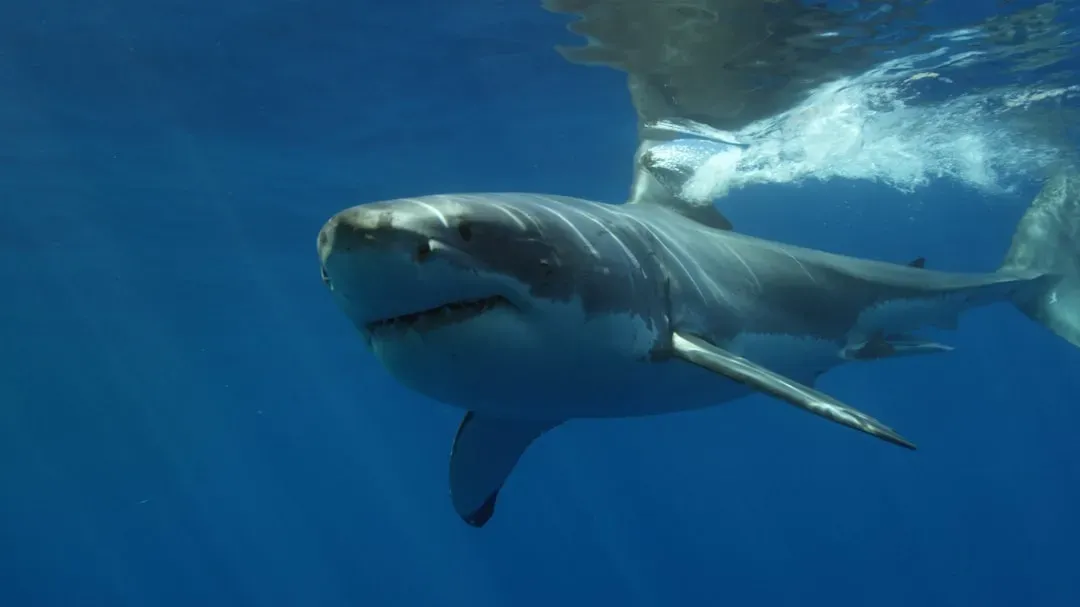
Few marine animals command the imagination quite like the great white shark. White sharks range from tropical to temperate and even colder waters around the world, with major populations in the northeastern and northeastern Pacific and western North Atlantic. Major US hotspots include the Farallon Islands in California and Cape Cod in Massachusetts.
Increased sightings of young sharks in areas they were not previously common, such as Monterey Bay on the central California coast, suggest climate change may be forcing juveniles closer to the poles. In other words, their range is shifting, and not for reasons we should celebrate.
The white shark preys on marine mammals such as seals and dolphins, as well as fish, including other sharks, and cephalopods. It is also a prolific scavenger of whale carcasses. Though normally an apex predator, the species is sometimes preyed on by orcas. Even the ocean’s most feared hunter has something to fear.
3. The Atlantic Sturgeon: A Living Fossil Under Threat
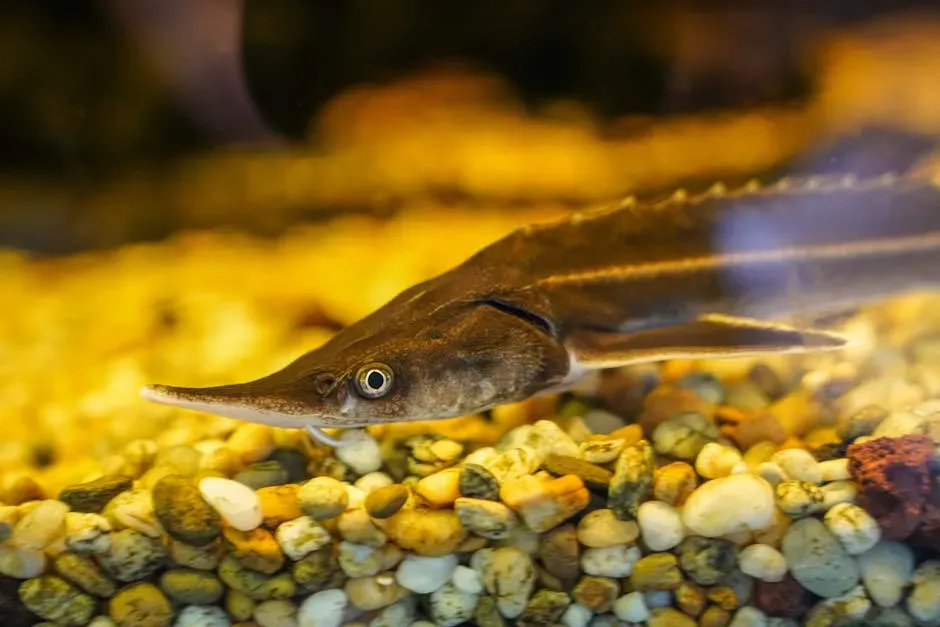
Sturgeons are prehistoric fish that have existed for over 120 million years. Let that sink in. These armored giants were gliding through rivers and coastal waters long before the first flower bloomed on Earth. They are, in the truest sense, living fossils.
The fish can reach 60 years of age, 15 feet in length, and over 800 pounds in weight. Atlantic sturgeon live in rivers and coastal waters from Canada to Florida. Hatched in freshwater rivers, Atlantic sturgeon transition to the marine environment and return to their birthplace to spawn when they reach adulthood.
The species is also known for its occasional leaping behavior, during which the fish will emerge completely out of the water in a forceful motion. The exact reason why sturgeon leap remains unknown, although some scholars believe leaping is a form of group communication. The Atlantic sturgeon is among the most endangered species groups in the world, due to habitat loss and harvesting for caviar.
4. The Sperm Whale: The Deep-Diving Giant of Both Coasts
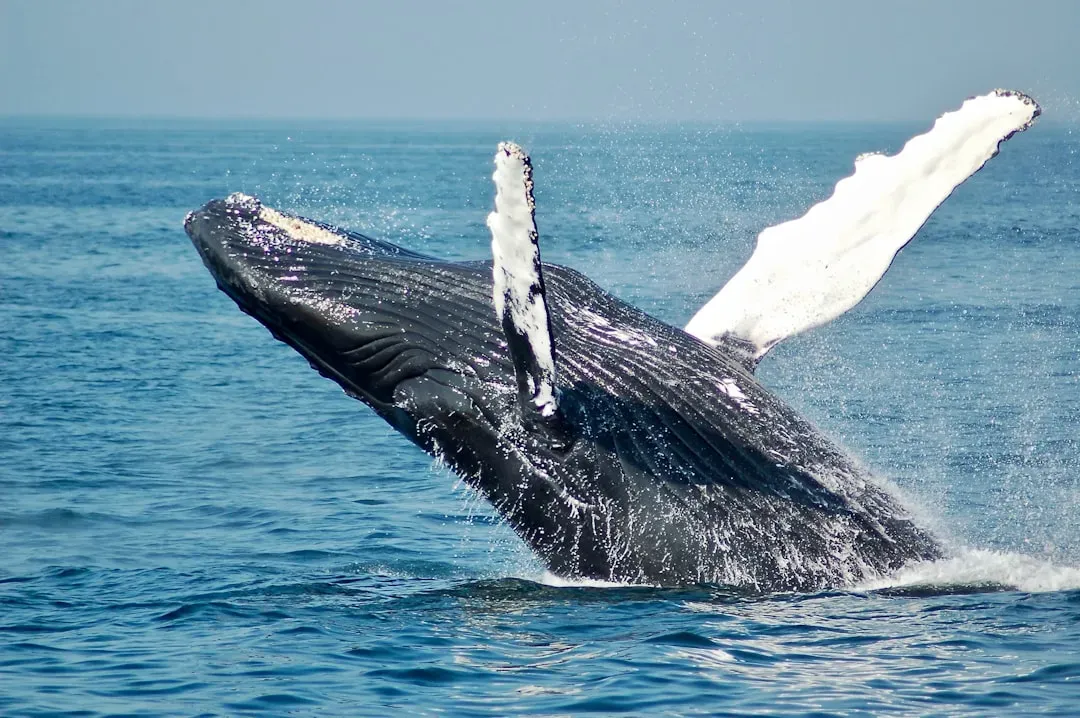
I think there are few things in nature as deeply awe-inspiring as a sperm whale. Sperm whales can dive for over an hour, sometimes going a mile down to feed on giant squid that dwell at the bottom of the ocean. A mile down. In total darkness. Hunting something the size of a car.
The sperm whale sometimes enters deep waters to chase the giant squid. They are found in both the Atlantic and Pacific waters off the US coast, making them one of the more wide-ranging megafauna in American seas. Their massive heads, which can make up nearly a third of their total body length, are filled with a waxy substance called spermaceti, once prized by whalers.
These animals communicate using complex clicking patterns called codas, and research continues to reveal just how sophisticated their social lives really are. Some scientists believe their communication systems may rival that of any other non-human animal on Earth. That’s not hyperbole. That’s science catching up to nature.
5. The Common Octopus: The Genius Hiding in Plain Sight
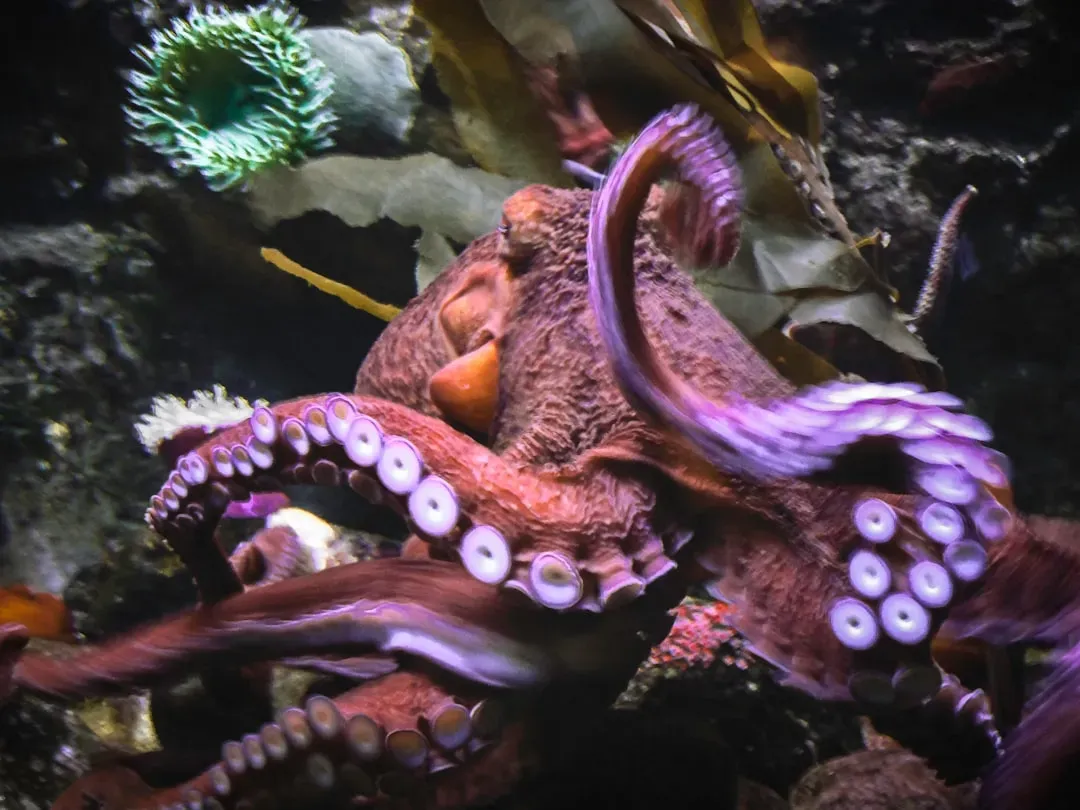
If aliens came to Earth looking for the most intelligent invertebrate, they would not have to look far. With 3 hearts, 8 arms, and the ability to match its skin color to its surroundings, the common octopus exudes cool. Considered the valedictorians of the invertebrate world for their ability to problem solve and retain lessons learned, they are also able to regenerate an arm.
The octopus has one of the largest brain-to-body ratios in all invertebrates, and it also has an extensive and complex nervous system. Their arms are not just limbs, they contain neurons. In a very real sense, an octopus thinks with its arms.
Their favorite foods are mussels, scallops, shrimps, clams, and crabs. They are also able to use their masterful disguises to pounce on unsuspecting lobster and fish. In North Atlantic waters, these adaptable invertebrates generally grow to 24 to 36 inches and have a natural lifespan of 12 to 18 months. A brilliantly intelligent life, lived at extraordinary speed.
6. The Lionfish: The Beautiful Invader Taking Over Atlantic Waters
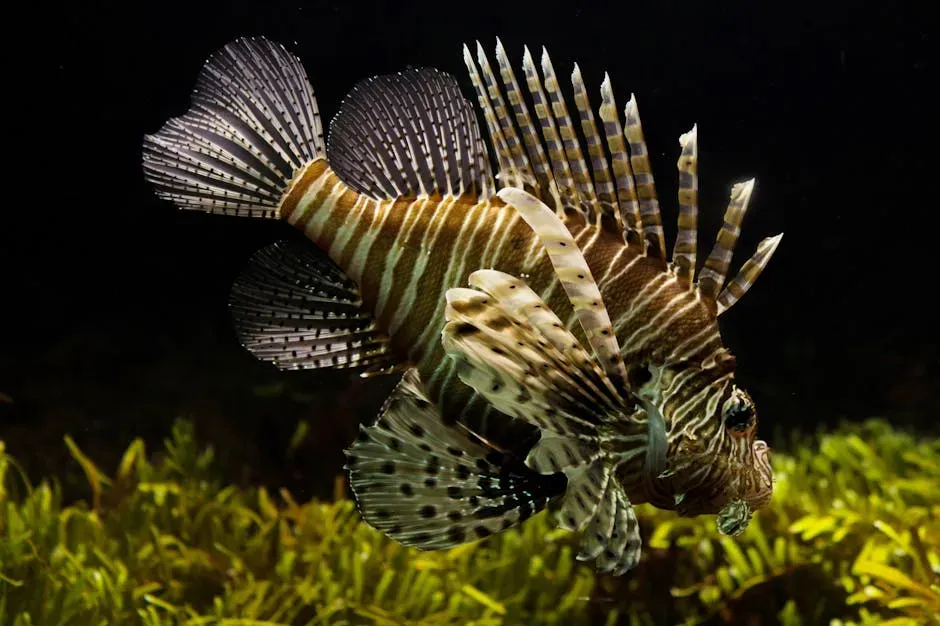
Here’s the thing about the lionfish: it looks absolutely stunning, like something a fantasy artist designed for a video game. Like its African namesake, the lionfish has a majestic flowing mane surrounding its head, giving it a very striking appearance. Don’t be fooled by the looks, though.
Native to the Indian and Pacific Oceans, lionfish are considered invasive species in the Atlantic, most likely introduced by aquarium hobbyists. First observed off the coast of Florida in 1983, by 2012 they were a documented invader around the Atlantic. That is an astonishing and troubling spread.
A full-grown adult lionfish can be up to 18 inches long, and they feed on at least 50 known species of fish, including valuable commercial fish. They store venom in their spines and use it on their prey to subdue them. Humans have learned the hard way that a sting causes extreme pain, sweating, respiratory distress, and even paralysis. Beautiful, devastating, and utterly at home in waters they were never meant to inhabit.
7. The Portuguese Man-of-War: Not a Jellyfish, Something Far Stranger
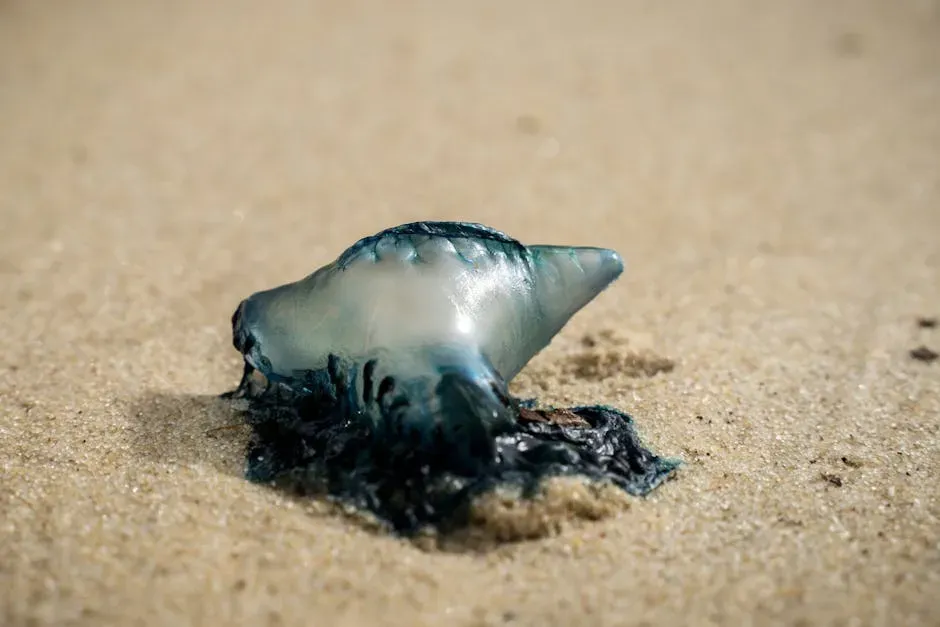
Most people see a man-of-war washed up on a beach and think, “what a big jellyfish.” They’re wrong. The man-of-war is a unique creature properly called a siphonophore, or a colony animal. The different animals or zooids in this creature do different things to keep it alive. One of them is stinging, which is how the animal captures and paralyzes its prey.
Think of it less like one animal and more like a floating city of specialized workers. Some zooids handle locomotion, some handle digestion, some handle reproduction, and some handle defense. It is, in every biological sense, a collective organism.
The stings raise whiplike welts and are excruciating, though adults probably won’t die from them. However, the venom of the man-of-war has been known to kill children. Found drifting along US Atlantic coastal waters, particularly in warmer months, this creature is one of the most misunderstood and underestimated animals in American seas. Respect the bubble.
8. The Atlantic Wolffish: The Ugly Beauty with a Secret Superpower
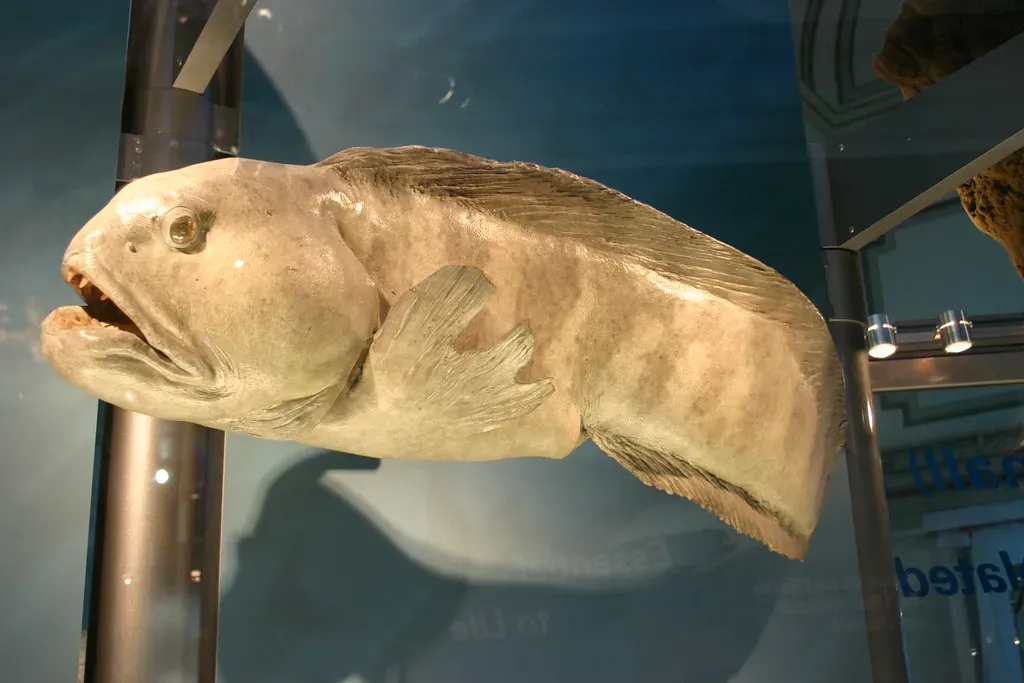
If you have never seen an Atlantic wolffish, prepare yourself. The Atlantic wolffish has two rows of sharp and snaggly teeth and an undulating, eel-like body. It looks like something designed specifically to appear terrifying on Halloween.
Despite the monstrous appearance, this creature is actually harmless to humans in the wild. It grows up to 5 feet long, lives in cold North Atlantic waters off the US coast, and here is the part that genuinely impressed me: the wolffish produces a natural antifreeze in its blood. Without it, its blood would literally freeze solid in the frigid deep-water temperatures it calls home. That is a real biological superpower.
The wolffish also plays a crucial ecological role by feeding on sea urchins, mussels, crabs, and clams. Without them, sea urchin populations can explode and devastate kelp forests. It’s a good reminder that even the strangest-looking creatures often have outsized importance in keeping ecosystems balanced. Never judge a fish by its teeth.
9. The Giant Pacific Octopus: The Heavyweight Champion of the Cephalopod World
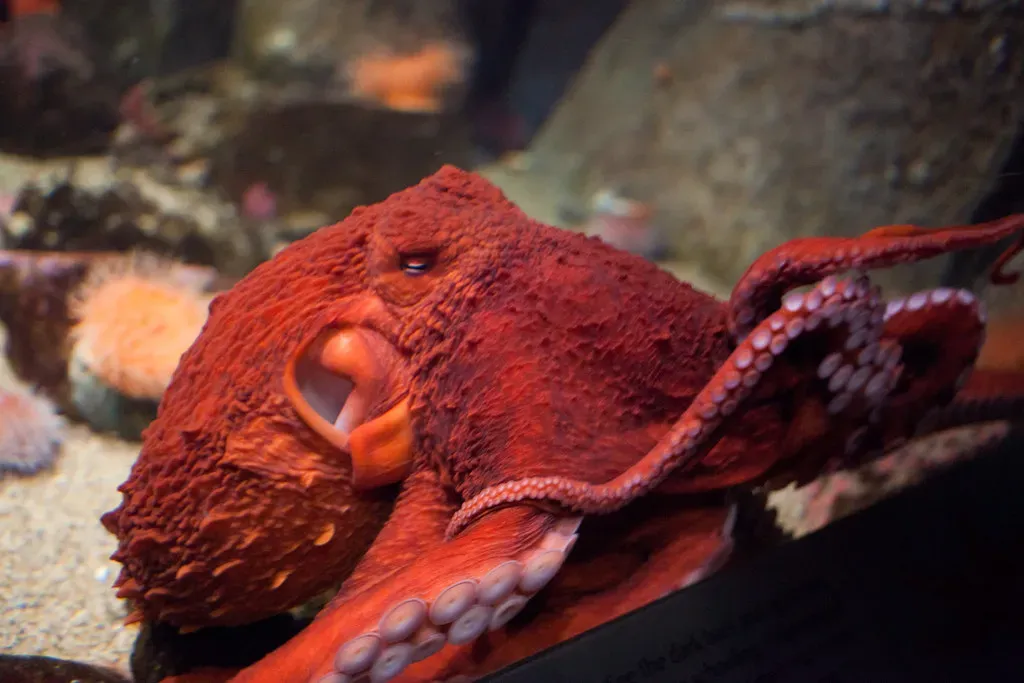
If the common octopus is impressive, the Giant Pacific Octopus found in US Pacific coastal waters is on a completely different level. The Giant Pacific Octopus can grow to attain a body weight of 150 pounds. That is not a typo. A 150-pound octopus, lurking in the kelp forests of the Pacific Northwest.
These animals are extraordinarily intelligent, capable of learning tasks, remembering faces, and even showing what appears to be individual personality traits. They have been observed opening jars, escaping from tanks, and returning to the water, and in some cases even sneaking across the floor of an aquarium to raid fish tanks at night before returning to their own enclosure. That is not instinct. That is planning.
Their lifespan is tragically short for such a complex animal, usually just three to five years. They live fast, grow enormous, reproduce once, and die. In their brief lives, they explore, problem-solve, and hunt with a precision that would be remarkable in an animal ten times their brain size. The Pacific waters of Alaska, Washington, and Oregon hold some of the largest individuals on Earth.
10. The Leatherback Sea Turtle: The Ocean’s Ancient Mariner
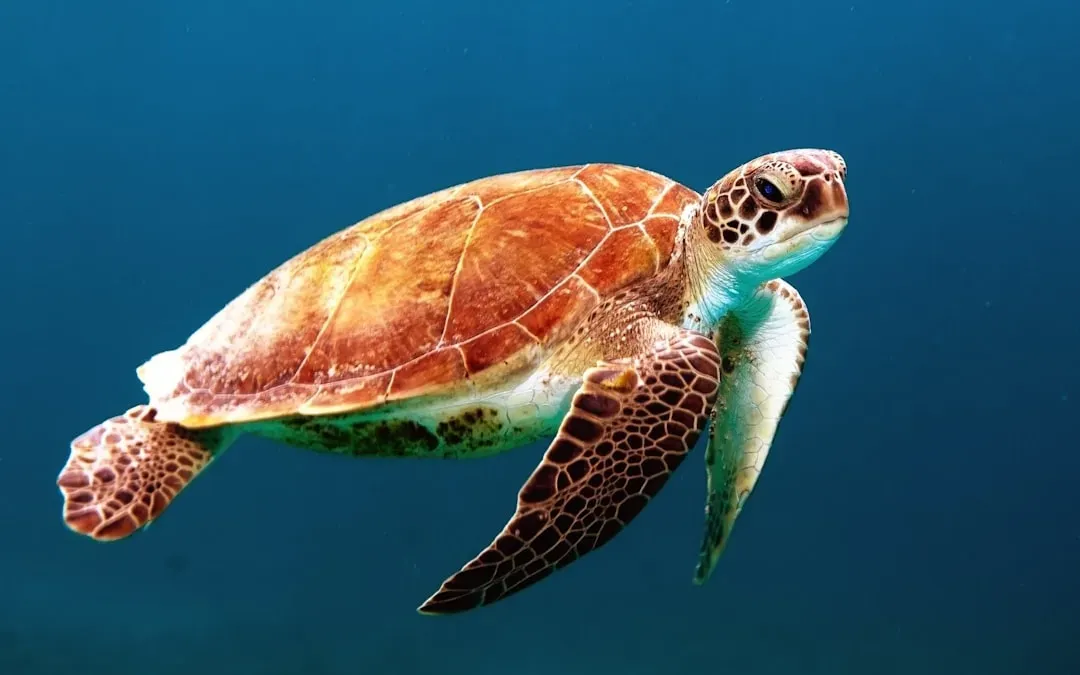
The leatherback sea turtle is in a category of its own. The leatherback turtle is the largest of all sea turtles, with adults attaining an average weight of 1,500 pounds. According to NOAA Fisheries, they hold the deepest recorded dive reaching depths of nearly 4,000 feet and can hold their breath for over an hour.
Leatherbacks travel thousands of miles between nesting beaches and feeding grounds, with significant populations tracked through US Atlantic and Pacific coastal waters. Unlike other sea turtles, they have a soft, rubbery shell instead of a hard one, which allows their bodies to compress at extreme depths. Their primary prey is jellyfish, which makes their 1,500-pound bulk one of nature’s most satisfying paradoxes: an enormous animal surviving almost entirely on creatures made mostly of water.
They have been swimming the world’s oceans since the time of the dinosaurs. Sea turtles, as a whole, are endangered. The hawksbill sea turtle is critically endangered and may also be in danger of going extinct. The leatherback itself faces serious pressure from bycatch, plastic pollution, and climate change disrupting nesting beaches. Watching one haul itself ashore on a dark Florida or Pacific beach is, by every account, one of the most moving experiences a person can have.
11. The Hammerhead Shark: Nature’s Most Peculiar Engineering Achievement
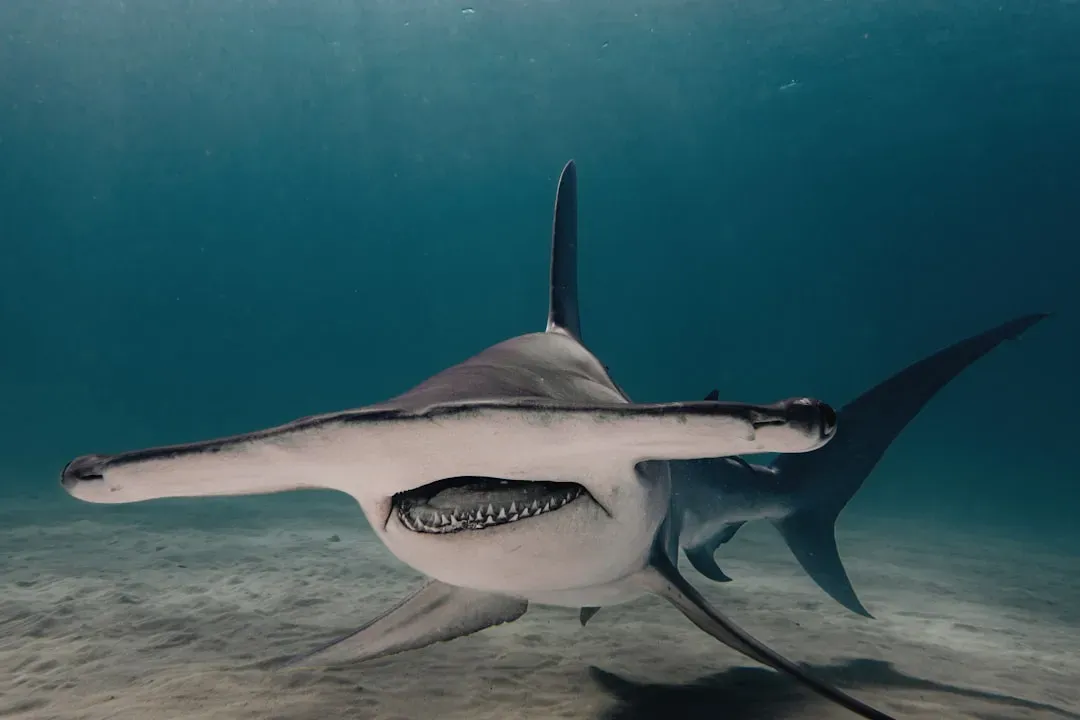
Of all the shark species patrolling US waters, the hammerhead is the one that raises the most questions. Why on earth would evolution produce a head shaped like a T-bar? Hammerhead sharks are easily identifiable due to the shape of their heads which resemble a hammer. This distinct shape of their heads enables the shark to have a 360-degree vision. In short, the bizarre shape is a sensory masterpiece.
The flat, wide cephalofoil, as scientists call it, also gives hammerheads an enormous advantage in detecting the weak electrical fields emitted by prey buried in the sand. Their electroreception sensors are spread across a far wider surface area than in other sharks, making them almost impossible to hide from. The waters off the East Coast are home to more than 50 shark species, ranging from the small spiny dogfish to the much larger white shark, found in just about every kind of ocean habitat.
Scalloped hammerheads are found in both US Atlantic and Pacific warm-coastal waters and are one of the few shark species that schools in large groups, sometimes in the hundreds. Yet despite their impressive presence, their populations have declined dramatically in recent decades due to overfishing and the global demand for shark fin soup. It’s hard to say for sure whether conservation efforts are enough, but the need is urgent.
12. The Masked Angelfish: Hawaii’s Most Exclusive Resident
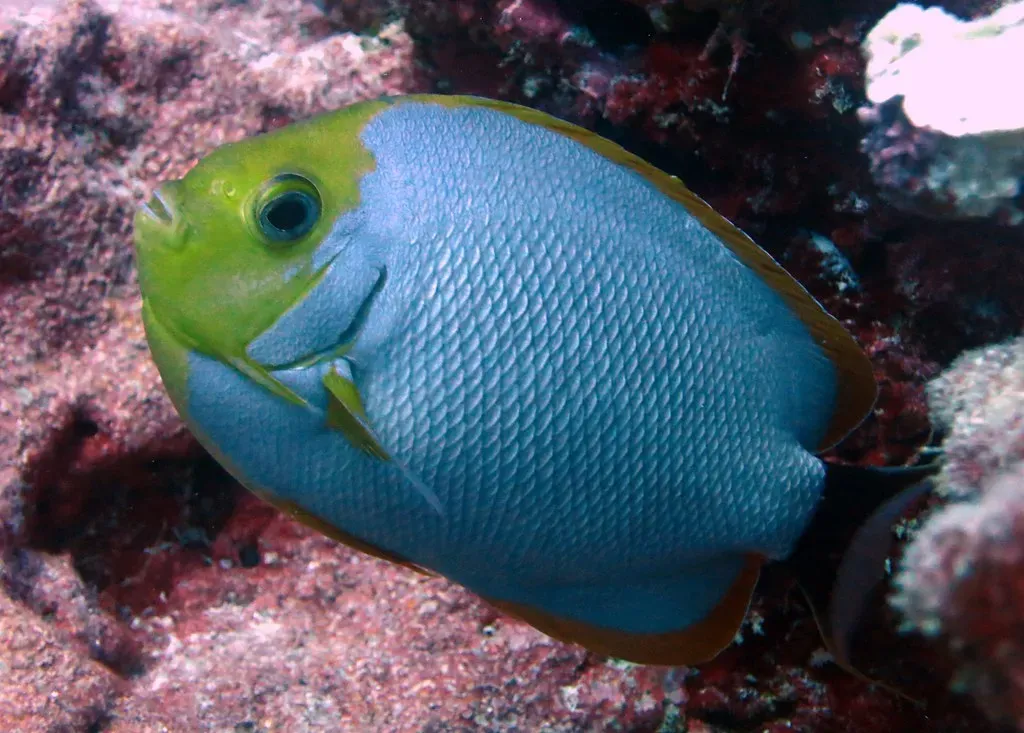
Of all the creatures on this list, this one might be the most visually spectacular and the least known. The masked angelfish is found exclusively on deep reefs of 100 to 500 feet in Hawaii, and the highly protected waters of Papahānaumokuākea National Marine Sanctuary are the only place on Earth where they are regularly seen at comfortable scuba depths.
The masked angelfish is one of the most expensive aquarium fish in the world, with a single specimen sometimes exceeding $10,000. The name “masked angelfish” comes from the distinct black mask on the face of juveniles and females. As they mature, males lose the mask and become almost entirely white. That transformation, from masked and dark to pure white, is as dramatic as any metamorphosis in nature.
These fish are among the most striking examples of why protecting US marine sanctuaries matters. America’s national marine sanctuaries and monuments protect some of the ocean’s rarest and most fascinating creatures, species that have evolved in unique ways to thrive in these underwater habitats. Without that protection, the masked angelfish and countless other exclusive Hawaiian reef species might simply vanish before most people even knew they existed.
Conclusion: The Ocean Is Closer Than You Think
What strikes me most, after going through all of this, is that none of these animals are exotic in the sense of being far away or inaccessible. They live in US waters. They patrol the same Atlantic coast where people jog in the mornings and the same Pacific coastline where families go on summer vacation.
The ocean off America’s shores is not a backdrop. It is a living, breathing, fiercely complex world that most of us barely acknowledge. From the ancient armor of the Atlantic sturgeon to the ghostly white of a male masked angelfish, from the terrifying elegance of a great white to the heartbreaking rarity of the North Pacific right whale, these animals are all part of the same story. A story playing out right now, just beyond the shoreline.
The question isn’t really whether these animals are fascinating. They obviously are. The question is whether we find them fascinating enough to protect them before it’s too late. What do you think it would take for people to truly care about what lives beneath the waves? Share your thoughts in the comments.

- 13 Odd Hummingbird Habits Ornithologists Say Still Puzzle Them After More Than Four Decades of Study - August 2, 2026
- 18 Dog Breeds Older Vets Remember Treating Constantly That Younger Vets Have Never Once Seen - August 2, 2026
- 17 Small Things Your Old Cat Starts Doing When It Knows the End Is Coming Closer - August 2, 2026