

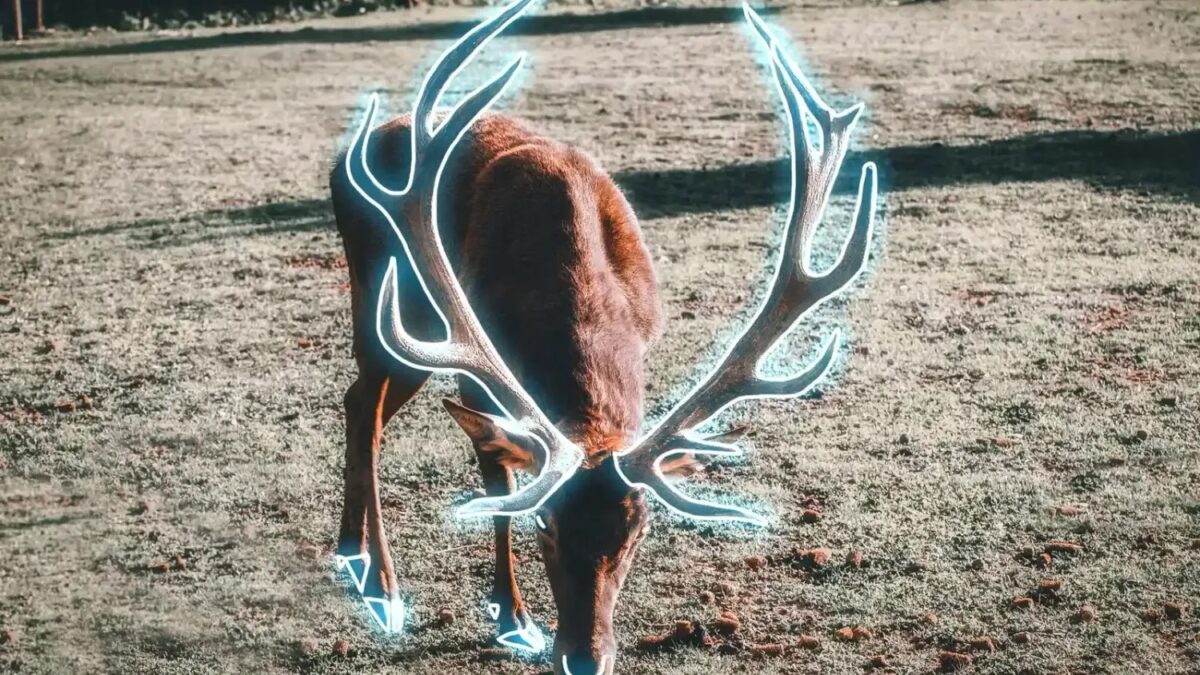
There’s something quietly unsettling about realizing an animal you’ve walked past in the woods can perceive a dimension of light that you simply cannot. Most of us assume our visual experience of the world is more or less the standard version. Turns out, for white-tailed deer, that assumption is completely wrong.
These graceful, seemingly skittish creatures scattered across North American forests and meadows are hiding a visual superpower. Their eyes detect ultraviolet light, a part of the spectrum entirely invisible to the human eye. If that sounds like science fiction, it really isn’t. Let’s dive in.
The UV Vision Discovery That Stunned Researchers
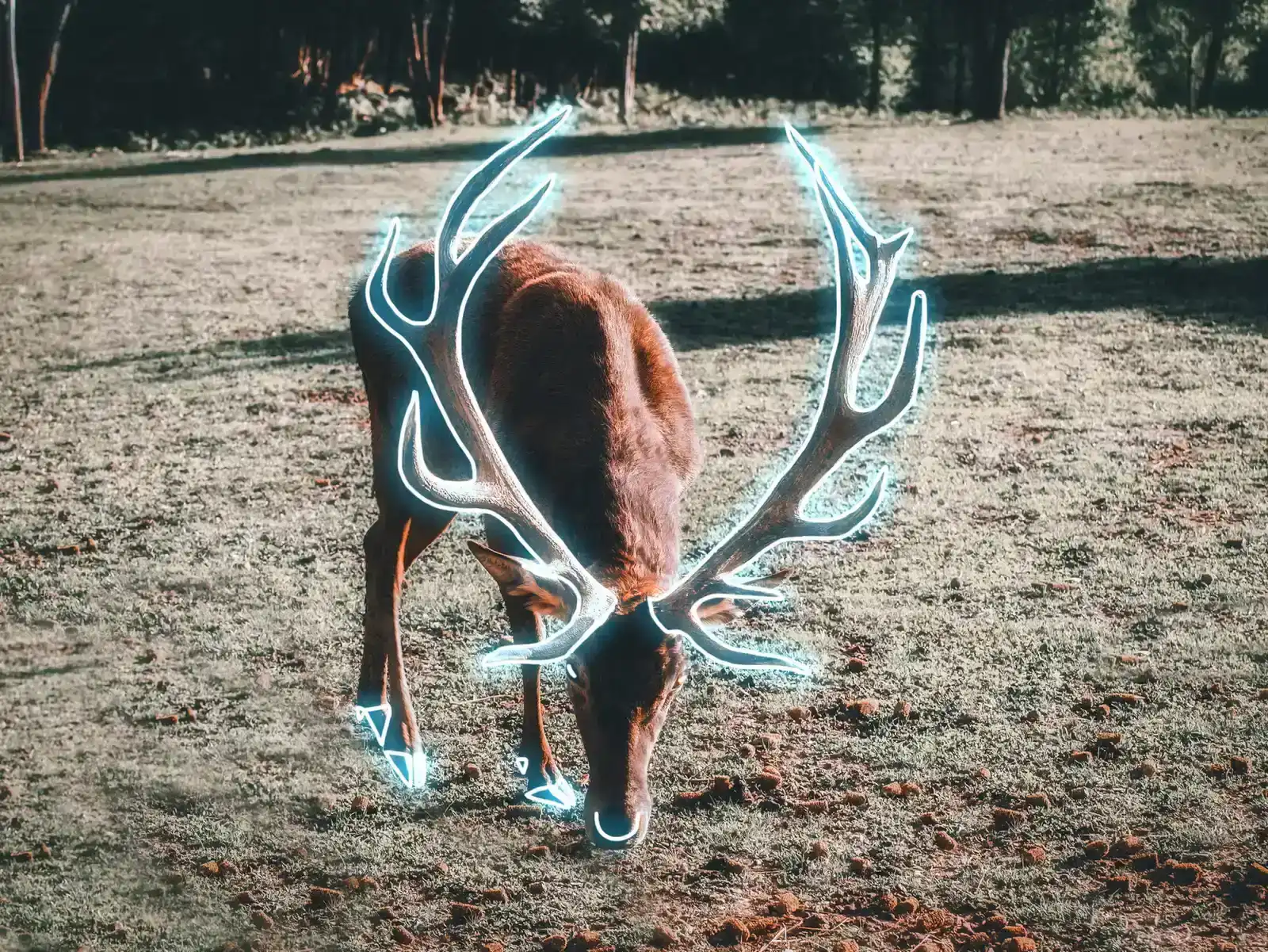
Here’s the thing – scientists have known for a while that some animals see UV light. Bees do it. Certain birds do it. Reindeer, interestingly, were confirmed UV-seers years ago. What genuinely surprised researchers was finding strong evidence that white-tailed deer, one of the most studied large mammals in North America, share this ability.
The discovery came from examining the structure of deer eyes at a physiological level. Researchers found that deer lack a lens filtering mechanism that humans and many other mammals rely on to block UV wavelengths from reaching the retina. In humans, the eye’s lens absorbs UV light before it can hit photoreceptors. Deer simply don’t have that filter working in the same way.
This is not a minor anatomical footnote. It fundamentally reshapes how we understand a deer’s entire visual experience of the world.
How UV Vision Actually Works in the Deer Eye
To understand this, think of it like wearing invisible glasses that suddenly reveal hidden graffiti on walls that everyone else walks past without noticing. UV light is always there. Most mammals just can’t process it. Deer, it appears, can.
The key lies in the lens and cornea. In species with UV-blocking lenses, these structures absorb shorter wavelengths and prevent them from stimulating the retina. Deer lenses transmit a significant portion of UV wavelengths instead of absorbing them. This means UV photons actually reach the photoreceptors at the back of the eye.
It’s worth noting that having UV light reach the retina doesn’t automatically guarantee crisp UV vision. However, combined with other anatomical evidence, researchers believe deer are genuinely perceiving and processing this additional visual information in a meaningful way.
What the World Looks Like Through Deer Eyes
Honestly, it’s almost impossible to fully imagine. The closest human analogy might be switching from an old standard-definition TV to a version with entirely new color channels added. Certain objects that appear dull or uniform to us might glow, pulse with contrast, or stand out dramatically under UV light when seen through a deer’s eyes.
Urine, for instance, reflects UV light strongly. So does certain vegetation at specific growth stages, and many materials used in hunting gear. A patch of forest floor that looks calm and featureless to a hunter could look like a neon-lit runway to a deer moving through the same space.
This realization carries genuinely practical implications. It forces a rethink of how deer navigate their environment and what triggers their acute awareness of threats or opportunities that seem invisible to the humans watching them.
Why Hunters Should Be Paying Close Attention
Let’s be real – this finding has massive implications for anyone who spends time in a blind wearing what they thought was perfectly camouflaged gear. Many modern hunting fabrics are treated with UV-brightening agents, the same technology used in laundry detergents to make whites appear whiter. Under UV light, those garments essentially light up like a beacon.
To a deer perceiving UV wavelengths, a hunter sitting motionless in UV-brightened camo might stand out against a natural background that reflects far less UV. The deer isn’t spooked by movement or scent in those moments. It may simply be reacting to what its eyes are telling it is clearly, obviously out of place.
Some hunting brands have responded by developing UV-blocking or UV-suppressing fabric treatments specifically to address this problem. It’s a direct, practical application of what was previously an obscure area of animal sensory biology.
The Survival Logic Behind UV Sight
From an evolutionary standpoint, UV vision in deer makes a compelling kind of sense. Deer are crepuscular animals, most active at dawn and dusk when UV light conditions in the environment differ markedly from midday. At those low-light boundary moments, the ability to detect additional wavelengths could sharpen contrast, help distinguish objects, and potentially provide a meaningful survival edge.
Predator detection is another obvious advantage. If certain biological signatures – urine trails, disturbances in vegetation, even the UV reflectance of fur or feathers – stand out more sharply under UV-sensitive vision, a deer with that capability is simply better equipped to stay alive. Nature rarely invests in a feature that doesn’t serve a purpose.
It also raises an intriguing question about communication. Could deer be using UV-reflective signals, in their coats or secretions, in ways that are completely invisible to human observers but socially meaningful to other deer? That possibility hasn’t been fully ruled out.
What This Means for Wildlife Science More Broadly
This finding is part of a wider scientific reckoning happening across animal sensory research. For a long time, researchers projected human sensory frameworks onto other species. We assumed our visual range was roughly the norm. Study after study in recent years has dismantled that assumption across birds, insects, fish, and now large North American mammals.
The white-tailed deer case is particularly striking because this species has been studied so extensively. It’s not some obscure deep-ocean creature or a tropical insect newly catalogued. Deer live in backyards, suburban woodlands, and national parks across the continent. Researchers have tracked, tagged, and examined them for generations. Yet this fundamental aspect of their sensory life was underappreciated for so long.
It’s a humbling reminder of how much our assumptions can blind us, ironically enough, to what’s happening right in front of us.
The Bigger Picture of Animal Perception Science
I think this is where the story gets genuinely exciting rather than just scientifically interesting. We’re in a period of rapid revision when it comes to understanding animal minds and senses. UV vision in deer connects to a broader conversation about how profoundly different the inner experience of other species might be from our own.
Researchers are now asking better questions. Rather than starting from what humans perceive and checking which animals match that baseline, the field is increasingly asking what each species’ sensory toolkit actually is, on its own terms. That methodological shift is producing revelations across the board.
White-tailed deer seeing a UV-rich world that humans walk through completely blind to isn’t just a quirky biology fact. It’s a doorway into taking animal perception seriously in a way that science is only beginning to fully embrace. What else are we missing when we observe the natural world through nothing but our own limited eyes?
What do you think – does knowing deer see a world invisible to us change the way you look at them? Drop your thoughts in the comments below.

- Urban Coyotes Show Remarkable Adaptability, Learning to Thrive in City Environments - July 22, 2026
- Beavers Are Nature’s Engineers, Creating Vital Habitats for Other Wildlife Species - July 21, 2026
- The Recovery of the California Condor Offers Hope for Other Critically Endangered Birds - July 21, 2026