

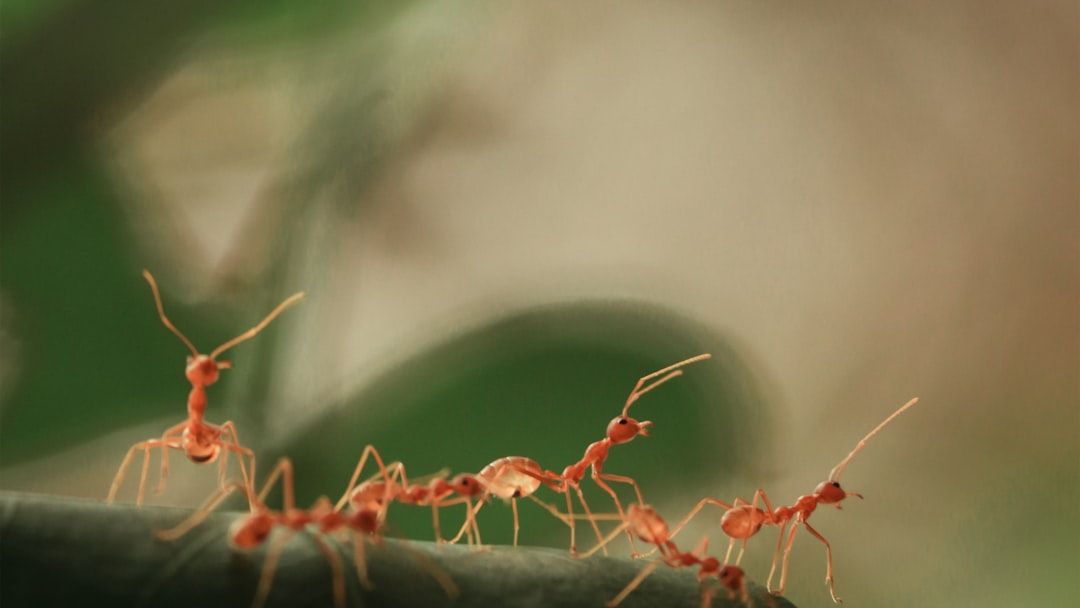
Ants have always been one of those creatures that seem almost alien in their social complexity. They build empires without architects, wage wars without generals, and somehow manage to coordinate millions of individual lives with stunning precision. So when scientists start digging into exactly how ants tell friends apart from enemies, things get genuinely interesting fast.
Clonal raider ants, in particular, are a species that keeps surprising researchers. A recent study has shed new light on how these remarkable insects distinguish nestmates from strangers, and the findings point to a communication system far more sophisticated than most people would expect. Let’s dive in.
The Clonal Raider Ant – A Species Unlike Any Other
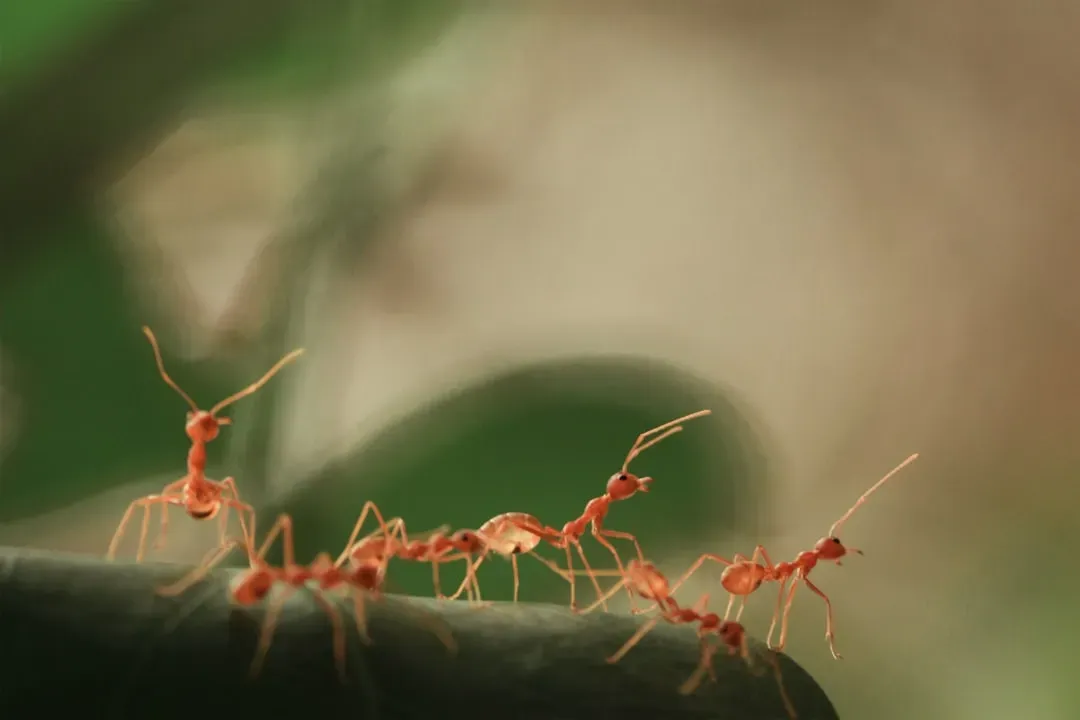
Here’s the thing about clonal raider ants: they’re already weird before you even get to the nestmate recognition stuff. These ants, known scientifically as Ooceraea biroi, reproduce exclusively through clonal parthenogenesis, meaning there are no queens and no males. Every single worker is essentially a genetic copy of every other worker.
This makes them a dream subject for researchers. Because all individuals share the same genetics, scientists can isolate behavioral and chemical differences without the noise of genetic variation muddying the picture. It’s like running a perfectly controlled experiment where nearly every variable is already accounted for.
That kind of biological consistency is rare. Honestly, it’s almost too convenient for science, which is probably why clonal raider ants have become such a popular model organism for studying social behavior and communication.
The Chemical Language Ants Speak
Ants don’t use words or sounds to communicate identity. They use chemistry. Specifically, they rely on a class of compounds called cuticular hydrocarbons, or CHCs, which coat the outer surface of their bodies. These chemical profiles act like a biological ID badge.
When one ant encounters another, it essentially “reads” the chemical signature through contact. If the profile matches, all is well. If it doesn’t, the ant registers an intruder. It’s a bit like having a secret handshake, except the handshake is made entirely of molecular compounds you can’t even see.
What’s remarkable is just how nuanced these chemical signals can be. They don’t just say “ant” or “not ant.” They convey colony membership with extraordinary specificity, and new research is helping scientists understand exactly how that recognition plays out at the neurological level.
How Clonal Raider Ants Distinguish Nestmates From Strangers
The core finding from recent research is that clonal raider ants process nestmate versus non-nestmate chemical cues in distinct and measurable ways. When an ant encounters a familiar nestmate, there’s one kind of neural response. When it encounters a stranger, something different happens entirely. The brain, in a sense, “knows.”
Researchers found that specific antennal lobe regions in the ant brain respond differently depending on whether the chemical profile being detected belongs to a colony member or an outsider. This points to a dedicated neural circuit for social recognition, not just a general chemical detection system.
Think of it like the difference between recognizing a close friend’s face versus a stranger’s. Your brain doesn’t process them the same way. For ants, the same principle applies, just through smell rather than sight. It’s a beautiful parallel to vertebrate social cognition, tucked inside a creature with a brain barely visible to the naked eye.
The Role of the Antennae in Social Recognition
The antennae are everything in this story. They are the primary sensory organs ants use to detect chemical signals, and in the context of nestmate recognition, they are essentially the front line of the entire social security system. Without functional antennae, the whole recognition process collapses.
Researchers have been particularly interested in how signals travel from the antennae into the brain and what happens at each stage of processing. The findings suggest that the transformation from raw chemical input to a meaningful social judgment happens in stages, with specific brain regions playing distinct roles along the way.
It’s genuinely impressive when you think about how much social intelligence is packed into such a small biological package. A clonal raider ant brain is tiny by any measure, yet it manages to perform identity verification with a reliability that most human-designed systems would envy.
Friend or Foe – What Happens After Recognition
Recognition isn’t just an abstract cognitive event. It has immediate behavioral consequences. When an ant identifies a stranger, aggression typically follows. When a nestmate is recognized, grooming and cooperative behavior are the norm. The distinction between these two outcomes is, quite literally, a matter of life and death in ant society.
What makes this especially interesting is how fast these judgments happen. There’s no deliberation. No hesitation. The chemical cue is detected, processed, and a behavioral response is triggered in what seems like an instant. The speed of that pipeline says something profound about how evolution has prioritized social boundary enforcement.
It’s hard not to see a certain poetry in it. These tiny animals, with no central leadership and no conscious self-awareness, still manage to maintain social cohesion through a system of chemical recognition so finely tuned it has lasted millions of years.
Why This Research Matters Beyond Ants
It’s tempting to think of ant research as niche, almost disconnected from anything that touches human life. That would be a mistake. Understanding how social recognition works at a fundamental biological level has broad implications for neuroscience, evolutionary biology, and even the study of social disorders in humans.
The neural circuits involved in distinguishing “us” from “them” are ancient. They predate ants’ evolutionary ancestors by a staggering amount of time. By studying how these circuits function in a genetically uniform, highly controllable organism like the clonal raider ant, scientists get a cleaner window into the basic mechanics of social cognition.
There’s also a practical angle here for robotics and artificial intelligence. Swarm intelligence systems increasingly look to ant colonies for inspiration. The more we understand about how individual agents in a colony identify and respond to one another, the better we can design systems that mimic that collective intelligence. I think that potential alone makes this research worth paying attention to.
Conclusion: Small Creatures, Big Questions
Clonal raider ants are, by most measures, modest little insects. They don’t build the towering mounds of leafcutter ants. They don’t have the terrifying reputation of army ants. Yet they carry within their tiny bodies and tinier brains a level of social sophistication that continues to astonish researchers with every new study.
The question of how any creature draws the boundary between friend and foe is, at its core, one of the deepest questions in biology. Ants have been answering it with remarkable consistency for tens of millions of years. Watching scientists decode that answer, one chemical signal at a time, feels like reading a very old language we’re only just beginning to understand.
What do you think – does it change how you see ants when you realize just how complex their social lives really are? Drop your thoughts in the comments.

- Urban Coyotes Show Remarkable Adaptability, Learning to Thrive in City Environments - July 22, 2026
- Beavers Are Nature’s Engineers, Creating Vital Habitats for Other Wildlife Species - July 21, 2026
- The Recovery of the California Condor Offers Hope for Other Critically Endangered Birds - July 21, 2026